

TCL Medical Imaging Partners with Siemens Healthineers to Revolutionize Independent Imaging Centers
Entering the Independent Imaging Center Market, TCL Medical Imaging Has Chosen the Right Timing
In September 2015, the General Office of the State Council issued the “Guiding Opinions on Advancing the Construction of a Tiered Diagnosis and Treatment System,” which explicitly proposed to “explore the establishment of independent regional medical laboratory institutions, pathological diagnosis institutions, medical imaging examination institutions, sterile supply institutions, and blood purification institutions to achieve regional resource sharing.” In August 2017, the National Health Commission added five more categories of independently established medical institutions to the original five, allowing social capital to invest in independently established medical institutions and encouraging chain-based and group-based operations. These policies unequivocally demonstrate the state’s determination to simplify hospital management, optimize resource allocation, and promote privately run healthcare services.
TCL Medical has undoubtedly identified the opportunities within these policies. In October 2017, TCL Medical redefined its strategy for imaging services. As a domestic enterprise engaged in the R&D, manufacturing, and sales of large-scale medical imaging equipment, it began shifting its focus from production to services, positioning independent imaging centers as the next core pillar of its healthcare strategy.
From strategic determination to the official operation of its imaging centers, TCL Medical took less than two years. In early 2019, the independent imaging center in Kunshan, Jiangsu, which was being prepared by TCL Medical Imaging, completed preliminary approval and began construction; the first imaging outpatient department—the Jiaozuo Outpatient Department in Henan—also commenced operations at the end of 2019. By mid-2020, the Luohu Imaging Outpatient Department and the Longhua Independent Imaging Center in Shenzhen had successively begun operations. TCL Medical’s imaging services strategy quickly got on track.
Currently, TCL Medical Imaging operates three independent imaging centers and three imaging outpatient clinics, with additional facilities under construction. All operational imaging outpatient clinics hold medical practice licenses, large-scale equipment configuration permits, and designated status as medical insurance providers. Two independent imaging centers and four imaging outpatient clinics are in the preparatory phase. The company is progressively implementing a nationwide network strategy based on a model of chain and group operations, integrating independent imaging centers with imaging outpatient clinics.
Recently, Siemens Healthineers and TCL Medical Imaging Group held a signing ceremony for a strategic cooperation agreement at the Siemens Healthineers China headquarters, joining forces to enter the independent imaging center market. Wang Hao, President of Greater China at Siemens Healthineers, Lu Hongliang, CEO of TCL Medical Imaging, and other senior executives from both sides attended the ceremony.
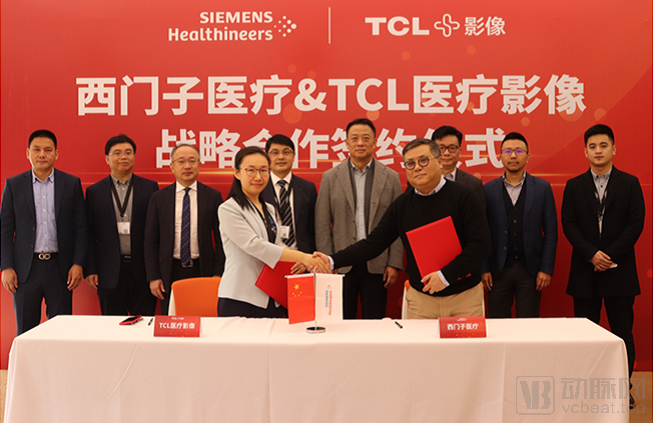
Siemens Healthineers and TCL Medical Imaging Group Sign Strategic Cooperation Agreement
Specifically, both parties will engage in extensive and in-depth alignment and cooperation in areas such as advanced clinical applications, differentiated diagnostic and treatment protocols, telemedicine guidance, and scientific research technologies, to further enhance TCL Medical Imaging’s core competitiveness and differentiated service capabilities.
In light of this, although TCL Medical Imaging has been in the medical services sector for only two years, it has indeed achieved commendable results. With the support of Siemens Healthineers, TCL Medical Imaging is well-positioned to make a significant impact in the independent imaging center market.
The prosperity of the medical services sector hinges on the supply-demand dynamics within it, and the independent imaging center segment is no exception.
Medical imaging examinations are extensively utilized across all stages of healthcare, from early screening for various diseases to diagnosis, grading and staging, and treatment efficacy assessment. CT, MRI, and PET-CT scans play indispensable roles throughout this process. Consequently, radiology departments in tertiary hospitals have long been operating under excessive workload. However, on a national scale, the total inventory of imaging equipment in hospitals across China is sufficient to meet current demand; the underlying issue stems from the irrational allocation of resources.
From the perspective of China’s national healthcare structure, high-quality medical resources are concentrated in tertiary hospitals located in major cities. Consequently, residents with the means flock to the country’s most renowned hospitals, resulting in an excessive workload for radiology departments.
According to data from VCBeat, at Grade A tertiary hospitals, 60% of radiologists work more than 8 hours per day, 25% average over 10 hours daily, and 75% earn a monthly salary below RMB 6,000. Nearly every hospital’s radiology department operates on a 24-hour shift system, with no breaks from morning till night during peak periods. In addition, radiologists are exposed to radiation or potential hazards due to prolonged work in enclosed spaces.
In contrast, although primary healthcare institutions have procured large-scale medical imaging equipment, they still require the involvement of professional management and technical personnel to enhance the operational efficiency of their radiology departments. This necessity stems from a shortage of physicians, lack of patient trust, and limitations in institutional management capabilities and technical talent.
In this context, the development of independent imaging centers not only helps triage patients, alleviate congestion at tertiary hospitals, and reduce medical costs for patients, but also empowers primary care hospitals by improving the quality of grassroots healthcare and reducing the recurring procurement costs associated with basic medical services. Therefore, third-party independent imaging centers that can serve multiple medical institutions within a region represent an excellent complementary solution.
From an investment perspective, independent imaging centers are capital-intensive projects. Consequently, there are relatively few enterprises capable of operating in this sector. Five years after the introduction of relevant policies, the market remains far from saturated, offering substantial room for growth.
The expansion of market space is driven by the dual forces of policy and market demand. On one hand, policies such as Diagnosis-Related Groups (DRG) and performance assessments for public hospitals are pushing hospitals toward refined management and cost reduction. This has created a spillover demand for departments like radiology, which are not core treatment units but can be transformed into specialized, standardized service providers. On the other hand, under the construction of a new public health defense system, more primary care hospitals seek to enhance their diagnostic imaging capabilities to retain patients at the grassroots level, yet they lack sufficient physicians, technicians, and matching equipment. In this context, TCL Medical Imaging’s independent imaging centers can provide professional, in-depth third-party diagnostic imaging services. Through comprehensive solutions, they optimize the construction costs of individual imaging centers or outpatient imaging clinics, offering high investment efficiency and strong scalability.
Possessing an “imaging DNA” is another factor driving TCL Medical’s strategic choice to focus on imaging services. In 2009, TCL began the R&D, manufacturing, and sales of medical imaging equipment, as well as the introduction, subsequent re-development, production, and sales of high-end foreign medical technologies. It was among the earliest to receive the “Double Soft” certification issued by the Beijing Municipal Government, gradually evolving into a company with a comprehensive portfolio of medical imaging products, including DR, ultrasound, MRI, CT, and DSA systems.
Furthermore, the key founders of TCL Medical Imaging Group are former senior executives from leading medical imaging companies such as Siemens Healthineers and GE Healthcare. Dr. Lu Hongliang, the CEO, previously served as Vice President of Siemens’ Global X-ray Product Division, General Manager of the GE Healthcare Wuxi Factory, and General Manager of the Magnetic Resonance Division. Mr. Chen Yanbing, Advisor to the President, formerly held the position of General Manager of the Magnetic Resonance Division at Siemens (China). In summary, every member of TCL Medical Imaging Group’s management team possesses a profound understanding of imaging center equipment, enabling them to professionally and efficiently configure, manage, and apply medical imaging devices.
Examining TCL Medical’s development trajectory, although its transition into medical imaging services has been brief, TCL Medical Imaging has laid a solid foundation with every step taken in establishing third-party independent imaging centers. This is also one of the factors that led Siemens Healthineers to partner with TCL Medical Imaging.
Overall, the profound significance of Siemens Healthineers’ strategic partnership with TCL Medical extends beyond the two companies and may well reshape the landscape of the entire medical imaging industry. Mr. Peng Tao, Head of Enterprise Services & Solutions and Key Accounts at Siemens Healthineers Greater China, stated, “By establishing a value-based partnership with TCL Medical, Siemens Healthineers will fully leverage the respective strengths of both parties in technology and services, setting a new collaborative model for the construction and operation of imaging centers. We will continue to seize market opportunities accurately, driving new growth for our company and partners through innovative solutions alongside our advanced product technologies.”
Unlike the positioning of many imaging centers, TCL Medical Imaging defines its standalone imaging centers as “a complement to public hospitals.” With this objective, TCL Medical Imaging aims to leverage the strength of Siemens Healthineers to enable more patients to receive timely imaging examinations, while enjoying superior equipment and professional imaging services during the process, thereby facilitating more accurate diagnoses.
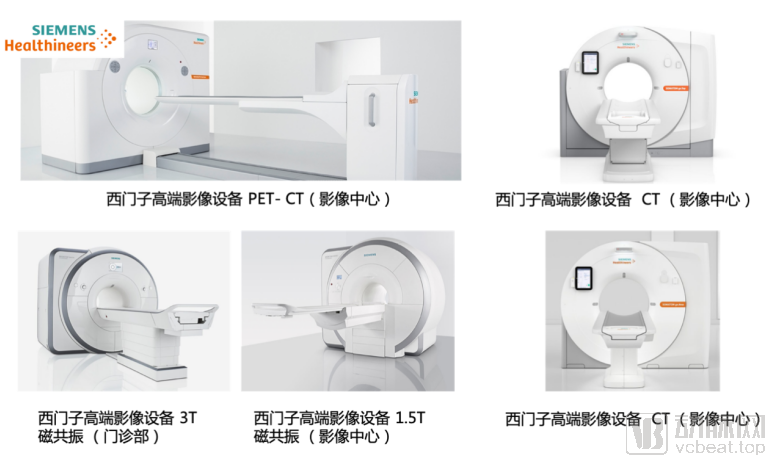
Taking TCL Medical’s Shenzhen Independent Imaging Center as an example, the center is equipped not only with high-end imaging devices such as Siemens’ premium MRI systems and 128-slice CT scanners—whose software and hardware configurations exceed the high-end standards typically found in public hospitals—but also with molecular imaging equipment, namely PET-CT. This setup enables the center to meet patients’ routine needs for MRI examinations while allowing those requiring molecular imaging to obtain scans promptly, thereby avoiding the long queues common at tertiary Grade A hospitals. Furthermore, it supplements mid-to-high-end MRI scanning services that public hospital radiology departments are often unable to provide due to insufficient time or inadequate software and hardware resources.
Talent is also the key to success for independent imaging centers. If managers of these centers lack an in-depth understanding of the cutting-edge clinical applications and core capabilities of imaging equipment, they will be unable to fully leverage its clinical value or allocate equipment usage effectively, ultimately leading to resource waste. To address this, TCL Medical Imaging has recruited a large number of senior professors and scholars in the field of medical imaging to manage its independent imaging centers and outpatient imaging clinics. This initiative aims to enhance the specialized clinical application capabilities and overall operational efficiency of each center, thereby improving the quality of medical services.
Taking Shenzhen as an example, Professor Lu Puxuan, Dean of the Shenzhen Longhua Independent Imaging Center, has been engaged in diagnostic medical imaging for over 30 years. Director He Huaide, Head of the PET-CT Department, has more than 40 years of experience in nuclear medicine diagnostics using PET-CT. Director Hua Yuqiang, Head of the MR Department at the Shenzhen Luohu Imaging Outpatient Clinic, specializes in medical imaging diagnosis for systemic tumors and has practiced medicine for 25 years. TCL Medical’s independent imaging centers and imaging outpatient clinics in Shenzhen not only fill certain gaps in equipment configuration and clinical applications present in public hospitals, but also provide patients with a better medical environment and care delivery model.
Leveraging its profound expertise in medical imaging, TCL Medical Imaging Group has established a technologist training center and developed a mature career advancement framework for technologists to cultivate and retain talent. Meanwhile, TCL Medical Imaging actively supports physicians at independent imaging centers and imaging outpatient clinics in conducting academic and clinical research, encourages internal physicians to simultaneously engage in medical diagnostics and clinical scientific research, and regularly organizes reviews and discussions of diagnostic reports to enhance disciplinary capabilities.
Revisiting the Model. “Independent Medical Imaging Center + Imaging Outpatient Clinic” is the unique imaging center composition model constructed by TCL Medical Imaging.
On one hand, TCL Medical Imaging has established independent third-party medical imaging centers in municipalities directly under the Central Government and at the provincial and municipal levels. Building upon national standards, these centers offer advanced PET-CT imaging examinations, providing specialized imaging services focused on PET-CT and magnetic resonance imaging (MRI), while also supplying physician resources and technical support to nearby outpatient imaging clinics.
On the other hand, TCL Medical Imaging also establishes independent imaging outpatient clinics in collaboration with local Grade A tertiary hospitals, providing imaging services primarily focused on professional magnetic resonance imaging (MRI) examinations. These clinics can operate independently while also driving patient referrals to nearby independent imaging centers, thereby jointly forming a regional medical consortium.
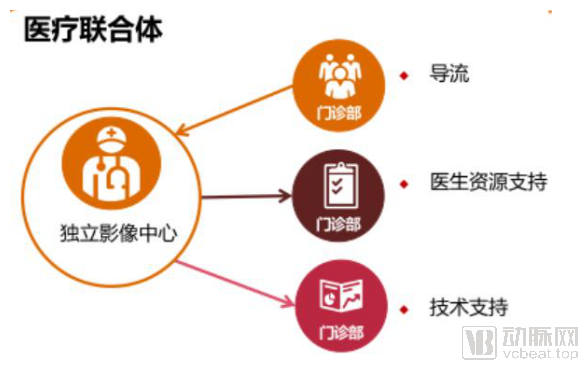
In actual operation, TCL Medical Imaging integrates independent imaging centers with imaging outpatient clinics to generate synergistic effects. This approach not only broadly addresses the challenges of image interpretation faced by primary healthcare institutions but also provides differentiated, value-added services to high-net-worth users, thereby establishing the company’s unique business model and competitive advantage.
2020 proved to be a pivotal year for the rise of independent imaging centers, as several such facilities secured hundreds of millions of yuan in financing, gaining increasing acceptance for this innovative model.
However, even if we aggregate the total number of independent imaging centers in the market (including self-built, jointly built, and managed facilities), the figure stands at no more than 500. Compared with the mature scale of third-party imaging centers in developed countries such as the United States and Japan, China’s sector remains significantly less mature.
However, unlike in developed countries, the lack of sufficient awareness means that independent imaging centers in China often rely on hospitals or insurance providers for patient referrals, making win-win cooperation a key driver of their development.
Looking back, TCL Medical Imaging has been steadily advancing along a path of win-win cooperation. By joining forces with Siemens Healthineers, TCL Medical Imaging has already secured an early advantage in high-end clinical applications and medical quality.
TCL Medical Imaging’s next step remains collaboration; with its technological advantages, TCL Medical Imaging can substantially upgrade hospitals’ clinical imaging capabilities. In the future, TCL Medical Imaging may accelerate and extend its market expansion.