

Baidu Smart Healthcare Leverages AI to Advance Integrated Diabetes Prevention and Treatment Model in China's Primary Care
On November 27, the “National Demonstration Project for Smart Management of Integrated Medical Care and Prevention of Diabetes at the Primary Care Level” was officially launched at the 24th National Academic Conference of the Chinese Diabetes Society, Chinese Medical Association. Wang Xudan, Deputy Researcher of the Department of Primary Health Care under the National Health Commission, delivered a remote address. The launch ceremony was jointly attended by Professor Jia Weiping, Director of the National Office for Diabetes Prevention and Control at the Primary Care Level and Former President of the Chinese Medical Association; Professor Zhu Dalong, Co-Director of the National Office for Diabetes Prevention and Control at the Primary Care Level and Current President of the Chinese Diabetes Society; Feng Bo, Supervisor of the Academic Affairs Department of the Chinese Medical Association; Professor Cai Chun, Executive Deputy Director of the National Office for Diabetes Prevention and Control at the Primary Care Level; Huang Yan, General Manager of Baidu Smart Healthcare; and Liu Junwei, Deputy General Manager of Baidu Smart Healthcare.
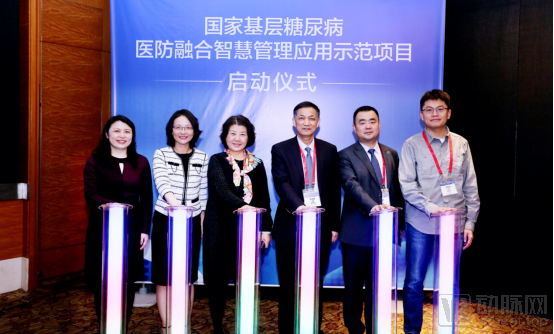
(November 27, Launch Ceremony of the National Demonstration Project for Smart Management Integrating Medical Care and Prevention in Primary Diabetes Care)
According to the latest epidemiological data on diabetes, China has 129.8 million patients with diabetes and 357 million individuals with prediabetes, making it the country with the largest diabetic population globally. Primary healthcare institutions serve as the main frontline for diabetes prevention and control, with over 80% of diabetic patients in China seeking care at these facilities. Implementing integrated medical and preventive management of diabetes at the primary care level is a key initiative under the Healthy China Diabetes Action Plan and a priority task for the National Health Commission to enhance the quality and efficiency of national basic public health services.
The upcoming “National Demonstration Project for Smart Integrated Medical and Preventive Management of Diabetes at the Primary Care Level” will be implemented under the guidance of the Department of Primary Health Care of the National Health Commission and with the support of the Chinese Diabetes Society of the Chinese Medical Association. Led by the National Office for Diabetes Prevention and Control at the Primary Care Level in collaboration with Baidu Lingyi Zhihui, the project will establish a national smart platform for integrated medical and preventive diabetes management at the primary care level, as well as a platform to support standardized diagnosis and treatment of diabetes. These platforms will respectively monitor and evaluate pilot initiatives for integrated medical and preventive diabetes care at the primary care level, and facilitate integrated remote management of diabetes in community hospitals. In addition, the partners will jointly develop tools for evaluating standardized diabetes diagnosis and treatment at the primary care level based on community electronic medical records, proactive health management tools for patients with diabetes, and a guideline-based clinical decision support system for primary care diabetes management. By leveraging artificial intelligence to empower integrated medical and preventive diabetes health management at the primary care level, the project aims to promote standardization and homogenization of diabetes diagnosis and treatment in primary care settings, provide efficient solutions to improve rates of standardized care and treatment target attainment, and serve as a nationwide model and demonstration.
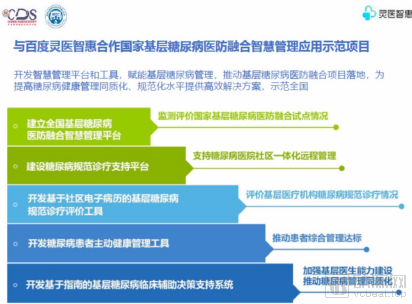
(Specific Construction Content of the National Primary Care Diabetes Medical-Prevention Integration Smart Management Application Demonstration Project)
Wang Xudan, Deputy Researcher at the Department of Primary Healthcare, National Health Commission, stated in her address, “It is gratifying to see that the Chinese Medical Association and the National Office for Prevention and Control of Diabetes in Primary Care are leveraging social resources to promote the National Demonstration Project on Smart Integrated Management of Medical Care and Prevention for Diabetes in Primary Care. By harnessing the advantages of information technology, this initiative aims to enhance the standardization of diabetes diagnosis and treatment at the primary care level and empower the integration of medical care and prevention for chronic diseases in primary healthcare settings.”

(Wang Xudan, Deputy Researcher, Department of Primary Healthcare, National Health Commission)
Established in 2018 under the commission of the National Health Commission, the National Office for Primary Diabetes Prevention and Control Management is tasked with advancing standardized diabetes management at the primary care level and gradually achieving homogenization in the quality of diabetes prevention and control across primary healthcare institutions. Jia Weiping, Director of the National Office for Primary Diabetes Prevention and Control Management, stated, “China is further and actively exploring pilot programs for integrated medical and preventive interventions in diabetes. The ‘Two Platforms, Three Tools’ initiative, developed in collaboration with Baidu Lingyi Zhihui, will better enhance the efficiency and quality of diabetes management at the primary care level.”
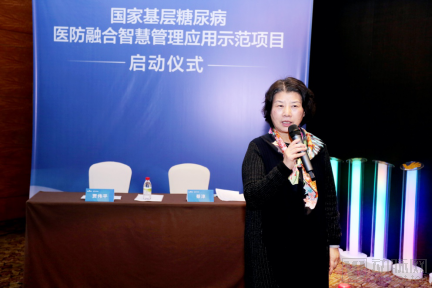
(Jia Weiping, Director of the National Office for Primary Diabetes Prevention and Control Management)
Zhu Dalong, Co-Director of the National Office for Primary Diabetes Prevention and Control Management and Chairman of the Chinese Diabetes Society of the Chinese Medical Association, stated in his address: “Baidu Lingyi Zhihui has supported our ‘Blue Light Action’ for World Diabetes Day, actively promoting public education on diabetes. Today, we are delighted to witness the launch ceremony of the Demonstration Project for Smart Management Integrating Medical Care and Prevention in Primary Diabetes Care. Our Society welcomes the participation of such social forces in diabetes prevention and control efforts. The Chinese Diabetes Society will leverage its professional expertise to ensure the effective implementation of the national project integrating medical care and prevention in primary diabetes management.”
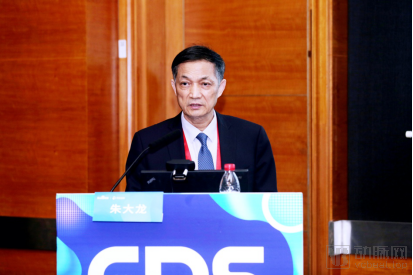
(Zhu Dalong, Chairman of the Chinese Diabetes Society)
Huang Yan, General Manager of Baidu Smart Healthcare, stated, “Baidu is delighted to participate in the National Primary Care Diabetes Medical-Prevention Integration Project. In the field of chronic disease management, Baidu has been deeply engaged for many years. Specifically in diabetes care, we have established a product matrix covering screening, diagnosis and treatment, and management that aligns closely with national requirements for medical-prevention integration. We hope this collaboration will truly empower primary care diabetes management, leverage Baidu’s technological and product advantages, and explore effective models for integrating medical care with prevention, thereby benefiting millions of patients with diabetes.”
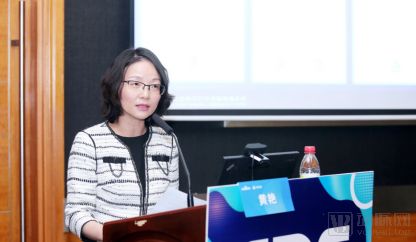
(Huang Yan, General Manager of Baidu Smart Healthcare)
Cai Chun, Executive Deputy Director of the National Office for Grassroots Diabetes Prevention and Control Management, introduced the background, framework design, and future plans of the project.
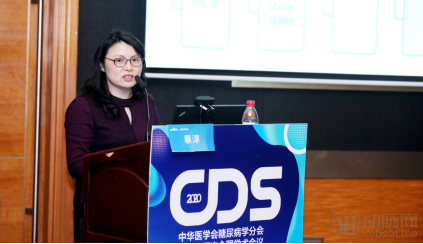
(Cai Chun, Executive Deputy Director of the National Office for Primary Diabetes Prevention and Control)
Professor Bao Yuqian, Head of the New Technologies for Diabetes Monitoring and Treatment Group under the Chinese Diabetes Society of the Chinese Medical Association, and Director of the Department of Endocrinology at Shanghai Jiao Tong University Affiliated Sixth People’s Hospital, provided a detailed interpretation of the expert consensus on standalone diabetes apps published by the EASD (European Association for the Study of Diabetes) and the ADA (American Diabetes Association). Her analysis covered three aspects: regulatory policies, challenges encountered in the field of diabetes, and summaries with future outlooks. She emphasized that the development of diabetes apps requires collaborative efforts from all stakeholders to better support patients with diabetes.
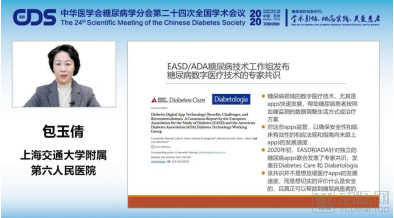
(Director of the Department of Endocrinology, Shanghai Sixth People's Hospital Affiliated to Shanghai Jiao Tong University, Bao Yuqian)
At the conference, Dr. Zhang Lei from the Department of Endocrinology at Shanghai Sixth People’s Hospital Affiliated to Shanghai Jiao Tong University spoke highly of Lingyi Zhihui’s Active Health Management System for Diabetes, providing a detailed introduction from three perspectives: evidence-based product design, functional presentation, and patient experience. From the initial design stage, the product engaged a multidisciplinary team of clinical experts—including those from Shanghai Sixth People’s Hospital, Peking Union Medical College Hospital, and Beijing Sport University—as well as public health experts from the Shanghai Center for Disease Control and Prevention, ensuring the product’s authority and rigor. Following two rounds of patient experience surveys, the product will undergo further upgrades and iterations, with the aim of helping more diabetes patients build self-management capabilities and promoting comprehensive target achievement in diabetes management.
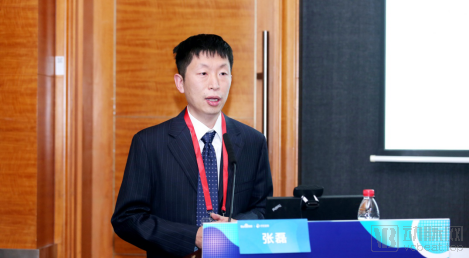
(Dr. Zhang Lei, Department of Endocrinology, Shanghai Sixth People's Hospital Affiliated to Shanghai Jiao Tong University)
As the prevalence and mortality rates of chronic diseases in China show a clear upward trend, the disease burden on the population is becoming increasingly heavy. In recent years, Baidu Lingyi Zhihui has continuously deepened its engagement in the field of chronic disease management, with its rich product matrix playing a significant role in gradually addressing various aspects of chronic diseases.
In screening, Baidu has developed a fundus image analysis system based on multimodal, authoritatively annotated fundus imaging data. By integrating evidence-based medical algorithms with high-precision deep learning algorithms, the system can accurately identify major eye diseases such as diabetic retinopathy. In diagnosis and treatment, Baidu provides a comprehensive and efficient solution encompassing medical knowledge services, clinical decision support systems, and regional healthcare data monitoring and analytics platforms, thereby establishing a permanent AI medical team for primary care institutions. In management, Baidu collaborates with the National Office for Primary Diabetes Prevention and Control Management to co-create proactive health management tools for diabetic patients. Spanning from mobile apps to Xiaodu smart screens, these tools offer services including patient education, proactive reminders, and intelligent follow-ups, ensuring a superior user experience and improving patient adherence to management protocols. Meanwhile, patients’ home health data are automatically transmitted to family doctors, enabling them to deliver more efficient, proactive, professional, and compassionate chronic disease management services.
As the nation strengthens its efforts in chronic disease prevention and control, striving to safeguard people’s health comprehensively and across the entire life cycle, Baidu will continue to leverage its artificial intelligence advantages to empower the healthcare industry. By launching an increasing number of smart healthcare demonstration projects, Baidu aims to help reduce the national disease burden and enhance health management standards.