

Sansure Biotech Advances Point-of-Care Molecular Diagnostics to Make Precision Testing Accessible to All

Sansure Biotech
Provider of Total Solutions for In Vitro Diagnostics
On August 28 this year, Sansure Biotech transformed from a conventional IVD company into the “first anti-epidemic stock,” emerging as another shining star on the STAR Market.
Since its establishment in 2008, Sansure Biotech has been committed to addressing the critical pain points and challenges within the industry, with a focus on advancing the “precision” and “accessibility” of molecular diagnostic technologies. The company has strategically laid out its presence in four key technological domains: sample processing, detection technologies, automation control and integration, and bioinformatics analysis. Its portfolio encompasses a series of core technologies, including “high-precision magnetic bead method,” “user-friendly one-step method,” “fully automated unified sample processing,” “POCT mobile molecular diagnostics,” “multiplex fluorescent PCR,” “high-throughput sequencing,” “micro-disc liquid chip,” and “bioinformatics technology.” To date, Sansure Biotech has developed over 400 nucleic acid testing products. By organically integrating multiple core technologies, the company is dedicated to building a new ecosystem that promotes the universal application and full-scenario deployment of gene technologies.
On the afternoon of November 18, at Sansure Biotech’s (688289) shareholders’ meeting, Chairman Dai Lizhong stated, “With the comprehensive acceleration in the development of nucleic acid testing capabilities, the application of nucleic acid testing will expand significantly, and the molecular diagnostics market is expected to achieve geometric growth. The company is transitioning from being driven by technological products to being driven as a platform-based enterprise, with its endogenous growth and exogenous expansion capabilities entering an entirely new stage.”
To gain a deeper understanding of Sansure Biotech’s strategic layout in the niche sector of nucleic acid testing and the significant value demonstrated by such testing during the COVID-19 pandemic, VCBeat conducted an exclusive interview with Tang Yao, Marketing Director at Sansure Biotech.
Early nucleic acid testing for SARS-CoV-2, from sample collection, specimen transport, and nucleic acid extraction to detection and final report issuance, typically required 8–12 hours. During the extraction and detection process, nucleic acid extraction alone at the front end took approximately 2 hours, while amplification required about 1.5 hours, resulting in very low efficiency.
Although such traditional nucleic acid testing models can handle large-scale samples, they require substantial human and material resources, impose stringent requirements on facilities, environmental conditions, and operators, and involve significant investments in equipment, space, and personnel. Consequently, they are ill-suited to meet the testing demands in scenarios such as emergency care, fever clinic management, entry-exit screening, and food safety testing.
Sansure Biotech’s innovative nucleic acid testing technology has reduced the manual nucleic acid extraction step (for 96 samples) from the original 3–4 hours to under 30 minutes, and when paired with automated extraction, the time can be further reduced to under 15 minutes, significantly improving the efficiency of large-scale nucleic acid testing. The POCT innovative product showcased at this event, the iPonatic Nucleic Acid Testing Analyzer, enables rapid screening and confirmed diagnosis for tested populations. In as fast as 8 minutes, the iPonatic completes the entire workflow from nucleic acid extraction to report generation, addressing the “accessibility” challenge of traditional nucleic acid testing while maintaining “accuracy.”
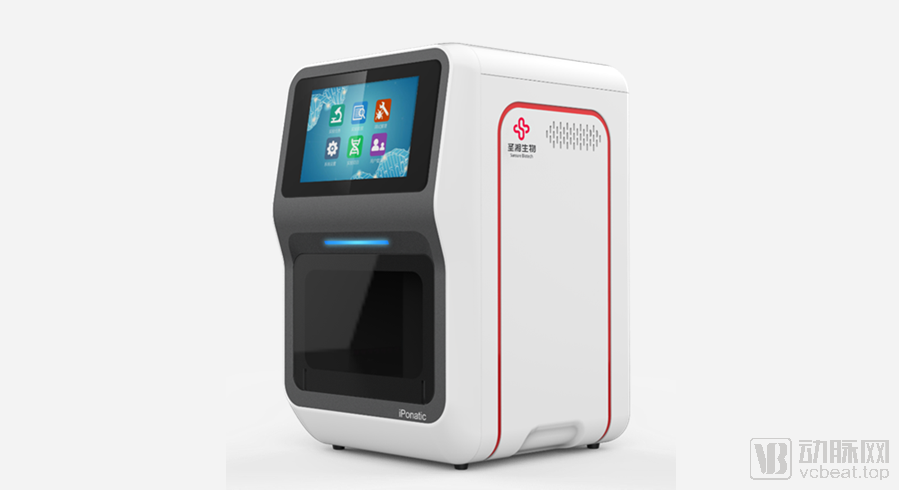
Following its market approval on April 23, the product garnered strong acclaim both domestically and internationally, with demand outstripping supply. Leveraging its advantages in precision, accessibility, systematic operation, automation, and ease of use, iPonatic has become a powerful tool for rapid COVID-19 screening.
Molecular diagnostic POCT products offer advantages such as miniaturization, fully automated operation, high-speed processing, and ease of use. They are well-suited to address fragmented testing needs that are difficult for centralized PCR laboratories to cover, thereby significantly expanding application scenarios during the pandemic.
Following the issuance of national policy documents encouraging private hospitals, blood station systems, primary healthcare institutions, and disease control agencies to equip themselves with nucleic acid testing capabilities, the market size for point-of-care testing (POCT) in nucleic acid detection is poised for rapid expansion. Beyond primary healthcare settings, these tests can be utilized for emergency and outpatient services in large hospitals, preoperative infectious disease screening, nosocomial infection monitoring, response to sudden public health emergencies by disease control centers, on-site vehicle-based or tent hospital testing, border entry and exit screening, animal quarantine, military and school screenings, overseas frozen food inspection, and infectious disease surveillance within closed facilities such as prisons and drug rehabilitation centers. The future market potential is immense.
Autumn and winter are peak seasons for influenza viruses and other respiratory infectious diseases, so disease prevention and control efforts must not be taken lightly. The clinical symptoms of influenza virus infection share similarities with those of COVID-19, which not only interferes with epidemic prevention and control measures but also poses a threat to public health and safety. Drawing on past global outbreaks of infectious diseases, rapid and accurate identification of pathogens is key to controlling their spread. Therefore, combined nucleic acid testing for both SARS-CoV-2 and influenza viruses is highly necessary.
To prepare for global epidemic prevention and control during the autumn and winter seasons, Sansure Biotech has launched a series of solutions in the field of respiratory nucleic acid testing. These include dozens of respiratory product lines, such as reagents for SARS-CoV-2 nucleic acid detection, triplex nucleic acid tests for SARS-CoV-2, Influenza A, and Influenza B, six-panel respiratory pathogen nucleic acid tests, and seven-panel respiratory bacterial pathogen nucleic acid tests. The iPonatic mobile molecular diagnosis platform can be integrated with various reagents for detecting respiratory pathogens, meeting clinical needs for the rapid identification of respiratory pathogens amid the COVID-19 pandemic. This supports global efforts in preventing and controlling COVID-19 and other respiratory diseases during the autumn and winter months.
Mr. Tang Yao believes that nucleic acid testing POCT is simple to operate and features compact instruments, thereby freeing nucleic acid testing technology from the constraints of centralized use in large laboratories. Future application areas will by no means be limited to the diagnosis and screening of infectious diseases; there are many more applications awaiting development. For instance, early screening for tumors and genetic disorders, as well as chronic disease management for a series of gene-related conditions such as cardiovascular diseases and diabetes, can all be accomplished using nucleic acid testing POCT technology.
Sansure Biotech will uphold the quality policy of “Pursuing high precision and high quality in every kit and dose, and recognizing that every diagnosis bears on human life.” It will continue to expand the application areas and scenarios of nucleic acid testing technology, address the industry’s persistent challenges of affordability and usability with stable, reliable, high-quality products, and collaborate with all sectors of society to build a new ecosystem for universal, full-scenario nucleic acid testing, striving to make precise molecular diagnostic technologies and products truly accessible to all.