

Nearly 100,000 Pharmacies Join Meituan: How Traditional Pharmacies Are Digitally Transforming
Recently, Meituan released its financial report for the third quarter of 2020. VCBeat noted that consumer demand for categories such as pharmaceuticals and flowers on Meituan Instashopping has become even more prominent,Single-quarter pharmaceutical orders increased by more than two-fold year-on-year, with nearly 100,000 pharmacies registered on the Meituan Medicine platform by the end of the third quarter.

Screenshot of Meituan's Q3 2020 Financial Report
This data indicates that in the post-pandemic era, users’ medication purchasing habits are accelerating their shift to online channels. Moreover,To adapt to market changes, traditional pharmacies are also proactively embracing online and digital transformation.During this process, Meituan not only provided channels and convenience for users to purchase medications but also facilitated the digital transformation of offline retail pharmacies. As a result, Meituan achieved strong market performance in this quarter.
As is well known, internet giants such as Alibaba and JD.com have also set their sights on the pharmaceutical and healthcare market.Over the past six months, they have made frequent moves: Alibaba Health’s app was rebranded as “Yilu” (MediDeer), aiming to further strengthen its core competitiveness in physician quality and operational capabilities; JD Health launched the first internet-based respiratory care center, seeking to create a new online-plus-offline model for chronic disease management, and went public with an IPO in Hong Kong this month...
For Meituan Medicine, the key to achieving rapid growth lies in how well it can leverage its ecosystem synergy advantages.Not only that, the pharmaceutical and healthcare industry differs from other sectors in that it not only requires companies to possess strong commercialization capabilities but also tests their dedication to and understanding of the medical industry.
Can Meituan forge a distinct growth trajectory in the pharmaceutical and healthcare sector?
As a branch of pharmaceutical e-commerce,Pharmaceutical O2O was once a hot startup sector.
According to statistics from the VCBeat database,Around 2013 alone, more than 30 platforms entered the pharmaceutical O2O sector.Among them, star projects such as Dingdang Kuaiyao, Kuaifang Songyao, Yao Kuaihao, and Yao Geili have continuously secured tens of millions or even hundreds of millions in financing.
However, due toAt that time, the logistics infrastructure was underdeveloped, resulting in high time costs for medication delivery. Furthermore, as smartphone users were predominantly young people with limited awareness of purchasing medications via mobile devices, a large number of pharmaceutical O2O platforms failed to establish a closed-loop business model.By 2016, amid shifting policies and market dynamics, many pharmaceutical O2O platforms that had exhausted their venture capital funding struggled to survive and ultimately vanished in the wave of internet healthcare startups.
Why Has Meituan Medicine Achieved Rapid Growth This Year?The COVID-19 pandemic since the beginning of this year has undoubtedly acted as an accelerator.. Information disclosed in Meituan’s Q3 financial report and earnings conference call indicated that in the post-COVID-19 era,Consumers are increasingly inclined to use online healthcare solutions and medication delivery services.
Then, timing is merely a potential opportunity.The delivery capabilities accumulated by Meituan through years of deep cultivation in the food delivery sector are key to delivering a superior user experience.
FromDelivery SpeedFrom the above,Meituan Medicine has achieved an average delivery time of 23 minutes.In other words, within half an hour, Meituan can meet users’ needs for conventional medications to treat acute conditions such as diarrhea and stomach pain. Moreover, Meituan Medicine provides 24-hour service,Ensure that medications are delivered promptly around the clock, even for orders placed in the early hours of the morning.
Imagine a scenario where a user experiences a sudden medical emergency late at night and is able to purchase the necessary medications via Meituan within 30 minutes; this would have a profoundly positive impact on user perception.
Having resolved the issues within the logistics system, it is time toHow to Break Through the Low-Frequency Consumption Bottleneck in the Pharmaceutical Industry?
First, as a typical active app,The Meituan app and the Meituan Waimai app are used with high frequency.This is precisely where Meituan holds a significant advantage over other O2O medicine delivery platforms. Specifically, Meituan firstBroader Product Categories, including dining and fresh produce, thereby offering users a wider range of choices on the App; secondly,Relatively Concentrated Delivery Times, especially during lunch and dinner, when user demand is highest; thirdly,More Concentrated Locations, with delivery areas primarily consisting of office buildings and residential communities. The convergence of these factors has led to more frequent use of the app by Meituan users, and enablesFood delivery riders meet the demands of more customers simultaneously in both time and space, thereby improving overall delivery efficiency and reducing operational costs.
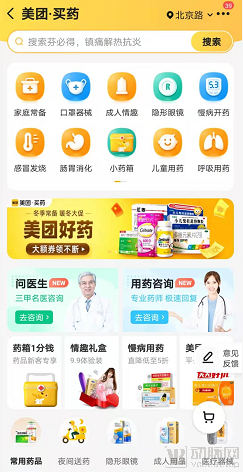
Screenshot of the Meituan Medicine Interface
Furthermore,Meituan Medicine connects doctors and patients through partnerships with internet hospitals, thereby increasing user stickiness and gradually expanding into the prescription drug sector.On the Meituan Medicine interface, online consultation features such as “Ask a Doctor” and “Medication Consultation” are prominently displayed. According to Meituan’s official description, these features are launched in collaboration with licensed internet hospitals, aiming to enable users to purchase essential daily medications when they do not have time to visit a hospital for a prescription, thereby providing emergency and urgent care support.
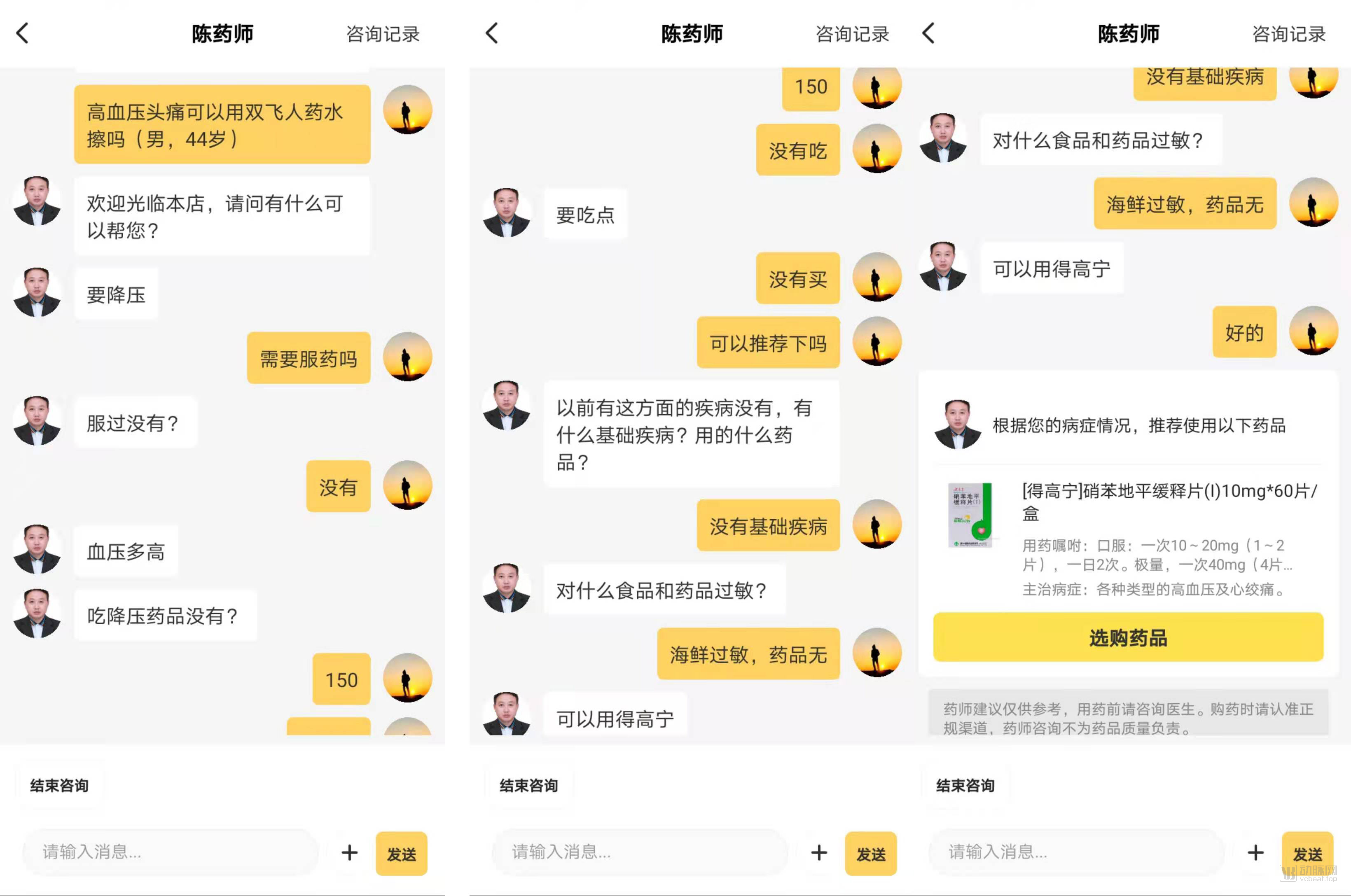
Online Consultation Screenshot
In addition, in terms of operations, we have foundMeituan Medicine also launched the “Meituan Mini Medicine Cabinet” this year.. To attract more users to Meituan Medicine, the purchase price of this medicine cabinet is only 1 cent for new users. Combining aesthetics with practicality, the Meituan Mini Medicine Cabinet became an instant social media sensation across China upon its nationwide launch, leading to temporary stockouts in some cities. Meanwhile, most users also purchased common household medications along with the medicine cabinet.
It is not difficult to see that,Addressing challenges in pharmaceutical O2O, such as logistics speed and low-frequency consumption, Meituan has successfully achieved rapid sales growth by leveraging its advantages in online traffic, offline delivery capabilities, and operational expertise accumulated in the internet food delivery sector.
A healthy industry ecosystem requires not only new platforms to provide users with more convenient choices, but also the digital transformation of traditional pharmacies.
Prior to the emergence of pharmaceutical e-commerce, most pharmacies conducted sales exclusively through brick-and-mortar stores. However, with the rise of numerous pharmaceutical e-commerce enterprises in recent years and the market education driven by the COVID-19 pandemic this year,Users’ medication-purchasing habits are shifting toward a greater preference for online healthcare solutions and pharmaceutical delivery services.As the consumption structure shifts, the brick-and-mortar pharmacy industry is compelled to confront a new round of challenges.
In response to this, platform-based e-commerce players such as Meituan Medicine adopt a strategy that, in their collaborations with pharmacies, not only ensures timely responsiveness to consumers’ emergency and diverse scenario-based medication needs, but alsoHelp partner pharmacies develop medication sales models suited for the mobile internet, optimize drug selling methods, and promote the digital transformation of traditional pharmacies.
Specifically,The first benefit Meituan brings to pharmacies is massive traffic.Following the launch of pharmacies on the platform, more users are able to discover nearby pharmacies. Coupled with Meituan’s delivery capabilities, the service radius of pharmacies has expanded from the previous 300 meters to 3–5 kilometers. As a result, pharmacies can serve a larger customer base in less time, leading to significant growth in performance.
More importantly, after partnering with Meituan Medicine, pharmacies have undergone a fundamental transformation in their business model. Traditionally, pharmacies operated solely through brick-and-mortar stores, requiring customers to discover nearby locations offline and visit in person to purchase medications. NowFollowing digital upgrades, pharmacies have been empowered with a more flexible "store + warehouse" business model, resulting in improved operational efficiency.
Meituan Medicine’s collaboration with traditional brick-and-mortar pharmacies to facilitate their digital transformation has achieved a win-win outcome for all parties involved and bolstered the digitalization of the pharmaceutical retail industry. This has also been a key driver behind Meituan Medicine’s growth in drug sales.
Essentially,The essence of innovation in pharmaceutical O2O lies in leveraging the Internet to match users with pharmaceutical supply and demand information and to enable efficient drug distribution.The prerequisite for its rapid development is the establishment of a basic logistics system and the maturity and stability of internet technology.On this basis, the digitalization of offline retail pharmacies is key to whether the entire industry can undergo a comprehensive digital upgrade.
As various conditions mature,The pharmaceutical O2O sector has also begun to expand in two directions.One category isPlatform-based enterprises represented by Meituan, which boasts massive traffic entry points and allocates users to partner pharmacies based on geographic location within its software; such companies typically utilize a shared pool of delivery personnel. The other category isSelf-operated enterprises,They complete the entire service loop through self-built stores, technology, operations, and delivery.
In general,Platform-based enterprises place greater emphasis on traffic entry points and the concept of one-stop services., while ensuring basic service quality, to provide users with a faster and more convenient experience;Self-operated enterprises can ensure control over the entire process, with more focused brand perception.
Based on the current situation, it is difficult to compare which is better between platform-based enterprises and self-operated enterprises, butThe question that cannot be avoided is this: in an era where platform delivery capabilities have become increasingly standardized, the key determinant of whether a company can maintain its leading position in the next phase of new retail pharmaceuticals lies in who can successfully validate their business model.
What factors influence the formation of a sound closed-loop business model?
First, the matching efficiency between the supply and demand sides of pharmaceuticals.Similar to the logic of food delivery services, how pharmaceutical suppliers provide the most appropriate medication advice and drug choices to consumers is paramount for enhancing user stickiness. For example, when a patient with a chronic condition needs to purchase long-term medications, the platform can leverage user data to rapidly recommend the optimal option, thereby saving decision-making time. Similarly, for a patient with an acute condition requiring immediate home delivery of medication, the platform’s ability to instantly match the best solution—considering factors such as pharmacy inventory, proximity, and customer ratings—after the user searches for symptoms or drugs is a critical component in improving user experience.
Second, the operational capability for pharmaceutical sales.In traditional pharmaceutical retail scenarios, pharmacy inventory planning is based on historical data of local residents' medication purchases across different seasons. While this approach generally works well, it is highly vulnerable to sudden emergencies, which can significantly disrupt sales, leading to overstocking of certain drugs and shortages of urgently needed medications. In contrast, online sales generate continuous consumer data that can guide pharmacies in optimizing inventory levels and even scheduling offline staff. Furthermore, the platform can optimize logistics capacity, thereby enhancing the overall operational efficiency of pharmaceutical sales.
Third, how to transform low-frequency behaviors into high-frequency consumption scenarios.It is well known that pharmaceutical sales are low-frequency within the same region at any given time. Pharmaceutical O2O (Online-to-Offline) expands the coverage area, drug categories, and customer base served by a single pharmacy, thereby increasing purchase frequency. For offline pharmacies, this means they no longer serve merely as points of sale; they also function as forward warehouses and experience centers, becoming an integral part of the overall service ecosystem.
Based on the above three aspects,Platform-based enterprises and self-operated enterprises are both seeking breakthroughs in their own ways.Platform-based enterprises like Meituan hold relative advantages in supply-demand matching efficiency, sales operational capabilities, and the construction of scenarios that convert low-frequency into high-frequency consumption, with these advantages continuing to deepen.
Furthermore, a notable trend is the maturation of home medication delivery services,Follow-up extended services have also become a new space for imagination.For instance, services such as decocting and delivering traditional Chinese medicine (TCM) on behalf of patients, and curating household essential medication kits. However, regardless of the service models introduced, the core logic remains to establish a closed-loop business model for pharmaceutical O2O (Online-to-Offline), thereby ensuring sustainable operations.
Internet pharmaceutical e-commerce is experiencing rapid development.
From a policy perspective, in mid-November, the General Office of the National Medical Products Administration publicly solicited comments on the “Administrative Measures for the Supervision and Regulation of Online Drug Sales (Draft for Comments).”(hereinafter referred to as the “Draft Opinion”), which formally sets out the direction for online sales of prescription drugs, permitting their sale and the display of related information over the internet. In other words, with the implementation of the Draft Opinion, online sales of prescription drugs will operate transparently under regulatory oversight, thereby fostering standardized and healthy market development.
From a market perspective, major pharmaceutical e-commerce enterprises have achieved strong revenue performance.Alibaba Health’s financial report shows that its revenue for fiscal year 2020 was RMB 9.6 billion, with sales of pharmaceutical and health products accounting for 87%; JD Health’s prospectus reveals that its 2019 revenue reached RMB 10.8 billion, a 92.8% increase from RMB 5.6 billion in 2017, with sales of pharmaceutical and health products also accounting for 87%……
With policy support and significant market growth, online pharmaceutical e-commerce platforms and retail pharmacies are bound to engage in fierce competition in the coming development phase. ButFrom the current perspective, each company has its own strengths.
For exampleTraditional Pharmacies, with physical stores, they enjoy greater credibility in consumers' minds; moreover, as pharmacy services primarily cover nearby residential communities, accessibility for users is enhanced; forTraditional B2C Pharmaceutical E-commerce...they offer a more comprehensive product range, and the prices of most medications are relatively affordable;O2O ModelIts greater timeliness and close collaboration with pharmacies enhance user stickiness and bring incremental market opportunities to pharmacies.
As policies are gradually relaxed, pharmaceutical e-commerce companies are actively establishing their own internet hospitals or engaging in deep collaborations with other internet hospital providers. Meanwhile, internet hospital enterprises are beginning to extend their service chain from medical care to pharmaceuticals. Against this backdrop,The markets for prescription and over-the-counter drugs are gradually converging, leading to an increasing alignment of business models between internet hospital providers and pharmaceutical e-commerce platforms. Retail pharmacies will also continuously embrace digitalization throughout this process, becoming a critical component of the industry.
In the future, as internet-based healthcare gradually gains widespread social recognition and acceptance, users’ choices among services that all involve consultation, medication purchase, and delivery will test the comprehensive service capabilities of each enterprise. Therefore,How to expand more user value while consolidating one's own advantages is a direction that all parties need to consider.
It is important to note that the pharmaceutical and healthcare industry differs from other sectors, possessing its own development patterns and characteristics that require gradual cultivation and careful nurturing by all stakeholders. Therefore, for all market participants, a critical imperative worthy of thorough research and careful consideration is how to achieve steady and sustainable growth in this specialized industry.