

VarMix Next-Generation Hospital Information System Files IPO Prospectus: Powering Value-Based Healthcare Through Data-Driven Innovation
Since 2018, driven by the urgent need for a comprehensive transformation of the healthcare service and security system, policies related to medical informatics have been intensively introduced. As the core unit bearing the construction and application of medical informatics, hospitals have reached a crossroads in their informatization development. Where should the informatization construction of smart hospitals head from here?
For hospitals, refined management serves as the foundation for steadily advancing toward high-quality development, and the realization of such refined management relies on high-quality data support. The rapidly progressing construction of medical informatization is inevitably shifting from policy-driven to business-driven and data-driven models. However, most hospitals’ current informatization systems, built on traditional architectures, struggle to meet and adapt to the transformation and upgrading of hospital needs. Even if these hospitals pass the graded evaluation of electronic medical record (EMR) system application levels, user satisfaction with their clinical business systems is gradually declining.
As policy-driven forces continue to advance and business-driven momentum gains strength, Xinxing Technology has launched VarMix, a new-generation Hospital Information System (HIS), targeting industry pain points and grounded in a novel philosophy of technology and service. True to its name, “Var” stands for variety and “Mix” for integration; thus, VarMix signifies a platform system capable of integrating diverse products and functionalities to meet the multifaceted needs and development goals of hospitals. VarMix aims to help hospitals achieve unification across standards, data, and business logic, thereby building an interconnected and synergistic ecosystem.
VarMix adopts a next-generation technical architecture, guided by an integrated and open design philosophy, to reshape the hospital’s core business systems. This transformation delivers comprehensive improvements across multiple dimensions, including closed-loop business processes, data standardization, interaction design, and role-based user experiences. By leveraging high-level business interoperability, VarMix achieves deep and complete information integration, establishing a real-time, comprehensive clinical data center. This data-driven approach empowers smart healthcare applications within the hospital, encompassing intelligent medical care, nursing, services, and management. Committed to helping hospitals build high-quality data centers, VarMix better serves core areas such as clinical practice, management, and scientific research, thereby maximizing medical value.
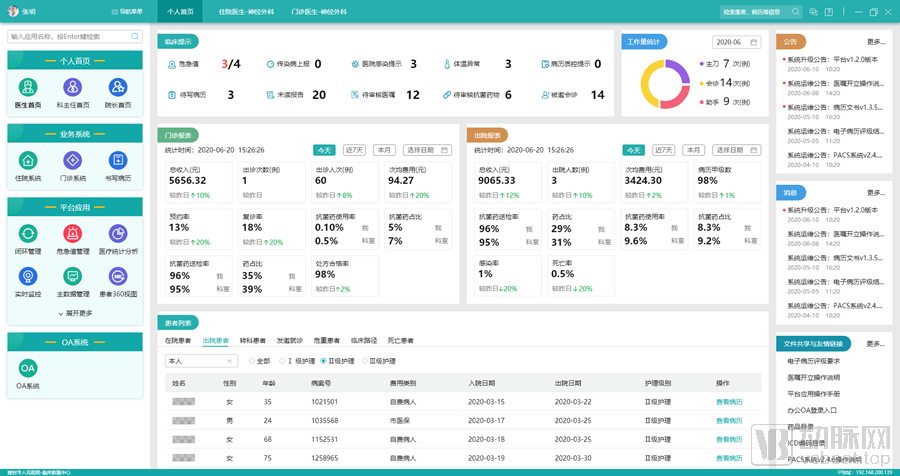
VarMix Next-Generation Hospital Information System User Interface
VarMix, a new-generation hospital information system, has been successfully deployed in secondary and tertiary hospitals after more than six years of dedicated research and development and functional optimization. It has been showcased at the China Hospital Information Network Conference and the China Health Technology Exchange Conference.
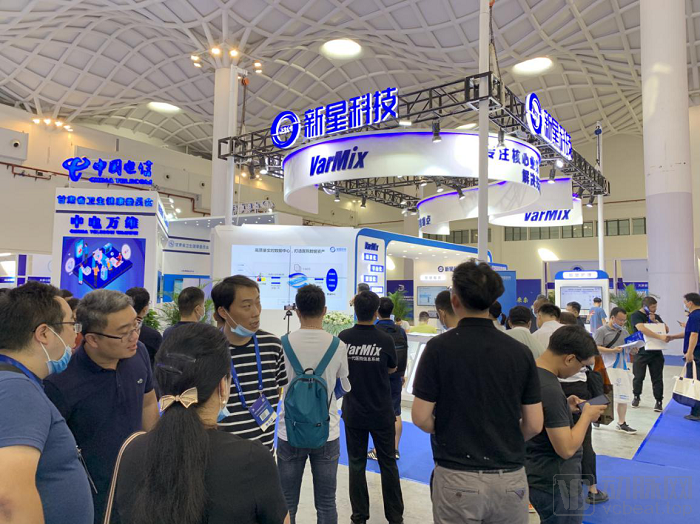
Exhibition Photos
According to Yang Bo, General Manager of the VarMix Business Unit, the future belongs to the era of intelligent healthcare, with data serving as its core engine. Therefore, VarMix’s core positioning is to drive value-based healthcare through data: business operations generate data, which in turn empowers those operations, creating a continuous cycle that accumulates insights and ultimately enables data-driven intelligent healthcare.
“VarMix focuses on the core operations of hospitals, with data primarily sourced from the core business systems used by medical staff. It begins with data standardization and, through data governance and control, gradually accumulates high-quality data assets. However, this is merely a prerequisite for determining whether data holds value. To truly unlock data value and generate tangible benefits, data must also possess openness and connectivity capabilities, enabling data integration,” said Yang Bo.
Guided by this philosophy, VarMix has implemented a unique design in which numerous entities—such as patients, beds, equipment, medications, consumables, staff, departments, pricing, and medical orders—are designated as data resources and assigned unique master indices. This approach enables the formation of data chains across various application scenarios and themes within the hospital, facilitating the continuous integration of healthcare data under intelligent guidance and thereby empowering diverse operational roles throughout the institution.
Furthermore, data security is an area that must never be overlooked, and VarMix strives for excellence in this regard. According to Yang Bo, VarMix has abandoned traditional database integration methods, instead achieving business interoperability through system integration under secure signature-based authorization, thereby creating a new generation of open and secure products.
Supported by secure, open, standardized, and systematically organized medical data, VarMix not only meets the requirements of high-level accreditation and rating policies but, more importantly, serves future development by enabling a variety of intelligent application scenarios, including medical big data research, healthcare security, 5G, and the Internet of Things (IoT).
In the view of Liu Rongrong, Marketing Director, the healthcare informatics market has gradually reached a scale of hundreds of billions of yuan. The true driving force for the future of healthcare informatics stems from clinical operations themselves. The core competitiveness of informatics software lies in its ability to deliver products that truly satisfy healthcare professionals. Driven by policy initiatives and technological advancements—particularly the promotion of health insurance payment reforms represented by DRG/DIP (Diagnosis-Related Groups/Big Data Diagnosis-Intervention Packet)—traditional healthcare informatics must undergo disruptive transformation.
Looking ahead to future market development, Liu Rongrong stated, “We have always believed in the value culture of altruism, which enables us to forge close interdependent relationships with more outstanding and professional partners in healthcare IT. This allows us to truly realize a diversified ecosystem characterized by real-time information exchange, real-time business interoperability, and comprehensive data integration, thereby providing users with holistic hospital informatization solutions that are comprehensive, flexible, intelligent, and convenient. At the same time, we look forward to having more channel partners recognize and appreciate the energy and value of VarMix, and through an effective support service system, extend our high-quality products and services to a broader audience.”
Leaving behind Xinxing Technology, we witnessed the boldness and courage of established HIS vendors. We have reason to believe that the emergence of VarMix’s new-generation Hospital Information System is not merely a product driven by policy, but more importantly, it meets the needs of medical staff by providing them with accurate, timely, convenient, and intelligent tools. Much like the leap in the mobile phone industry from “feature phones” to “smartphones,” which seemingly addressed pain points such as inconvenient input methods, the real transformation lay in the application of new technologies and the resulting changes in the environment. These shifts fostered new ways of thinking, ultimately giving rise to a new generation of products that truly meet user needs.
Across all industries, users are the producers of data. To ensure a leap in productivity, they must identify production tools that meet contemporary demands amidst the shifting landscape. We look forward to the new generation of hospital information systems truly serving as the foundational infrastructure for smart hospital development, supporting hospitals’ long-term growth, and empowering healthcare professionals to achieve data-driven value-based care.