

Zhishi Vision Completes Tens-of-Millions RMB Series A++ Equity Transfer Financing to Build a Digital Operations System for the Trillion-RMB Health Insurance Market

Knowledge Vision
Intelligent Decision-Making Platform Provider
VCBeat has learned that Chengdu Knowledge Vision Technology Co., Ltd. (hereinafter referred to as “Knowledge Vision”) recently completed a tens-of-millions-level A++ round equity transfer financing, led by Changrun Capital and Wenming Fund. It is understood that the proceeds from this round of financing will be used to supplement cash flow and optimize the equity structure.
Knowledge Vision, established in 2016, is dedicated to leveraging next-generation artificial intelligence technologies to help clients in the insurance and healthcare sectors upgrade from informatization to digitalization. The company provides customized digital operational systems, supporting software, and intelligent modules, empowering clients to build a closed loop encompassing marketing, service, and operations.
In 2019, Knowledge Vision successively completed its Series A and Series A+ financing rounds, demonstrating significant commercial potential. Coupled with this latest round of funding, the company has delivered an impressive performance in the capital markets over the past two years. Tracing back to the roots, what value orientations for the enterprise and the entire industry lie behind the continuous tilt of capital?
In January 2020, the China Banking and Insurance Regulatory Commission (CBIRC) and other departments jointly issued the “Opinions on Promoting the Development of Commercial Insurance in the Social Services Sector.” The document proposed that China strive to expand the health insurance market size to exceed RMB 2 trillion by 2025, with the share of medical expenses covered by commercial insurance rising to 20%.
In recent years, with the continuous improvement of living standards and income levels, demand for health insurance has become stronger than ever. In response to this trend, many commercial insurance companies have experienced explosive growth.
The commercial insurance industry has officially entered a “market expressway,” characterized by continuous industrial expansion alongside heightened demands for risk control and intensified competitive pressure. Insurers are urgently seeking to achieve proactive risk and cost control, as well as personalized health services, through managed care and health management models. On the other hand, precise user profiling based on big data from insurance and medical sectors is key to realizing efficient synergy between insurance and healthcare services. However, most insurance companies currently limit their efforts to claims entry for medical documents, leaving many valuable medical insights underutilized and underexplored.
Xiang Fei, founder of Knowledge Vision, identified this pain point through extensive market research. “A rapidly growing market inevitably brings higher risks and more intense competition. For traditional insurers to stand out in this competitive landscape, their biggest challenge lies in the difficulty of fully extracting medical information from medical documents. On one hand, there is the issue of structured data, as insurers cannot access hospitals’ internal systems; on the other hand, there is the issue of standardization, since medical document formats vary across different hospitals, making subsequent integration considerably more difficult.”
In response to this market demand, Knowledge Vision has proposed an integrated solution that leverages a digital operational framework for health insurance to help insurers achieve more comprehensive collection and management of insurance-related medical information, thereby enabling the digital integration of healthcare, medical services, and pharmaceuticals.
In Xiang Fei’s view, the core competitiveness of Knowledge Vision lies in providing insurance companies with a comprehensive suite of professional health insurance operational systems. This not only assists insurers in building digital and intelligent infrastructure but also fully leverages internal data value to facilitate secondary customer development, thereby supporting the sustained expansion of value-added services.
Driven by this value-oriented approach, Knowledge Vision has launched two core offerings tailored to diverse needs: the “Shutu Bao” Intelligent Auxiliary System for Health Insurance (hereinafter referred to as “Shutu Bao”) and the “Inphile” Intelligent Insurance and Medical Big Data Operations Platform (hereinafter referred to as “Inphile”). These solutions comprehensively support the digital transformation of health insurance operations for insurers, helping clients reduce costs and enhance efficiency, minimize unreasonable claims payouts, and drive value-added growth in business operations.
1"Shu Tu Bao" Intelligent Assistant System for Health Insurance Operations
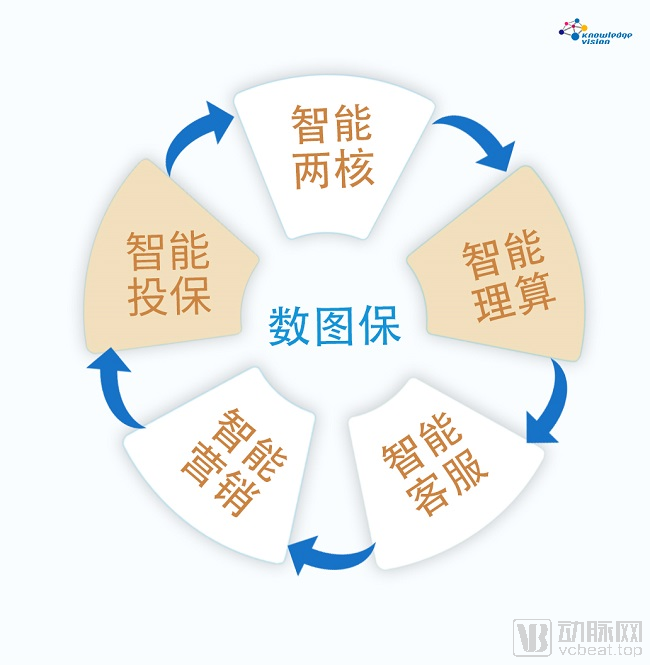
“Shu Tu Bao” focuses on providing core functional modules for the digital operations of health insurance, including intelligent underwriting, intelligent dual-core verification (underwriting and claims assessment), intelligent claims adjustment, intelligent marketing, and intelligent customer service. It also offers a full-process auxiliary operation system for health insurance to support these intelligent modules. By leveraging a “WeChat Mini Program + Intelligent Claims Assessment System + Knowledge Graph Database,” it helps insurance companies establish robust information systems, thereby improving claims processing efficiency and ultimately enhancing customer satisfaction.
According to Xiang Fei, the core of “Shu Tu Bao” is the establishment of an intelligent, omnidirectional service network. Through its WeChat mini-program, users can access a comprehensive suite of support services, including rapid information entry, quick upload of policy and claims documentation, inquiry into claims details and status, consultation with online customer service, and appeals against claims decisions.
Within the operational chain, the intelligent claims adjudication system lays a solid foundation for function realization. Leveraging its Optical Character Recognition (OCR) model, the system first extracts valid information from user-submitted image-based claim documents, such as medical expense invoices, prescriptions, medical records, and examination reports. It then conducts structured analysis, completeness verification, authenticity validation, and reasonableness assessment using a knowledge graph database. Finally, the system reviews reasonable and unreasonable payment components within the detailed medical expenses, analyzes underwriting risk points and pricing mechanisms, identifies high-risk suspected fraud cases, and generates a claims adjudication report.
It is worth noting that any insurance company can rapidly deploy this system, which is applicable to various types of health insurance products—including employee benefits insurance, high-limit medical insurance, critical illness insurance, Huimin Bao (city-specific supplemental medical insurance), and specialized drug insurance—thereby establishing an online service platform and achieving end-to-end digitalization of business processes.
2“Inphile” Intelligent Insurance and Medical Big Data Operations Platform
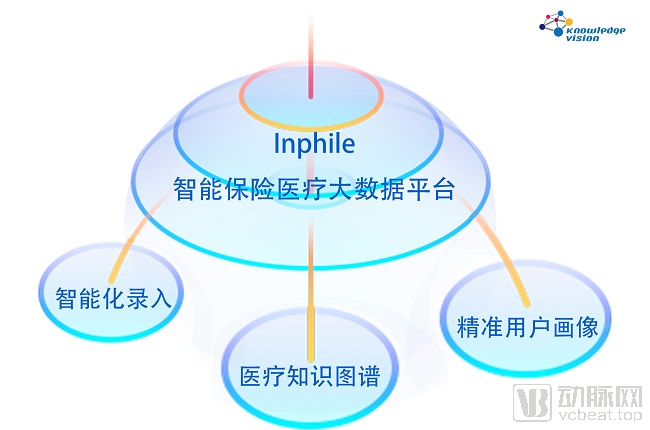
“Shutu Bao” focuses on supporting insurers’ existing operations, while “Inphile” concentrates more on innovative business segments—the key to gaining a competitive edge in a fiercely contested market.
Xiang Fei stated, “Data is the primary driver for integrating upstream and downstream business operations. The core of ‘Inphile’ lies in systematically organizing insurance and healthcare big data through intelligent entry, converting it into textual, structured, and standardized formats to generate user profiles. By rapidly matching these profiles with medical resources under a precision recommendation mechanism, we are actively exploring value-added insurance business segments.”
“Inphile” enables intelligent entry of insurance-related medical information with an accuracy rate of up to 99%, significantly reducing the cost for insurers to acquire such data. Meanwhile, leveraging Inphile’s accompanying medical knowledge graph, it standardizes medical terminologies—including drug names, device materials, disease names, diagnostic results, and medical services—achieving an automatic coding accuracy of up to 97% and enabling precise user profiling.
In terms of data security, “Inphile” relies on a private deployment system and integrates various front-end technologies to establish a protective network for user data. In Xiang Fei’s view, the entire operational process is compliant and lawful. “On one hand, insurance companies require all users to upload complete documentation when filing claims; on the other hand, within health management services, insurance companies can proactively provide patients with health consultations.”
Currently, the two core products have been widely promoted and adopted by multiple insurance companies, receiving positive user feedback, and business expansion will continue.
Looking to the future, the application of big data in insurance and healthcare will gradually unlock a vast market for insurance operations. Knowledge Vision will continue to deepen its expertise in this field, leveraging its three core business pillars—“products, services, and operations”—to build a trustworthy health management service platform.
In terms of products, we are committed to meeting users’ personalized needs by continuously improving and strengthening product functionalities, focusing on building technical barriers, and cultivating core competitiveness.
In terms of service, we are enhancing our existing service capabilities while establishing collaborative mechanisms with more partners. Under the guidance of professional teams, this will drive a qualitative transformation in our service delivery, better addressing users’ practical needs and further maximizing the application value of our products.
In terms of operations, leveraging the strong infusion of core technologies and professional teams, and supported by robust existing databases and knowledge graphs, we collaborate with upstream and downstream medical resources to empower insurance companies, enabling them to offer value-added health and medical services.
The successful completion of this financing round marks Knowledge Vision’s smooth expansion from pathology AI into the digital operations of health insurance, garnering widespread recognition from the capital markets.
For investors, however, considerations differ. From the perspective of Changrun Capital (CRTZ Asset Management Co., Ltd.), this round of financing will further expand their coverage in the digitalization sector, and they plan to continue co-investing in future rounds. From the perspective of Wenming Fund (Beijing Famous Investment Fund Management Co., Ltd.), this financing will support their sustained exploration in the field of artificial intelligence, representing a precise strategic layout in this track.
About CRTZ Capital
CRTZ ASSET MANAGEMENT CO.,LTD, established in 2008 and headquartered in Futian District, Shenzhen, specializes in equity and securities investment as well as investment consulting. The firm is registered with the Asset Management Association of China (Registration No.: P1001423) and holds qualifications for conducting private fund businesses, including private securities investment, equity investment, and venture capital. Positioning itself to invest in growth-stage and mature enterprises, its investment scope covers intelligent manufacturing, the Internet of Things (IoT), consumption upgrades, new materials, energy conservation and environmental protection, healthcare, education, and other sectors.
About Famous Fund
Beijing Famous Investment Fund Management Co., Ltd. is a comprehensive investment institution approved and registered with the Asset Management Association of China (Registration No.: 1060770). Located in Tower A, Jinmao Building, Xizhimen, Beijing, the company is dedicated to building a premier private equity fund management platform in China. Since 2017, it has engaged in equity investments and primary semi-market transactions, managing assets exceeding RMB 3 billion. The firm has invested in multiple unicorn companies, including a single RMB 1 billion investment in Unisoc, a top-three global semiconductor chip enterprise. Its team members hail from renowned domestic securities firms and investment institutions, each possessing over ten years of industry experience, extensive investment research expertise, and broad professional networks.