

How Hospital IT Departments Can Excel Amid New Policy-Driven Challenges
When it comes to the Information Technology (IT) Department in hospitals, many people are likely unfamiliar with it, which is understandable. Compared to other clinical departments, most people have few opportunities to interact with this department. However, as the construction of medical informatization continues to advance, the IT Department has begun to come into the public eye and is increasingly mentioned by governments and media outlets.
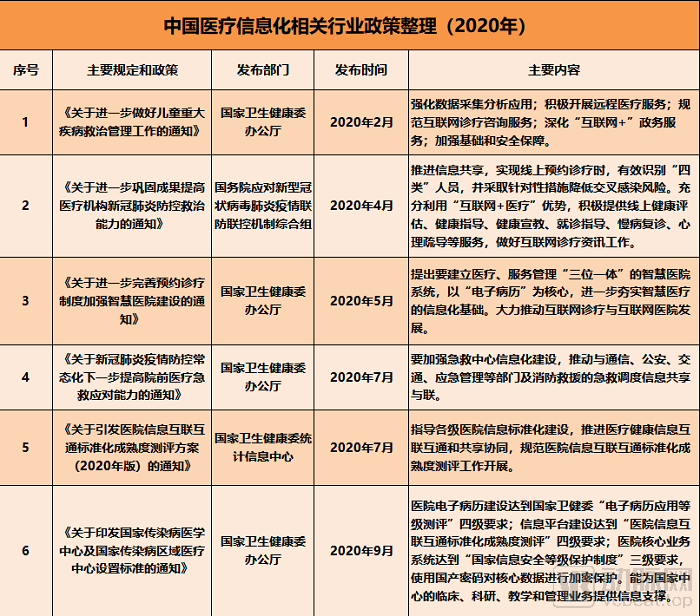
Compilation of Industry Policies Related to Healthcare Informatics in China (2020)
As of now,Over the course of this year, functional departments led by the National Health Commission have issued a total of 16 policies related to healthcare informatization., including the “Notice on Further Improving the Appointment-based Diagnosis and Treatment System and Strengthening the Development of Smart Hospitals,” the “Notice on Issuing the Evaluation Scheme for Standardization Maturity of Hospital Information Interconnectivity (2020 Edition),” and the “Notice on Issuing the Establishment Standards for National Centers for Infectious Diseases and National Regional Medical Centers for Infectious Diseases.”
Driven by policy, the entire ecosystem is undergoing transformation. From an external perspective, an increasing number of enterprises are clustering in the healthcare informatics sector, developing diverse novel information systems to address industry pain points. Internally, the IT department—once habitually overlooked as an “outsider”—has suddenly been propelled to the forefront, becoming a “key focus area.”
Being valued is certainly a positive development, but it often entails assuming greater responsibilities. In the face of new challenges, is the Information Department truly prepared? Can it keep pace with the rapid advancement of healthcare informatization? What aspects of internal management need to be strengthened? These are urgent issues that the Information Department must address.
“Hello, is this the IT Department? I can’t view a patient’s information on my workstation. Could you please check what’s causing the issue?” “Hello, is this the IT Department? I need to modify some entries in a medical record. What is the procedure for doing so?” “Hello, is this the IT Department? My computer won’t boot up. Could you please come and take a look?” “Hello, is this the IT Department? Why has the network suddenly gone down? We have so many patients; how should we handle this?” Answering questions such as these is part of the daily routine for IT department staff.
Known within the industry as the “all-purpose department,” the Information Technology (IT) Department is virtually “capable of anything.” From maintaining information systems such as the Hospital Information System (HIS), Picture Archiving and Communication System (PACS), Laboratory Information System (LIS), and Electronic Medical Record System (EMRS), to handling miscellaneous tasks like repairing computers, printers, and telephones, there is nothing the IT Department cannot do—only things you might not imagine.
However, these were not the original intentions behind establishing the Department of Medical Informatics.
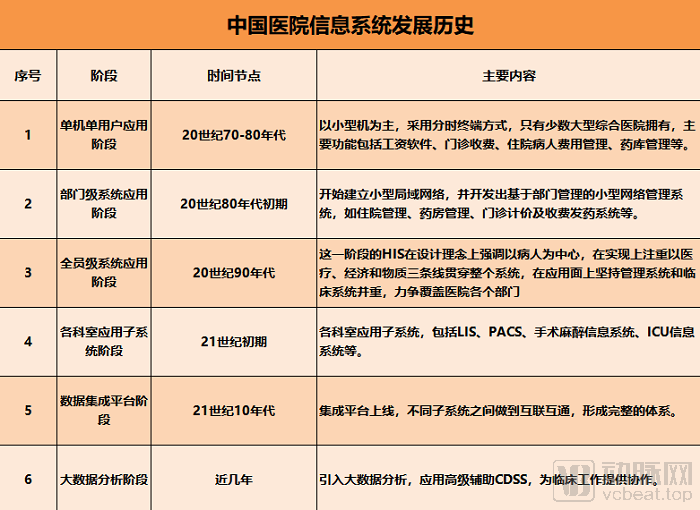
The History of Hospital Information System Development in China
The establishment of hospital information departments in China began in the 1970s and 1980s, primarily to meet the growing demands of the healthcare sector. In the early stages, there was no standardized name for these departments; they were variously known as the Intelligence and Data Department, Data and Information Department, Information Technology Department, or Data Department, with inconsistent organizational structures across institutions. It was not until the early 1990s that the term “Information Department” became the unified designation.
The standardization of the name “Information Department” signifies a functional shift from mere data custodianship to active information development and utilization, and from passive service delivery to an emphasis on effective and impactful information services, thereby establishing the Information Department’s status as a service-oriented academic institution.
However, this holds little appeal for healthcare institutions that are primarily focused on clinical care. A professional with many years of experience in the Information Technology Department told VCBeat in an interview, “The work done by the Information Technology Department is, in simple terms, “thankless.”Hospital leaders mostly come from clinical departments. They are sensitive to clinical data and economic data, but sluggish in responding to data from the information department, even showing disdain. In their view, doubling the number of beds is worth celebrating, as is a 20% increase in gross revenue. However, when faced with IT-related initiatives such as memory upgrades at nursing stations, broadband upgrades, or achieving gigabit connectivity to desktops, they merely nod slightly and glance over them, unable to truly perceive the tangible benefits these bring to the hospital.
Consequently, within the lengthy list of hospital departments, the “Information Technology Department” has no standing whatsoever. It is not even considered in discussions regarding how non-clinical departments are categorized or tiered, as the IT Department remains unclassified. On the ranking list of administrative departments, the IT Department ranks third from the bottom, ahead of only the Finance Department and the Logistics Department; nevertheless, this represents an improvement over recent years.
To outsiders, the Information Technology Department, leveraging the dividends of medical informatization construction, should have undergone significant changes compared to the past, with its status and influence on an upward trajectory; however, the reality is quite different.
When discussing changes in status, the head of the information department at a medical institution in Shenzhen stated, “Overall, there has been little significant change. On one hand, our influence is insufficient; we often lack a voice and struggle to garner attention from leadership. On the other hand, we face resource constraints, with inadequate staffing, material supplies, and funding. As a result, we are unable to ‘take meaningful steps’ toward initiating projects or addressing issues.”
Although their status has not significantly improved, the workload borne by the Information Department has become heavier than ever before.
The head of the information department at a hospital in Chongqing told VCBeat in an interview,“Under the trend of healthcare informatization, our most immediate perception is that workloads are increasing, the scope of responsibilities is expanding, and the burdens we bear are becoming heavier. This is mainly reflected in the expansion from focusing solely on internal hospital information systems to investing in the development of smart hospitals and internet-based healthcare services. In addition, we must also cope with unannounced ‘flight inspections’ and performance evaluations at various regulatory levels, while simultaneously advancing refined pharmaceutical supervision and DRG data quality management.”
Many industry experts agree that the workload borne by the Information Technology (IT) Department is on a continuous upward trend, driven by the ever-expanding scope of information system applications. Just as traditional Hospital Information Systems (HIS) have evolved from initially covering only one or two modules, such as outpatient and inpatient billing, to later encompassing Electronic Medical Records (EMR), Laboratory Information Systems (LIS), Picture Archiving and Communication Systems (PACS), pathology, electrocardiography (ECG), anesthesia and surgery management, and Intensive Care Unit (ICU) systems, this expansion reflects a “natural law” of healthcare informatization at a certain stage of development. Consequently, as the department responsible for informatization construction, the IT Department’s responsibilities have naturally grown in significance and scope.
However, industry insiders have also made it clear that, due to the current scarcity of resources across all areas within information technology departments, there will be little significant progress in the short term, and their influence and visibility will not see a substantial increase.
Although it has not yet garnered sufficient attention, the era of healthcare informatization has arrived. However, given the current situation, IT departments in healthcare institutions must address challenges related to both “legacy” and “new” systems to truly deliver value.
1Unresolved legacy issues remain a barrier.
Looking back at the development history of the Information Technology Department, many issues have become key obstacles to its progress; however, as time has passed, these “legacy problems” still persist.
Loss of Consciousness
When asked about the most thorny issue currently facing the IT Department, a seasoned professional who has worked in the department for many years blurted out two words during the interview: “awareness.”
He believes that although the current landscape of healthcare informatization is bustling, very few initiatives truly solidify into tangible practical value. The primary reason lies in a lack of awareness, with every link in the ecosystem chain operating in a passive state, thereby making it difficult to realize genuine value.
For hospital leadership, the inability to precisely quantify the benefits delivered by the IT department has led to insufficient prioritization and a lack of long-term vision for its future development. For physicians, there is little enthusiasm for health information technology initiatives, as the current stage of development offers no obvious practical benefits; consequently, they have not taken proactive steps and remain passively driven by digitalization efforts. For healthcare IT vendors, excessive focus has been placed on overcoming technical challenges and marketing promotion, rather than refining products through careful alignment with the fundamental operational needs of hospitals. This functional “misalignment” significantly diminishes the application value of their platforms.
Talent Shortage
An engineer from a medical IT company once joked that every time he went to a hospital for project implementation or after-sales support, it felt like “volunteer teaching in remote areas,” which gives you an idea of the impression left on him by the hospital’s information department in terms of professional capacity building.
The head of the Information Department at a medical institution in Shenzhen told VCBeat, “The Information Department is a hub for multidisciplinary talent, as job responsibilities require staff to possess technical expertise, clinical knowledge, and a background in healthcare management. Consequently, cultivating specialized professionals for the Information Department is highly challenging.”
Cultivating talent is undoubtedly challenging, but the most pressing issue at present is the lack of candidates to train. A post on Zhihu regarding work in hospital information departments reveals that, due to issues with compensation and professional title advancement, highly skilled professionals do not prioritize hospital information departments when choosing jobs; instead, such positions are often viewed as a last resort for employment.
Some may ask: Where have all these highly skilled professionals in the field of health information technology (HIT) gone? The answer is: to well-known HIT companies and research institutes within the industry. Their decision is easy to understand. First, the disparity in compensation and benefits is obvious. Second, regarding technical atmosphere and environment, large enterprises focused on informatization are rich in technological resources, enabling employees to stay at the forefront of the industry—a distinct advantage that most hospital information departments cannot match.
Insufficient Funding
Funding plays a decisive role in the development of new ventures and is a prerequisite for transitioning from inception to maturity. For the Department of Information Technology, which is entering a fast lane and urgently needs to accelerate its growth, this need is particularly acute; however, the path ahead is fraught with challenges.
In an interview, the director of the Information Department at a certain hospital stated, “Funding has always been a sensitive issue for our department. Since the core function of our department is to provide support services, we cannot generate direct economic benefits for the hospital like clinical departments do. As a result, from a top-down perspective, we struggle to secure funding due to insufficient attention from senior leadership; from a bottom-up perspective, the department often operates at a deficit and lacks any financial reserves. Therefore, every year we develop two implementation plans—one with funding support and one without. This is not a sustainable long-term strategy, but it is indeed a necessary compromise.”
In contrast to the "explicit" funding shortages faced by small and medium-sized medical institutions, large medical institutions are in a state of "implicit" funding constraints. For the information technology departments of large medical institutions, funding may not be the primary concern; rather, the key to securing sustained financial investment lies in whether such investments can rapidly yield tangible benefits and bring about perceptible, positive changes to the hospital.
A head of an IT enterprise told VCBeat that the process of translating an information platform from theory into practice is lengthy, requiring at least six months even under the most optimistic scenarios. This poses a significant disadvantage for large medical institutions eager to see tangible results. As capital investment continues to expand, leadership teams grow increasingly restless, often leading to projects being abandoned without resolution.
2New Policies Spawn New Pain Points, with Data Taking Center Stage
“Old problems” remain unresolved, while “new challenges” have already emerged. With the successive implementation of new policies, data-centric healthcare informatization will place entirely new demands on hospital information departments.
Data Mining
The outbreak of the COVID-19 pandemic has directly spurred rigid demand for healthcare informatization construction. A data-centric operational model that extensively supports various healthcare business segments has become the future development direction for hospital information departments. As evidenced by policies released this year, such as the Notice on Providing Internet-Based Diagnosis and Consultation Services During Epidemic Prevention and Control and the Notice on Issuing Standards for the Establishment of National Centers for Infectious Diseases and National Regional Medical Centers for Infectious Diseases, precise data mining will be the primary focus of work for information departments in the next phase.
Data Security
Throughout the epidemic prevention and control efforts, medical big data has played an indispensable role. However, with the increasing collection, storage, and application of big data, data security issues across all stages of medical information flow and utilization cannot be overlooked. In the policy document "Notice on Strengthening Information Technology Support for the Prevention and Control of Novel Coronavirus Pneumonia," issued by the National Health Commission earlier this year, it is explicitly stated that advanced data protection technologies, such as de-identification and encryption, should be fully applied during data storage, transmission, and usage to provide continuous protection for sensitive medical data and prevent leaks during data sharing and exchange.
Data Rating
With the continuous advancement of healthcare informatization, data-centric assessments have become the primary means of evaluating whether the Information Department meets mandatory performance indicators. Based on policies issued this year, including the "Notice on Further Improving the Appointment-based Diagnosis and Treatment System and Strengthening the Construction of Smart Hospitals," the "Notice on Issuing the Evaluation Scheme for Standardization and Maturity of Hospital Information Interconnectivity (2020 Edition)," and the "Notice on Issuing the Establishment Standards for National Centers for Infectious Diseases Medicine and National Regional Medical Centers for Infectious Diseases," the Information Department is required to achieve Level 4 in the "Electronic Medical Record Application Grade Evaluation," Level 4 in the "Hospital Information Interconnectivity Standardization and Maturity Evaluation," and Level 3 in the "National Classified Protection System for Information Security."
Driven by both policy and technology, the Information Department will face a “major test,” but whether it can successfully pass this assessment depends on finding a breakthrough amidst current challenges.
1Promote to the level of Vice President
From the perspective of industry insiders, the key reason why hospital information departments have failed to deliver value at this stage is their insufficient influence; therefore, to change this situation, the status of the information department must be elevated.
The director of the Information Department at a certain hospital stated that while the hospital’s informatization is continuously under development, the responsibilities borne by the Information Department do not appear to be commensurate with its authority. If the head of the Information Department were granted authority equivalent to that of a vice president, communication costs during the construction process could be effectively reduced, and the optimization of business processes would be more thorough. Only in this way can genuine attention be drawn from senior leadership and staff across all departments, encouraging their active participation in the hospital’s informatization initiatives and thereby realizing its true value.
2Internal Intensive Training, External Talent Attraction
No reform can succeed without the drive of talent, and in the process of transforming the Information Department, the demand for talent is even more pronounced, which is also the key to determining whether this transformation can be achieved.
The head of the Information Technology Department at a hospital in Chongqing told VCBeat, “Building a talent pipeline for the IT department focuses on two main aspects. First, internal training: mastering health informatics is a continuous learning process, so regular training sessions should be held to help staff strengthen their capabilities and better meet operational requirements. Second, broad recruitment: by establishing comprehensive benefit systems, clearly defining job responsibilities, and fostering a positive work environment, hospitals can attract more high-caliber professionals.”
For the IT department, shedding the burden of routine operations has only given way to a new, even greater challenge. The shift from information management to data management demands the acquisition and mastery of a broader knowledge base, including data processing techniques, big data platform architecture, statistics, artificial intelligence algorithms, and big data development technologies. Furthermore, it entails high-level challenges such as designing top-level data management frameworks, implementing data governance, enhancing data quality, and prioritizing data security.
3Unlock the Value of Data: Integrating into Core Areas Including Clinical Practice, Management, and Scientific Research
A Director of an Information Center lamented in a HIT WeChat group: “The standing of the IT department is precarious. It should devote efforts to data mining at an early stage and proactively integrate into core business areas such as clinical care, management, and scientific research.”
The head of the Information Department at a medical institution in Shenzhen frankly stated, “The future development of the Information Department must be closely aligned with core business operations. This requires the department to be guided by data value, gradually integrate into the entire healthcare system, engage in in-depth collaboration on business operations, and fully leverage its application value.”
Furthermore, he noted that the Information Department will receive an increasing number of requests in the future. However, not all demands can be met, necessitating enhanced capabilities in data analysis and mining. Previously, when working in the information department, the focus was more on process planning, with relatively less interaction with clinical departments, as “satisfying one department essentially meant satisfying the others.” Now, however, each clinical department has personalized data needs, leading to more frequent communication between the Information Department and clinical units.
As a new multi-functional integrated department, the focus of the Information Department is no longer on singular information management, but rather on serving as an authoritative information unit to manage comprehensive hospital information, utilizing modern management knowledge and networked internet systems for data collection and processing. By systematically and standardizing the analysis of medical information, it will create a comprehensive service system for healthcare institutions that extends vertically to the highest level and horizontally to every corner.
4Enhance Proactivity and Prioritize Data Security
Deep engagement with clinical practice and hospital management is the primary recommendation from the Director of the Information Department at a Chongqing-based hospital to peers aiming to leverage and mine data. Additionally, he advises that information departments should take greater initiative, master fundamental big data technologies, avoid over-reliance on third-party vendors, and cultivate their own core competencies. Furthermore, team members must upgrade their knowledge and refine their expertise structures to provide clinicians with the tools, platforms, methodologies, and systems necessary for data mining. They must also maintain a strong service orientation, acting as the “engine” to drive the entire hospital’s research and innovation in big data and artificial intelligence.
Meanwhile, data security should also be given high priority. The head of the information department at a medical institution in Shenzhen stated, “Data security is a critical component; however, our research indicates that most IT staff have not devoted sufficient effort to this area, which poses significant risks. It is essential to enhance proactive measures and not rely solely on platforms for building data protection networks; internal capabilities must also be strengthened.”
The Information Technology Department Has Become the “Load-Bearing Wall” of Contemporary Hospital Development. Literally speaking, the hospital’s IT department is indispensable and serves as a core component of the overall institutional architecture; in practical terms, it plays a significant role in advancing the modernization of healthcare institutions.
Although the Information Department has not yet felt the actual “propulsive force” from the wave of healthcare informatization, but instead has seen its workload steadily increase, it is poised for transformation in the future as technology and the market mature. However, this hinges on the department’s commitment to strengthening its technical capabilities. Relevant managers should adopt a long-term perspective, continuously integrating new concepts, achievements, and technologies into hospital information systems to ensure that the Information Department can more effectively support the hospital’s modernization.
"Informatization" is not merely about the continuous emergence of information technology tools; rather, it focuses on resolving information silos through comprehensive planning, top-level design, and interoperability of IT systems. This enables a more holistic and integrated architecture for business and data processes, representing an inevitable direction for the development of hospital information departments.