

Jianke Ark Internet Hospital Files IPO Prospectus: Empowering Branded Physicians and Advancing Tech-Driven Chronic Disease Management

Fangzhou Pharmaceutical
Chronic Disease Service Platform
Looking back many years later, defining 2020 as the year of explosive growth for internet hospitals would undoubtedly be a sound judgment.
In 2019, driven by demand and policy support, internet healthcare began to experience explosive growth in quantity. Data from the National Health Commission of China shows that in the first 11 months of 2019, the number of internet hospitals under construction or already established nationwide was nearly equal to the total number built across the country in the previous five years.
When the COVID-19 pandemic struck, people’s physical activities were confined to limited spaces. Internet-based healthcare began to penetrate more rapidly across broader populations and a wider variety of scenarios. The boundless imagination and limitless possibilities of the internet finally became a reality in the medical field, sparking exponential growth.
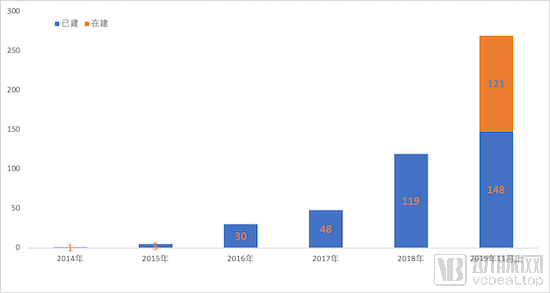
Number of Internet Hospital Licenses in China from 2014 to November 2019 Data Source: Official Website of the National Health Commission
As participants achieve greater scale and the healthcare resource chain becomes increasingly integrated, internet healthcare has initially formed five core functional modules characterized by mobile consultations, mobile appointment registration, internet hospitals, physician services, and pharmaceutical e-commerce. Competition among stakeholders has evolved from initial single-point entry and gradual deepening to cross-module integration and collaborative breakthroughs.
Since entering the internet healthcare sector through pharmaceutical e-commerce, Jianke Group has gradually deepened its application scenarios in tandem with market and technological advancements each year, quietly completing a transition in its development model from “asset-light” to “asset-heavy.” At the 2020 Partners Conference, Xie Fangmin, Founder, Chairman, and CEO of Jianke, unveiled a new strategy: the establishment of a RMB 200 million Health Innovation Fund for the year, which will be allocated to building physician brands and digitally upgrading chronic disease management.
Just as elderly patients registering for appointments and renewing prescriptions online serve as strong evidence of the internet’s viral expansion, an increasing number of doctors are choosing to interact with patients through live-streaming platforms. Taking Douyin (TikTok) as an example, physicians have launched accounts to share emergency medicine knowledge, correct misconceptions about health preservation, and interpret cutting-edge medical technologies. Within just a few months, this has given rise to numerous influencer doctors with tens of millions of followers. Live streaming by doctors has clearly become a popular mode of communication, well-received by audiences with diverse preferences.
According to the newly announced Health Innovation Fund plan, Jianke Fangzhou Internet Hospital, under the Jianke Group, will invest a total of RMB 100 million from the fund to build a physician-focused Multi-Channel Network (MCN) in the broader healthcare sector. MCN, short for Multi-Channel Network, is a business model that originated on YouTube, the international video platform. It aggregates high-quality Professional Generated Content (PGC) and User Generated Content (UGC) of various types and themes under the platform, providing content creators with operational, commercial, and marketing services through a platform-based approach, thereby facilitating the monetization of PGC or UGC.
MCNs are specialized platforms within the content industry chain. Since 2017, China’s MCN sector has experienced explosive growth. Generally, services provided by professional MCNs encompass a comprehensive and complex range of activities across all stages of content production and dissemination, including creator selection and incubation, content development, technical support, sustained creative input, user management, platform resource integration, event operations, commercial partnerships, and sub-IP development.
Vertical MCNs targeting physicians possess unique characteristics compared to conventional MCNs. Although Fangzhou Jianke Internet Hospital was not the earliest internet healthcare platform to enter this field, and a mature system for physician-focused MCNs has yet to be established, it chose physician live streaming as its entry point. This August, Fangzhou Jianke Internet Hospital partnered with Baiyunshan Pharmaceutical to launch the "Qixi Male Health Expert Live Streaming Week" under the "Famous Doctors on Health" series. During the live streams, two male health specialists from the Andrology Branch of the Chinese Medical Association and The First Affiliated Hospital of Sun Yat-sen University were invited to conduct thematic discussions and share insights on "male health management," attracting cumulative participation from over 4 million online viewers who engaged via public screen comments.
In October of that year, during the 2020 Men's Health Week, Fangzhou Internet Hospital joined forces with 12 authoritative organizations, including the Andrology Branch of the Chinese Medical Association, to launch a series of short educational videos on men’s health under the theme “Safeguarding Men’s Health.” Meanwhile, “Health Live Rooms” were simultaneously launched on the Fangzhou Hospital and Fangzhou Doctor apps, enabling direct online connectivity between patients and doctors on the platform.
It is understood that the 100 brand-name doctors incubated by the Fangzhou Jianke Internet Hospital will engage in multi-format professional health education through video and text. With a focus on patient education, this initiative aims to enhance the interactive value between doctors and patients, leverage consultation resources on the Jianke Doctor App, and promote an integrated prevention-and-treatment medical experience, thereby further strengthening patient stickiness to the internet healthcare platform.
Xie Fangmin explained that building “brand-name doctors” not only helps patients better understand physicians and addresses information asymmetry, but health education itself can also contribute to chronic disease management to a certain extent. “At the same time, brand-name doctors will create a role-model effect, encouraging more physicians to join Jianke.” By establishing a platform for brand-name doctors, the company can achieve the outcome of leveraging physicians to engage and retain patients. After all, compared with ordinary customer service representatives at Jianke’s Chronic Disease Management Center, expert opinions exert greater influence and appeal on patients. “In patient–physician education, physicians are a key component and the core of the chronic disease management process. The strategic upgrade undertaken by Fangzhou Jianke Internet Hospital is essentially an increased investment in and development of its internet hospital operations, further empowering physicians,” Xie Fangmin pointed out.
As another component of the Health Innovation Fund Program, Fangzhou Pharmaceutical will invest RMB 100 million in the development and application of digital and intelligent technologies for chronic disease management. As one of the earliest platforms in China to migrate retail pharmacy operations online, Fangzhou Pharmaceutical, under the leadership of Xie Fangmin, has maintained a highly open attitude toward next-generation information technologies, successively integrating intelligent chronic disease management systems and AI-powered voice customer service into its internet-based pharmaceutical service ecosystem.
In recent years, the business model of internet-based healthcare has stabilized, with frontier technologies such as big data, artificial intelligence, and robotics becoming new drivers of its development. For instance, chronic disease management based on medical big data can address deficiencies in patients’ self-health management, enable long-term medical service management, and create a closed-loop business model centered on “data + application scenarios.” Evidence from existing cloud-based diabetes management platforms shows that the proportion of medium- and high-frequency users has increased significantly following the launch of features enabling real-time cloud-based communication between doctors and patients, among patients themselves, and for patient education.
Xie Fangmin told VCBeat that Jianke has built precise profiles for 30 million patients by leveraging core technologies such as data engines, AI applications, and hybrid cloud solutions. In the chronic disease management services provided by Jianke, the platform utilizes investments in 5G, wearable devices, IoT (Internet of Things), and other related technological equipment to monitor user data in non-hospital settings, serving as a basis for delivering better health management recommendations. To date, doctors on the Jianke platform have been able to use intelligent tools to achieve more precise diagnosis and treatment covering 24 major categories and 989 types of diseases.
In addition to optimizing the online user experience, Jianke has also integrated the platform’s digital service capabilities and launched offline pilots to establish a closed-loop system for chronic disease management. In 2019, Jianke put into operation the Smart Medical Center of Fangzhou Internet Hospital, affiliated with the People’s Hospital of Tumxuk City in Xinjiang. This center comprises four functional zones: a big data implementation zone, a self-service consultation zone, a self-service medication dispensing and pickup zone, and a remote consultation center. By offering services such as online consultations, remote consultations, electronic prescribing, and health education, the center helps extend high-quality medical resources to grassroots levels.
Xie Fangmin pointed out that in the digital era, highly transparent medical processes not only improve diagnostic and treatment efficiency and patient experience but also accumulate massive amounts of data. This data will serve as a valuable basis for pharmaceutical companies to make effective decisions regarding drug channel distribution and R&D innovation, addressing their current lack of precious patient-side data resources.
As hospital-based medication reforms deepen, pharmaceutical companies are shifting from a model centered on hospitals and physicians as end points to one that directly reaches patients. The latter represents a relatively unfamiliar domain for pharmaceutical firms, which are increasingly exploring channels such as offline pharmacies and pharmaceutical e-commerce platforms to uncover patient consumption patterns and latent needs. In this process, platforms that have proactively deployed digital technologies can leverage their accumulated patient data to help pharmaceutical companies reduce channel costs and make more precise R&D and sales decisions.
Currently, Fangzhou Pharmaceutical has reached strategic cooperation intentions with multinational pharmaceutical companies such as Bayer, AstraZeneca, Pfizer, Eli Lilly, and Sanofi to establish chronic disease patient care programs. The two parties will collaborate in areas including drug traceability, smart healthcare, chronic disease management, patient education, physician education, grassroots benefit projects, and medical big data, exploring integrated pharmaceutical and health services focused on medication safety and doctor-patient education.
Xie Fangmin hopes that, in the future, Jianke can further unlock the development potential of a full-chain ecosystem spanning from hospitals to homes by leveraging the user healthcare data accumulated on its platform. This would help integrate relatively fragmented medical service scenarios and effectively shift from traditional point-to-point offline care models to online one-to-many service delivery. A comprehensive product portfolio and strong capabilities in product implementation and delivery will serve as effective safeguards for enhancing patient experience.