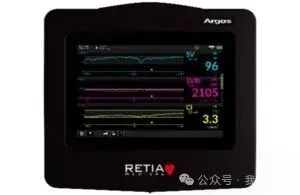
Lead: After securing exclusive U.S. distribution rights in 2025, global medical device leader Medtronic has announced another pivotal, high-impact partnership! By expanding its collaboration with Retia Medical, Medtronic is formally introducing the disruptive Argos cardiac output monitor across all of Western Europe, comprehensively upgrading perioperative and critical care solutions, with the potential to reshape the clinical landscape of high-end hemodynamic monitoring in Europe and the United States.On June 5, 2026, medical device giant Medtronic (MDT) officially announced new partnership developments: the company has further upgraded its distribution agreement with Retia Medical, expanding the coverage of its core innovative product—the Argos Cardiac Output Monitor—from the U.S. market to the entire Western Europe region, ensuring comprehensive deployment across hospitals at all levels in Western Europe.This marks the second time in just two days that Medtronic has officially announced an expansion of its distribution network for the Acute and Critical Care Monitoring (ACM) product line, clearly revealing the global medical device giant’s firm ambition to deepen its presence in the specialized critical care monitoring sector.In fact, as early as April 2025, Medtronic secured the exclusive U.S. distribution rights for the Argos cardiac output monitor. After more than a year of clinical implementation and market validation, this monitoring device, equipped with cutting-edge technology from top universities, has officially launched its commercialization strategy in Europe, providing a novel solution for clinical monitoring of high-risk surgeries and critically ill patients in Western Europe. 01.Why Did Medtronic Make a Major Investment? Precisely Addressing Multiple Clinical Pain Points In traditional clinical settings, mainstream cardiac output monitoring devices have long suffered from numerous shortcomings: cumbersome operational procedures, the need for repeated calibration, and high costs associated with disposable consumables. Furthermore, in special critical conditions such as patient arrhythmia, low cardiac output, and fluctuations in vascular tone, monitoring data are highly prone to distortion, failing to meet the requirements for precise monitoring of critically ill patients.The Argos cardiac output monitor specifically addresses key industry pain points, achieving comprehensive innovation across four dimensions—operation, cost, technology, and accuracy—with exceptionally prominent core advantages:
The device requires no additional puncture or catheterization; it can directly utilize the arterial lines routinely indwelling in patients during surgery or in the ICU. By connecting a reusable dedicated cable to a radial artery pressure sensor, the system can be fully set up, thereby minimizing patient trauma to the greatest extent and adapting to various critical care and surgical scenarios.
✅ Calibration-free, easy to use, no expensive consumables
The entire unit eliminates the complex calibration procedures typical of traditional devices, enabling immediate use upon startup. Equipped with a user-friendly multi-touch large screen, the interface is intuitive and streamlined. Healthcare professionals can complete comprehensive operational training in just five minutes, allowing for device deployment and clinical implementation within minutes. The most significant advantage is that the system requires no purchase of costly disposable consumables, substantially reducing long-term operational costs for hospitals and departments.
✅ Core Algorithm Jointly Developed by MIT and Michigan State University
This is Argos’s core technological barrier! The device features the proprietary MBA (Multi-Beat Analysis) algorithm, jointly developed by the Massachusetts Institute of Technology (MIT) and Michigan State University.Unlike the limitations of traditional monitoring devices that analyze blood pressure signals on a single-beat basis, the MBA algorithm can continuously capture and analyze blood pressure waveforms across multiple cardiac cycles, directly and accurately measuring patient vascular resistance, thereby fundamentally enhancing the scientific rigor of monitoring.Powered by advanced algorithms, Argos accurately outputs ten comprehensive core hemodynamic parameters. It maintains precise and stable data even in complex and critical scenarios such as changes in vascular tone, low cardiac output, and arrhythmias, perfectly meeting the continuous monitoring needs of high-risk surgical procedures and critically ill patients. 02.Address Product Line Gaps and Build the Gold Standard Portfolio for Critical Care This expansion into the Western European market holds significant strategic importance for Medtronic’s critical care business.Previously, Medtronic’s flagship product, the INVOS cerebral oximetry monitor, had been widely used in perioperative and critical care settings worldwide, earning a well-established clinical reputation. The addition of the Argos cardiac output monitor effectively fills the gap in comprehensive systemic hemodynamic monitoring.The powerful combination of the two achieves comprehensive coverage of cerebral oxygenation monitoring and systemic circulatory blood flow monitoring, enabling clinicians to gain a one-stop, holistic understanding of critically ill patients’ physiological status, thereby providing robust data support for precise diagnosis and targeted treatment.Marc DeMartini, Vice President of Business for Medtronic’s Western Europe Acute Care and Monitoring division, stated that the core of clinical diagnosis and treatment is to help physicians clearly decipher complex medical conditions. Argos complements Medtronic’s ACM product portfolio by adding critical hemodynamic monitoring capabilities, thereby complementing its existing mature technologies. Amid the current European landscape of strained healthcare resources and stringent insurance cost controls, this efficient, low-cost, and high-precision monitoring solution empowers healthcare institutions to deliver higher-quality diagnostic and therapeutic services to patients despite limited resources. This aligns with Medtronic’s core commitment to deepening its engagement in global critical care medicine.Marc Zemel, CEO of Retia Medical, also spoke highly of the collaboration: “With its comprehensive product portfolio, extensive clinical customer base, and absolute industry leadership in critical care, Medtronic is the optimal partner for expanding our brand into the Western European market. The two parties will work together to advance technology implementation, helping Argos establish a new global industry standard for hemodynamic monitoring.” 03.Industry Shift! New Trends Emerge in Precision Critical Care Monitoring In recent years, refined and individualized perioperative monitoring has become an essential industry requirement globally, while the standardization of critical care diagnosis and treatment continues to advance. Traditional monitoring devices, characterized by high consumable usage, high operational thresholds, and low fault tolerance, are accelerating into a cycle of replacement and iteration.Medtronic’s rapid deployment across the two core high-end medical markets—the United States and Western Europe—has accelerated the market adoption of this innovative device, characterized by “no consumables, no calibration, high precision, and low entry barrier.” This development signals that the global critical care hemodynamic monitoring sector has officially entered a new phase defined by low cost, high accuracy, and lightweight design.In the future, as Argos becomes increasingly adopted in major hospitals across Western Europe and clinical data continue to accumulate, this disruptive device may further reshape industry standards and become the mainstream choice for intensive care. 04.Interactive Topic Which cardiac output monitoring device is your hospital currently using? Do you think this MIT-developed, consumable-free, calibration-free technology has the potential to be rapidly introduced to China and widely adopted in clinical practice in the future? Feel free to share your thoughts in the comments section!# Medical Devices# Intensive Care#Medtronic# Perioperative Medicine# Hemodynamic Monitoring