

Nobel Prize Boosts Gene Therapy: Multinational Pharma Heavily Invests as China's Early-Stage Market Heats Up | 2020 Year-in-Review
2020 was a year in which gene therapy basked in the international spotlight, as French microbiologist Dr. Emmanuelle Charpentier and U.S. National Academy of Sciences member Dr. Jennifer A. Doudna were awarded the 2020 Nobel Prize in Chemistry for their outstanding contributions to gene editing.
These two female scientists jointly discovered the cleavage activity of Cas9 and the targeting function of crRNA, and demonstrated that crRNA and tracrRNA can be fused into a single-guide RNA (sgRNA). This constitutes the currently most prominent CRISPR/Cas9 gene-editing technology, hailed as the most powerful molecular tool in genetic technology to date.
It is worth noting that Dr. Charpentier and Dr. Doudna were previously involved in a patent dispute with Chinese scientist Dr. Feng Zhang over CRISPR/Cas9 in 2014, which ultimately ended in Dr. Zhang’s favor. Nevertheless, Dr. Charpentier and Dr. Doudna’s receipt of the 2020 Nobel Prize serves as significant academic recognition of their research achievements in the field of gene editing.
CRISPR/Cas9 is merely the most commonly used “gene scissors” among gene-editing tools. For the entire gene therapy industry, however, having gene-editing tools alone is far from sufficient; numerous technical hurdles remain to be overcome, and gradual standardization is essential to establish a complete gene therapy value chain.
1What Is Gene Therapy?
Strictly speaking, gene therapy refers to the introduction of normal exogenous genes into target cells via technical means, thereby treating diseases caused by genetic defects or abnormalities through the function of the normal genes. This implies that the core of gene therapy lies in precisely targeting the root cause of the disease—the abnormal DNA itself—with the mode of intervention ranging fromNarrow senseFrom the above perspective, it is achieved through direct replacement or supplementation of normal exogenous genes,Broad SenseGene therapy, also known as gene therapy, refers to the treatment of a disease by the product expressed from an exogenous gene in the patient's body.
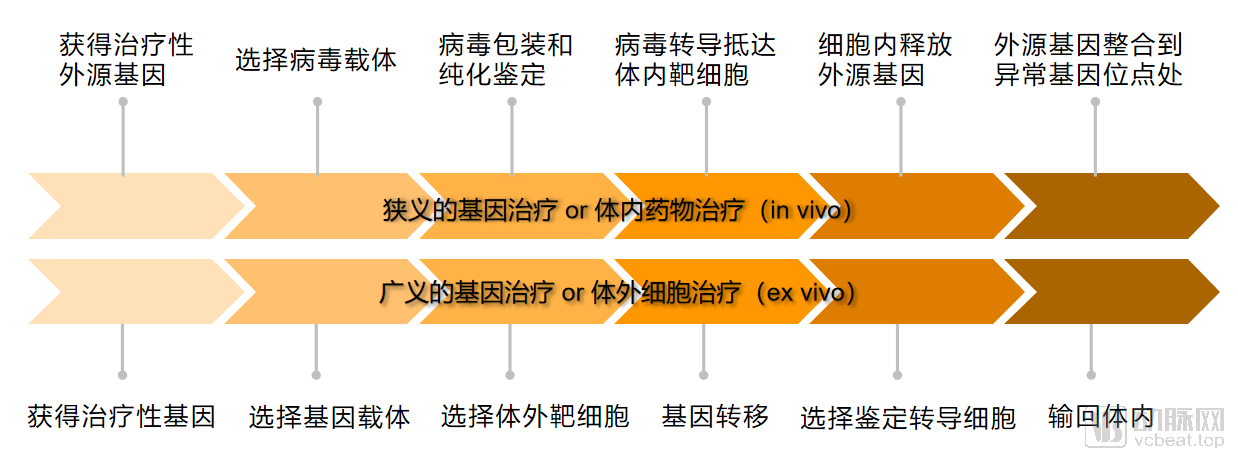
Basic Workflow of Gene Therapy
By defining the concept of gene therapy, we can identify a critical step in the gene therapy process, namelyIntroduction of Exogenous Genes. There are multiple methods for introducing exogenous genes into target cells, with the most common being biological methods, specifically viral transfection. Additionally, physical and chemical methods exist, achieved through techniques such as microinjection and DNA micro-particle bombardment, respectively. However, compared to biological methods, physical and chemical approaches exhibit significantly lower transfection efficiency, resulting in limited application and narrow usage scenarios.
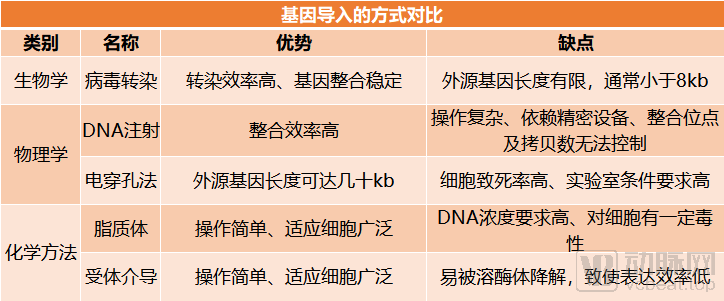
Comparison of Several Methods for Introducing Exogenous Genes into Target Cells (Viral Transduction vs. Other Methods)
The aforementioned CRISPR/Cas9 is the “star technology” of gene editing. In the context of narrow-sense gene therapy, it is a gene-editing approach employed when exogenous genes, already delivered into target cells, need to be integrated into specific target sites within the genome of those cells. Certainly, gene-editing tools extend far beyond this; existing methods include, but are not limited to, ZFNs, TALENs, Cre/loxP systems, and transposon insertion.
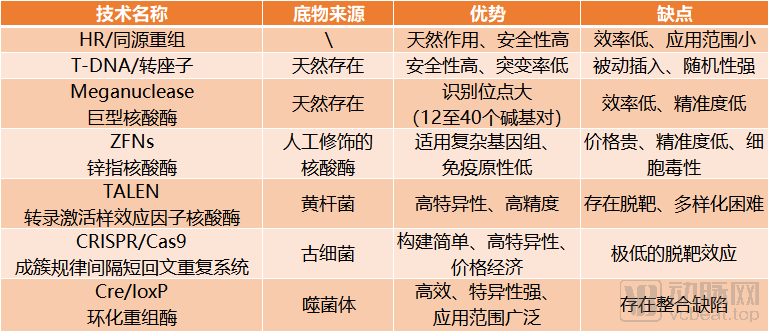
Comparison of Several Gene Editing Technologies
Unlike other gene-editing technologies,Homologous Recombination (HR)This form of genetic modification does not rely on specific tools such as “molecular scissors” (e.g., nucleases); instead, it leverages the natural mechanism of homologous DNA recombination to exchange (recombine) genetic information between two similar (homologous) strands. It represents one of the earliest gene-editing approaches. Researchers produce and isolate DNA fragments containing sequences homologous to the target region of the genome to be edited, introduce these fragments into target cells, where they undergo recombination with the cellular DNA, thereby replacing the targeted genomic segment.
Gene editing mediated by homologous recombination is also known as "gene targeting" or "gene targeting technology.", enabling the insertion of exogenous DNA sequences in the presence of homologous intracellular sequences to replace or delete target genes or partial gene sequences. However, this technique is associated with a high error rate and extremely low efficiency, and is currently limited to species with low frequencies of DNA recombination, such as microorganisms and bryophytes.
Besides special HR,Transposongene editing under the influence of, andMeganucleaseWe will not provide an in-depth interpretation of gene modification mediated by these mechanisms, as their applications in the industry are extremely limited. Although both techniques rely on naturally occurring mechanisms within the human body to perform gene editing, transposon-based editing is random and discontinuous (“jumping”), making it difficult to control; meanwhile, meganuclease-based editing suffers from extremely low efficiency and poor controllability of precision. Both technologies fail to meet the growing demands of functional genomics research.
Provide a detailed interpretation of the four common gene-editing technologies: CRISPR/Cas9, Cre/loxP, ZFNs, and TALENs.
CRISPR/Cas9It is currently the most widely used gene-editing tool, found to be associated with bacterial adaptive immunity, and this mechanism is prevalent in bacteria and archaea. Simply put, throughout the course of evolutionary history, bacteria have developed a unique immune system capable of excising viral genes from their own genomes to prevent viruses from integrating viral DNA into their genomic sequences. This function is similar in principle to RNA interference (RNAi) in eukaryotes.
Leveraging the mechanism of action of this system, scientists have developed the CRISPR/Cas9 gene-editing tool. This tool treats the genomic DNA of target cells as viral or exogenous DNA and cleaves it with high precision. By introducing a repair template plasmid (donor DNA molecule) into the cells, fragment insertion or site-specific mutations can be incorporated during the repair process in accordance with the provided template, thereby enabling gene replacement or mutation.
“If CRISPR/Cas9 is a ‘shotgun,’ then Cre/loxP is a ‘trap.’”Cre/loxP Trap"Composed of Cre recombinase and loxP sites. Cre recombinase is a site-specific DNA recombinase discovered in bacteriophage P1; loxP is also a special DNA sequence derived from bacteriophage P1."
Cre recombinase can mediate sequence deletion or recombination between loxP sites: when two loxP sites at both ends of the target site are locatedthe same DNA strandAbove andSame Direction, Cre recombinase mediates the sequence between loxP sitesResection; conversely, it mediates inversion; if two loxP sites are located atDifferent DNA StrandsorChromosome, Cre recombinase mediates twoDNA Strand ExchangeorChromosomal Translocation。
Unlike the CRISPR/Cas9 and Cre/loxP systems,ZFNsandTALENGene editing is even simpler and more straightforward. It can be directly understood as “genetic scissors”—restriction enzymes that can cut specific DNA sequences. These artificially engineered nucleases/restriction enzymes can precisely cleave target sequences at designated sites, and, in conjunction with the DNA repair system, introduce random mutations or customized sequences during the repair process, thereby achieving targeted gene modification.
It is worth noting that not all pharmacotherapies involving gene editing can be classified as gene therapy. Many companies in the industry have developed engineered drugs using gene-editing techniques and labeled their treatments as gene therapy, which is, in fact, an imprecise characterization.
2Popular Vectors for Gene Therapy: AAV Viruses
Historically, humanity’s exploration of gene therapy for disease treatment can be traced back to 1962, when Szybalski et al. first discovered that Ca²⁺ could stimulate the uptake of DNA into cells, laying the groundwork for subsequent artificial transfer of genetic material by scientists.
The first gene therapy widely recognized by the academic community was conducted in 1973, when American scientists in Germany attempted to restore deficient enzymes in patients to normal levels via viral vector delivery; the final outcome demonstrated neither efficacy nor adverse effects.
After nearly 50 years of development, humanity has taken this “giant leap” in gene therapy.
According to information disclosed on the FDA’s official website, in “Cell and Gene Therapy Products“Eighteen products have already been approved in this category; however, a brief screening reveals that the majority are cell transplantation products based on HPC umbilical cord blood. It was not until 2017 that the FDA approved the first gene therapy, independently developed by Novartis,”KymriahApproved for the treatment of acute lymphoblastic leukemia.
Subsequently, in August of the same year, the U.S. FDA approved Kite Pharma’sYescartafor the treatment of large B-cell lymphoma; at year-end, Spark Therapeutics' independently developedLuxturnaAnother FDA Approval for the Treatment of Hereditary Retinal Dystrophies.
However, a persistent controversy remains: some in the academic community argue that Spark Therapeutics’ Luxturna gene therapy is the only one that qualifies as true gene therapy, while Kymriah and Yescarta are classified as cell therapies.
On the FDA’s official website, Kymriah and Yescarta are defined as “Cell-Based Gene Therapy”, tracing back to the concept of gene therapy, both Kymriah and Yescarta involve genetic modification (by adding new genes) to enable target cells to produce specific proteins. After being infused back into the patient, these proteins direct T cells to target and kill cancer cells expressing specific antigens, thereby achieving therapeutic effects. This belongs toGene Therapy in the Broad Sense(The products expressed by exogenous genes in the patient's body can treat a certain disease). In this light, the underlying logic of CAR-T cell therapy is essentially derived from gene therapy approaches.
Unlike Kymriah and Yescarta,Luxturna is rightly considered a gene therapy (in the narrow sense)., Luxturna is an adeno-associated virus (AAV)-based gene therapy that delivers a functional RPE65 gene directly to diseased retinal cells. The protein expressed from this gene converts light into electrical signals in the retina, thereby restoring patients' vision.
Subsequently,2017 was hailed as Year One of gene therapy.By May 2019, the FDA had approved another gene therapy based on AAV viral vectors—developed by NovartisZolgensma, for the treatment of children under two years of age with spinal muscular atrophy. The drug achieved $160 million in sales within just four months of its market launch. This demonstrates that, within the gene therapy sector, adeno-associated virus (AAV) vectors were the first to achieve industrialization and commercialization.
Adeno-associated virus (AAV) is a non-enveloped virus approximately 26 nm in size, with an icosahedral capsid structure. It belongs to the genus Dependoparvovirus within the family Parvoviridae and requires co-infection with a helper virus (such as adenovirus or herpesvirus) for replication. Compared with other viral vectors, such as adenovirus, AAV is widely recognized as the most extensively used and promising vector for gene therapy, owing to its favorable safety profile, broad host cell range, low immunogenicity, and prolonged expression of exogenous genes in vivo.
In addition to AAV, viral vectors currently used in clinical practice include adenovirus (AdV), lentivirus (LV), and retrovirus (RV).
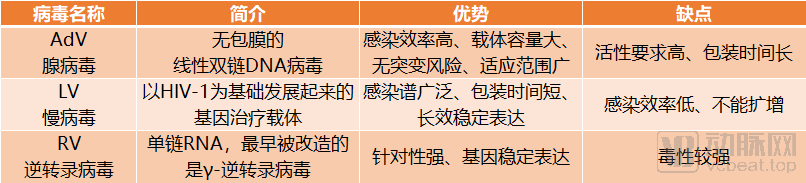
Comparison of Several Types of Viral Vectors
3China's Gene Therapy Industry: In the Early Exploration Stage, with Undiminished Capital Interest
From the perspective of the concept of gene therapy, the number of domestic companies engaged in gene therapy is very limited; indeed, the number of CROs providing outsourced services related to gene therapy is comparable to that of gene therapy companies themselves. Gene therapy is a sector characterized by high barriers and high risks. At this stage, when the domestic market is not yet mature, engaging in CRO services related to gene therapy can, to some extent, mitigate the risks associated with directly operating and developing gene therapies for enterprises.
VCBeat has compiled a brief overview of domestic companies currently involved in gene therapy-related businesses, providing a preliminary classification and analysis.(Note: There is controversy over whether the companies in red font are gene therapy enterprises.)
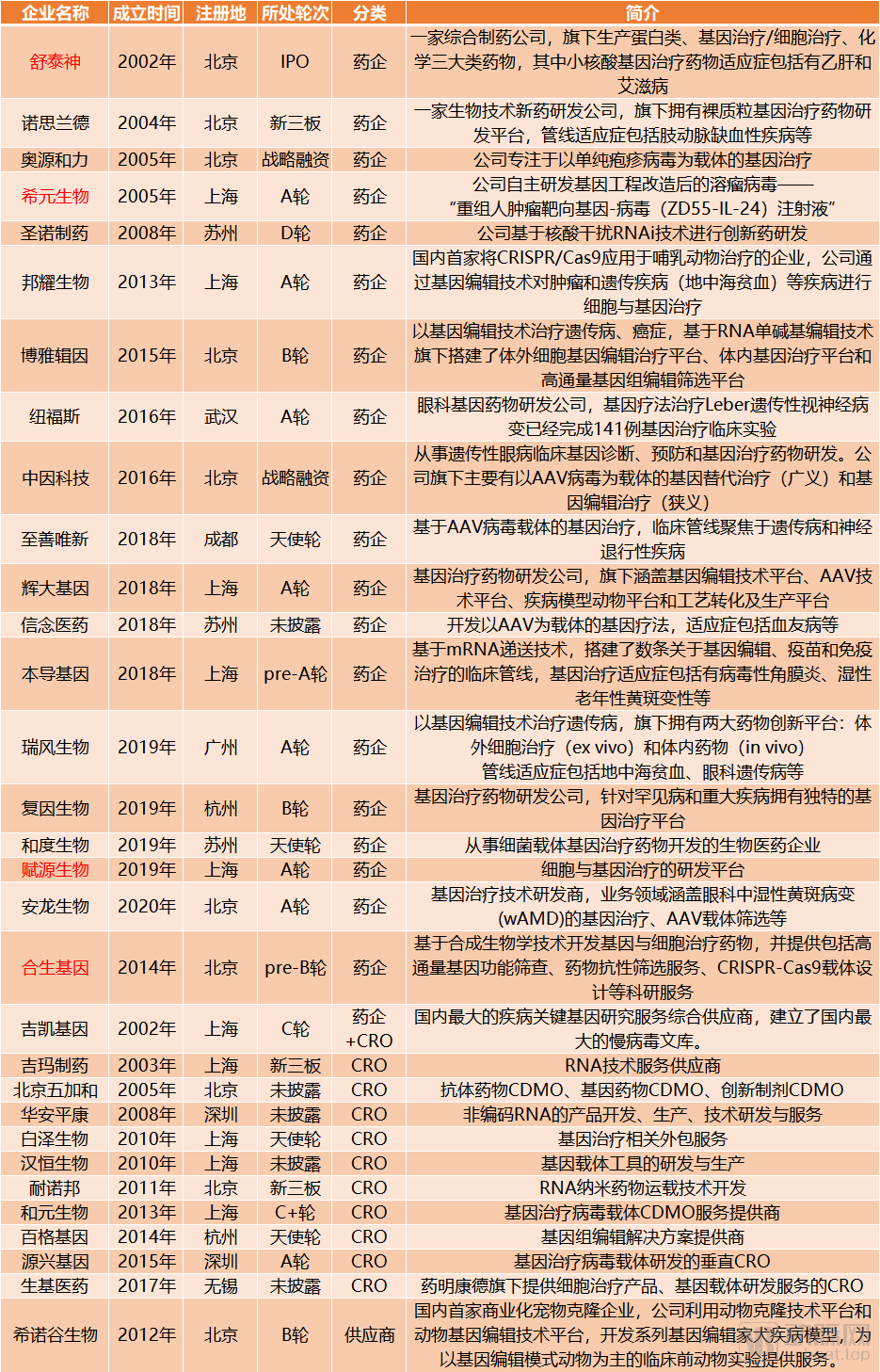
Selected Companies in China’s Gene Therapy Industry
(Note: Data sourced fromVBData, companies with inaccurate data or those not included are welcome to contact VCBeat for joint discussion)
We have categorized domestic gene therapy companies along two dimensions: founding year and financing round. The data show that the establishment of Chinese gene therapy firms is concentrated primarily in 2018 and 2019, with Series A and angel rounds being the most common financing stages (excluding undisclosed rounds). This indicates that China’s gene therapy industry remains largely in its early stages, with startups constituting the main force in the domestic gene therapy sector.
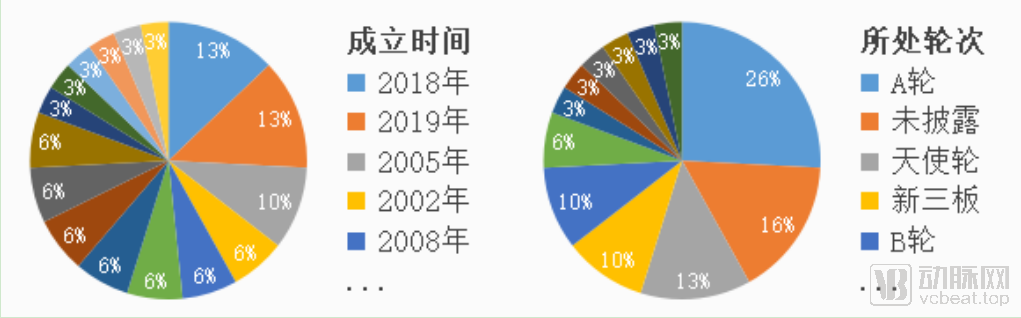
Distribution of Founding Years and Funding Rounds for Gene Therapy Companies in China
This differs from the cell therapy industry, where China and international markets have advanced in tandem; in the gene therapy sector, a significant gap still exists between China and Europe and the United States. Why has China failed to replicate such success in transitioning from cell therapy to gene therapy? VCBeat conducted an exclusive interview withDr. Yang Hui, founder of Huida Gene, a leading company in the gene editing industry, he explained the reasons to us.
First,Gene Therapy Faces Higher Technical Barriers Than Cell TherapyAlthough gene therapy drugs have nearly 30 years of development history, the “Philadelphia Children’s Hospital” incident in 2001 led to widespread skepticism toward gene therapy, with the U.S. FDA even halting clinical trials for a period. It was not until Spark Therapeutics’ gene therapy received approval in 2017 that investors both domestically and internationally began to recognize the feasibility of gene therapy. The potential of gene-editing technologies further came into focus following CRISPR Therapeutics’ clinical trials in 2019, prompting a surge of companies entering the gene therapy sector in China.
Second,Compared to the “fertile” soil that nurtured the initial incubation of cell therapy, the current technical and industrial ecosystem for gene therapy in China remains highly “infertile.”. China’s cell therapy sector emerged from the maturation of stem cell technology, a period during which overseas cell therapy technologies were also developing concurrently. However, in the field of gene therapy, China currently lacks such support.
In addition to the establishment time and funding rounds, another characteristic of China’s gene therapy industry can be observed from the table: there is a large number of contract research organizations (CROs). Among the 31 gene therapy-related companies included in the statistics, 11 are gene therapy CROs, with those providing viral vector R&D services being the most prevalent.
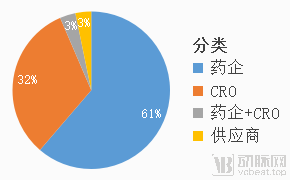
Classification of Gene Therapy Company Attributes
This industry distribution is a true reflection of the early stage of China’s gene therapy sector. With gene therapy technology still immature in China, most resources are currently being invested in manufacturing and CRO services. Once gene therapies gain regulatory approval for market launch in China, CROs may not only expand their gene therapy-related businesses but also potentially develop their own clinical pipelines for gene therapies.
“The reason why CRO companies are increasingly choosing to provide R&D services for viral vectors is becauseLarge-Scale, Industrial-Grade Viral Vector Packaging and Production Is a Key Factor Limiting the Industrialization of Gene Therapy in China。”Dr. Hui Yang, Huada Gene“It told VCBeat that ‘CDMO companies in China engaged in process development for viruses such as AAV started relatively late, and their accumulation of talent and technology lags far behind international standards. This makes it difficult to meet the industrial-scale production needs from R&D to commercialization. Only after viral process development matures can the development of gene-editing technologies in the market advance more rapidly, and gene therapy pipelines be brought to fruition more quickly.’”
It is challenging for China’s gene therapy industry to catch up with Europe and the United States. To break free from a perpetual “follow” position and circumvent patent restrictions on Western DNA editing tools during future commercialization, Professor Yang Hui suggests that the domestic gene therapy sector could start from the foundational “Delivery Technology" and "Editor Tools“Overtaking on the curve” at two levels. Since we cannot bypass foreign patent protections for DNA editing technologies, any further modifications by enterprises will still be subject to IP restrictions in the future. Therefore, it is evident that the threshold for domestic innovation in current gene therapy alternatives has become significantly higher, leaving fewer opportunities to catch up with Europe and the United States.
4Amid the pandemic, global interest in gene therapy remains undiminished as RMB 1.6 billion flows into China’s sector
2020 was an exceptional year for the healthcare industry. The COVID-19 pandemic spurred explosive growth in COVID-19-related medical testing and care services, while peripheral healthcare sectors not related to COVID-19 care suffered significant setbacks. According to ResearchAndMarkets’ report “Gene Therapy - Global Market Trajectory and Analytics,” the global gene therapy market contracted by 13.6% in 2020.
Amidst such “scorching heat and bitter cold,” gene therapy companies have forged ahead, delivering a stream of good news in the quiet year of 2020.
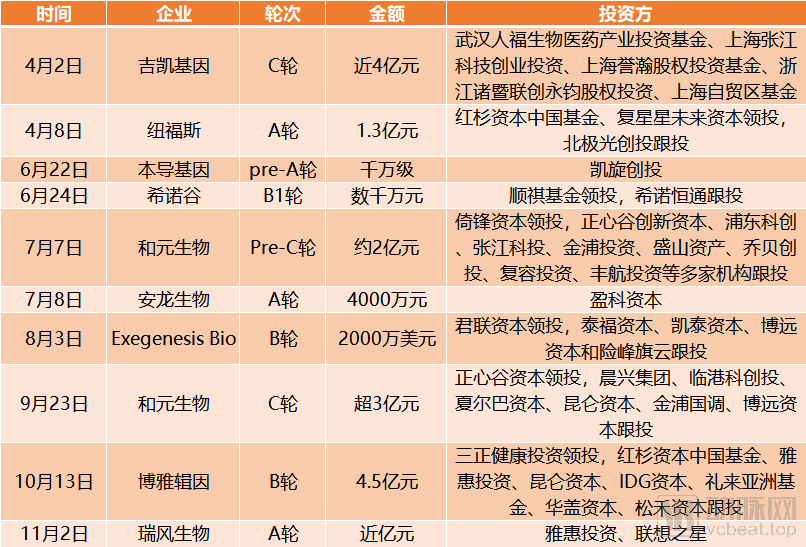
2020 Financing Landscape of China’s Gene Therapy Industry (Data Source: VBInsight Database)
Based on the financing landscape in the gene therapy sector this year, Obio Technology has demonstrated exceptional performance. On July 7 and September 23, 2020, the company completed a Pre-Series C round of approximately RMB 200 million and a Series C round exceeding RMB 300 million, respectively. Both the number of financing rounds and the total capital raised rank among the top in the industry.
Obio Technology is a cell and gene therapy CDMO established in 2013. With the R&D and manufacturing of recombinant viruses for gene therapy as its core business, the company is dedicated to providing high-quality products and technical services to the biopharmaceutical industry. Currently, it operates three major business segments: life science basic research services, gene therapy drug incubation, and industrial-scale production of clinical-grade recombinant viruses. In the field of gene therapy, the company primarily provides technical support such as viral vector R&D services.
“Since the beginning of this year, there have been more than 10 financing events in China’s narrow gene therapy sector (excluding oncolytic viruses, RNAi, etc.), indicating strong investor interest and clear intentions to position themselves in this space. Some gene therapy companies have even achieved high valuations.”Zhou Yihui, Investment Director at Qingtong Capital“During the course of our project advancement, we have clearly felt the growing enthusiasm in the gene therapy sector. Companies are essentially facing a situation where demand from investors far outstrips supply, leaving them overwhelmed with interest. Meanwhile, companies are also continuously tightening their timelines for fundraising.”
“We anticipate that capital interest in gene therapy will maintain this year’s momentum into next year. Qingtong Capital remains bullish on this sector, and we look forward to seeing robust progress from companies operating within it.”Zhou Yihui, Investment Director at Qingtong CapitalTo summarize, the pipeline projects of most gene therapy companies in China are still in the early stages of investigator-initiated or sponsor-led clinical trials, and it will take considerable time before their products gain regulatory approval for market launch.
In contrast, gene therapy companies in Europe and the United States have made rapid clinical progress, with 10 companies releasing updates on their gene therapy pipelines so far this year alone.
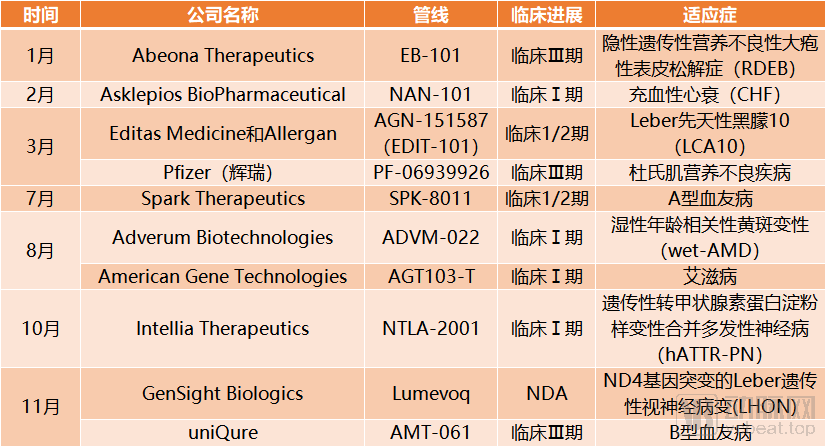
Latest Progress in the Global Gene Therapy Clinical Pipeline in 2020 (Data Source: Arterial Orange Database)
In January 2020, Abeona Therapeutics announced that it had received Institutional Review Board (IRB) approval to initiate the Phase III VIITAL trial of its gene therapy candidate EB-101 for the treatment of recessive dystrophic epidermolysis bullosa (RDEB).
In February 2020, gene therapy company Asklepios BioPharmaceutical announced that the first patient in its Phase I clinical trial of NAN-101 had been treated. NAN-101 is a gene therapy designed to activate protein phosphatase inhibitor-1 (I-1c) to inhibit the activity of protein phosphatase 1 (PP1), thereby treating congestive heart failure (CHF).
In March 2020, Editas Medicine and Allergan jointly announced that the first patient had been dosed in the Phase 1/2 clinical trial named Brilliance. This trial involves AGN-151587 (EDIT-101), a pipeline product based on CRISPR gene-editing technology, for the treatment of patients with Leber Congenital Amaurosis 10 (LCA10).
In the same month, Pfizer announced that its gene therapy candidate PF-06939926 had entered Phase III clinical trials for the treatment of Duchenne muscular dystrophy. This candidate is a gene replacement therapy utilizing adeno-associated virus serotype 9 (AAV9) as the vector.
In July 2020, Spark Therapeutics announced updated data from its Phase 1/2 clinical trial of SPK-8011, an investigational gene therapy for hemophilia A. Among the 12 patients who received one of three different doses of the gene therapy, follow-up over 2 to 3.3 years showed a 91% reduction in the annualized bleeding rate (ABR) and a 96% reduction in factor VIII infusion usage, with stable and durable factor VIII expression observed in patients.
In August 2020, Adverum Biotechnologies, a gene therapy company, announced positive results from its independently developed intravitreal injection (IVT) gene therapy ADVM-022. Phase I trial data for the treatment of wet age-related macular degeneration (wet AMD) demonstrated that a single administration of ADVM-022, at both low and high doses, significantly reduced the annualized frequency of anti-vascular endothelial growth factor (VEGF) injections in patients who previously required frequent anti-VEGF therapy.
In the same month, American Gene Technologies, a U.S. biotechnology company, announced that it had received approval from the U.S. FDA to initiate a Phase I clinical trial of its AGT103-T cell product, aiming to eliminate HIV in individuals living with HIV through gene therapy.
In October 2020, Intellia Therapeutics announced that the MHRA had authorized the company to initiate a Phase 1 clinical trial to evaluate the efficacy and safety of its gene-editing therapy, NTLA-2001, for the treatment of hereditary transthyretin-mediated amyloidosis with polyneuropathy (hATTR-PN).
In November 2020, the gene therapy company uniQure announced key Phase III clinical trial data for AMT-061 in patients with hemophilia B. The results demonstrated that AMT-061 was well tolerated after administration, with no treatment-related serious adverse events reported. Seventy-two percent of patients (39/54) reported no bleeding episodes, and the mean annual consumption of factor IX (FIX) replacement therapy decreased by 96%. AMT-061 is an adeno-associated virus serotype 5 (AAV-5)-based gene therapy that enables sustained elevation of FIX levels to therapeutic ranges following a single dose.
InNew Gene Therapy Drugs Hit the MarketIn this regard, in November this year, the European Union accepted the marketing application for Lumevoq, a gene therapy drug under GenSight Biologics, which has now entered the review process. We believe that good news will soon follow.
In addition, Zolgensma, the gene therapy from Novartis that was listed in the United States last year, has also received marketing approval this year from the EMA and Japan’s Ministry of Health, Labour and Welfare for the treatment of pediatric patients under two years of age with spinal muscular atrophy (SMA), officially entering the Japanese SMA market.
Similarly, as the momentum behind gene therapy continues to build,Some large multinational pharmaceutical companies have also begun to incorporate gene therapy into their pipeline strategies through acquisitions and other means.。
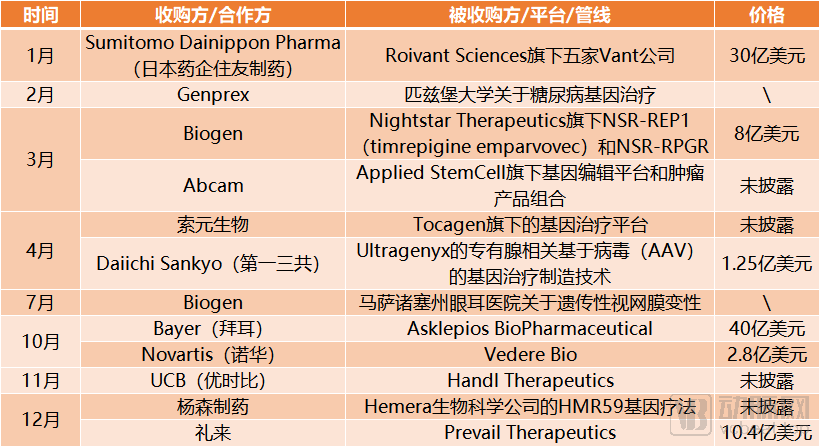
Latest Developments in Mergers, Acquisitions, and Collaborations in the International Gene Therapy Industry in 2020 (Data Source: VCBeat Database)
In January 2020, Japanese pharmaceutical company Sumitomo Dainippon Pharma completed the $3 billion acquisition of five Vant companies under Swiss innovative biopharmaceutical company Roivant Sciences, thereby acquiring the pipeline of two gene therapies, SPIRO-2101 and SPIRO-2102, from Spirovant Sciences.
In February 2020, gene therapy company Genprex announced an exclusive licensing agreement with the University of Pittsburgh for a gene therapy targeting diabetes. The therapy aims to reprogram pancreatic cells to restore their ability to produce insulin, thereby treating both type 1 and type 2 diabetes.
In March 2020, Biogen acquired the ophthalmic gene therapy company Nightstar Therapeutics for approximately $800 million in cash, thereby obtaining the ophthalmic gene therapy assets NSR-REP1 (timrepigine emparvovec) and NSR-RPGR. NSR-RPGR consists of an AAV8 vector containing codon-optimized human RPGR (AAV8-coRPGR).
In the same month, Abcam announced an asset acquisition of Applied StemCell’s gene-editing platform and oncology portfolio for the life sciences research and diagnostics markets. Applied StemCell is a market leader in engineered cell lines, dedicated to advancing genome editing technologies into novel therapies to facilitate drug development.
In April 2020, Sorrento Therapeutics acquired the global rights to Tocagen’s gene therapy platform (the Replicating Retroviral Vector platform, RRV) and all related product pipelines, with the exception of the Greater China rights for one product.
In the same month, Japanese pharmaceutical company Daiichi Sankyo announced a strategic collaboration with Ultragenyx Pharmaceutical to non-exclusively license Ultragenyx’s proprietary adeno-associated virus (AAV)-based gene therapy manufacturing technology. Daiichi Sankyo will make an upfront payment of $125 million to Ultragenyx, with an additional $25 million payable upon successful technology transfer and commercialization of products manufactured using this platform.
In July 2020, Biogen and Massachusetts Eye and Ear, an affiliate of Harvard University, signed a patent agreement to develop therapies for inherited retinal degeneration caused by PRPF31 gene mutations.
In October 2020, Bayer announced the $4 billion acquisition of U.S. biopharmaceutical company Asklepios BioPharmaceutical (AskBio), securing full rights to AskBio’s gene therapy platform and integrating AskBio into Bayer’s emerging cell and gene therapy business.
In the same month, Novartis announced the acquisition of U.S.-based gene therapy company Vedere Bio for a total consideration of $280 million, aiming to strengthen its leadership in gene and cell therapies and gain access to Vedere Bio’s comprehensive gene therapy platform for ophthalmic diseases.
In November 2020, UCB announced the acquisition of Handl Therapeutics, a startup developing transformative gene therapies. Concurrently, it entered into a new collaboration agreement with Lacerta Therapeutics, a clinical-stage gene therapy development company. These recent acquisitions and partnerships will significantly accelerate UCB’s research and development progress in gene therapy.
In December 2020, Janssen Pharmaceuticals, a subsidiary of Johnson & Johnson, acquired the patent rights to HMR59, a gene therapy developed by Hemera Biosciences. HMR59 is a one-time, outpatient intravitreal injection therapy for the treatment of geographic atrophy associated with macular degeneration.
In the same month, Eli Lilly and Company announced the acquisition of gene therapy company Prevail Therapeutics for approximately $1.04 billion. Prevail Therapeutics is dedicated to developing adeno-associated virus 9 (AAV9) vector-based gene therapies for patients with neurodegenerative diseases. This acquisition will add a gene therapy clinical pipeline to Eli Lilly’s portfolio and broaden its strategic layout in treating hereditary neurodegenerative diseases.
Beyond industrial developments, scientists’ enthusiasm for frontier gene therapy technologies has remained undiminished this year. There have been continuous breakthroughs in applying gene-editing techniques to combat diseases such as AIDS, cancer, obesity, and eye disorders. Whether it is the initial success of editing SIV to counteract immunodeficiency caused by HIV, or the successful in vivo cleavage of cancer cell DNA using the CRISPR/Cas9 system, every incremental advance in gene-editing technology will ultimately culminate in a major leap forward for human gene therapy.
Special Acknowledgments
Dr. Yang Hui, Founder of Huada Genomics
Zhou Yihui, Investment Director at Qingtong Capital
References
"Comparison of Cell Transfection Methods" by Detai Biology
《Methods, Principles and Application of Gene Editing》Hans Journal of Biomedicine