

Dialogue with Ray Yang of YuanYi Capital: Focused on Early-Stage Investments and Industry Trends

MARATHON VENTURE PARTNERS
Early-stage venture capital institution
Before entering the venture capital industry, Yang Ruirong had nearly a decade of government experience; his tenure in the Department of Personnel of the Ministry of Commerce influenced his later investment style.
In 2004, Yang Ruirong entered the venture capital industry, helping Lancheng Asia establish offices in Shanghai and Beijing, and leading and participating in a series of successful investments in the consumer and technology sectors. Since 2010, Yang Ruirong has served as a partner at Northern Light Venture Capital, responsible for investments in the healthcare and financial technology fields. In 2016, he left Northern Light Venture Capital and co-founded MARATHON VENTURE PARTNERS with his former colleague Chen Qiang, focusing on investments in the broader health industry.
Representative projects led or participated in by Yang Ruirong include Shukun Technology, Medbanks Health, Beden Medical, Mingyi Zhonghe, Xunshi Technology, Lenuo Medical, Hope Bioscience, YunKai YaMei, Weimai Medical, Burning Rock Biotech, ThunderSoft, BGI Genomics, Annoroad Gene Technology, Basecare Medical, iRay Technology, Daqing Biology, Micropoint Bioscience, and YiXinLi.
From HR Official to Investment Trailblazer: How Did Yang Ruirong Make the Transition? What Impact Did His Tenure at the Department of Personnel of the Ministry of Commerce Have on His Investment Philosophy? What Is His Investment Logic? How Has He Strategically Positioned Himself in the Greater Health Industry?
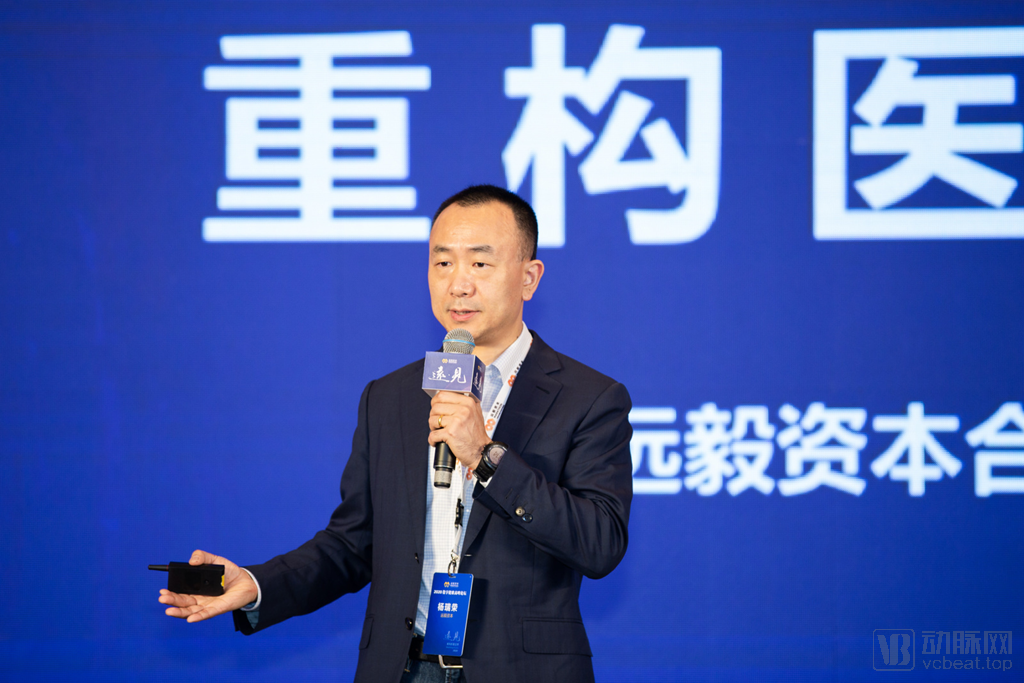
(Yang Ruirong, MARATHON VENTURE PARTNERS)
Recently, Li Datao, founder of VCBeat, engaged in an in-depth dialogue with Yang Ruirong, Partner at MARATHON VENTURE PARTNERS.
VCBeat:In 2015 and 2016, a cohort of seasoned investors departed from their incumbent institutions. Although these individuals cited various reasons for their departure, this trend resembled the “entrepreneurial fever” of 1998, representing more of a phased collective phenomenon. Behind such collective behavior lies the logic of societal transformation. Therefore, by examining this specific case, we explore China’s industrial and social transformations: Why did a group of investors choose to establish their own firms in 2015 and 2016?
Yang Ruirong: This is actually a major trend.
From an industry perspective, the most significant trend is increasing segmentation and specialization. In 2004, domestic investment institutions were scarce, with funds predominantly foreign-owned. Subsequently, internet-focused funds, TMT funds, and consumer-sector funds gradually emerged, leading to a flourishing venture capital market. In 2009, the launch of the ChiNext board spurred the creation of numerous investment firms, triggering an explosive growth phase for RMB-denominated venture capital and private equity. By 2010, a new generation of investors had matured, bringing unprecedented diversity and vibrancy to the entire industry.
By 2014, the venture capital (VC) market had grown sufficiently large for the "winner-takes-all" effect to become evident. The most direct impact was the need for greater industry segmentation and specialization, a trend also observed in the U.S. market. Consequently, investors began exploring various approaches to investing in vertical sectors, particularly in highly specialized markets such as healthcare. Against this backdrop, a cohort of investors left their former firms in 2015 and 2016 to focus exclusively on niche-sector investments.
From the perspective of market competition, investing in niche segments offers greater opportunities. Since 2014, the venture capital market has exhibited a pronounced "head effect," making it difficult for new entrants to compete with well-established investment firms. However, in niche sectors, new players may actually seize greater growth opportunities and gain a competitive edge through specialized expertise.
VCBeat:How did you initially assess the healthcare industry?
Yang Ruirong: This has been a continuous process of reflection, beginning when I first started investing in the healthcare sector. In 2010, there was a lack of specialized investment funds in the market. However, from a macroeconomic perspective, as social consumption reaches a certain stage, the share of healthcare in GDP will continue to rise, and the development opportunities within the healthcare industry will become increasingly significant.
First, healthcare is a natural trend following consumption upgrading. With China’s economic development and the continuous rise in national income, people have begun to prioritize their physical health and aspire to enjoy a better quality of life. Consequently, consumer (patient) spending in the healthcare sector has steadily increased.
Secondly, an increasing number of healthcare professionals have begun launching startups in China. At that time, a large cohort of biopharmaceutical experts returned to the country to start businesses, injecting new vitality into the domestic healthcare industry. Additionally, large multinational pharmaceutical and medical device companies have operated in China for many years; while generating substantial profits, they have also cultivated a pool of healthcare and management talent. Around 2010, some of these individuals began venturing out on their own. Taking medical imaging as an example, talent emerging from large multinational corporations has come to dominate half of the investment and entrepreneurial landscape in this sector.
Finally, healthcare reform is in full swing, with policy driving rapid industry development. In 2010, the impact of healthcare reform penetrated to the level of medical enterprises and investment; the reform is transforming the healthcare industry, creating significant opportunities for entrepreneurship and investment in the medical field.
In summary, driven by multiple factors including market dynamics, talent availability, technological advancements, and policy support, the healthcare industry is embracing significant development opportunities, thereby presenting substantial investment prospects in the medical sector.
VCBeat:During your tenure at Northern Light Venture Capital, which portfolio companies did you consider standout investments? What was the underlying investment thesis?
Yang Ruirong: At Northern Light Venture Capital, my greatest satisfaction came from mapping out the gene sequencing and medical imaging subsectors.
In 2013, Aurora Venture Partners strategically invested in BGI, a pioneer in life sciences, thereby entering the gene sequencing sector. Through its investment in BGI, Aurora Venture Partners gained a comprehensive understanding of the gene sequencing landscape and subsequently invested in Annoroad Gene Technology, a provider of non-invasive prenatal testing (NIPT) services, and Burning Rock Biotech, a supplier of integrated precision medicine solutions.
In the field of medical imaging, we started with core components by first investing in iRay Technology, a developer of digital X-ray detectors, and subsequently expanded downstream by investing in Weimai Medical, a company focused on interventional diagnosis and treatment equipment.
Subsequently, Marathon Venture Partners invested in Shukun Technology, a high-tech medical AI company. In fact, this represents an extension into the field of medical imaging, spanning from core components and complete equipment to solutions and artificial intelligence.
This also reflects the investment logic of MARATHON VENTURE PARTNERS: entering a niche sector through an initial investment case, gaining a thorough understanding of the entire field, and then gradually deploying across the full industry chain.
VCBeat:Before the establishment of MARATHON VENTURE PARTNERS, how did you build your team?
Yang Ruirong: The primary consideration at the time was the foundation of trust. My partner, Chen Qiang, is my senior alumnus; we attended the same university and later worked together in the Personnel Department of the Ministry of Commerce. Both of us also served as diplomats. These shared experiences helped us establish a solid basis of trust. With his prior experience in the insurance industry, Chen Qiang oversees the fintech sector at MARATHON VENTURE PARTNERS. Over time, through referrals from friends, we gradually built a comprehensive investment team.
VCBeat:What left a deep impression was that VCBeat released a report on primary healthcare in 2017, which included a list of companies. It was later reported that Marathon Venture Partners had reached out to every company on that list. How does Marathon Venture Partners view specific industry segments? How does it evaluate investment opportunities?
Yang Ruirong: At times, certain cases prompt deep reflection on the entire industry. For instance, a case quality control project led us to systematically examine the DRG payment sector and trace its intricacies throughout the industry.We hope our investments are not in early-stage companies.Project, weHopeTargeting early-stage industries。
Investment hinges most critically on understanding its underlying context and logic. When an industry is still a tender sprout, we can clearly discern its internal structure. If we begin monitoring the industry at this early stage, we will understand how it grows into a towering tree; and even when it matures into a dense forest, we can still perceive the industry’s underlying dynamics through the canopy.
The same logic applied to our initial focus on primary healthcare, as there are still significant pain points to be addressed in this sector. Policies such as tiered diagnosis and treatment will drive the development of primary healthcare; therefore, we conducted a comprehensive review of the primary healthcare industry at that time. In fact, our investments in the primary healthcare sector continue to inform and support our current investment logic and strategy.
VCBeat:To date, MARATHON VENTURE PARTNERS has invested in over 40 projects. What does its investment landscape look like?
Yang Ruirong: Approximately 15% of our investment portfolio is dedicated to pure fintech, while the remaining 85% focuses on healthcare. Based on our current industry insights, these projects can be categorized into three areas: access, efficiency, and payment.
Primary care and internet-based healthcare are both components of patient access, for example,Beideng Medical: China's National Digital Medical Device Supply Chain Service Platform, Yun Kai Ya Mei, a comprehensive service platform focused on vertical disease areas of chronic and special diseases... These companies all reach patients and serve the terminal through various methods.
In terms of innovative payment solutions, our first-round investments in leading domestic players—such as Medbanks Health, a pioneer in innovative pharmaceutical payment services; Baozhunniu, a leader in scenario-based insurance; and DaoCloud, a frontrunner in container technology—have helped patients make payments more conveniently, while providing technical support and model innovation in the insurance and payment sectors.
Efficiency refers to leveraging innovative technologies to enhance diagnostic and treatment efficiency across the entire healthcare journey, including pre-diagnosis, during diagnosis and treatment, and post-treatment phases. For instance, high-throughput sequencing technology enables precise diagnosis in the pre-diagnosis stage. Non-invasive prenatal testing (NIPT) can replace traditional prenatal screening for Down syndrome and amniocentesis, thereby improving efficiency while reducing patient discomfort. During the diagnosis and treatment phase, technologies such as 3D printing, artificial intelligence, and surgical robots assist physicians in boosting diagnostic and therapeutic efficiency, shortening treatment and recovery times. Ultimately, these efficiency gains help address or alleviate the shortage of medical resources in China. In the post-treatment phase, greater emphasis is placed on whole-course disease management, employing efficient methods to improve physicians’ patient management efficiency, thereby delivering better clinical outcomes for patients.
VCBeat:"Everyone is talking about digitalization these days. What is MARATHON VENTURE PARTNERS' definition and understanding of digitalization?"
Yang Ruirong: Digitalization is a broad concept. We believe that any effort to digitize disease diagnosis and treatment can be categorized as digital health. Digital technologies include social networks, as well as emerging digital technologies such as 3D printing, artificial intelligence (AI), robotics, and blockchain.
We regard digital technology as a tool, with the ultimate goal remaining to help patients achieve better clinical outcomes. In this process, the linkage and integration of data generated by various digital technologies create greater value. Such data include information from Hospital Information Systems (HIS), genomic sequencing, wearable devices, consumer transactions, behavioral trajectories, and new drug research and development. By integrating these data around the patient, we can truly realize smarter and more personalized diagnosis and treatment.
From this perspective, innovation opportunities continue to emerge in the generation, collection, storage, and application of medical data.
VCBeat:Could the Development of Digital Technologies Lower the Skill Requirements for Doctors and Technicians?
Yang Ruirong: Indeed. If social networks have made it more convenient to connect doctors with patients, then new-generation digital technologies such as AI and robotics are helping physicians expand the boundaries of their capabilities, making high-quality medical care more accessible. From an international perspective, the da Vinci Surgical System is a typical example: surgical robots have extended surgeons’ capabilities, enabling procedures that were previously difficult or infeasible. From a domestic perspective, Shukun Technology, in which we have invested, has intelligentized the interpretation of medical images, empowering physicians at primary-care hospitals to produce high-quality medical imaging reports.
VCBeat:"Everyone has been talking about digitalization in recent years, and almost everyone believes that digitalization is the direction of the future. What sets MARATHON VENTURE PARTNERS apart from others when it comes to focusing on digitalization?"
Yang Ruirong: MARATHON VENTURE PARTNERS did not first identify digitalization and then turn its attention to it; rather, while tracking industry developments, we first identified opportunities in patient engagement, payment, and operational efficiency. We discovered that the underlying driver of these opportunities was digitalization, which ultimately led us to refine our investment focus on digital health. In fact, this reflects MARATHON VENTURE PARTNERS’ overall investment logic and approach: deriving insights from actual investment cases, establishing practical pathways first, and then formulating theoretical frameworks.
VCBeat:What do you envision the state of the internet healthcare industry to be when it reaches equilibrium in the future?
Yang Ruirong: From a macro perspective, the market will evolve into a tripartite landscape. First, general practice traffic monopolists will emerge; in traffic-dependent businesses such as light consultations and pharmaceutical e-commerce, these monopolists will hold an absolute advantage.
Secondly, offline medical institutions will continue to occupy a significant market share. Leveraging the power of the internet for technological upgrades, these institutions will sustain their development, bolstered by strengths in branding, physician talent, and academic expertise.
Finally, startups will seek growth opportunities in specific disease niches. For instance, by integrating medical expertise with digital technologies for whole-course management of particular diseases, they can strengthen their competitive moats in these specialized areas.
VCBeat:Why Does MARATHON VENTURE PARTNERS Engage in Early-Stage Investment? Why Is Its Positioning Focused on the Early Stage?
Yang Ruirong: It’s in my nature. I enjoy engaging with early-stage entrepreneurs and relish the thrill of discovering new industries.
For MARATHON VENTURE PARTNERS, investing in the mid-to-late stages does not confer a competitive advantage. Instead, by leveraging our resource network across the healthcare, insurance, and internet sectors, we can enter industries at an early stage, thereby positioning ourselves to capture excess returns.
In fact, we are more passionate about creating value and identifying trends. We take great pride in spotting an industry trend or uncovering a promising niche sector.
In fact, early-stage investment requires nothing more than conviction.
VCBeat:How Do You Evaluate an Entrepreneur?
Yang Ruirong: My approach is to “listen.” I simply need entrepreneurs to clearly articulate their experiences, from which I gather substantial information and make judgments based on these insights.
In fact, we do not rely on a template or framework to judge individuals. Human beings are complex, and investing is an art form. Applying templates or frameworks to evaluate people often leads to erroneous conclusions.
We do not believe that any individual is guaranteed to succeed in handling every task; instead, we place greater emphasis on assessing their suitability for the specific role.
VCBeat:Describe yourself and the entrepreneurs you invest in using a few words.
Yang Ruirong: Grounded in his work, straightforward and action-oriented.
VCBeat:Entrepreneurs are inherently driven by an impulse to expand. How do investors view this drive for expansion?
Yang Ruirong: Entrepreneurs must have a certain impulse; if they are unwilling to take risks, they are not cut out for entrepreneurship. In a sense, entrepreneurs inevitably exhibit a higher risk appetite. The founders we invest in typically possess a solid financial foundation and substantial industry experience. They made the decision to start their own ventures only after hitting career bottlenecks, which demonstrates their inherent willingness to embrace risk.
VCBeat:What are the mission and vision of MARATHON VENTURE PARTNERS?
Yang Ruirong: Our goal is to become the premier digital health fund in forward-looking sectors, while delivering substantial returns to our investors. Our culture is defined by openness, equality, and growth. On one hand, an open internal and external culture helps MARATHON VENTURE PARTNERS continuously expand the boundaries of thinking and identify new tracks. On the other hand, we strive to build relationships of equality and mutual trust with entrepreneurs, growing together with them. True to our name, early-stage investment and entrepreneurship are both marathons; we are committed to partnering with entrepreneurs to go the distance and achieve success through perseverance.