

WeDoctor Showcases Digital Healthcare Leadership at the 6th Yabuli Young Entrepreneurs Innovation Forum Amid IPO Filing
On December 18, the 6th Innovation Annual Conference of the Yabuli China Entrepreneurs Forum was held in Kunshan, Suzhou. Liao Jieyuan, Chairman and CEO of WeDoctor Group, was invited to deliver a keynote speech at the opening ceremony, sharing with attendees practical insights and reflections on how enterprises can achieve growth through innovation and transformation in the digital era.
The outbreak of the COVID-19 pandemic has exposed weaknesses in the traditional healthcare service system, presenting significant opportunities and challenges to the medical and health services industry. In the fight against the epidemic, the healthcare sector, empowered by digital technologies such as the internet and artificial intelligence, has demonstrated unprecedented strength.
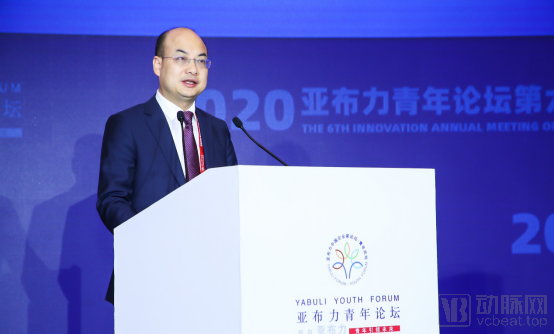
“The pandemic has driven the digital migration of medical and health services, accelerating the digital transformation of the healthcare delivery system.” Liao Jieyuan explained in his presentation that during the pandemic, digital health platforms—including WeDoctor—leveraged innovative digital tools to provide public anti-epidemic services such as free online consultations, epidemic science popularization, psychological support, and remote consultations. These measures effectively reduced the risk of cross-infection and alleviated the burden on frontline medical institutions.
It is reported that the “Real-Time Assistance Platform for COVID-19,” launched by WeDoctor at the outset of the pandemic, handled up to 280,000 online consultations in a single day at its peak, meeting 97% of Wuhan’s demand for online follow-up visits among patients with severe chronic conditions. As of December 17, the platform had mobilized a total of 75,000 physicians, served 2.33 million patient visits, recorded over 196 million page views, and reached users in more than 220 countries.
“Digital healthcare services have become a norm and are penetrating every sector of China’s healthcare system,” said Liao Jieyuan. As a data-driven healthcare service platform, WeDoctor has been continuously exploring higher-quality and more efficient pathways for medical care. By integrating medical services, pharmaceuticals, and health insurance, it aims to fill and improve the gaps in health management mechanisms, providing users with integrated online and offline healthcare services.
As a pioneer of internet hospitals in China, WeDoctor has built an online medical service platform through digital technology, enabling users to access comprehensive healthcare services anytime and anywhere. It continuously explores and drives innovation in chronic disease management in China, establishing a full-lifecycle chronic disease management service system that covers pre-diagnosis, during-diagnosis, and post-diagnosis stages.
Meanwhile, leveraging health big data, WeDoctor provides comprehensive data empowerment for commercial health insurance—spanning product design, risk control, services, and claims processing—thereby establishing an integrated health security service system that combines basic medical insurance with commercial insurance, and continuously delivering high-quality, efficient health management services to users.
It is reported that WeDoctor Internet General Hospital has launched 30 internet hospitals in China, 18 of which have been designated as medical insurance providers. The platform connects more than 7,600 large and medium-sized hospitals, 22 chronic disease management centers, 26,000 primary healthcare institutions, and 33,000 pharmacies. With over 250,000 physicians practicing online, it provides medical and health services to more than 210 million registered users. Meanwhile, WeDoctor leverages internet, cloud computing, and big data technologies integrated with smart terminal devices to establish a three-tier medical security network spanning “county–township–village” levels, thereby addressing the difficulties faced by grassroots populations in accessing medical care.
In the era of the Industrial Internet, China’s digital health market continues to expand, driven by growing demand for high-quality medical and healthcare services, the formation of user habits, the improvement of payment systems involving both basic medical insurance and commercial health insurance, and policy support. The market is gradually segmenting into distinct tracks, primarily comprising pharmaceutical e-commerce and digital medical services. Pharmaceutical e-commerce focuses mainly on health-related consumer goods and over-the-counter (OTC) retail, where consumers make independent choices, with price and traffic serving as key factors. In contrast, digital medical services provide in-depth offerings such as professional diagnosis and treatment, health maintenance, prescription drugs, and health insurance. These services are primarily guided by physicians’ clinical judgments, with reimbursement through medical insurance and the capacity to deliver medical care becoming critical determinants.
As a frontrunner in the digital medical services sector, WeDoctor delivers rigorous and professional healthcare services to users by continuously innovating its application of digital technologies. “Digital health platforms with substantial revenue volumes will account for 20–30% of the entire big health industry, with the digital medical services segment exhibiting even more pronounced growth—a future landscape we can foresee,” said Liao Jieyuan. He noted that industry development will be significantly accelerated by the catalytic effect of the pandemic, reaching the projected proportion within approximately five years.