Hospital Digital Transformation 2020: New Events, Emerging Trends, and Evolving Scenarios
Over the past decade, the focus of digital transformation in hospitals has centered on information technology infrastructure. Electronic medical records (EMR) and Hospital Information Systems (HIS) have become standard across most major hospitals, while digital auxiliary systems used more extensively in clinical stages, such as Clinical Decision Support Systems (CDSS) and Picture Archiving and Communication Systems (PACS), are increasingly being integrated into diagnostic and treatment processes at major hospitals throughout China.
In 2020, the healthcare industry moved into the spotlight amid the COVID-19 pandemic. Public attention focused on the contributions of medical staff in combating the virus and on hospitals’ survival challenges during lockdowns. In reality, however, hospital digitalization has continued to advance unabated despite the pandemic. Here, we summarize five key events in 2020 that shaped hospital digitalization, along with the future trends they are likely to drive.
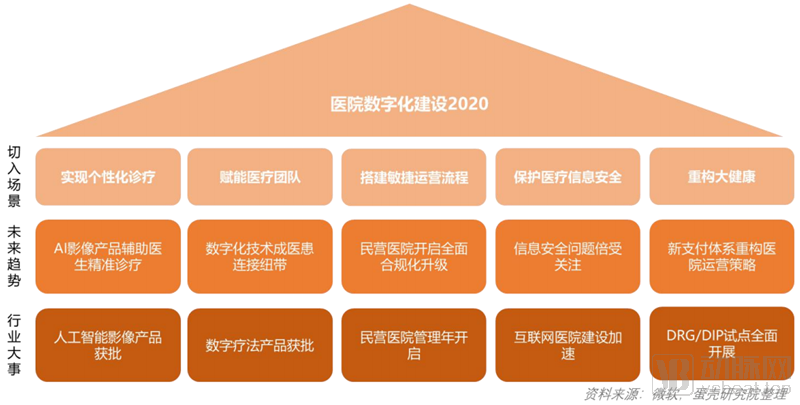
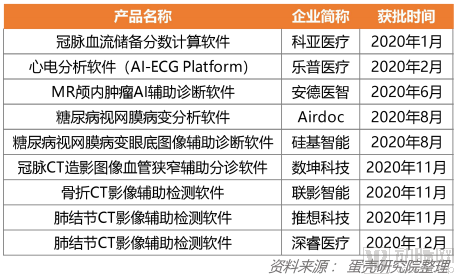
AI Imaging Products Approved—After Keya Medical secured the first Class III medical device certification for an AI product in January 2020, nine companies—including Lepu Medical, Ande Yizhi, Airdoc, Silicon Intelligence, Shukun Technology, Infervision, and Deepwise Medical—subsequently received regulatory approval for their core products, enabling their official market launch. AI imaging products will undoubtedly assist radiologists in achieving more precise diagnoses, effectively reducing misdiagnoses and missed diagnoses. Meanwhile, hospitals’ willingness to procure AI imaging solutions will directly determine whether AI imaging companies can successfully validate their business models.
Digital Therapeutics Product Approved— This year, the approval of the digital therapeutic product “ShuKang” has once again brought this field back into the spotlight. Following the intense competition among numerous diabetes management platforms, China’s digital chronic disease management sector has gradually forged a unique development path, shifting its core focus from patients to hospitals. By providing Software-as-a-Service (SaaS) solutions to hospitals, it aims to enhance the connectivity and efficiency between patients and healthcare institutions.
Private Hospital Management Year Kicks Off—In August 2020, the National Health Commission and the National Administration of Traditional Chinese Medicine jointly issued the “Notice on Launching the ‘Private Hospital Management Year’ Campaign.” During this two-year campaign, the foremost challenge addressed was regulatory compliance in private hospitals. While leading hospitals possessed sufficient financial and human resources to adapt to heightened compliance requirements, how should small and medium-sized private medical institutions respond to the suddenly tightened regulatory demands?
Acceleration of Internet Hospital Development—Over the past two years, physical hospitals have replaced internet healthcare companies as the dominant force in the development of internet hospitals, thereby sparking a series of reflections on cybersecurity issues. In the course of hospital digitalization, the number of connection ports between hospital intranets and external networks has increased, boundaries have become increasingly blurred, and data stored within intranets face more severe security challenges.
Comprehensive Rollout of DRG/DIP Pilot Programs——In November 2020, the list of pilot cities for Diagnosis-Intervention Packet (DIP) was released, with the number of pilot regions more than double that of the Diagnosis-Related Group (DRG) pilot areas. Whether under DRG or DIP, the traditional fee-for-service payment system will be disrupted. With the shift to case-based payment, how should hospitals rapidly adjust their operational strategies to adapt to the new payment system?
The trends driven by these five major events reflect the five key scenarios currently facing hospitals in their digital transformation, namely:Deliver Personalized Diagnosis and Treatment, Empower Medical Teams, Build Agile Operational Processes, Safeguard Healthcare Information Security, and Reshape the Broader Health Ecosystem. This report will provide a detailed analysis of each scenario to clarify the development direction of hospital digitalization in the coming years.
2020 marked a new watershed moment for the field of artificial intelligence. Since Keya Medical obtained the first Class III medical device certificate for an AI-based product in January 2020, nine products have successively received approval from the National Medical Products Administration (NMPA). These approvals span multiple disease areas, including CT-derived fractional flow reserve (CT-FFR), electrocardiography, intracranial tumors, diabetic retinopathy, fractures, and lung cancer. AI-powered medical imaging has finally moved beyond the phase of “unlicensed operation” and has officially begun to be implemented in clinical practice within hospitals.
Imaging screening and diagnosis is one of the primary functions of medical AI. Leveraging AI-based image recognition and algorithmic models, it enhances the speed and accuracy with which radiologists interpret images, enabling early identification of suspected cases for isolation and treatment, thereby reducing the risk of transmission. Currently, AI imaging products cannot fully replace radiologists; instead, they primarily provide auxiliary diagnostic support to improve diagnostic accuracy, with a key focus on employing high sensitivity to prevent missed diagnoses by radiologists.
Previously, AI imaging had not received official certification and was primarily deployed in leading hospitals for research purposes. With the acquisition of Class III medical device certification, AI will not only empower large tertiary Grade A hospitals but also increasingly extend its reach to primary care institutions.
Historically, most AI products have chosen to establish themselves in large tertiary hospitals to access richer medical data resources, superior physician teams, and stronger payment capabilities. However, given the current distribution of healthcare resources in China, it is primary care that stands in greater need of AI empowerment. Primary healthcare institutions suffer from weak infrastructure, a shortage of medical talent, and suboptimal diagnostic and treatment standards. By leveraging AI to assist primary care physicians in disease diagnosis, treatment, and patient management, we can help alleviate the imbalance in the distribution of medical resources.
Meanwhile, AI functionalities should be differentiated across healthcare institutions at various levels. For large tertiary Grade A hospitals, the primary focus is on standardizing diagnostic and treatment protocols, reducing missed diagnoses, alleviating physicians’ workload, and enhancing the hospital’s research capabilities. For primary care institutions, the main objectives are to improve physicians’ diagnostic proficiency, minimize misdiagnoses, broaden disease coverage, and optimize patient management, thereby encouraging patients to seek care at the primary level.
However, this shift has also created another challenge for the deployment of AI-based medical imaging solutions. Beyond top-tier tertiary hospitals, will more primary and secondary healthcare institutions be willing to pay for AI imaging products? Hospitals need to proactively recognize and understand these technologies before deciding whether to purchase AI-driven solutions.
To date, there have been no incentive policies for hospitals’ radiology departments to procure AI products. The policy most closely related to the implementation of AI imaging products is the “Administrative Measures (Trial) and Evaluation Criteria for the Graded Evaluation of Electronic Medical Record System Application Levels” issued by the National Health Commission at the end of 2018. While Levels 3, 4, and 5 of the evaluation respectively require basic, intermediate, and advanced clinical decision support, they do not explicitly specify requirements for the use of AI imaging.
Therefore, although AI imaging products have obtained regulatory approval, their adoption in secondary hospitals and lower-tier institutions may be relatively delayed. The next phase may require further policy incentives to boost procurement interest among more primary care hospitals. Meanwhile, hospitals should give greater consideration to the role of AI imaging products in enhancing their diagnostic and treatment capabilities. For hospitals seeking to improve the quality of radiology services but lacking support from highly skilled physicians, AI imaging products may represent the optimal choice in the current landscape.
Digital Therapeutics (DTx) is a software-based therapy that provides patients with evidence-based therapeutic interventions to prevent, manage, or treat diseases. It can be used independently or in conjunction with medications, devices, or other therapies. Traditionally, patients would fill prescriptions issued by physicians at pharmacies. Digital therapeutics replace the medication with a digital application, which may be purely software-based or a combination of software and hardware.
The U.S. FDA’s regulatory framework for digital therapeutics is relatively mature. By the first half of 2020, a total of 29 distinct digital therapeutic products had been approved for market launch (including three products approved through the emergency review pathway), with all products registered as Class II medical devices. VCBeat has categorized these products into three major groups based on an analysis and synthesis of their functionalities: digital chronic disease management products, digital pharmaceuticals, and digital treatment regimens.
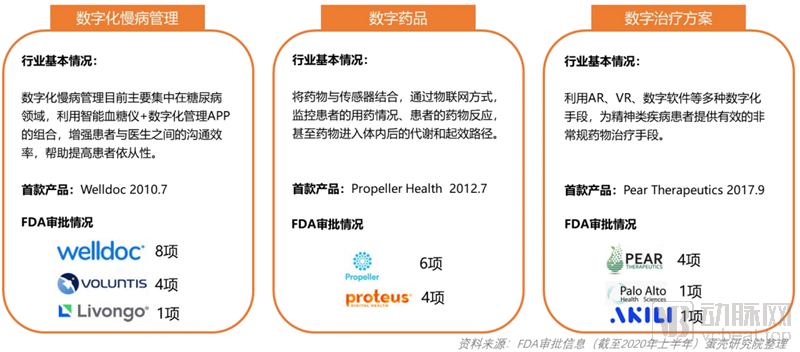
These three major product categories have advanced almost in lockstep overseas, whereas the situation in China differs slightly.
The development of the digital therapeutics sector in China has been relatively lagging, with no benchmark enterprises emerging to date. In terms of digital treatment solutions, Zhijingling (Liuliunao) once obtained a Class II medical device registration certificate for its product, which is used for the comprehensive management of patients with brain dysfunction. However, overall industry interest remains low, and the pace of development has been slow.
In contrast, the development of digital chronic disease management in China is relatively advanced, particularly in the field of digital diabetes management, where leading companies have gradually emerged after intense market consolidation. Interestingly, the digital management product “Shukang,” approved this year, does not belong to the diabetes sector but instead focuses on rehabilitation. This also indirectly reflects the diversity of the development of China’s digital chronic disease management industry.
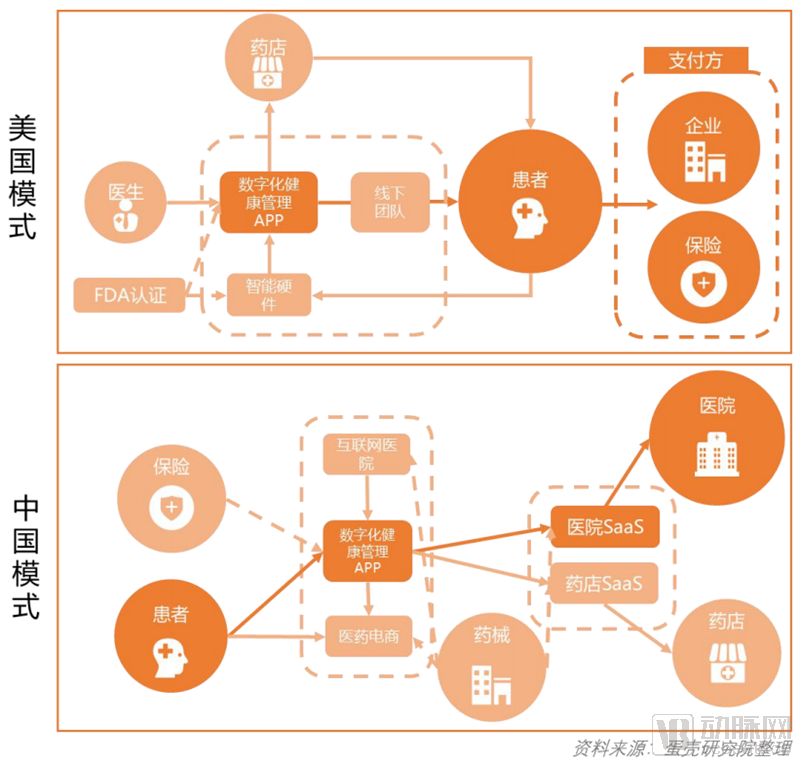
The business models for digital chronic disease management in China also differ from those abroad. In foreign markets, digital chronic disease management has benefited from mature payment systems involving enterprises and insurance providers, with stable payers willing to purchase related services. In the early stages of the development of digital patient management in China, many companies attempted to replicate this business model; however, due to the absence of clear payers, the industry temporarily reached a stalemate.
Subsequently, the industry shifted its mindset amidst the stalemate. Given patients’ low willingness to pay, the focus moved from a patient-centric model to a hospital-centric one. By introducing SaaS solutions into hospitals, companies enhanced hospitals’ stickiness with patients and shifted the payment burden to the hospitals. After accumulating substantial resources of both hospitals and patients within their digital management systems, these companies then empowered multiple stakeholders, including insurance providers and pharmaceutical and medical device manufacturers.
Therefore, China’s digital chronic disease management system has currently evolved into a hospital-centric ecosystem, becoming an integral component of hospitals’ digital management frameworks.
The successful approval of Shukang signals that this industry will gradually come under regulatory oversight in the near future, and it also means that digital chronic disease management products can be integrated into hospital diagnosis and treatment processes in a more compliant manner. For hospitals, as digital chronic disease management becomes a trend, they need to embrace this transformation with a more proactive attitude by incorporating long-term management of chronic disease patients into their own diagnosis and treatment systems.
After years of tortuous development, internet hospitals finally demonstrated their full value during the COVID-19 pandemic in 2020.
In response to epidemic prevention and control requirements, since 2020, multiple national ministries and commissions, including the National Health Commission and the National Healthcare Security Administration, have intensively issued a series of policies to vigorously promote the development of internet hospitals. From encouraging the development of online diagnosis and treatment services in early February, to the National Healthcare Security Administration’s announcement in early March that eligible fees for “Internet+” medical services would be covered by medical insurance, and further to the introduction of multiple regulatory policies in May and June, internet healthcare completed the full pathway of “compliance–payment–regulation” within just six months, entering a new era of development.
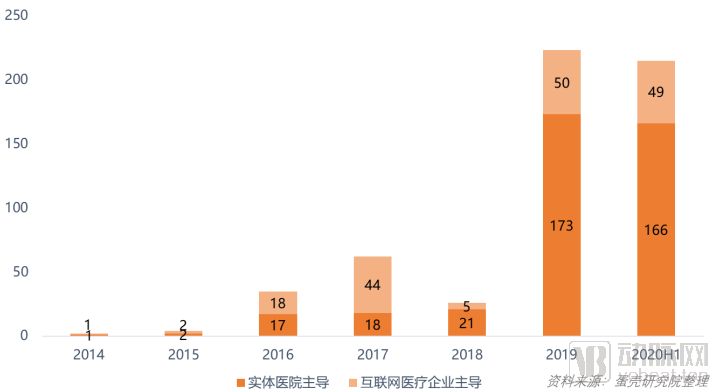
According to the latest statistics from VCBeat, enthusiasm for establishing internet hospitals continued to rise in 2020, with 215 internet hospitals registered and established in the first half of the year alone—nearly matching the total for the entire year of 2019. Meanwhile, the development of internet hospitals has shifted from being enterprise-led to being led by physical hospitals. Among the 438 internet hospitals registered and established between 2019 and the first half of 2020, 339 were initiated by physical hospitals, accounting for 77.4%. An increasing number of physical hospitals are choosing to go online, leveraging internet hospitals to provide services to a broader patient population.
It can be said that the core of today’s internet hospital industry lies in the digital transformation of physical hospitals. Amidst this wave of digitalization, security has become one of the primary concerns.
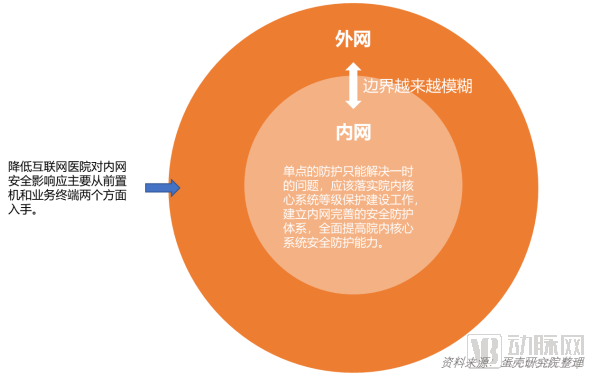
In response to the demand for interconnected and shared medical information across online and offline channels in internet hospitals, traditional, relatively closed intranet medical information environments are being integrated with the external internet. As previously grid-like connected hospital internal systems link with internet hospitals, the boundary between internal and external networks becomes increasingly blurred, significantly heightening the risks of network intrusion and information leakage within the intranet. Given the current inadequacies in cybersecurity protection capabilities at healthcare institutions, it is difficult to address the security risks brought about by digitalization, leading to a further increase in overall security risks for these institutions.
Relevant data in the healthcare industry has long been a target for hackers, and hospitals, as direct holders of medical data, frequently face attacks from various hacker groups. According to the "2020 Digital Healthcare: Research Report on Cybersecurity Risks During Epidemic Prevention and Control" released by the China Academy of Information and Communications Technology (CAICT), 29.8% and 28.88% of medical institutions had database services and file services exposed to the public internet, respectively, involving a total of 21,000 data assets.
During the COVID-19 pandemic, the widespread adoption of remote work exposed cybersecurity systems to significant threats from hackers. On January 31, 2020, brute-force attacks against the healthcare industry peaked at 800,000 attempts in a single day.
These data serve as a reminder to hospitals that, while pursuing digital transformation, they must carefully consider the adverse effects of the blurring boundaries between internal and external networks, and guard against malicious actors illegally infiltrating hospital intranet systems via internet channels.
The Report also points out that Remote Desktop Protocol (RDP) and SQL Server database services within the Windows ecosystem are primary targets for cyberattacks. However, this situation does not stem from Windows having a lower security standard than other systems. Dr. Xu Mingqiang, CTO of Microsoft China’s Omni-channel Business Unit, specifically addressed this issue at a series of forums on Microsoft’s support for digital transformation in the healthcare industry: “Security is akin to an endless game of cat and mouse between law enforcement and criminals; no operating system is inherently more secure than another at its foundation. The higher frequency of security incidents involving Windows is due to the greater profitability for attackers, which leads to a higher frequency of attacks.”
Microsoft has consistently maintained an annual investment of over $1 billion in security. Leverage the built-in security services within the Microsoft Azure cloud platform to safeguard data, applications, and infrastructure. These services feature unparalleled security intelligence that enables early identification of rapidly evolving threats and facilitates rapid response. Implement a layered, defense-in-depth strategy across identity, data, hosts, and networks; unify security management across hybrid cloud environments; and achieve advanced threat protection.
For detailed scenarios and specific case studies, such as “Regulatory Implementation: Compliance Upgrades in Private Hospitals Driven by the ‘Private Hospital Management Year’ Initiative” and “Payment Implementation: Strategic Shifts in Hospital Operations Under the New Payment System,” please refer to the full report.
The above is an excerpt from the report. Scan the QR code to read and access the full report.