

Synyi Intelligence Secures RMB 400 Million Series D Funding to Advance Data-Driven Smart Hospital Solutions

SYNYI AI
Provider of Comprehensive Solutions for Medical Big Data
On December 22, SYNYI·AI announced the completion of its RMB 400 million Series D financing round, led by CICC Jiazi, with follow-on investments from Sunshine Insurance Group and Tencent. Since its inception, SYNYI·AI has secured multiple rounds of funding from top-tier domestic investment firms, including ZhenFund, Sequoia Capital China, CEPC Health Fund, GGV Capital, Xianghe Capital, Tencent, and Sinopharm Capital. With this latest round, SYNYI·AI’s cumulative fundraising has reached nearly RMB 1 billion.
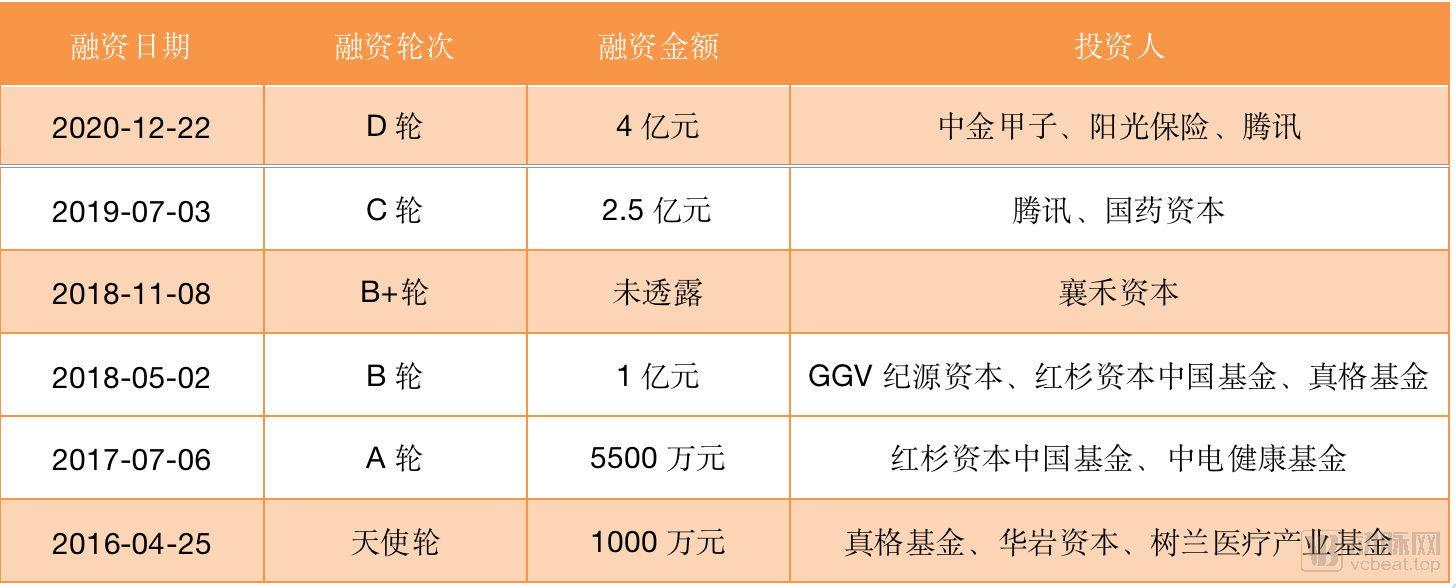
SYNYI·AI's Financing Path
Founded in 2016, SYNYI·AI has been dedicated to providing hospitals with professional and efficient data-driven and intelligent solutions. In just four years, it has risen to become a leading enterprise in smart healthcare, thanks to its rare innovation capabilities and comprehensive solution offerings within the industry. To date, SYNYI·AI employs over 500 staff members, including more than 200 R&D personnel. Its solutions have been implemented in over 150 Grade A tertiary hospitals across China.
Regarding the use of funds, Zhang Shaodian, Founder and CEO of SYNYI·AI, stated: “Following this round of financing, SYNYI·AI will further accelerate its market expansion to serve a broader client base, while increasing R&D investment in digital and intelligent healthcare solutions to strengthen the company’s long-term competitiveness. We look forward to helping hospitals efficiently achieve their digital and intelligent transformation and upgrading, supported by customer trust, the dedication of all employees, and the backing of the government and shareholders.”
The healthcare industry is highly policy-driven. The promotion of tiered diagnosis and treatment, along with related policies, has reshaped the landscape of information silos among hospitals. Meanwhile, precision medicine has prompted hospitals to utilize clinical data more effectively for diagnosis and treatment.
2020 was a landmark year for the rollout of healthcare policies, with a total of 20 policy documents outlining issues and reform directions in the digitalization and intelligent transformation of healthcare from multiple perspectives. VCBeat has selected eight of the most impactful policies as follows. Overall, internet-based healthcare serves as the application, related platform construction provides the support, grassroots informatization forms the foundation, and data governance connects these three elements, thereby unlocking greater value.
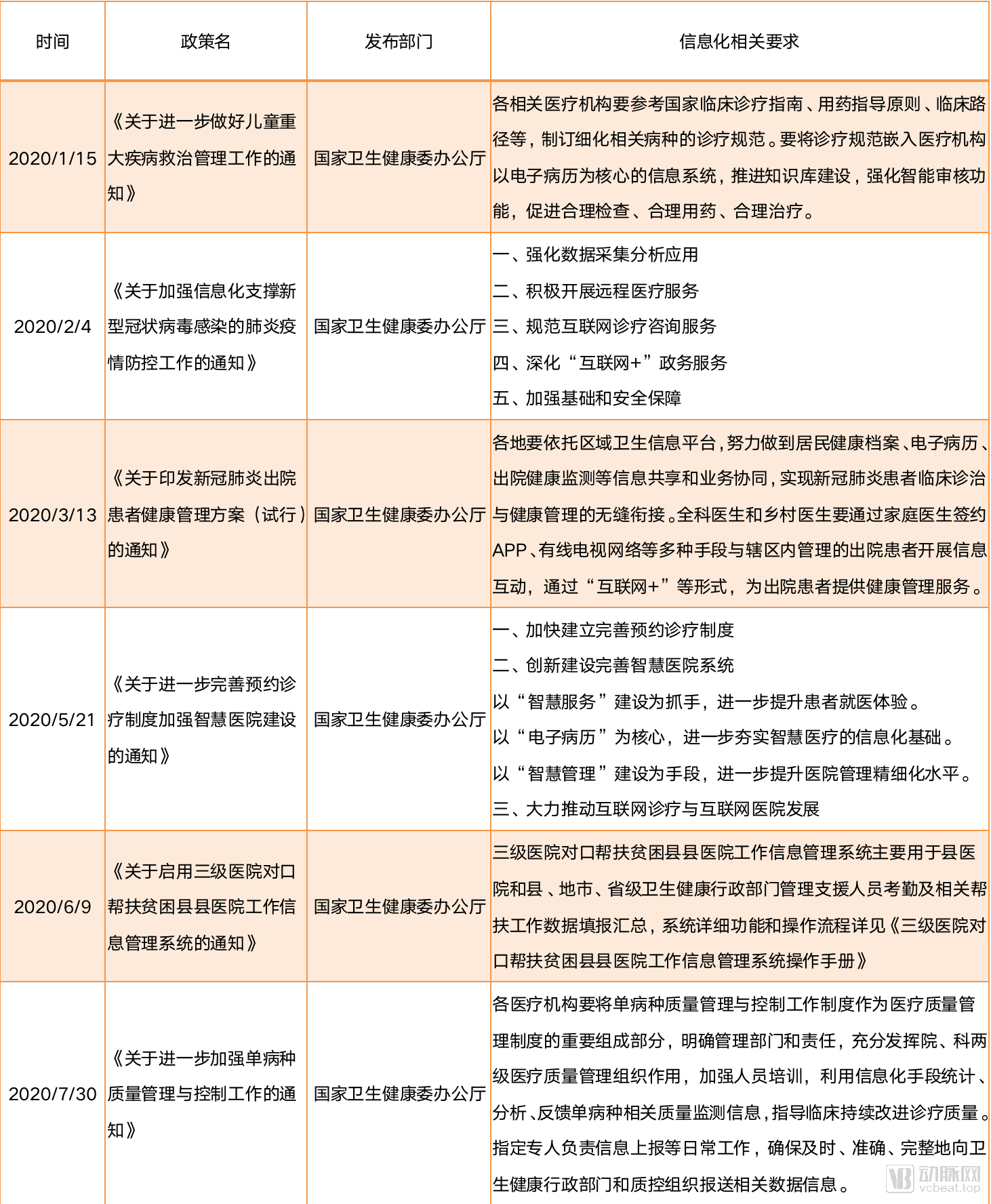
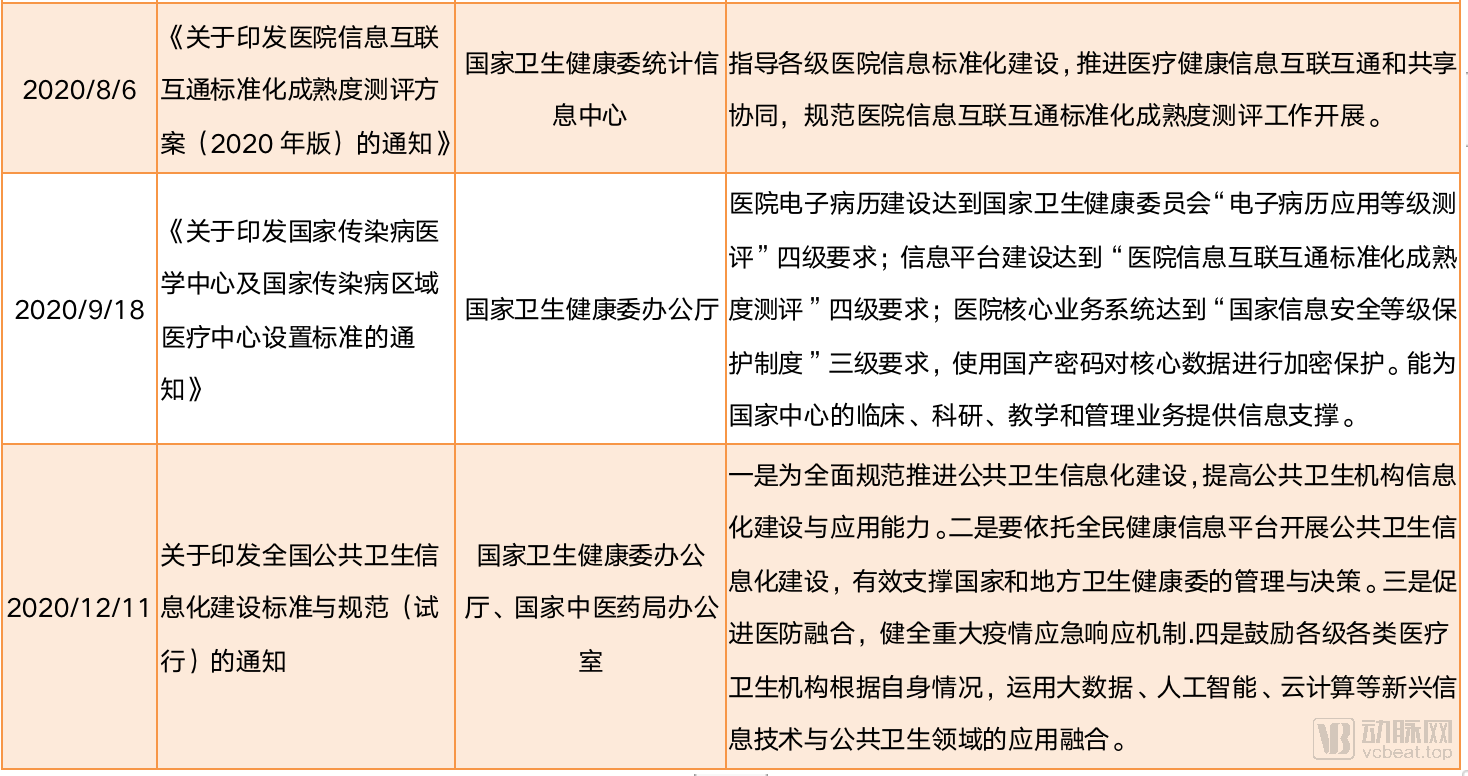
2020Overview of Smart Healthcare Policies (Table prepared by SYNYI·AI and VCBeat)
From the aforementioned policies, we can identify three major trends:
I. With the advancement of electronic medical record (EMR) adoption and interoperability ratings, the digitalization and intelligent upgrading of healthcare data have yielded significant results. Although new rating requirements and standards continue to be introduced, policy initiatives—such as hospital data reporting and leveraging data support for the prevention and control of the novel coronavirus pneumonia (COVID-19) outbreak—demonstrate that smart healthcare is moving toward the “application level,” with “data” set to become one of the central themes of the next phase of reform.
II. The emergence of the COVID-19 pandemic has imposed new requirements on existing information systems and data governance capabilities. On the consumer side, hospitals and related enterprises need to provide interfaces for residents to facilitate comprehensive data collection. On the business side, enterprises are required to assist hospitals in establishing regional information platforms and help hospitals and research institutions clean, categorize, and mine relevant data, thereby accelerating the upgrade of smart healthcare.
III. Medical emergency care, nursing services, and clinical management of antimicrobial drugs are being integrated with the Internet, necessitating support from new intelligent systems and data services.
The new demands generated by policy changes have presented fresh opportunities for innovative smart healthcare companies. After all, even as platforms are gradually established, hospitals still commonly face issues with missing key data and the specific data required for applications.Data update latency; non-standardized data content, including issues with format, length, and violations of value domain constraints; inconsistent semantics of medical terminology; post-structuring of unstructured dataFive Major Questions. The purpose of interoperability and electronic medical record (EMR) grading is to effectively utilize clinical data; therefore, data governance is crucial at this stage.
Zhang Shaodian told VCBeat, “Hospitals must first digitize their operational data. The underlying logic is to represent key events occurring during the diagnosis and treatment process through data. In this process, digitizing operational data essentially means delineating complex clinical workflows using data. For the healthcare industry, this effort has yielded phased achievements after more than 30 years of digital transformation.”
However,WhenAs intelligent technologies continue to break through with advancements in computing power and algorithms, their application in medical settings has revealed a scarcity of high-quality data truly suitable for modeling and prediction within hospitals.. In other words, the lack of high-quality data support makes it difficult for models to deliver their intended value; this is a major pain point in the industry and also the core reason why SYNYI·AI continues to strengthen its data governance system.
Next is the operationalization of data. The ultimate goal of SYNYI·AI is to empower clinical practice through intelligent technologies. The data it utilizes originates from clinical settings, and the final results must be fed back into clinical workflows. Through various data modeling techniques, what we ultimately obtain is merely another form of data. If such data—including patients’ health risk indices and alerts or reminders for physicians—cannot be delivered to the right personnel at the appropriate time, its potential to enhance clinical quality and outcomes will be significantly diminished.
Therefore, the process of feeding conclusive data back into clinical workflows in a rational manner constitutes the operationalization of data. Clinical data derived from patients, physicians, and information systems must ultimately be fed back to patients, physicians, and administrators through intelligent means.This establishes a full-chain closed loop spanning data collection, modeling, and intelligent enablement.This is precisely the development direction chosen by SYNYI·AI.
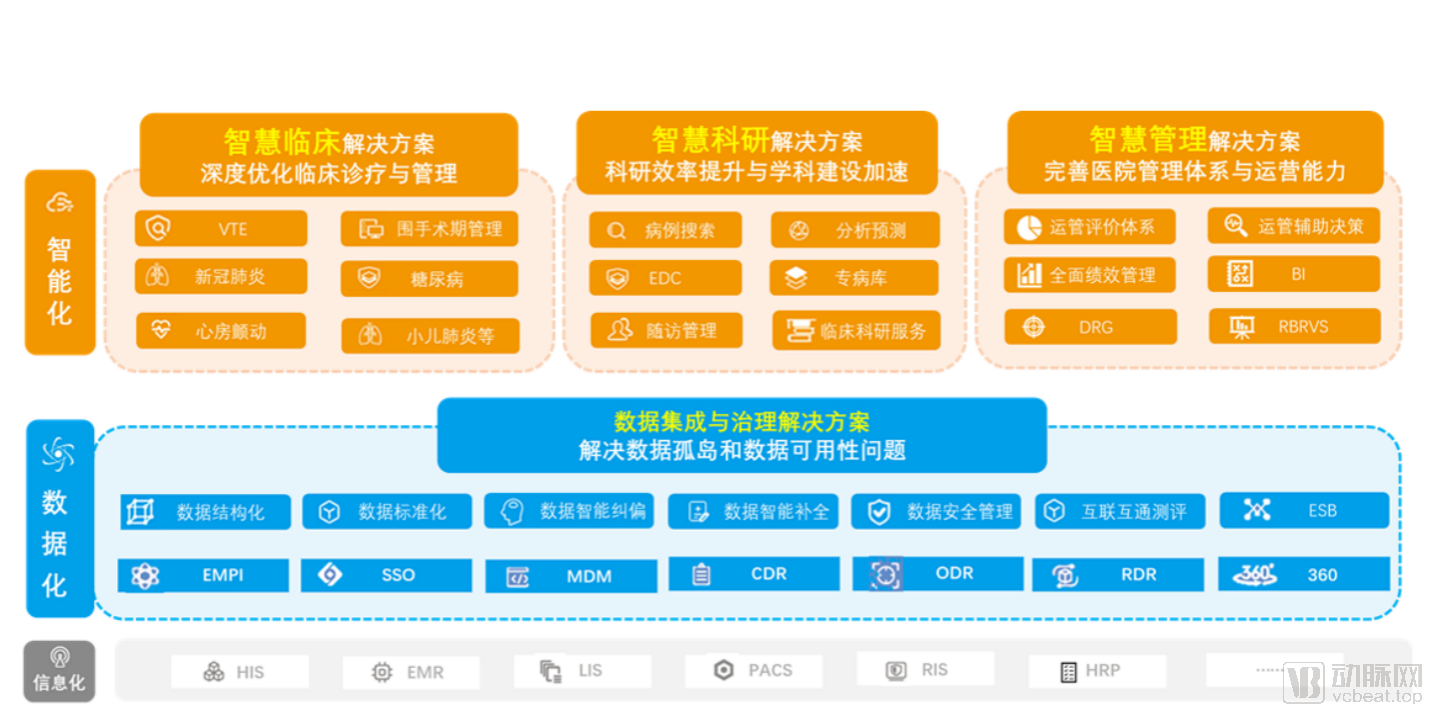
By deconstructing SYNYI·AI’s business structure, we can identify three core segments: Smart Clinical Care, Smart Research, and Smart Hospital Management. Smart Clinical Care focuses on optimizing clinical workflows for specific diseases; Smart Research centers on patient data governance; and Smart Hospital Management targets the high-demand areas of DRG (Diagnosis-Related Groups) and performance management for tertiary public hospitals. Each business segment is strategically designed to address critical pain points in healthcare.
Prevention and management of venous thromboembolism (VTE) is one of the cases where Senyi Intelligence has deeply optimized diagnosis, treatment, and management. VTE is a relatively common clinical condition. Patients who are postoperative, have suffered trauma, have advanced-stage cancer, are in a coma, or are bedridden for prolonged periods are all at risk of developing VTE. Once a patient’s deep vein thrombosis progresses to pulmonary embolism, immediate resuscitation is required. Even so, the mortality rate remains above 10%. Assessing a patient’s risk of developing VTE is not straightforward. In addition to physicians’ clinical judgment, more authoritative approaches involve individualized VTE risk assessment models, such as the Caprini Risk Assessment Model and the Padua Prediction Score, to analyze and evaluate patients.
In practice, hospital administrators have limited time and manpower, necessitating a trade-off between the quality and quantity of VTE prevention and control, as well as between physicians’ core clinical duties and VTE screening and prevention efforts. Under such circumstances, physicians often neglect VTE screening and prevention due to their focus on primary clinical responsibilities.
SYNYI·AI’s one-stop VTE prevention and management platform addresses this pain point. By leveraging third-party resources, hospitals can achieve broader quality control, faster scoring, and more accurate assessments while requiring minimal manpower.
Specifically, the platform leverages models to perform real-time analysis and scoring of patient data, alerting physicians to the risk of deep vein thrombosis (DVT) or pulmonary embolism (PE) within the next 72 hours. Since implementing this system, Shanghai Tenth People’s Hospital has achieved an 83% increase in VTE risk assessment rates and an 87% reduction in assessment time compared to previous manual processes. The system saves medical staff an average of 600 hours of work per week.
Smart Handover is a key initiative by SYNYI·AI in the realm of smart hospital management. Traditional handover documentation requires on-duty physicians and nurses to manually record information in logbooks, a process that often takes over an hour. In contrast, SYNYI·AI’s Smart Handover System automatically aggregates and summarizes patient flow and clinical information for special cases within the handover period. On-duty medical staff only need to document exceptional events, significantly reducing the time required for handover documentation.
Yin Yong, Director of the Department of Respiratory Medicine at Shanghai Children's Medical Center, stated, “Previously, we might have only examined patient information in greater detail during ward rounds. Now, with the smart handover system, we can access first-hand data immediately. Moreover, this information is updated and synchronized in real time.”
Leveraging a series of innovative solutions, in October 2020, SYNYI·AI helped eight hospitals, including the Children’s Hospital of Fudan University, Shenzhen Bao’an District Maternal and Child Health Hospital, The University of Hong Kong-Shenzhen Hospital, and Jingjiang People’s Hospital, successfully pass the National Healthcare Information Interoperability Standardization Maturity Assessment, achieving Level 5 Grade B and Level 4 Grade A ratings for the 2019 cycle.
The aforementioned businesses are embedded within SYNYI·AI’s “1+3+N” framework, functioning much like the roots and branches of a tree. The “1” refers to data integration and governance solutions, which help healthcare institutions aggregate and standardize data, serving as a data middle platform that supports batch applications in the future. The “3” denotes three core solutions related to smart clinical care, research, and management, which constitute the cornerstone of smart hospital development. The “N” signifies numerous application scenarios that extend from these three pillars, penetrating various aspects of healthcare delivery.
Unlike other providers that offer only single, fragmented solutions, SYNYI·AI’s “1+3+N” framework enables hospitals to build smart hospital systems comprehensively—from isolated points to holistic integration, and from underlying infrastructure to application layers. As clients, hospitals can not only enhance operational efficiency and achieve refined management but also successfully pass reviews and assessments conducted by relevant national authorities with the company’s support.
To further enhance the sense of gain among hospital clients, Zhang Shaodian stated, “SYNYI·AI will continue to pursue innovation in frontier fields and actively promote industry development. In the future, SYNYI·AI aims to share its practical experience with relevant regulatory authorities to support the design and planning of smart hospitals in the next phase. Additionally, the company is exploring the tooling of its smart hospital solutions, enabling hospitals to exercise more flexible and autonomous control over their data and systems, thereby allowing them to respond more ‘freely’ to the new era characterized by an explosion of smart hospital applications.”
In 2017, SYNYI·AI became the first company to introduce data governance technology into the healthcare industry. In 2018, SYNYI·AI pioneered the release of China’s first artificial intelligence-based solution for the prevention and treatment of venous thromboembolism (VTE). In 2019, SYNYI·AI partnered with Huawei to launch the healthcare industry’s first smart hospital solution based on the Kunpeng processor, thereby receiving Huawei’s first certification in the field of medical big data. In 2020, SYNYI·AI continued its innovation by rolling out multiple industry-specific solutions and engaging in deep collaborations with hospitals in areas such as intelligent shift handovers, single-disease quality control management, and big data governance.
After more than four years of development, SYNYI·AI’s industry competitiveness has become increasingly comprehensive and diversified. Beyond its technologies and solutions, the company has established a solid foundation in delivery efficiency, talent structure, and corporate operations to support sustained high-speed business growth in the future.
In response, Zhang Shaodian stated, “Business leaders should view their company as a product, continuously refining and optimizing it through iterative improvements in technology, product offerings, business models, and talent. Compared to ToC companies, ToB firms require more meticulous cultivation, leveraging long-term practice and effort to build their competitive moat.”
Regarding the investment in SYNYI·AI, Liang Guozhong, Managing Director and Partner at CICC and Chairman of CICC Jiazi, stated: “SYNYI·AI’s most prominent advantage lies in its exceptional founders and well-balanced core management team. The company’s team possesses globally leading knowledge and experience in the integration of healthcare, data, and AI, while also demonstrating extensive experience, broad resources, and strong execution capabilities in the sales and implementation of intelligent healthcare products. As a result, the company can efficiently deliver highly standardized, market-leading smart healthcare systems to hospitals, thereby fully addressing hospital management needs and physicians’ research requirements. Meanwhile, SYNYI·AI has cumulatively served over 150 hospital clients, including a significant number of China’s top-tier and Grade III Class A hospitals. This rich and high-quality customer base has established a strong industry reputation, serving as a critical support for SYNYI·AI’s continued expansion of its market share.”
Song Wenlei, General Manager of the Strategic Investment Department at Sunshine Asset Management, stated: “The core competitive barrier of SYNYI·AI lies in its capabilities in healthcare data governance and application, which aligns precisely with the focused needs of hospitals entering the 3.0 stage of in-hospital medical informatization. Leveraging its proprietary core technologies, the company has entered the market through the data governance and application layer, extending downward to the data integration layer. By capitalizing on its technological advantages, it serves high-quality tertiary hospitals and other institutions, achieving rapid commercialization. Furthermore, the team comprises a combination of young AI talent and seasoned industry experts, enabling sustained collaborative competitiveness in the intelligent healthcare market.”
Yao Leiwen, Managing Director of Tencent Investment, stated, “Intelligent healthcare represents the next phase in the informatization and digitalization of the medical industry. By leveraging technological means to address practical challenges in data integration and governance for hospital clients, we also enhance patients’ care experience. The Synyi team combines robust technical capabilities with deep insights into the healthcare sector, and its continuously iterated products and solutions are at the forefront of the industry. Tencent will collaborate with such outstanding teams to help elevate the level of intelligence in the sector and advance modernized management.”