

Zenoti Files for IPO Following $160M Series D Funding Round as India's Fifth SaaS Unicorn

Tiger Global Management
Private Equity Fund

Zenoti
Cloud Platform Provider for Beauty and Wellness Industry Enterprises

Accel
Venture Capital Firms

Steadview Capital
Private Equity Investment Firm

Sunley House Capital
Private Equity Firm

Norwest Venture Partners
Venture Capital Firms
Recently, VCBeat learned that SaaS company Zenoti has completed a $160 million Series D financing round. The round was led by Advent International, the world’s largest private equity investment firm (through its subsidiaries Advent Tech and Sunley House Capital), with participation from existing investors Steadview Capital and Tiger Global Management.
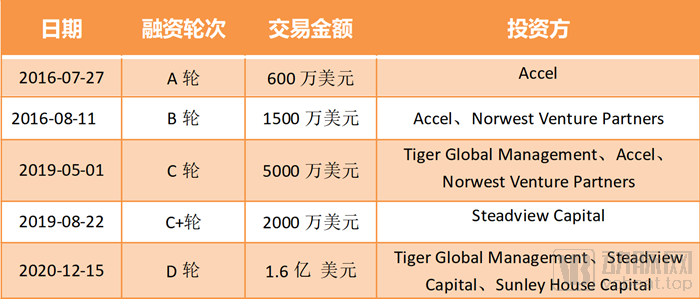
Zenoti’s Funding History (Source: VCBeat)
Following the completion of this funding round, Zenoti has joined the ranks of unicorn companies in India’s SaaS (Software as a Service) sector, becoming the fifth Indian software product company after Freshworks, Druva, Icertis, and Postman.
Zenoti was founded by Sudheer Koneru and Dheeraj Koneru in 2010. The company specializes in providing technology solutions for small and medium-sized enterprises (SMEs) in the spa, beauty, and hair salon industries. On the Zenoti platform, business users can manage operations online or via mobile devices, handling tasks such as online booking, billing, built-in marketing, stock management, staff management, inventory control, and customer relationship management (CRM). Consumers can also use the platform to easily schedule appointments, check in independently, and make automatic payments.
Prior to 2010, founder Sudheer Koneru and his brother Dheeraj Koneru operated several spa chains in India. During those years, the medical aesthetics and fitness center sectors in India experienced rapid business growth. Through years of operational experience, Sudheer Koneru identified a significant gap between the needs of medical aesthetics and fitness centers and the problems that existing software solutions could actually address. This insight inspired him to develop a software platform to bridge this gap.
Sudheer Koneru stated, “Our operational experience has helped us identify gaps in the market, and we also possess the expertise and know-how to build enterprise solutions.” As a result of their efforts, ManageMySpa was launched—a platform providing services and solutions for spas and fitness centers.
Zenoti was formerly known as ManageMySpa. Unlike ManageMySpa, Zenoti targets a broader market that extends beyond the spa industry. Sudheer Koneru once stated that the company’s name was changed from ManageMySpa to Zenoti to reflect its potential expansion into multiple sectors, with the new name fostering greater business affinity across other industries.
In 2015, Zenoti acquired Massage Heights, a beauty and wellness company with 150 locations, further expanding its scale.
In recent years, to expand its customer base, Zenoti has been upgrading its platform on a monthly basis to ensure rapid response to market demands. Now, a decade later, Zenoti’s workforce has grown to over 550 employees, serving more than 12,000 spas, salons, and fitness centers across over 50 countries. Its clients include well-known brands such as Lakme Salons, Naturals, Kaya Skin Clinics, Sothys Malaysia, Bio Essence, and Massage Green.

Some Zenoti employees (Image source: Zenoti official website)
Although Zenoti is a vertical SaaS company (one that focuses exclusively on a specific industry or sector), it faces particularly intense competition within its industry. In addition to established platforms such as Peppertap, Grofers, Localoye, and Urbanpro, many SaaS startups have flocked to the beauty and wellness industry in recent years, seeking to capture a share of the market.
Founded in 2014, Vyomo is a beauty and wellness management platform. Like Zenoti, Vyomo focuses on serving small and medium-sized enterprises (SMEs) in the spa, beauty, and hairdressing industries. Leveraging SaaS-based management software, it helps businesses expand by providing services that cover traffic generation, customer relationship management, performance management, booking management, and data analytics. Since its inception, Vyomo has received financial support from YouWeCan, an investment firm established by Indian cricketer Yuvraj Singh.
Meanwhile, Stylofie, a peer startup founded in 2015, has developed a review app for the beauty industry that enables partners in the SPA and hair and beauty sectors to monitor their daily operations. Additionally, Stylofie supports search and comparison functions for beauty salons and SPA centers, offering service options such as appointment booking and payment for beauty services.
Discussing Zenoti’s unique advantages, partner Dheeraj Koneru stated that the beauty and wellness industry is in urgent need of business model transformation—such as monthly subscriptions, online booking, and digital payments—and that Zenoti already possesses the necessary capabilities to drive this change.
Regarding competition, Sudheer Koneru stated, “The key distinction between our solution and those of other providers is that ours is purpose-built for enterprises. Our solution scales effectively to accommodate the user base of client organizations, which is highly appealing to both Asian and U.S. customers.”
Since the 1980s, India has seen the emergence of a cohort of world-class software service outsourcing companies, led by Infosys. These entrepreneurs were dubbed “IT Boys.” Today, the development of SaaS enterprises in India is echoing the robust momentum witnessed by IT firms in that era.
A recent study by management consulting firm Zinnov shows that approximately 2,300 B2B/SaaS startups have sprung up in India over the past five years. With keen market insight, Sudheer Koneru launched Zenoti before the onset of this largest wave of Indian SaaS companies.
Historically, the Indian software market has been relatively small, with low technology adoption rates among enterprises. Survey results indicate that India’s SaaS revenue is merely a drop in the bucket compared to the global SaaS market size—the total revenue of all Indian SaaS startups accounts for less than 1% of the global market. On one hand, this highlights the limitations of the Indian SaaS market; on the other hand, it underscores that SaaS companies have access to the vast remaining 99% of the global market beyond India.
In their pursuit of customers and market expansion, a large number of Indian B2B founders have relocated their startups to Silicon Valley, treating it as a “second headquarters.” In 2014, Zenoti expanded its operations to the United States and established a new headquarters in Bellevue, Washington. Currently, the U.S. market drives more than 60% of Zenoti’s business, followed by the United Kingdom, which accounts for 20% of total business volume. Australia and New Zealand rank third in terms of business volume. Although some larger beauty centers and spa chains in India and West Asia continue to use Zenoti, their business volume lags far behind that of Western markets.
Well before Zenoti shifted its focus to the U.S. market, Lucideus, an Indian cybersecurity startup founded in 2012, had already swiftly executed a strategic relocation to the United States. The global cybersecurity market targeted by Lucideus is valued at $135 billion, with the U.S. accounting for 40% of this total. Clearly, Lucideus’s move to the U.S. was driven by the desire to be closer to its customers. In addition, other companies such as Zinier, a modern field service management platform; Helpshift, a customer relationship management platform; and CleverTap, a mobile marketing platform, have successively joined the wave of firms leaving India for Silicon Valley.
Rajan Anandan, Managing Director of Sequoia Capital India, once commented on the phenomenon of “Indian founders relocating to the U.S.”: “Since the U.S. is their largest market, moving there significantly enhances founders’ understanding of their customers, facilitating relationship-building and accelerating growth.”
At this stage, Zenoti’s business footprint has long extended beyond India and the United States. With its expansion into North America, operations in the United Kingdom, the Netherlands, and South Africa are also experiencing significant growth. Furthermore, the company plans to expand its presence in the European market in 2021.
Zenoti Raises $160 Million in Series D Funding Amid the Pandemic, Planning to Accelerate Innovation and Strategically Reposition to Meet Global Consumer Expectations for Health and Safety
Sudheer Koneru, Co-founder and CEO of Zenoti, stated that Zenoti has developed sophisticated technology solutions over the past few years, and the outbreak of the COVID-19 pandemic has increased market demand for new technological solutions. The Zenoti platform helps businesses minimize unnecessary face-to-face contact with consumers, allowing customers to receive essential services while mitigating the risk of infection.
The pandemic has driven up demand for corporate technology solutions, enabling Zenoti to achieve robust revenue growth in 2020. Sudheer Koneru stated, “Our growth exceeded 100% in 2020, and we anticipate at least another 100% increase next year. Our board has committed to a growth target of approximately 120% for the coming year.” Undoubtedly, to some extent, the pandemic—a “black swan” event—has boosted Zenoti’s business volume and propelled higher revenue generation.
Notably, during the pandemic, Zenoti employees voluntarily donated a portion of their salaries to establish a “COVID-19” relief fund. They launched an aid initiative providing support to COVID-19 patients, reaching out to more than 500 beauty and wellness professionals across the United States, Australia, India, the Philippines, and Indonesia.
Regarding its next steps, Zenoti stated that the company will leverage the new capital to continue scaling its business and drive innovation through artificial intelligence. This will help its clients better manage inventory, schedule appointments, conduct marketing, and implement dynamic pricing. The company also noted that the funds will be used to acquire other businesses to achieve inorganic growth.
Sudheer Koneru added, “We believe this capital can be allocated to R&D, expansion into new verticals (such as pet SPA and group classes), and M&A activities. Given the current macroeconomic environment, we observe that many companies are struggling, and conditions are expected to deteriorate further. This may lead to industry consolidation, and we intend to seize this opportunity to establish a dominant position in the process.”
Sudheer Koneru revealed that Advent’s recent investment thesis centers on Zenoti’s potential initial public offering (IPO) in the coming years. Although the exact timeline remains unclear, he stated that the board of directors will begin considering an IPO once the company’s annualized recurring revenue (ARR) reaches approximately $200 million, a milestone that would grant Zenoti significant scale and influence in the market.