

Intelligent Drive for the Future: Seizing Opportunities in Biopharmaceutical Innovation from AI-Powered R&D to Smart Manufacturing
Discussions on the digital transformation of the pharmaceutical industry have gained momentum in recent years. In 2020, we observed digital technologies being implemented across various scenarios throughout the pharmaceutical supply chain from multiple entry points. The integration of digital technologies with biotechnology has reignited innovation in the biopharmaceutical sector, an industry where success hinges on innovation.
On December 18, 2020, under the guidance of the Investment Promotion Service Center of the Lingang New Area of the China (Shanghai) Pilot Free Trade Zone, the Bioprocess Solutions division of Thermo Fisher Scientific (hereinafter referred to as “Thermo Fisher”), in collaboration with Life Bay in the Lingang New Area, launched the Bio-Empower: Smart-Driven Future Innovation Forum. The forum connected biological industrial parks, pharmaceutical companies, industrial automation technology firms, and leading internet enterprises to create a platform for intellectual exchange, exploring cutting-edge applications of AI, big data, and intelligent technologies in the biopharmaceutical field.
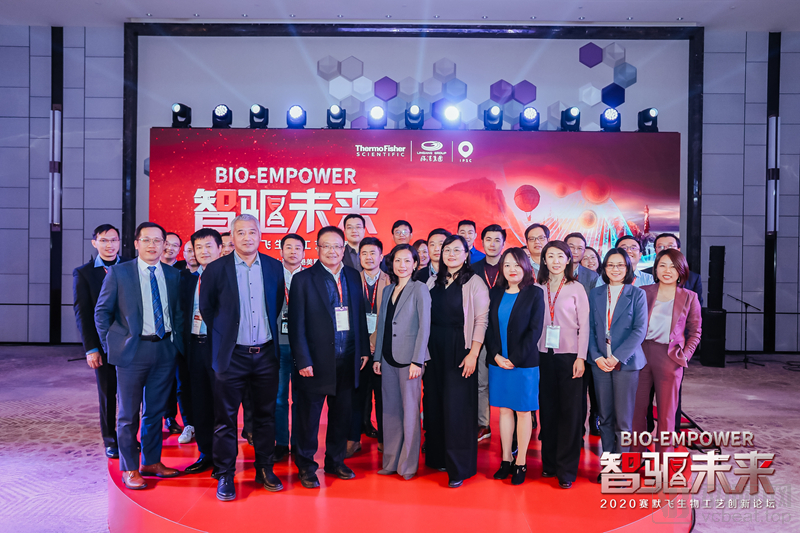
As 2020 drew to a close and the New Year approached, this forum served as both a summary of the digital transformation progress in the pharmaceutical industry throughout 2020 and, through the multiple partnerships signed at the event, set the tone for the upcoming year of 2021.
In 2020, the most prominent biopharmaceutical park was undoubtedly Life Blue Bay in the Lingang New Area of Shanghai. As a new source for technological innovation and industrial achievement transformation in the biopharmaceutical industry, its future development is even more promising given the current trend of industrial agglomeration. The 2020 Thermo Fisher Scientific Bioprocessing Innovation Forum was held at Life Blue Bay, with strong support from the Lingang Group and the Investment Promotion Service Center of the Lingang New Area.
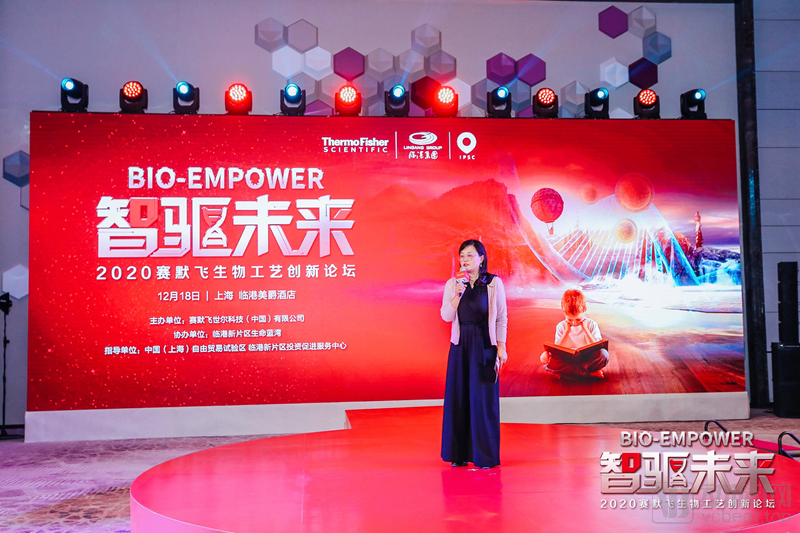
Qu Xia, Deputy General Manager of Lingang Fengxian Economic Development Co., Ltd.
Qu Xia, Deputy General Manager of Lingang Fengxian Economic Development Co., Ltd., described the development philosophy for industrial capacity in Lingang with the saying, “Those who have constant property have constant perseverance.” She stated, “We benchmark against the world’s leading biopharmaceutical industry clusters, lay out 33 specialized sub-sectors, and focus on leading enterprises in each track. All relevant industrial policies are automatically applicable, with preferential treatment granted where possible. On top of this, we offer a series of practical corporate support measures, such as interest subsidies on bank loans, a 15% corporate income tax rate, and a 15% individual income tax rate for foreign senior executives. In addition, our international community provides comprehensive living infrastructure, including housing, education, healthcare, commercial facilities, and transportation.” The goal is to build Life Blue Bay into an ideal place for business, residence, and living.
In Shanghai, high-quality biopharmaceutical enterprises have ample space for expansion, comprehensive support from industrial policies, and ready access to breakthrough innovations through pilot policy initiatives and stress testing. High-caliber companies are premium seeds, and Life Bay serves as fertile soil. By focusing on the powerful driving forces behind industrial development, we empower the Life Bay industry cluster. Qu Xia stated that by introducing industrial resources while simultaneously enhancing project R&D and supporting services, Life Bay will deliver a comprehensive, integrated solution.
Amid the golden age of industrial development, we should strategically introduce leading enterprises and cutting-edge projects across various fields to strengthen, supplement, and solidify industrial chains. By precisely aligning Lingang’s valuable industrial resources with the industry chain and integrating global industrial resources, we aim to empower enterprises and create a closed-loop value system for the development of the Life Blue Bay industry.
As a key enabler of the biopharmaceutical industry, Thermo Fisher Scientific provides essential upstream support for companies based in Life Bay. With a century-long presence in the life sciences sector and having officially entered the Chinese market in 1982, Thermo Fisher has been deeply rooted in China for 38 years. The company has supported the launch of hundreds of pharmaceutical products worldwide. Notably, during the COVID-19 pandemic in 2020, Thermo Fisher participated in and supported more than 250 projects, including mRNA vaccines, making outstanding contributions to the global fight against the epidemic.
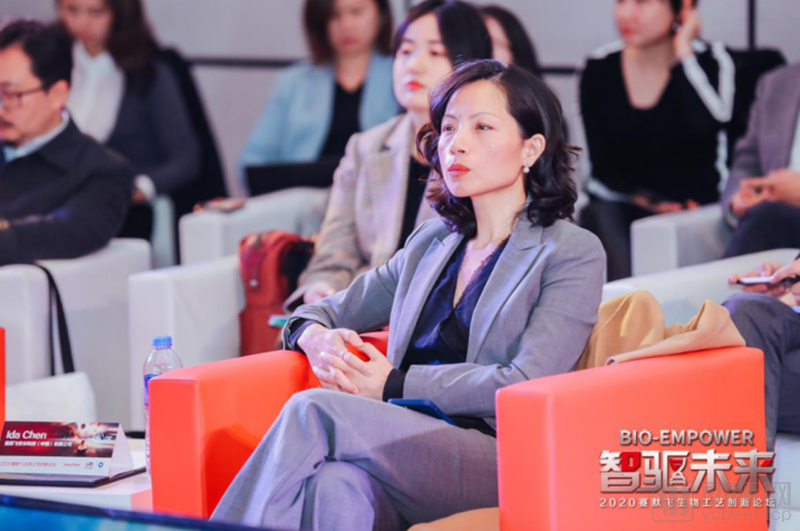
Ida Chen, Vice President of Business, Thermo Fisher Scientific Life Sciences Products and Services Division
“Enterprises’ original creativity is the primary driving force behind the development of biopharmaceutical companies and the broader biomedical industry,” said Ms. Ida Chen, Vice President of Business for Thermo Fisher Scientific’s Life Sciences Solutions segment, during the forum. “Thermo Fisher has always carried an innovative DNA, cultivated expertise in the life sciences sector over many years, actively participated in shaping the future, and become a key contributor to advancing technological progress across the industry.”
Therefore, at this conference, Thermo Fisher Scientific and Lingang signed a strategic cooperation agreement to comprehensively support the development of Lingang’s biopharmaceutical industry, ranging from corporate support to industrial park construction.
"China's biopharmaceutical industry is experiencing explosive growth. For enterprise development, time is money, and comprehensive, high-efficiency solutions are the key to competitiveness! Thermo Fisher Scientific has introduced its world-leading product portfolio and service philosophy to China, providing integrated solutions that enable domestic innovative drug companies to accelerate industrialization," commented Qu Xia on the collaboration with Thermo Fisher Scientific.
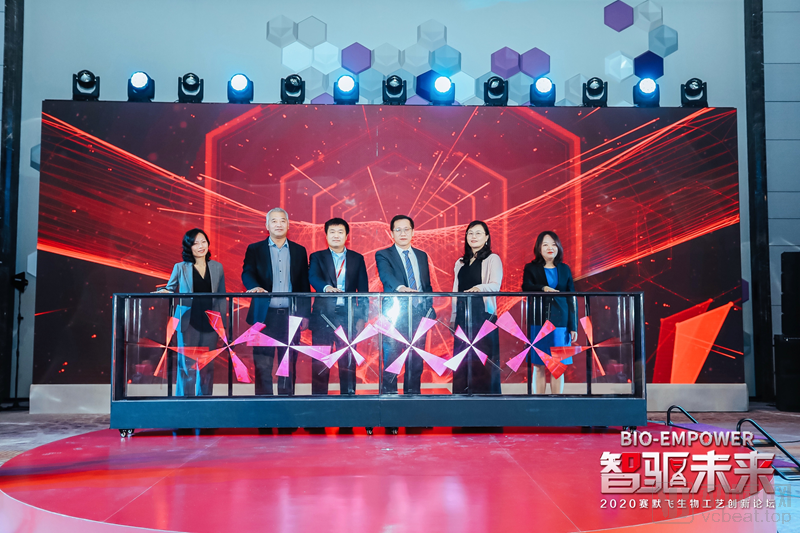
Thermo Fisher Scientific, Lingang Lanwan, Junshi Biosciences, and Emerson Launch Strategic Partnership
For enterprises whose products have already entered the industrialization stage, Thermo Fisher Scientific, as an upstream supporter of the biopharmaceutical industry, will support the development of process technology platforms for R&D, pilot-scale testing, and production in the Lingang New Area. It will provide management and consulting services to biopharmaceutical companies established in the Lingang New Area, including planning and design, conceptual design, engineering implementation and maintenance, and process development by the Thermo Fisher Scientific Bioprocess Design Center.
For projects in the early stages of research and development, the shared biology laboratory established through the collaborative efforts of both parties at the Lingang incubation platform will leverage Thermo Fisher Scientific’s product portfolio to jointly provide platform services to startup companies located within the park.
In addition, both parties will jointly organize ad hoc technical application seminars and training courses at the Thermo Fisher Scientific China Bioprocess Design Center on an annual basis. These events will invite participation from technical personnel of enterprises in the Lingang New Area, government regulatory agencies, industry association leaders, and other stakeholders, with Thermo Fisher Scientific presenting its latest products and technological application achievements.
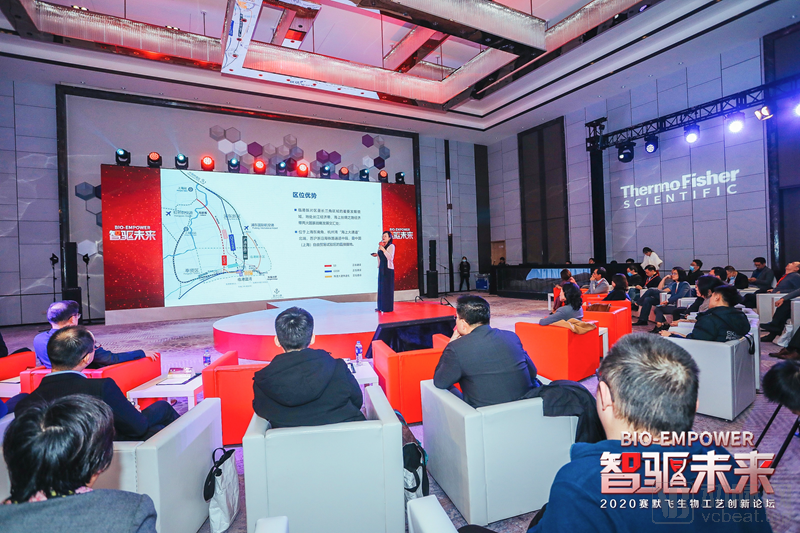
Regarding the ultimate decision to partner with Thermo Fisher Scientific, Qu Xia highlights a key factor: its strong local presence. “What surprised me about Thermo Fisher Scientific is its excellent localization in China. A common challenge in collaborations with multinational corporations lies in the local team’s ability to integrate into Chinese culture and provide accessible solutions tailored to specific industry segments. When these aspects are well addressed, cooperation proceeds smoothly and efficiently. Over the past few decades, Thermo Fisher Scientific has invested significantly in local innovation, fostering an open and integrated team culture that gives us a sense of harmony in partnering with a multinational enterprise.”
Junshi Biosciences was one of the first biopharmaceutical companies to establish its presence in Lingang.
In 2016, when the decision was made to build a manufacturing facility in Lingang, the policies relevant to the future Lingang New Area of the China (Shanghai) Pilot Free Trade Zone were not yet fully clear. Junshi Biosciences chose Lingang at that time for two main reasons: first, it recognized the area’s future development potential; second, as a biopharmaceutical company founded in Shanghai, Junshi Biosciences needed to establish a firm foothold within the city.
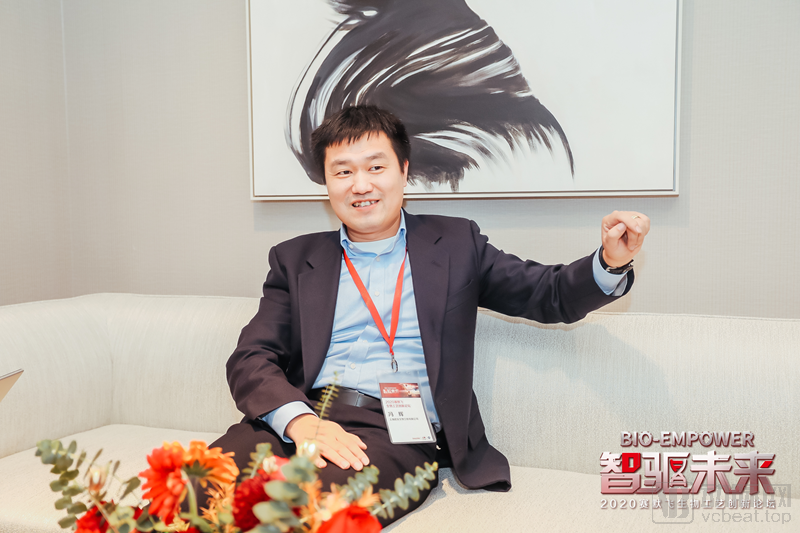
Junshi Biosciences Chief Operating Officer Feng Hui
“In the public perception, the biopharmaceutical industry is considered a high-tech sector; however, its production processes remain highly traditional and conservative. While smart manufacturing has been widely adopted in other industries, it has become a significant pain point for the biopharmaceutical sector. If we continue to rely on manual paper-and-pen records for all production processes, how can we maximize the authenticity and reliability of data while eliminating human interference?” Feng Hui, Chief Operating Officer of Junshi Biosciences, believes that digital transformation in the biopharmaceutical industry is imminent.
Therefore, from the moment Junshi Biosciences decided to establish its presence in Lingang, it was determined to achieve comprehensive digitalization of its facility, from design to construction. Junshi Biosciences aims to capture every data point within the production process, ensure full traceability of all manufacturing workflows, and implement real-time tracking and automatic saving of all data, thereby reducing the possibility of human error to zero.
Prior to the initial construction of its digital factory, Feng Hui conducted an extensive review of digital production systems across China, including multiple cross-industry cases. Among these, the warehouse management-centric system established by Wyeth left a deep impression on Feng Hui and subsequently became the core guiding principle for Junshi Biosciences in building its own digital factory.
“By incorporating a connecting corridor between each zone, we have completely separated personnel flow from material flow. Through this IoT system, our production building, warehouses, and QA center are fully interconnected, laying a solid foundation for the fully automated transfer of materials in the future,” said Xie Guoliang, Executive Director of Junshi Biosciences’ Lingang Production Base, as he provided attending guests with a comprehensive overview of Junshi Biosciences’ digital factory.
“Intelligentization is a systematic engineering endeavor, not a localized one. First, we must determine what type of platform we wish to select for comprehensive control. Second, we need to identify which enterprises to collaborate with in order to execute this effectively.” Feng Hui was involved throughout the entire construction process of the Lingang manufacturing facility and, after evaluating multiple suppliers, selected Thermo Fisher Scientific and Emerson as his system solution partners.
Junshi Biosciences’ digital factory is fully integrated by Emerson’s DeltaV system, while Thermo Fisher Scientific provides a comprehensive suite of solutions required for biopharmaceutical manufacturing, including single-use bioreactors, production media, and single-use reaction bags. A key reason for Junshi Biosciences’ selection of Thermo Fisher Scientific is that its end-to-end solution natively integrates with the DeltaV system. As a result, under the centralized control of the DeltaV system, Junshi Biosciences’ digital factory achieves seamless integration in production management.
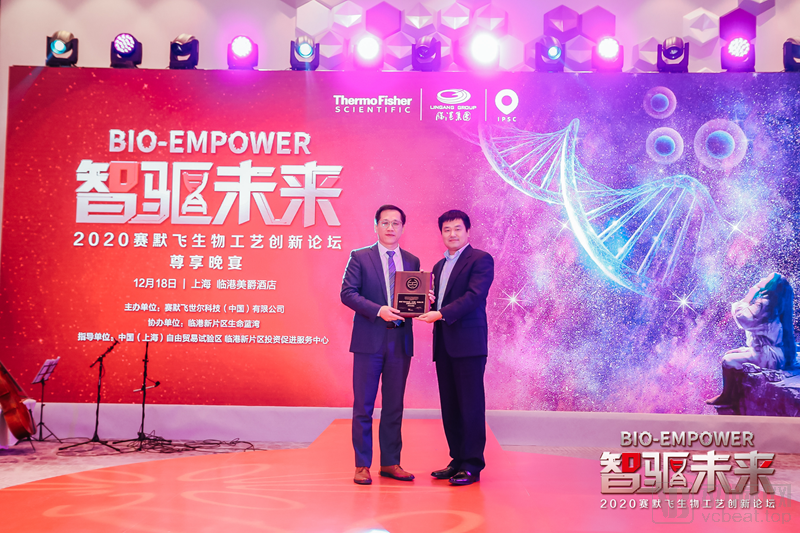
Hua Liqiang, Senior Commercial Director of Thermo Fisher Scientific’s Bioprocess Division, and Feng Hui, Chief Operating Officer of Junshi Biosciences
Srini Paluri, General Manager of Global Bioprocessing Equipment and Automation and Global Vice President at Thermo Fisher Scientific, stated at the forum: “Thermo Fisher’s products are built on the open TruBio platform, enabling seamless integration with other facility equipment, as well as connectivity with third-party devices and other production systems. As a result, through Thermo Fisher’s TruBio software solutions, our customers can achieve rapid translation from process development to commercial manufacturing. This strategy significantly simplifies technology transfer and accelerates time-to-market.”
Building on their established track record of successful collaboration, Thermo Fisher Scientific entered into further cooperation agreements with Junshi Biosciences and Emerson at this forum.
In its collaboration with Junshi Biosciences, Thermo Fisher Scientific will provide multiple 2,000-L single-use bioreactors, along with complementary reagents, consumables, and intelligent systems, to support Junshi Biosciences’ future production of COVID-19 neutralizing antibody therapeutics and other products.
The collaboration with Emerson focuses on the DeltaV system already deployed at Junshi Biosciences’ manufacturing facility. Thermo Fisher Scientific will jointly market and manage DeltaV products and systems with Emerson, while Emerson has committed to partnering with Thermo Fisher Scientific to drive industrial upgrading in the biopharmaceutical sector.
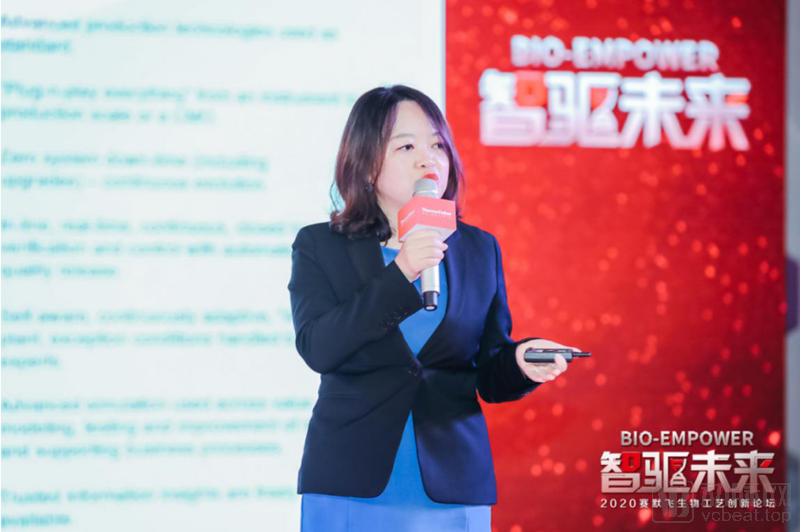
Qu Zhao, Business Director for China at Emerson’s Systems Division
“The digital structural transformation of the pharmaceutical industry can be divided into five stages: starting from basic, fully manual operations; progressing to the second stage, which involves the introduction of various digital management systems; advancing to the third stage, characterized by the integration of data exchange and data flows across systems; moving to the fourth stage, where data-driven predictions are realized; and culminating in the fifth stage, with the establishment of an adaptive digital ecosystem. Currently, most of the pharmaceutical industry remains at the second to third stages,” analyzed Qu Zhao, Business Director for China at Emerson’s Automation Solutions division, regarding the digital transformation journey of the pharmaceutical sector.
Feng Hui also stated in our conversation that although Junshi Biosciences’ digital factory is at the forefront of the industry, it is still in the process of transitioning from Phase II to Phase III, with significant room for future development.
In addition to breakthrough advancements in manufacturing, the forum featured two compelling presentations focusing on another key scenario in the digital transformation of the pharmaceutical industry: AI-driven drug discovery and development.
Ni Haihong, Vice President of Early-Stage Drug R&D at Deep Intelligence, stated, “For the past several decades, the pharmaceutical industry has relied on highly traditional approaches to new drug development. Why is there now growing emphasis on the application of AI in drug discovery in recent years? On one hand, we have accumulated massive amounts of data that can be leveraged for artificial intelligence learning processes; on the other hand, advances in novel algorithms and higher-performance hardware have made it possible to mine these vast datasets.”
The integration of artificial intelligence (AI) with small-molecule drugs has enabled the pharmaceutical industry to rapidly identify the most valuable drug candidates from vast volumes of literature. Years of accumulated research data have made this one of the most mature application areas for combining AI with new drug development.
Xie Wenjun, Head of Tencent’s AI Healthcare Strategy, also expressed agreement with this view: “If we take a holistic view, among the three major categories—small-molecule drugs, biologics, and traditional Chinese medicine (TCM)—AI applications are primarily concentrated in AI-enabled small-molecule drug discovery and AI-enabled biologic development. The application of AI in small-molecule drug discovery is relatively mature, whereas the biologics sector differs significantly; research in these areas is still in its early stages and evolving rapidly. Nevertheless, we can clearly observe certain application scenarios, such as AI-assisted protein structure prediction, AI-assisted protein design, and CRISPR gRNA design.”
Not long ago, at the Critical Assessment of Structure Prediction (CASP), known as the “Protein Olympics,” AlphaFold, launched by Google DeepMind, defeated other participants and elevated prediction accuracy to a new level. As soon as the news broke, AlphaFold dominated discussions across the healthcare industry’s professional networks. Following its application in small-molecule drug discovery, the analysis and design of large-molecule therapeutics may become another practical AI-driven scenario for novel drug development within the next two years.