

Digital TCM Industry in Growth Phase with Four Major Industrial Clusters Established | 2020 Year-End Review
In recent years, digital technologies such as artificial intelligence, big data, cloud computing, the Internet of Things (IoT), and blockchain have developed rapidly, penetrating various subfields of healthcare, including Traditional Chinese Medicine (TCM). These digital technologies provide a reliable technological drive for TCM. A growing number of TCM startups with unique characteristics have emerged. Under the joint influence of government and market forces, an increasing number of regions in China are prioritizing the TCM industry and establishing TCM industrial parks. To this end, VCBeat has compiled a list of 64 digital TCM enterprises and 33 TCM industrial parks across China, analyzing them from both the enterprise and industrial park perspectives to provide an overview of the national digital TCM and Chinese herbal medicine industries.
The digitalization of Traditional Chinese Medicine (TCM) diagnosis and treatment processes mainly encompasses two aspects: TCM clinical practice and the preparation and distribution of Chinese herbal medicines.
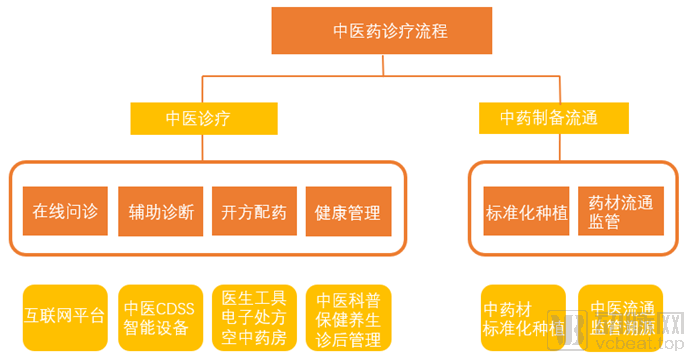
Based on the stages of medical care, digital Traditional Chinese Medicine (TCM) diagnosis and treatment can be subdivided into online consultations, assisted diagnosis, prescription and dispensing, and health management.
Online Consultation:Patients can schedule appointments and consult with doctors via the PC or mobile versions of the online TCM consultation platform. Doctors can communicate with patients online and issue electronic prescriptions.
Auxiliary Diagnosis:By utilizing systems such as the Four Diagnostic Instruments, Constitution Identification System, and Classical Prescription System, constitutional characteristics manifested in the patient’s facial appearance, pulse condition, and tongue features are collected. These data are integrated with the patient’s medical history to determine the basic constitution type and severity of the condition, thereby providing data-driven references.
Prescription and Dispensing:After completing the diagnosis, the physician issues an electronic prescription via the internet. The smart pharmacy system automatically receives the prescription, and a pharmacist conducts an online review. The electronic prescription is automatically transmitted to the digital pharmacy system through the “Internet Plus” framework. The system facilitates dispensing at the nearest location, handling processes such as herbal medicine retrieval, decoction services, and home delivery, thereby saving patients the time spent waiting in line to collect their medications.
Health Management:Leveraging Internet of Things (IoT) technology, patients use smart devices such as health-tracking wristbands and intelligent pulse diagnosis instruments to collect real-time physiological data—including pulse waves, heart rate, electrocardiogram (ECG) signals, and blood pressure readings—and transmit this information to physicians. Through online platforms, doctors can manage patients’ health, monitor their conditions in real time, and prescribe targeted treatments accordingly. Patients can also utilize internet technologies to access health management knowledge and engage in online consultations.
The preparation and distribution of traditional Chinese medicine include standardized cultivation and traceability-based regulatory oversight in circulation.
Preparation and Distribution of Traditional Chinese Medicine:By leveraging technologies such as the Internet of Things (IoT), we can track key attributes of each batch of medicinal materials, including geographical origin, germplasm source, growth age, harvesting season, and collection methods. We utilize IoT and big data cloud computing platforms to build a comprehensive quality traceability system covering the entire process. Furthermore, by employing techniques such as genetic testing, we establish a big data repository for traditional Chinese medicinal materials, provide novel methods for safety testing of traditional Chinese medicine (TCM), and offer assessment solutions for TCM safety control.
With the advancement of digital technologies, innovative projects leveraging these technologies have become increasingly prevalent. Based on data from VBInsight, we have compiled a list of 64 digital traditional Chinese medicine (TCM) enterprises and conducted an analysis across dimensions such as application scenarios and company types. These digital TCM enterprises aim to address various healthcare pain points, including precise patient diagnosis and prognosis management.
1. Health management is one of the most common application scenarios in Traditional Chinese Medicine (TCM).
We have categorized the specific business activities of enterprises into five major application scenarios and conducted a detailed analysis of the current status and development potential of each scenario. It should be noted that since enterprises are not limited to a single type of business, the total count will exceed 64 companies.
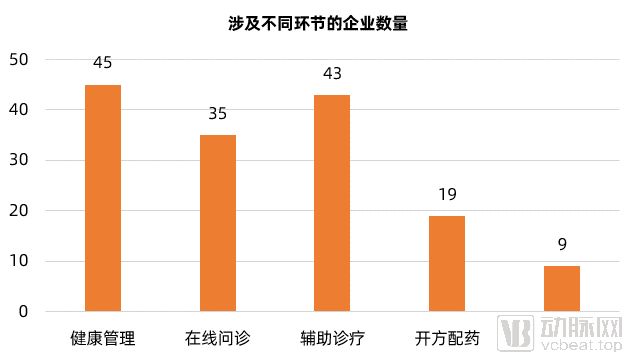
From the perspective of specific application scenarios, health management is the most prevalent scenario among digitalized Traditional Chinese Medicine (TCM) enterprises, with a total of 45 companies involved. Health management encompasses diverse sub-scenarios, including pre-diagnosis prevention, post-diagnosis rehabilitation, and popular science education. TCM health management focuses on wellness and healthcare for chronic diseases and sub-health conditions, providing primarily preventive and self-care-oriented services. Against the backdrop of the "preventive treatment of disease" philosophy, the health management sector has experienced rapid growth. This trend highlights the empowering role of digital technologies in health management and underscores that this area remains one of the primary focuses of TCM applications.
Benefiting from the vigorous development of internet healthcare and artificial intelligence technologies in recent years, two major application scenarios—online Traditional Chinese Medicine (TCM) consultations and AI-assisted diagnosis—have been significantly promoted. Particularly during the COVID-19 pandemic, TCM internet healthcare enabled contactless consultations, while assisted diagnostic devices provided support for clinical decision-making, thereby alleviating the pressure on medical staff to a certain extent. Considering the interaction between wearable devices in the Internet of Medical Things (IoMT) and internet healthcare, online TCM consultations and assisted diagnosis are poised for rapid growth as the underlying technologies mature.
“Inspection, Auscultation and Olfaction, Inquiry, and Pulse-taking” serve as the entry point for TCM diagnosis and treatment, featuring across various clinical scenarios for different diseases. According to Li Chunqing, General Manager of Daosheng Medical, objective data collection through these four diagnostic methods remains the most critical application segment in the digitalization of TCM, considering historical origins, the industry’s technological foundation, national policies, and the procurement capabilities of TCM hospitals.
2. The "Online Platform + Offline Entity" Model Holds Certain Development Potential
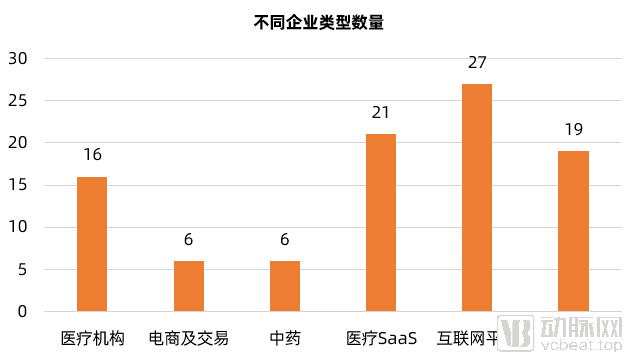
Based on the differences in core business activities of digital traditional Chinese medicine (TCM) enterprises, we have categorized the operations of 64 companies into six major segments: medical institutions, e-commerce transactions, Chinese herbal medicines, medical SaaS services, internet platforms, and medical devices and therapies. From the perspective of core business activities, TCM enterprises are predominantly concentrated in pre-diagnosis and intra-diagnosis services.
Among them, 13 companies have business scopes that cover both medical institutions and internet platforms, indicating that the “online platform + offline clinic” business model has been validated by certain enterprises and holds considerable development potential. By establishing an online diagnosis and treatment platform, setting up physical TCM (Traditional Chinese Medicine) clinics offline, and leveraging systems such as Hospital Information Systems (HIS) to achieve interconnectivity, offline medical services serve as the material foundation for internet-based TCM healthcare, while online medical services act as the driving force, thereby completing a closed-loop process encompassing TCM consultation, prescription, dispensing, and patient education. National policies supporting socially funded medical practices and allowing physicians to practice at multiple sites have also facilitated the growth of this model. Cao Xueli, CEO of Shangyi Renjia, stated that the integrated online-offline model demands substantial corporate strength. Only companies with robust financial resources, mature business models, and strong resource integration capabilities can sustain the operational costs associated with running both online and offline businesses.
3. Over 90% of project financing rounds occur before Series B
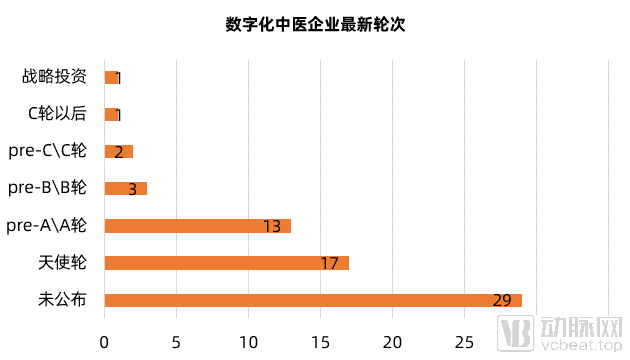
With the rapid development of digital technology in China, traditional Chinese medicine enterprises are gradually undergoing digital transformation. Meanwhile, due to the profit-driven nature of capital and the industry’s sensitivity, investment institutions have not yet shown significant activity in this sector. Among 64 companies, 29 have no publicly disclosed financing records. Of the remaining 35 companies, investment activities are predominantly concentrated at the angel and Series A stages.
From a financing perspective, most domestic digital TCM enterprises are still in the growth stage, facing intense competition and a high risk of elimination; only a few companies have managed to reach Series B funding or beyond. More than 90% of projects are at pre-Series B stages.
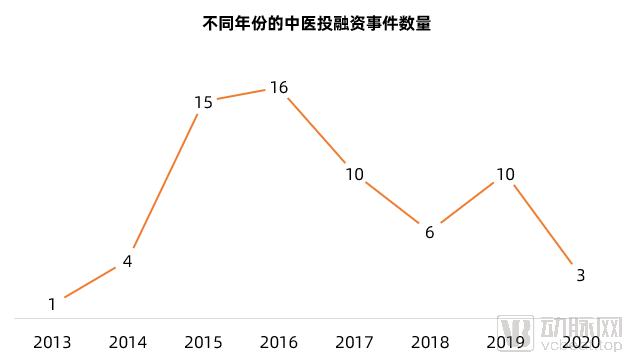
The traditional Chinese medicine (TCM) industry experienced a financing peak between 2015 and 2016. In May 2015, with the approval of the State Council, the Chinese government website released the “Development Plan for TCM Health Services (2015–2020),” which specifically highlighted the use of information technologies such as cloud computing, mobile internet, and the Internet of Things to develop intelligent TCM health service products. As the first national-level development plan in this field, this document serves as a programmatic guide for the development of China’s TCM health services industry over the subsequent five years.
4. Internet technology has the widest and most extensive range of applications
Internet, big data, artificial intelligence, and other technologies have been widely applied to all aspects of traditional Chinese medicine diagnosis and treatment.
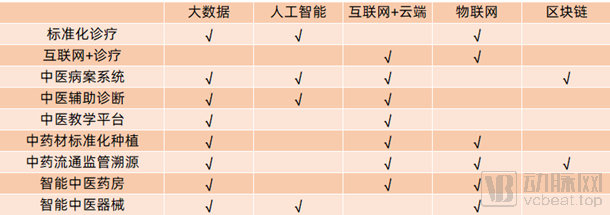
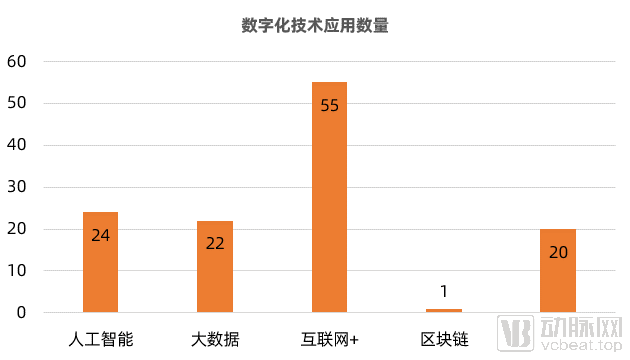
As shown in the figure above, internet technology is not only the most widely applied technology but also the most frequently utilized in practice. This is attributable, on one hand, to the maturity of internet technology itself, and on the other, to policy support for internet-based healthcare. Cao Xueli, CEO of Shangyi Renjia, stated that the positioning of internet platforms remains “Traditional Chinese Medicine (TCM) + Internet.” Given the characteristics of the TCM industry, such as high follow-up visit frequency and long treatment cycles, TCM internet service products primarily focus on lightweight consultations and online follow-up visits. These services effectively address pain points by reducing transportation costs and saving users’ time, while also fully demonstrating the convenience offered by smart pharmacies and home delivery services.
In recent years, big data and artificial intelligence (AI) have gained significant popularity. In the field of Traditional Chinese Medicine (TCM), big data technology can organize and integrate classic medical cases from renowned TCM masters and TCM knowledge bases into AI-assisted diagnostic systems. These systems provide doctors with treatment plans weighted by relevance, helping primary care physicians enhance their diagnostic and therapeutic capabilities. As medical cases continue to accumulate and machine learning algorithms become more sophisticated, the system’s utility in medical practice, education, and research will also improve. Li Chunqing, General Manager of Daosheng Medical, stated, “The adoption of TCM diagnostic data collection devices will inevitably drive the application of technologies such as the Internet of Things (IoT) and big data. Once sufficient data has been accumulated and validated, AI technology can be effectively deployed—for example, by providing physicians with auxiliary tools for the four diagnostic methods (inspection, listening/smelling, inquiry, and pulse-taking) and computational support for syndrome differentiation and treatment. Only through the integrated application of these technologies can their maximum value be realized.”
Wen Jing, head of the International Smart Healthcare Division at Tongrentang, stated that digital technologies in traditional Chinese medicine (TCM) are still in a developmental stage. However, as TCM receives increasing attention, its recognition has reached unprecedented levels. Industry standard systems related to TCM are gradually being refined, providing momentum for enterprises engaged in TCM digitalization. “In the future, TCM digitalization will embed complex knowledge systems within software platforms, making TCM products easier to operate and more practical.”
In 1988, China launched the Torch Program—a plan for the industrialization of high and new technologies—which explicitly proposed the establishment of High-Tech Industrial Development Zones and High-Tech Business Incubation Centers. Starting in 1991, numerous regions across China were approved to establish National High-Tech Industrial Development Zones, giving rise to traditional Chinese medicine (TCM) industrial parks. To gain a comprehensive understanding of the current development status of China’s TCM industry, VCBeat has compiled a list of 33 TCM industrial development zones in China.
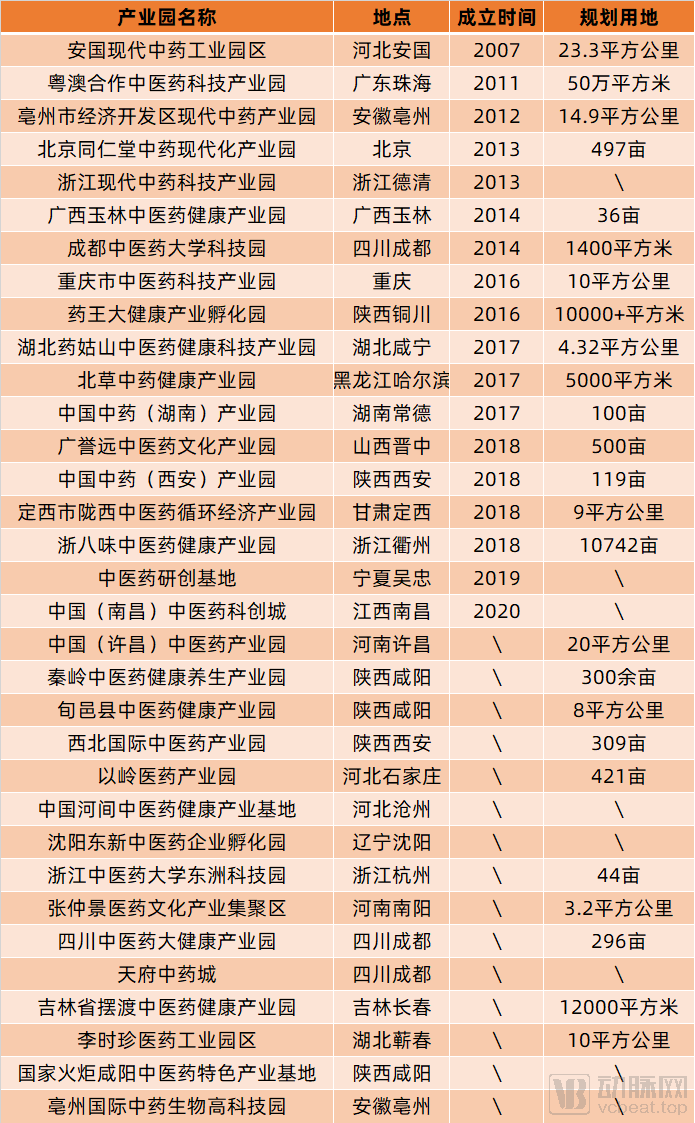
Currently, China’s traditional Chinese medicine (TCM) industrial parks have initially formed four industrial clusters in the Bohai Rim, the Yangtze River Delta, the Pearl River Delta, and the central and western regions. Each of these four clusters is centered around its core park and expanding outward to surrounding areas.
Each industrial cluster features several leading parks with their own distinct characteristics, such as the Anguo Modern Traditional Chinese Medicine (TCM) Industrial Park in the Bohai Rim region; the Modern TCM Industrial Park within the Bozhou Economic Development Zone in the Yangtze River Delta region; the National Torch Xi’an TCM Characteristic Industry Base and the Sichuan TCM Big Health Industrial Park in the central and western regions; and the Guangdong-Hong Kong Cooperation TCM Science and Technology Industrial Park in the Pearl River Delta region.
Centered around top-tier parks, a large number of second-tier parks have also achieved scale. Typical examples include the Ningxia Traditional Chinese Medicine (TCM) Research and Innovation Base, Xunyi County TCM Health Industrial Park, Bozhou International TCM Biotechnology High-Tech Park, and Nanchang TCM Science and Technology Innovation City. Together with other medical industrial parks distributed in the surrounding areas, these first- and second-tier parks constitute a regional medical industry ecosystem.
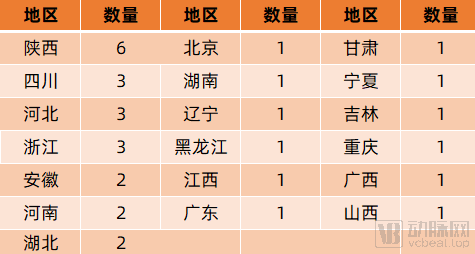
Categorized by the location of industrial parks, Shaanxi Province takes the lead, followed closely by Sichuan, Hebei, and Zhejiang. These top four provinces account for 45.5% of the total. Regions with concentrated TCM industrial parks, such as Shaanxi, Sichuan, Hebei, and Zhejiang, boast profound traditional Chinese medicine (TCM) cultural heritage, unique natural advantages, and a solid foundation for the TCM industry. However, the most significant factor influencing these industrial parks remains local policy support.
Taking Shaanxi Province as an example. Since the 12th Five-Year Plan, Shaanxi has designated traditional Chinese medicine (TCM) as a key priority within its strategic emerging industries. In 2015, the Shaanxi Provincial Government issued the Implementation Opinions on Promoting the Development of TCM Health Services, proposing plans to develop a number of key TCM health service projects and industrial parks. Subsequently, TCM industrial parks were established across Shaanxi Province, positioning the region at the forefront nationwide.
1. Industrial parks are predominantly concentrated in those established after 2015
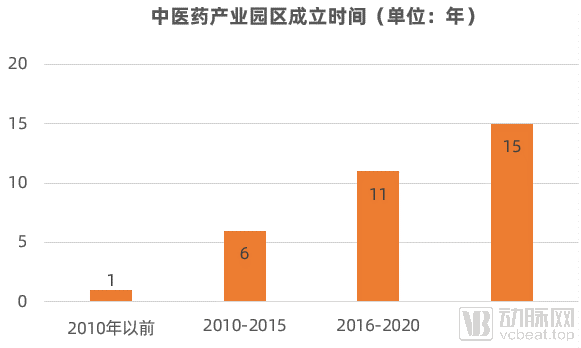
In the sample data, 15 industrial parks did not disclose their establishment dates. The Hebei Anguo Modern Traditional Chinese Medicine (TCM) Industrial Park, established in 2007, is the earliest-founded TCM industrial park in the sample. The Hebei Anguo Modern TCM Industrial Park is a key specialized park developed by the Anguo Municipal Committee of the Communist Party of China and the Anguo Municipal People’s Government, leveraging Anguo’s pharmaceutical strengths and adhering to the concept of green circular development. It comprises the Qizhou Industrial City, the South Park operated by Jointown Pharmaceutical Group Logistics, and the North Park dedicated to the TCM industrial sector, forming a “one zone, two parks” layout.
The industrial park focuses on two leading industries: modern traditional Chinese medicine (TCM) and health foods, while also developing traditionally advantageous sectors such as equipment manufacturing, textiles, and new energy. The projects settled in the park are mainly engaged in pharmaceutical production, TCM decoction pieces, TCM extraction, health supplements, pharmaceutical logistics and distribution, and other high-tech manufacturing initiatives. Currently, the Anguo Modern TCM Industrial Park has attracted 118 enterprises, ranking first among the sampled parks with an annual output value of RMB 62 billion.
Furthermore, traditional Chinese medicine (TCM) industrial parks were predominantly established after 2015, a trend closely linked to the policy environment at that time. The year 2015 marked a significant milestone in the development history of TCM. In May 2015, with the approval of the State Council, the Chinese government website released the Development Plan for TCM Health Services (2015–2020). As the first national-level development plan in this field, it served as a programmatic document guiding the growth of China’s TCM health service industry over the subsequent five years. Since then, the state’s commitment to vigorously promoting TCM has become evident, with supportive policies emerging in a surge. These measures span from strategic top-level design and legal safeguards to practical implementation guidelines, reflecting a series of policies successively introduced to “revitalize the cause of traditional Chinese medicine.”
2. Three Development Paths for Industrial Parks
From the perspective of park planning, different industrial parks have different focuses in their development plans. Overall, they can be divided into the following three categories:
First, prioritize the research and development and innovation of traditional Chinese medicine technologies.Such industrial parks often collaborate with universities and research institutions to focus on the research and development of core technologies in traditional Chinese medicine (TCM), promote the development of TCM industrial technologies and TCM big data centers, and develop new technologies, processes, and products. Examples include the Anguo Modern Traditional Chinese Medicine Industrial Park and the Chongqing Traditional Chinese Medicine Science and Technology Industrial Park.
Second, emphasis is placed on the integration of traditional Chinese medicine (TCM) health and wellness with cultural tourism.Such industrial parks are typically established on the basis of traditional Chinese medicine (TCM) cultivation areas, offering integrated services that combine residential living, health preservation and wellness, and leisure tourism, thereby promoting the integrated development of three major sectors: TCM health services, commercial trade, and cultural tourism. Examples include the Qinling TCM Health and Wellness Industrial Park and the Hubei Yaogu Mountain TCM Health Technology Industrial Park.
Category III: Focusing on the production and processing of traditional Chinese medicine.The construction of this category of industrial parks covers all processes of traditional Chinese medicine (TCM) processing. For instance, the development plan for the Northwest International TCM Industrial Park includes building a comprehensive TCM materials complex, decoction piece processing workshops, an information center, an R&D and training center, an e-commerce exhibition center, and supporting facilities, with the aim of establishing the largest production base for important TCM decoction pieces in the northwest region.
3. Policy, capital, and talent are the fundamental elements for enterprises to settle in industrial parks
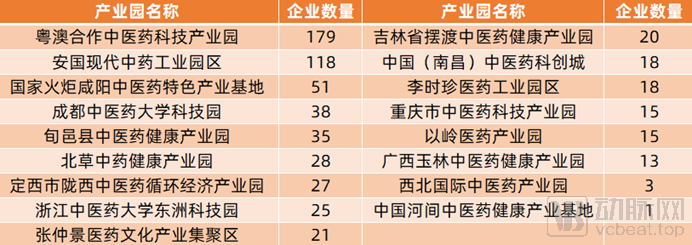
Among the 33 industrial park samples, 16 had no publicly available data on tenant enterprises. Of the remaining 17 industrial parks, only two hosted more than 100 tenant enterprises. These two parks were established earlier, with mature planning and infrastructure development. By providing high-quality park services, they have already achieved agglomeration effects and possess the capacity to attract high-quality enterprises. Newly established parks lack experience in enterprise services and a deep understanding of the traditional Chinese medicine (TCM) industry, making it inevitable for them to encounter difficulties during the early stages of development.
To stand out among numerous competitors, industrial parks need to create more highlights that attract entrepreneurs. Policy, capital, and talent are fundamental elements for enterprises.
First, the development of industrial parks relies heavily on policy support. Leading domestic industrial parks have largely benefited from strong local policy backing and continuously adjust their development plans in response to evolving policies, thereby fostering a favorable environment for growth.
Secondly, funding is the second key element that industrial parks need to provide for enterprises. The capital invested in the construction of an industrial park is generally allocated to two areas: enterprise investment and infrastructure development. The larger the scale of investment in the park’s construction, the more comprehensive its infrastructure will be, and the greater the support it can offer to enterprises. If an industrial park can collaborate with local or non-local fund institutions, it can quickly aggregate certain enterprise resources by attracting portfolio companies of these institutions into the park. Meanwhile, newly admitted enterprises can leverage their proximity to gain easier access to investors and facilitate investment agreements.
Finally, maintain a talent pool with relevant professional expertise. Park administrators can collaborate with nearby universities through lectures, campus recruitment, and other initiatives to foster interaction between enterprises within the park and academic institutions, thereby establishing a vital channel for universities to supply talent.
Taking the Guangdong-Macao Cooperation Traditional Chinese Medicine Science and Technology Industrial Park, which has the largest number of settled enterprises in the sample, as an example. The industrial park was established in April 2011 and is also the first implemented project of the Guangdong-Macao Cooperation Industrial Parks.
In terms of policy, the park has introduced government resources such as the Guangdong Provincial Food and Drug Administration and the Research Center for Traditional Chinese Medicine (TCM) Science, Technology, and Policy, creating favorable conditions for its scientific research service system and providing high-quality R&D services in policy, technology, and market access to domestic and international enterprises. In terms of capital, the park is located in the Pearl River Delta Economic Zone, which boasts robust economic strength. In terms of talent, the park’s proximity to Hong Kong and Macao enables it to attract international TCM R&D professionals from these regions and leverage their global influence to draw top-tier TCM talent worldwide.
Since its establishment, the Industrial Park has centered on two core objectives: building an “International Base for Quality Control of Traditional Chinese Medicine (TCM)” and an “International Exchange Platform for the Health Industry.” Guided by its mission to promote the适度 diversification of Macau’s economy and advance the internationalization of TCM, it has integrated Guangdong’s strengths in TCM healthcare, education, and science and technology industries with Macau’s scientific research capabilities, talent, and tourism resources. It is currently establishing itself as an “International Window for the Belt and Road Initiative in the TCM Industry and Culture.”
Acknowledgements: The following expert guests provided support for the content of this article (listed in no particular order):
Cao Xueli, CEO of Shangyi Renjia
Li Chunqing, General Manager of Daosheng Medical
Wen Jing, Head of the International Smart Healthcare Division at Tongrentang
References:
Medicine Herald: "Hengqin: A Global Window for Traditional Chinese Medicine—Exploring the Guangdong-Macao Cooperation TCM Science and Technology Industrial Park"