

Sinounion Healthcare Breaks Through Core Component Bottlenecks with Fully Indigenous PET/CT Technology
With the advancement of medical imaging, various diagnostic modalities have emerged, including ultrasound (US), digital radiography (DR), computed tomography (CT), and magnetic resonance imaging (MRI). Among these, PET/CT has a relatively short development history, having been introduced into clinical practice only in 2001, and is classified as high-end, large-scale medical equipment. After years of clinical application, an increasing number of physicians have come to recognize the clinical value of PET/CT. Currently, PET/CT has become one of the fastest-growing imaging modalities worldwide.
PET/CT seamlessly integrates PET and CT technologies, with PET providing detailed functional and metabolic molecular information about lesions, while CT offers precise anatomical localization. By combining both modalities, patients can obtain tomographic images of the entire body from multiple angles in a single scan, thereby achieving the goals of early lesion detection and disease diagnosis.
Currently, the PET/CT market remains monopolized by multinational corporations such as GPS (GE, Philips, and Siemens), with Chinese manufacturers holding a relatively low market share. Furthermore, core components of PET/CT systems are controlled by foreign enterprises, hindering the achievement of technological self-sufficiency.
Fortunately, a number of Chinese companies have focused on independent research and development, yielding several significant achievements to date. SinoUnion Healthcare Inc. stands out as a leader among them.
SinoUnion Healthcare Inc. was established in 2011 as a manufacturer of high-end medical equipment and an innovative service provider. Leveraging the resources of Tsinghua University, the company focuses on the research and development of PET/CT systems and their core components. By providing innovative medical service solutions that integrate high-quality medical resources, SinoUnion Healthcare aims to alleviate issues such as the uneven distribution of medical resources in China. To date, the company has led four major national and provincial-level scientific research projects and secured over 100 independent intellectual property rights.
On December 19, SinoUnion Healthcare Inc. announced a significant achievement at the 2020 Symposium on New Technologies in Nuclear Medicine and Molecular Imaging: its independently developed PET/CT system has pioneered time-of-flight (TOF) technology at the 200-picosecond level and has received certification from testing authorities.

Time-of-Flight (TOF) technology is a hallmark feature of PET/CT systems. Advances in this technology will enable faster scanning, lower radiotracer doses, higher image signal-to-noise ratios, and improved spatial resolution, thereby enhancing the localization accuracy of small lesions and optimizing the quality of clinical PET images.
Li Junyi, Deputy General Manager of SinoUnion Healthcare Inc., stated, “As the first domestic manufacturer to launch time-of-flight (TOF) technology for PET/CT systems, SinoUnion Healthcare’s significant breakthrough in TOF technology is closely tied to our achievements in core technologies such as the localization of chip production.”
Why was SinoUnion Healthcare able to be the first to launch time-of-flight technology? What other achievements has SinoUnion Healthcare made in its ten years since founding? What are the advantages and features of its PET/CT system? To answer these questions, VCBeat conducted an exclusive interview with Li Junyi, Deputy General Manager of SinoUnion Healthcare.
It is evident from its workforce composition that SinoUnion Healthcare Inc. is an R&D-driven enterprise: 60% of its employees hold master’s degrees or higher, 20% hold doctoral degrees, and 76% have a background in clinical medicine.
Li Junyi stated, “Our team members primarily hail from prestigious universities and renowned companies such as Tsinghua University, the University of Washington, the University of Illinois, Beijing Institute of Technology, GE Healthcare, Philips, and Siemens. They all possess profound industry expertise and deep insights. Furthermore, our team demonstrates exceptional stability, with approximately 80% of our core technical staff having been with the company for over eight years.”
In addition, SinoUnion Healthcare Inc. has collaborated with Peking Union Medical College Hospital and Tsinghua University to establish an innovation and translation cooperation platform integrating “industry, academia, research, and clinical practice.” Through independent research and development,SinoUnion Healthcare Inc. pioneered multiple technologies that were subsequently emulated by mainstream manufacturers.For example, SinoUnion Healthcare pioneered free-breathing imaging technology, enabling PET/CT systems to automatically capture lesion motion trajectories during the patient’s natural breathing without the need for external respiratory gating devices. It also introduced passive quality control technology, marking the end of the era of active quality control... Currently, many of SinoUnion Healthcare’s pioneering technologies have been emulated by major international manufacturers and have become mainstream key technologies.
Through technological innovation, SinoUnion Healthcare has accumulated over 100 intellectual property rights and launched multiple PET/CT systems with fully independent proprietary intellectual property.
In recent years, it has increasingly become a consensus among industry, academia, and regulatory authorities to achieve breakthroughs in key core technologies, realize independent and controllable supply of core components, and accelerate the effort to address the shortcomings of China’s high-end medical equipment.
Li Junyi stated, “Domestic medical devices have basically achieved localization of complete units in the initial stage and localization of major components in the intermediate stage, but there is still a long way to go in localizing core components.”
For example, high-end PET/CT systems feature two critical core components: fast scintillation crystals andSilicon Photomultiplier (SiPM)and its signal readout chips. Among these, domestic manufacturers of fast scintillation crystals have broken the foreign technological monopoly, achieving full localization of production and even exporting abroad; whereasSilicon Photomultiplier (SiPM)The situation of being “strangled” by foreign countries in terms of its signal readout chips has not improved.
Faced with this predicament, SinoUnion Healthcare Inc. rose to the challenge and, as the lead entity under the special support of the Ministry of Science and Technology of China, joined forces with Beijing Normal University, Tsinghua University, Beijing Friendship Hospital, Liaoning Provincial Medical Device Inspection and Testing Institute, and other institutions to conduct research and development breakthroughs.
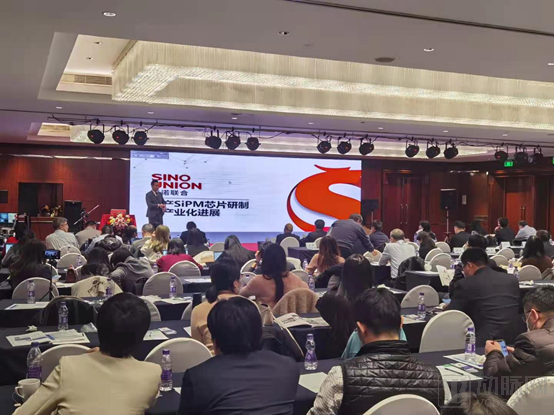
Li Junyi stated, “After years of R&D, we have finally achievedSilicon Photomultiplier (SiPM)The localization of its signal readout chips has been achieved, mass production of the devices has been completed, and they have passed whole-system performance testing for PET/CT scanners. This significant technological breakthrough means that China’s high-end PET/CT equipment will no longer be constrained by foreign technological monopolies, holding strategic importance for achieving import substitution and ensuring independent controllability of China’s high-end medical equipment.
At the “2020 Symposium on New Technologies in Nuclear Medicine and Molecular Imaging,” SinoUnion Healthcare Inc. unveiled its upcoming high-end PET/CT system. Notably, this device achieves a time-of-flight resolution on the order of 200 picoseconds, based on domestically produced silicon photomultipliers (SiPMs) and their associated chips.
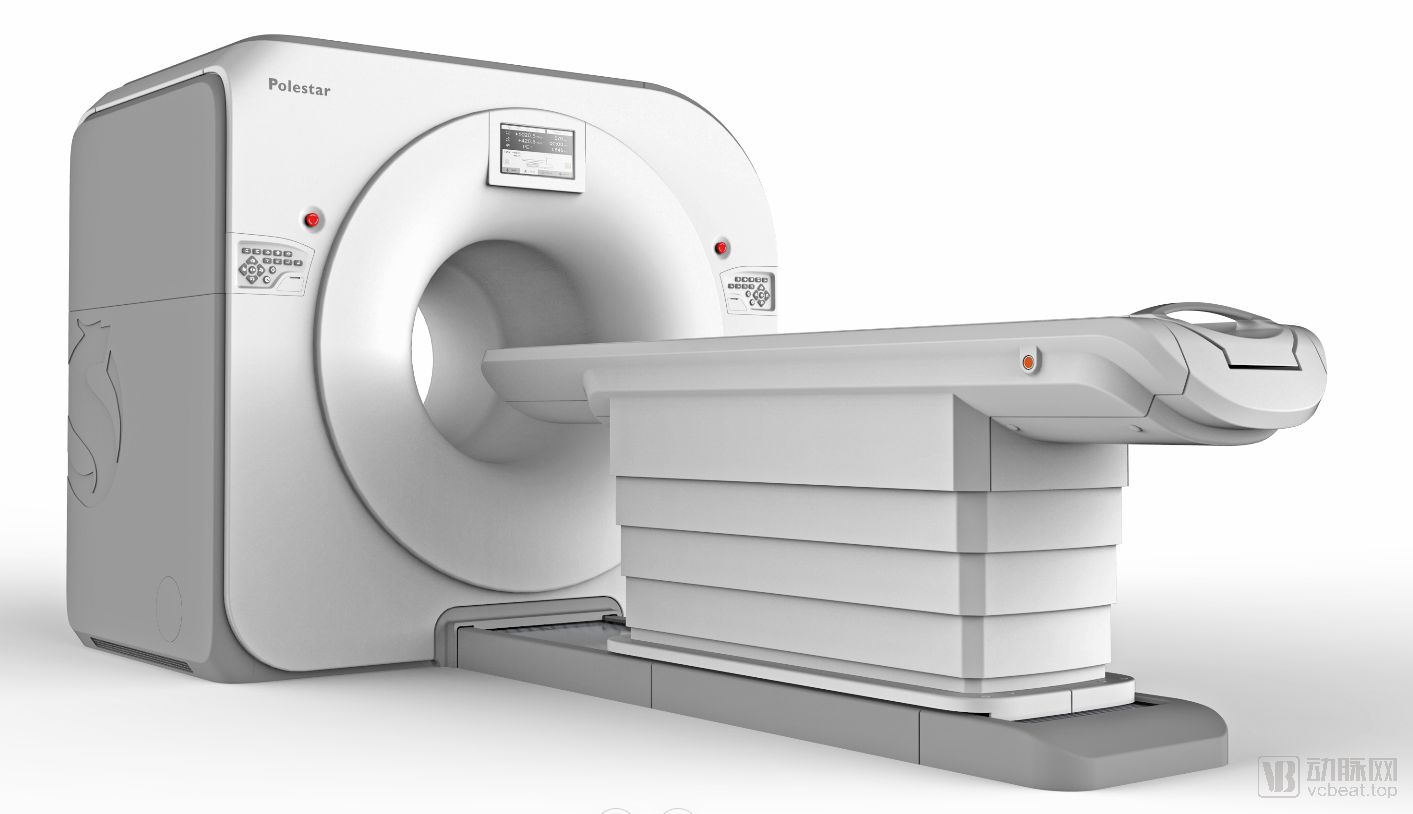
Director Yao Zhiming of the Department of Nuclear Medicine at Beijing Hospital stated:“The 200-picosecond-level time-of-flight technology achieved by SinoUnion Healthcare Inc. will bring fundamental improvements to PET/CT clinical imaging, delivering substantial value for clinical diagnosis and scientific research, and providing robust technical support for high-quality diagnostics in nuclear medicine.”
As a powerful tool for functional imaging diagnosis, PET/CT has always been the focus of attention in the industry regarding the imaging and diagnostic rate of small lesions. Time-of-Flight (TOF) technology can improve the localization accuracy of small lesions and optimize the effect of clinical PET images, which is of great significance for clinical diagnosis.
In fact, for every 1-picosecond improvement in time of flight, the difficulty increases geometrically. Therefore, time-of-flight (TOF) performance has become the gold standard for evaluating PET/CT systems. The 200-picosecond-level TOF parameter released by SinoUnion Healthcare Inc. marks the first domestically produced PET/CT system to achieve this level of TOF performance.
Li Fang, Director and Chair of the Nuclear Medicine Branch of the Chinese Association of Medical Equipment, stated, “The PET/CT products previously launched by SinoUnion Healthcare Inc. have gained recognition from hospital departments for their equipment performance and reliability. We hope that the upcoming new generation of domestically produced high-end PET/CT systems will provide greater support for clinical and research work in nuclear medicine in China.”