One Fang Group's Li Chen: The Golden Era of China's Health Industry Begins – Embracing Opportunities with Reverence
Whether ten or fifty years from now, when we look back on the development of China’s big health industry, 2020 will undoubtedly serve as a key reference point.
This is because the COVID-19 pandemic, which spread globally at the beginning of the year, has once again deepened people’s awareness of life safety and public health. Therefore,From national policies to people's livelihoods, new requirements and expectations have been placed on China's big health industry.. This is particularly evident in areas such as internet healthcare, innovative drugs, “real estate + healthcare,” and AI-assisted diagnosis.
As the sector heats up, numerous star startups in the broader health industry are basking in the spotlight.Taking the primary market as an example, data from the Artery Orange database shows that China’s healthcare industry raised a total of RMB 44.1 billion in Q3 this year, setting a new record for Q3 financing across all years. The full-year total is projected to significantly exceed that of 2019.
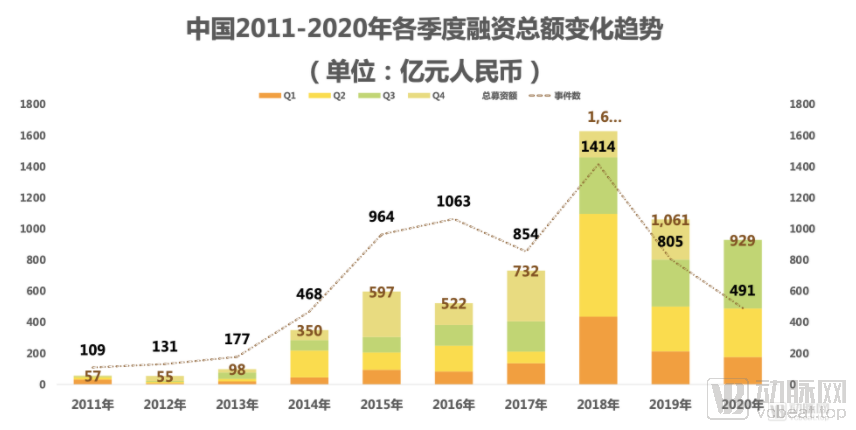 (Data source: Artery Orange Database)
Behind the booming market lies a significant achievement of China’s health and wellness industry, which has been accumulating momentum and relentlessly pursuing innovation and transformation in recent years.Particularly amidst the surging wave of innovation, companies driven by the dual engines of “R&D innovation + capital” have leveraged this momentum to rapidly expand their market share and achieve rapid growth. In contrast, for enterprises that have yet to achieve scale or produce innovative outcomes, challenges outweigh opportunities. Following this trend,A new era of the big health industry, driven by “technological innovation, interdisciplinary integration, and capital empowerment,” has quietly arrived.
Against this backdrop, in 2018, the PBC School of Finance at Tsinghua University and the Tsinghua University School of Medicine jointly launched the “Healthy China—Industry Leaders” Executive Education Program. By integrating the PBC School of Finance’s profound expertise in finance and its distinguished resource allocation capabilities with the School of Medicine’s cutting-edge academic and research resources, the program aims to cultivate multidisciplinary, interdisciplinary, and internationally oriented innovative talent for the health industry and society at large, thereby contributing to the realization of the “Healthy China” strategy.
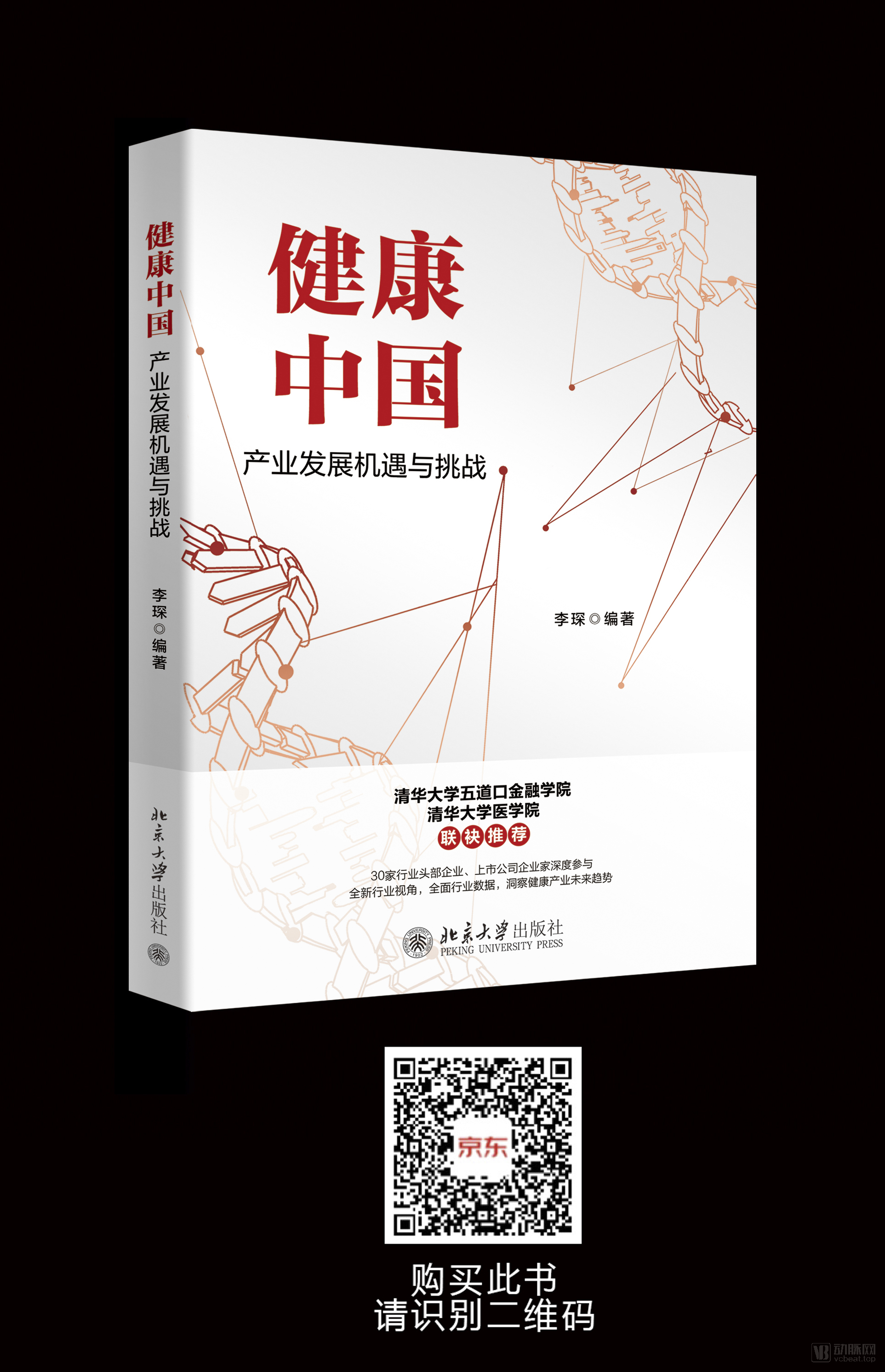
In response to the sudden outbreak of the novel coronavirus pneumonia this year, faculty and students from the inaugural cohort of the “Healthy China” program joined the fight against the epidemic, applying the knowledge and insights gained through their coursework and exchanges to the front lines of pandemic control. In this process,The students of the inaugural class decided to share these valuable insights with all those concerned about China’s health sector, giving rise to the book Healthy China: Industrial Development Opportunities and Challenges (hereinafter referred to as Healthy China).
This book was primarily authored by Li Chen, a member of the inaugural “Healthy China” program, with in-depth contributions from over 30 entrepreneurial classmates leading top-tier industry firms and publicly listed companies.It elaborates on the booming development of practices and innovations in China’s health industry across 30 niche sectors, including pharmaceutical R&D, medical device distribution, genetic testing, and healthcare services., and compiled comprehensive industry data and real-world case studies.

(Yifang Group: Li Chen)
As Healthy China was officially published, VCBeat held an in-depth conversation with Li Chen in the depths of winter. As a seasoned professional in the broader health and wellness industry, Li Chen currently serves at Yifang Group, where she has developed meticulous observations and profound insights into the entire sector. From the “Healthy China” initiative to the book Healthy China, Li Chen has immersed herself in the field, channeling her passion and aspirations into both her work and this publication.
The following is the original transcript, edited and compiled by VCBeat:
The publication of Healthy China represents an exchange of experiences and a collision of ideas, as well as a systematic review, retrospective, and forward-looking perspective on the broader health industry.
VCBeat:First, congratulations on the successful publication of Healthy China. After reading it, we found many of the viewpoints in the book to be novel and forward-looking. Could you briefly share what motivated you to write this book?
Li Chen:Thank you. To me, this book serves as a record of my studies in the “Healthy China – Industry Leaders” program, as well as a verbatim account of the consultations and exchanges with my classmates from the inaugural cohort. There are three primary reasons for writing this book.
First, it was my original intention. Last year, I experienced pregnancy and severe postpartum hemorrhage during difficult labor. With the help of medical staff, I was fortunately pulled back from the brink of danger. This experience prompted me to reflect on how I could contribute modestly to the healthcare industry as a gesture of reverence.
Second, the inaugural cohort of the “Healthy China” program has brought together entrepreneurs from leading enterprises and listed companies in the broader health industry. These participants are eager to share the valuable experience and learning outcomes accumulated through their industry practices with all those who care about China’s health cause.
Third, the sudden outbreak of the COVID-19 pandemic strengthened our resolve to contribute to the entire health and wellness industry. Therefore, during the pandemic, under the organization of the class committee, the inaugural cohort of “Healthy China” rapidly established a public welfare fund—the “White-Clad Warriors Protection Fund”—dedicated specifically to providing assistance to medical personnel. All author royalties from this book will also be donated to the fund.
VCBeat:"Healthy China" spans 200,000 words, representing a substantial workload. What challenges did you encounter during the book’s creation, and what support did you receive?
Li Chen:The primary challenge lay in articulating insights into the broader health industry with greater depth and clarity. To this end, the book draws extensively on data from numerous industry reports. During the preparatory phase, institutions such as VCBeat (Danke Research Institute), Qianzhan Industry Research Institute, and China International Capital Corporation (CICC) conducted substantial research and synthesis. Without the support of these data, this book would have been difficult to present. I am therefore deeply grateful to the friends who worked diligently behind the scenes, conducting extensive research and compiling and publishing industry reports.
VCBeat:Compared with other books that are purely theoretical and opinion-based, this book is rich in practical case studies and supported by data. What is the methodology behind writing this book?
Li Chen:Since entering the health industry, I have always approached learning and exploration with a sense of reverence. This book has benefited from the contributions of many professionals, who have shared their frontline observations and insights. Furthermore, *Healthy China* primarily adopts an industry- and enterprise-centric perspective, placing significant emphasis on case studies and data. It is therefore well-suited for practitioners and stakeholders in the broader health industry.
VCBeat:The book provides a comprehensive overview of the healthcare industry by systematically exploring four key areas: healthcare services, pharmaceutical technology, industrial chains, and the integration of applied technologies. It is evident that China’s healthcare industry has achieved numerous breakthroughs in both technology and business models. In your opinion, what is the current level of China’s healthcare industry in terms of innovation capability on the international stage? Which technologies or products are at the forefront globally? Could you please provide a few brief examples?
Li Chen:China’s health and wellness industry has achieved rapid development over the past few decades, with some niche sectors now at the international forefront. This progress is closely tied to China’s specific national conditions, including its large population base and market environment.
For instance, in the realm of healthcare informatization, China’s early adoption of Hospital Information System (HIS) construction has resulted in high coverage across major hospitals. According to the 2019 Survey on Hospital Informatization in China conducted by the Professional Committee on Information Management of the Chinese Hospital Association, the completion rate for patient basic information management systems reached 91.2%. Additionally, the implementation rates for clinical laboratory information management systems and medical imaging information management systems stood at 75.69% and 72.45%, respectively.
For instance, in the realm of internet hospitals, the market demand for such services in China is projected to reach RMB 255 billion this year, with a compound annual growth rate (CAGR) of 53.9% over the next three years. Driven by this substantial demand, the development of internet hospitals in China is entering a period of rapid expansion. A key benefit of this trend is the ability to effectively balance high-quality medical resources through telemedicine. Furthermore, the application of 5G network technology will foster advancements in emergency rescue, intelligent triage, and AI-assisted diagnosis, thereby comprehensively enhancing both the diagnostic and treatment efficiency of healthcare institutions and the patient experience.
Significant progress has also been made in innovative medical devices. For instance, in the field of surgical robots, the book introduces Beijing Baihui Weikang, a company invested in by Puhua Capital and ZhenFund. The “Remi” neurosurgical surgical robot, developed and manufactured by this enterprise, officially passed the Class III medical device review by the National Medical Products Administration (NMPA) in 2018. It became the first neurosurgical surgical robot product to receive formal approval in China, and the second such product globally to be approved in its country of origin. The “Remi” robot can assist physicians in performing minimally invasive surgeries with a precision of less than 1 mm, which is a remarkable achievement. In terms of clinical adoption, the “Remi” robot has been deployed in nearly 30 hospitals, including Beijing Tiantan Hospital, Xuanwu Hospital, and Peking Union Medical College Hospital.
Therefore, in terms of innovation, China’s big health industry has achieved many remarkable accomplishments.
The founder is the helmsman of an enterprise, who must steer the course and remain steadfast in conviction to lead the team through wind and waves.
VCBeat:This book features interviews with numerous founders of leading innovative enterprises in the industry, providing you with an in-depth understanding of their journeys. What advice would you offer to founders who are just embarking on their entrepreneurial paths, as they strive to drive continuous innovation in the healthcare and wellness sector?
Li Chen:Observing these outstanding founders, they generally possess two key traits: clear goals and firm convictions. Therefore, I have two suggestions.
First, it is essential to clearly define the chosen strategic direction. Within the selected niche, beyond the broader policy and market environment, one must identify the core value proposition of the company’s products, evaluate the alignment between team strengths and the chosen sector, and assess future growth potential, among other factors.
Second, founders must possess unwavering conviction. This trait was evident among the students of the inaugural “Healthy China” program. It is particularly critical for companies developing innovative drugs or novel technologies; without a founder’s steadfast belief, success is unattainable. Throughout the journey, countless challenges and setbacks, both major and minor, will arise. A founder with firm conviction can inspire and drive the entire team to persevere and move forward continuously.
A Partner and Companion to the Industry.
VCBeat:Having worked at Yifang Group for many years and currently overseeing the Yifang Health Valley project, you have gained firsthand experience in both real estate and the broader health industry. In your view, what role can the real estate sector play in achieving the “Healthy China” initiative?
Li Chen:Real estate developers serve as both providers and operators of physical spaces. Particularly for industrial parks, the core mission is to deliver a comprehensive suite of services to tenant enterprises, alleviating their concerns so they can establish a firm foothold within the park and grow alongside it.
Specifically, the mission of Yifang Health Valley is to leverage its platform advantages to continuously attract high-quality innovative enterprises in the broader health industry, empowering them through sustained and in-depth support to facilitate their growth. Currently, the park features rehabilitation medicine, reproductive care, and premium elderly care as its industrial specialties, while organizing biopharmaceutical R&D and corporate headquarters into clusters to layout a comprehensive healthcare industry chain. As the flagship project of the Huoxian Cultural and Health Town in the Beijing Sub-center, it serves as a pioneering pilot for relieving Beijing of functions non-essential to its role as the capital and fostering coordinated regional development of the health industry.
Throughout this process, we place particular emphasis on understanding what enterprises truly need and what value we can deliver to tenant companies. By carefully considering these factors, we translate our ideas into effective execution.
For instance, in terms of policy services, we collaborate with enterprises to identify applicable policies for their local operations, including research subsidies and talent support programs for settling-in research teams. We also provide comprehensive services, guiding enterprises in preparing documentation and assisting them throughout the entire application process.
Notably, Yifang Health Valley is located within the Zhongguancun Tongzhou Park. Companies established there can not only benefit from the “1+4” policy support of Zhongguancun, but high-quality enterprises may also apply for the preferential policies under the “Tong Ba Tiao” (Eight Measures of Tongzhou), which offer three categories of support: “upfront rewards, post-event subsidies, and enterprise services,” as outlined in the Several Measures on Accelerating the Development of High-Precision and Advanced Industries in Beijing’s Municipal Administrative Center.
VCBeat:How does Yifang Health Valley differ from other health real estate projects in terms of park development?
Li Chen:I believe the biggest difference between Yifang Health Valley and other industrial parks is that our operational platform is highly distinctive.
In fact, for an industrial park, the model is not simply about leasing office space to enterprises. Behind this, companies moving in have various needs, such as team building, financing, new product approval and registration, integration of resources within the park, and collaboration with large regional tertiary hospitals. We provide resource assistance and support to tenant enterprises in all these aspects, fostering synergy.
Certainly, we also firmly adhere to the philosophy of fostering collaborative growth with enterprises. We hope that Yifang Group will deeply cultivate its industrial parks rather than merely operating them as standalone facilities. Furthermore, when tenant companies seek to expand into other regions, establish R&D centers, or set up regional headquarters, we aim to leverage our complementary strengths to achieve win-win cooperation.
VCBeat:What is the current progress of Yifang Health Valley?
Li Chen:By the end of November, the Investment Promotion and Operation Center of Yifang Health Valley was officially launched, with completion and opening scheduled for next year. Dozens of companies, including Dignio, Hebin Rehabilitation, Langtian Technology, Kaiyao Gene, and Simei International, have already expressed interest in settling in the park.
"Professionals Handle Professional Matters"
VCBeat:“The Real Estate + Big Health” model has previously attracted significant attention from capital markets and society. However, in recent years, although some high-quality projects have emerged, the sector as a whole has encountered varying degrees of challenges. In your view, what dilemmas are real estate developers likely to face when diversifying into the healthcare sector?
Li Chen:The real estate industry differs significantly from the healthcare industry, a distinction determined by their inherent sector characteristics. Therefore, one cannot apply the methods and mindset of real estate development to the healthcare sector.
As a real estate provider, we offer space and services to enterprises; however, the core elements—medical R&D and manufacturing, medical products, and medical services—must be handled by professionals with decades of deep expertise in the healthcare industry. Why? Because specialists should focus on their areas of specialization.
Therefore, what is the current mainstream model in real estate? First, investment. By taking equity stakes, providing capital and leveraging other resources from real estate partners to support enterprises’ healthy development, thereby achieving mutual growth. In this process, specialized professionals in the healthcare industry handle pharmaceutical and medical device R&D as well as the provision of medical services.
Second, achieving win-win cooperation by addressing each other’s needs. Real estate developers provide physical space, which often lacks substantive content. For enterprises, challenges such as high rental costs, expensive financing, and communication with government authorities frequently arise during their development. Real estate developers can help resolve these issues. For instance, developers can customize spaces to meet the specific needs of enterprises, thereby saving time and effort while ensuring effective cost control. Therefore, collaboration between real estate developers and enterprises, leveraging their respective strengths, represents a highly effective model.
Third, real estate developers can focus on operations and service delivery, providing comprehensive support to tenant enterprises. After all, the park’s success is inherently tied to the prosperity of its tenants.
Therefore, I believe the core principle is that outsiders entering the healthcare industry must always maintain a sense of reverence. With this mindset, many actions and decisions, as well as collaborations with enterprises, will proceed more smoothly and efficiently.
VCBeat:What Role Will Real Estate Developers Play in Community Healthcare and the Broader Health Sector in the Future?
Li Chen:For example, hospital construction adheres to independent architectural design standards. Within this built environment, it is the hospital team that oversees management and operations, possessing the clearest understanding of the necessary clinical scenarios and service spaces required within the facility.
Therefore, those genuinely committed to developing industrial spaces must engage in research and learning, and collaborate with hospital operators and enterprises to explore what they consider the most ideal and efficient industrial space. This is essentially integration. It is not a matter of real estate developers simply constructing buildings and handing them over to enterprises. In the future, this industry will become increasingly integrated, but this requires greater investment and a broader strategic vision from all stakeholders.
VCBeat:Equivalent to the role of a companion and fellow traveler.
Li Chen:Yes. As enterprises embark on their journey from zero to one, we aim to accompany them by providing industrial resources to support their continuous growth and flourishing. This is a highly meaningful endeavor, and our big health industry will continue to thrive.
VCBeat:"You just mentioned that, in the process of supporting corporate growth, your team also acquires knowledge within the medical industry. Could you provide some examples?"
Li Chen:For instance, I am grateful for the opportunity to participate in Tsinghua University’s “Healthy China – Industry Leaders” program, which serves as an excellent platform for gaining in-depth insights into the broader health industry. In addition to the high-quality curriculum, the program facilitates extensive interactions with fellow students who are entrepreneurs from leading enterprises and publicly listed companies in the health sector, all of whom are highly responsive and willing to share their expertise.
Additionally, within the Yifang Group, we advocate for building a learning-oriented team; therefore, we have established a regular sharing segment in our routine meetings. Colleagues share their latest frontline findings, high-quality industry reports, corporate needs they have identified, and emerging industry trends. Continuous growth and learning are essential habits for our deep engagement in the industry.
Gazing into the Future from the Present
VCBeat:During the critical period of the Healthy China strategy, in addition to companies deeply engaged in the broader health industry, investment institutions, and individuals, what do you believe everyone needs to do and what can they do?
Li Chen:From the perspective of the entire big health ecosystem, every individual, company, and social unit is a participant. For individuals, this means prioritizing physical health and engaging in appropriate exercise. Investment institutions should empower outstanding innovative enterprises and grow alongside them. In summary, everyone should maintain a healthy mindset and adopt a healthy lifestyle while excelling in their respective roles. By doing so, we move closer to achieving the goal of a Healthy China, and everyone will become a beneficiary.
VCBeat:What are your hopes and perceptions regarding “Healthy China”?
Li Chen:Since the issuance and implementation of the “Outline of the ‘Healthy China 2030’ Planning” in 2016, it has provided substantial impetus to the development of China’s broader health industry. Elevating the construction of a Healthy China to the level of national strategy was a highly forward-looking decision.
Finally, let us conclude with a sentence from the preface of this book: “It is our earnest aspiration to safeguard the benevolent spirit of healthcare workers through dedication, devote ourselves to the nation’s medical and health endeavors with a sense of responsibility, and support the grand blueprint of Healthy China through concrete actions.”