

Abbott Raises $20 Billion (Approx. RMB 144 Billion) to Advance $21 Billion Acquisition of Exact Sciences

Abbott
Diagnostic and pharmaceutical product manufacturers
March 9, 2026AbbottAbbottAnnouncement Completed$20 Billion Senior Bond Issuance (Approx. RMB 144 Billion), for its previously announcedApproximately $21 billion acquisitionExact SciencesProvide funding (approximately RMB 151 billion).The completion of this financing also means that one of the most closely watched mergers and acquisitions in the global in vitro diagnostics industry in recent years has entered the substantive advancement stage.
From the perspective of the transaction structure, Abbott's issuance this time includes8 Series Bonds, with the term extending from 2029 to 2066, and the interest rate range approximately between 3.7% and 5.6%. The financing proceeds will be used to pay the acquisition consideration and may also be utilized to repay part of Exact Sciences' debt and related expenses.
Against the backdrop of a general slowdown in the frequency of mergers and acquisitions in the medical device industry, a global IVD giant has raised $200 billion to acquire a cancer diagnostics company, with a very clear strategic intent:Cancer early screening and tumor molecular testing are becoming new core growth tracks in the diagnostics industry.
# From Conventional Diagnostic Giant to Cancer Detection Platform
AbbottLong-term, as one of the important participants in the global IVD market, its diagnostic business mainly coversImmunoassays, Molecular Diagnostics, POCT, and Laboratory AutomationAnd other fields.
According to the company's public financial reports, Abbott's diagnostic business has an annual revenue of approximatelyApproximately $90 billion, consistently ranking among the top tier in the global IVD market over the long term. However, inCancer Early Screening and Tumor Molecular TestingIn this rapidly growing new field, Abbott's presence is not particularly prominent.
This is precisely the key logic behind this acquisition.
The Acquired PartyExact SciencesFounded in Wisconsin, USA, with a long-term focusCancer Screening and Tumor Molecular Testing, whose core products include:
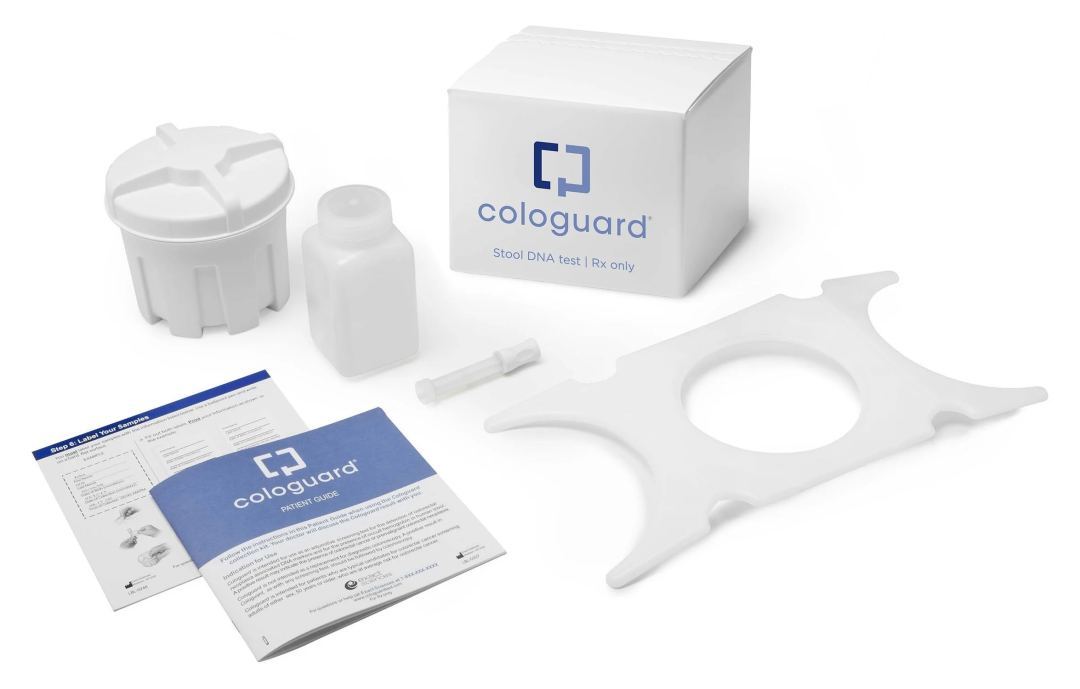
Cologuard: Non-invasive Stool DNA Colorectal Cancer Screening Test
Oncotype DX: Gene Expression Testing for Breast Cancer and Other Tumors
Cancerguard: Multi-Cancer Early Detection (MCED)
Oncodetect: Molecular Residual Disease (MRD) Monitoring
Among them, Cologuard is one of the earlier commercialized products in the United States.Fecal DNA Colorectal Cancer Screening ProductOne of the tests has already been covered in the U.S. healthcare system, becoming an important case in the commercial pathway for cancer screening.
From the perspective of business structure, Exact Sciences has actually built a pipeline fromCancer Early Screening → Decision Support → Recurrence Monitoring's molecular testing product line, which is precisely the capability that Abbott had previously lacked.
# Why Early Cancer Screening Is the Next Stop for Diagnostic Giants
If we observe the global diagnostics industry over a longer period, two significant changes have emerged in the past decade:
First, the growth of traditional IVD is slowing down.
In mature markets, immunoassays and biochemical testing have entered a stable period, with growth mainly coming from product replacement rather than new demand.
Second, the rapid rise of tumor molecular testing.
With the decrease in NGS technology costs and the advancement of precision medicine, cancer-related testing has become one of the most promising niche markets in the diagnostic field.
The most capital-focused directions include:
Cancer Screening
Multi-Cancer Early Detection (MCED)
MRD Residual Disease Monitoring
Companion Diagnostics (CDx)
The U.S. market has already seen multiple companies that focus on this field, such as:
Guardant Health
GRAIL
Natera
From the perspective of industrial structure, these companies oftenStrong technical capabilities, but weak commercialization channels. In contrast, the traditional IVD giants are just the opposite:Strong channels, wide hospital coverage, but slower in布局新技术赛道。
Abbott's Acquisition of Exact Sciences, in Essence, isIntegration of Two Capabilities。
# What It Means for Chinese Enterprises
For China's medical device industry, this acquisition sends out at least three noteworthy signals.
1. Cancer Early Screening Entering Giant Consolidation Phase
In the past few years, the global early cancer screening market has been mainly driven by innovative companies. However, as technology gradually matures,Large diagnostic companies begin to quickly fill capability gaps through mergers and acquisitions。
This trend has already taken shape in China.
Companies in China that are involved in the early screening of cancer and molecular testing include:
New Horizon Health
BGI
Burning Rock Medical
Among them, the colorectal cancer screening product "Changwei Qing" by Nuohui Health has entered the commercialization stage, similar to the technical path of Cologuard in the United States.
As global giants accelerate their entry into this track, the competition faced by Chinese companies in the future may no longer be limited to local firms.
2. The commercialization capability of early screening products is becoming a key barrier.
Cancer early screening products have an obvious difference from traditional IVD reagents:
Technology is just the first step; the real challenge lies in commercialization.
The success of Cologuard largely depends on:
U.S. Medicare Coverage
Healthcare System Promotion
Large-Scale Screening Program
These factors determine that early screening products often need toStrong market education capabilities and medical network。
This is also why technology companies often end up needing to partner with or be acquired by large healthcare enterprises.
3. Molecular Testing is Becoming the Strategic High Ground for IVD Companies
From the perspective of the industry pathway, global IVD companies have undergone several rounds of technological iterations:
Biochemistry → Immunoassay → Molecular → Multi-omics Testing
Among them,Molecular testing is becoming the core of a new round of technological competition.。
Abbott's acquisition of Exact Sciences is essentially aTechnology Route Upgrade:
From traditional laboratory testing platforms, towardsTumor Molecular Diagnostics PlatformExpansion.
For Chinese companies, this means that the focus of future competition may gradually shift from:
Equipment and Reagent Scale → Data and Testing Capabilities.
# The Industrial Cycle Behind a Merger and Acquisition
Looking back at the history of the global medical device industry, every round of technological change has brought about an industry consolidation.
The Era of Immune Diagnostics: The Rise of Companies like Roche
The Era of Molecular Diagnostics: The Formation of Platforms like Illumina
The Era of Early Cancer Screening: New Companies Emerging Rapidly
And when the technology gradually matures, a new phase often emerges:
Large enterprises integrate innovative companies through mergers and acquisitions.
Abbott's $21 billion acquisition of Exact Sciences this time is likely to be one of the significant milestones of this phase.
For China's medical device industry, this also means that a new issue is beginning to emerge:
Will China's future cancer early screening companies grow into new global platforms or become part of the integration by global giants?
The answer remains unknown, but the industry competition has already begun.