

Yitu Health's AI Cancer Prevention Map Achieves Million-Scale Screening in Three Years

YITU
Provider of Full-Stack Intelligent Healthcare Product Solutions
The mapping of the AI Cancer Prevention Landscape began three years ago with a visit by Yitu Healthcare to Panyu. Prior to that, medical AI companies were predominantly concentrated in tertiary hospitals, with few enterprises venturing down to explore primary healthcare settings.
In May 2018, as part of the low-dose spiral CT lung cancer early screening initiative in Panyu District conducted in collaboration with the Second Affiliated Hospital of Guangzhou Medical University, YITU Medical assisted the hospital in completing early screening for 1,323 individuals. The program identified 10 cases of lung cancer, nine of which were early-stage and all confirmed by pathology.
The value of this screening is self-evident. Data show that 75% of lung cancer patients in China are already at an advanced stage at the time of diagnosis, with a five-year survival rate of less than 20%; meanwhile, the early detection rate for breast cancer is less than 10%. The large number of patients with advanced-stage cancer not only imposes a heavy economic burden on patients and their families but also causes immense psychological distress, leading to countless social tragedies.
At that time, Yitu Medical began to reevaluate its position. After all, for artificial intelligence technology to realize its true value, it must not only alleviate the burden on large hospitals but also extend its reach to grassroots levels. To unlock its full potential, medical AI needs to assist physicians in diagnosis while leveraging big data to uncover the underlying causes behind high patient prevalence rates.
In November 2018, Yitu Healthcare officially launched the “AI Cancer Prevention Map” project, promoting the adoption of AI in primary healthcare, enhancing the service delivery capacity of medical institutions, strengthening research on cancer populations, optimizing early screening methods, and ushering China’s tumor screening into the “AI+” era.
We are now in the third year of mapping the cancer prevention landscape. Over the years, the project has been progressively implemented in multiple provinces and municipalities, including Guangdong, Fujian, Henan, Hubei, and Liaoning. In Guangdong, where the initiative originated, two years of intelligent early screening have led to an increasing number of residents proactively participating in follow-up visits, enabling more patients to receive treatment at the early stages of cancer.
Zhejiang, a land of fish and rice, is one of the target regions for YITU Healthcare’s 2020 Cancer Prevention Map. As a province with a relatively high incidence of colorectal cancer in China, Zhejiang’s age-standardized rate of colorectal cancer is 12.41% higher than the national average. This malignancy poses a significant threat to the health of residents and drives rapid growth in medical expenditures, underscoring the urgent need to strengthen prevention and control efforts.
Supported by its achievements in recent years, the Zhejiang Tour of the Cancer Prevention Map team has partnered with the Zhejiang Provincial Office for Cancer Prevention and Control to specially develop a provincial cancer screening information platform for colorectal cancer screening among high-risk populations in Zhejiang Province, contributing data intelligence to the province’s cancer screening initiatives. This screening program has received support from government departments at all levels, medical institutions, communities, healthcare workers, and volunteers.
Statistical data show that this colorectal cancer screening campaign mobilized 239 screening institutions, 1,282 recruitment agencies, and more than 14,000 medical professionals and volunteers. The screening coverage extended to all counties and cities within the province, reaching 1,294 out of 1,366 communities across the province, for a coverage rate of 94.7%. From the core urban areas of the provincial capital to rural health clinics in mountainous regions, screening volunteers were visible everywhere.
The total number of individuals screened has reached a new high. As one of the few province-wide, comprehensively coordinated single-cancer screening programs in China and abroad that achieves full coverage across all counties and districts, it has screened over 2 million individuals via questionnaires, performed more than 2 million fecal immunochemical tests (FIT), and conducted over 120,000 colonoscopies. More than 1,000 patients with colorectal cancer at various stages have been identified and received subsequent treatment, leading to improvements in their survival time and quality of life.
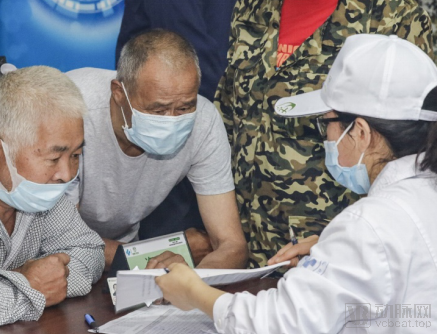
While screening data surged rapidly, this initiative—leveraging the provincial cancer screening information platform—achieved unified, end-to-end digital management through multi-tiered collaboration across the province. This enabled efficient quality control, interoperability, and seamless sharing of screening data, laying the foundation for future expansion to additional cancer types and regions, as well as for medical big data research.
To ensure screening efficiency and technical proficiency, the Zhejiang Provincial Cancer Prevention and Control Office, serving as the provincial-level technical guidance unit, conducted standardized technical training and assessments for endoscopists across the province. This initiative further elevated the standards of colorectal cancer screening, diagnosis, and treatment within Zhejiang, promoting standardized and homogeneous practices throughout the province.
Henan is another typical example of the AI Cancer Prevention Map.
In 2019, Xinye County People's Hospital introduced care.ai®’s Chest CT Intelligent 4D Imaging System, a domestically leading AI solution for medical imaging. The system has been widely applied in low-dose spiral CT (LDCT) lung cancer screening and routine clinical diagnosis and treatment, reducing image interpretation time from several minutes to just seconds. This advancement has significantly improved the efficiency and accuracy of lung cancer screening while bolstering physicians’ confidence in their diagnostic decisions.
On the other hand, leveraging AI technology as a bridge, Xinye County People’s Hospital has established a close hierarchical diagnosis and treatment system and academic exchanges with institutions such as Zhengzhou People’s Hospital, the First Affiliated Hospital of Zhengzhou University, and the Pulmonary Nodule Multidisciplinary Diagnosis and Treatment Professional Committee of the Henan Health Science and Technology Association. These efforts strengthen the exchange of advanced technologies and talent development, fundamentally enhancing the multidisciplinary tumor diagnosis and treatment capabilities of county-level medical institutions. By adopting a model characterized by “multi-level external collaboration, internal disciplinary integration, multi-departmental linkage within the county, and grassroots services extending to villages,” the hospital has achieved multi-party collaborative construction and mutual benefits, yielding significant outcomes in discipline development and positive social impact, thereby creating the “Xinye Model” for intelligent early screening of lung cancer.
According to statistics, over the past year since the project’s launch, joint efforts by relevant departments at Xinye County People’s Hospital and members of the county-level medical consortium (including 13 township health centers, 10 community health service centers, more than 40 urban outpatient clinics, and over 300 village doctors) have enabled the public education campaign for the intelligent early screening program for pulmonary nodules to reach more than 60,000 individuals. A cumulative total of over 11,000 individuals were screened, with more than 3,600 testing positive for pulmonary nodules. Following expert consultations, 32 patients underwent surgical treatment at Xinye County People’s Hospital.
Overall, YITU Medical’s AI Cancer Prevention Map has achieved a breakthrough from “0” to “1,” evolving from single-cancer to multi-cancer screening, scaling from tens of thousands to millions of cases, and shifting from isolated screening points to province-wide coordinated planning, thereby becoming a model for the advancement of AI in primary healthcare.
In the view of Director Chen Ming of the Zhejiang Provincial Cancer Prevention and Control Office, who leads Zhejiang’s colorectal cancer screening program, the “AI Cancer Prevention Map” initiative in Zhejiang was able to overcome numerous challenges and achieve significant breakthroughs only because of an indispensable combination of factors: strong policy support, a solid public foundation, rigorous training and quality control, and a unified provincial cancer screening information platform.
Zhejiang Province has a solid foundation for colorectal cancer screening. In this screening campaign, the initial screening compliance rate in Haining City exceeded 90%, and the compliance rate for colonoscopy among screen-positive individuals exceeded 70%. The initiative was also included in the “Ten Key Livelihood Projects of Zhejiang Province in 2020,” integrated into the Zhejiang Provincial Government’s Livelihood Project System, and incorporated into the “Healthy Zhejiang” performance evaluation.
The emergence of cancer screening information platforms has further empowered all stakeholders.
It is understood that this platform, developed under the guidance of the Zhejiang Provincial Cancer Prevention and Control Office and specially researched and developed by YITU Medical, integrates industry-leading advanced technologies such as medical informatics, artificial intelligence, and big data. It enables unified access to and management of cancer screening program information across the province, meeting diverse needs including screening process management, intelligent quality control, data security, and big data analytics. With robust agile scalability, the platform provides comprehensive support throughout the entire continuum of screening, diagnosis, and treatment.
When discussing the platform, Director Chen Ming stated: “The establishment of the provincial cancer screening information platform has further enhanced the efficiency and accuracy of cancer screening, facilitating earlier detection of colorectal cancer in more patients, improving their treatment outcomes and quality of life, and reducing medical expenses for both patients and the national health insurance system.”Preliminary estimates suggest that the implementation of colorectal cancer screening this year alone will save approximately RMB 2.87 billion in out-of-pocket medical expenses for the public and future expenditures from the basic medical insurance fund.
Meanwhile, the platform has achieved information-based management of the entire screening process, promoting data interoperability, intelligent quality control, and convenient sharing. Furthermore, leveraging this platform is expected to further improve the cancer prevention and control screening system, establish a standardized and sustainable mechanism for colorectal cancer screening, and strengthen regional collaboration.
“In the future, the platform will further expand its range of cancer types and screening programs,” disclosed Director Chen Ming. “In addition to the ten livelihood initiatives of the Zhejiang Provincial Government, the platform will also open access to cancer screening projects funded independently by various counties and cities, such as the lung cancer screening program for 10,000 residents in Wenling City and the gastrointestinal tumor screening project in Yongkang City. By providing support to these cancer screening initiatives, both the breadth and depth of cancer screening will be significantly enhanced.”
While delivering value to society and residents, Yitu Healthcare has also achieved AI advancement through its practical applications.
Primary healthcare represents a vast market, yet the “refined” models derived from tertiary hospital data are ill-suited to the “grassroots” realities of primary care.
To this end, YITU Medical’s Cancer Prevention Map is continuously being “upgraded.”
1. Implement differentiated training for the algorithms. During the development of the AI Cancer Prevention Map, Yitu Healthcare made targeted improvements based on the data characteristics of primary healthcare settings, enabling its AI products to achieve robust performance even with low- to mid-end imaging data.
2. It is better to teach someone how to fish than to give them a fish. YITU Medical actively promotes academic exchanges and personnel training, driving the standardization and homogenization of regional tumor diagnosis and treatment, thereby fundamentally enhancing the capacity of primary healthcare institutions in tumor screening, diagnosis, and treatment.
After years of refinement and accumulation, YITU Medical has taken the lead in the industry by evolving from disease-centric intelligent diagnosis and treatment to a patient-centric, closed-loop data processing system covering the entire lifecycle. Full-stack AI technology has been deeply integrated into every aspect of healthcare and public health, spanning multiple domains including intelligent data centers, smart hospitals, and clinical intelligent decision support.
As the medical AI sector experiences another wave of innovation, data and life sciences have become inextricably linked. How can we unlock the value of data to better serve physicians, benefit patients, and advance the healthcare system? As a leading enterprise in the field of AI-driven healthcare, how far can Yitu Medical’s “Cancer Prevention Map” extend? The possibilities are worth anticipating.