

BreathRay Technology: Pioneering Breath-Based Diagnostics for Early Detection of Infectious Diseases and Cancer
“Observation, auscultation and olfaction, inquiry, and palpation are indeed the fundamental principles of medical practice.”
The practice of diagnosing diseases through breath analysis has existed since ancient times, and clinical research over the past few decades has continued to explore the diagnostic value of breath analysis. This has given rise to a new discipline—breath metabolomics—which enables the diagnosis and monitoring of human health by detecting differences in the distribution of volatile organic compounds (VOCs) in human breath.
“After several in-depth discussions with multiple clinical respiratory specialists, I found that there has always been a demand for using breath testing technology in disease diagnosis,” Wang Dongjian, founder of Burui Technology, told VCBeat. “Existing breath testing devices and methods suffer from many issues, such as complex operation, low throughput, long processing times, and high costs, which have created a significant barrier to the clinical adoption and commercialization of breath testing.”

Wang Dongjian, Founder of Burui Technology
Burui Technology is a technology company specializing in breath analysis and research on disease biomarkers. The company aims to achieve early screening for malignant tumors and infectious diseases through human breath testing, provide auxiliary tools for the rapid diagnosis of various metabolism-related diseases, and offer hospitals, research institutions, third-party clinical laboratories, and other organizations a novel, non-invasive, precise, convenient, and cost-effective solution for screening and differential diagnosis.
After keenly recognizing the significant potential of the respiratory testing market, Wang Dongjian conceived the idea of creating a user-friendly, low-cost, high-throughput breath testing platform. By reviewing relevant domestic and international literature from the past decade, Wang Dongjian eventually connected with Professor Li Haiyang, who became another co-founder of Burui Technology.
Professor Li Haiyang is a leading expert in China specializing in high-end analytical instruments and online detection. He serves as the Head of the Rapid Separation and Analysis Research Group at the Dalian Institute of Chemical Physics, Chinese Academy of Sciences. A National Level-II Researcher and doctoral supervisor, he currently holds the position of Chief Scientist at Burui Technology.
With the support of Professor Li Haiyang, Wang Dongjian established the initial R&D team of Burui Technology in 2015. Since its inception, the team rapidly initiated clinical research in collaboration with the team led by Academician Wang Jun from the Department of Cardiothoracic Surgery at Peking University People’s Hospital, focusing on the project titled “Significance of Volatile Organic Compounds in Human Exhaled Breath for the Differential Diagnosis of Lung Cancer.” As the research progressed, Burui Technology, Peking University People’s Hospital, and the Dalian Institute of Chemical Physics of the Chinese Academy of Sciences jointly established the “Center for Respiratory Metabolism Research.”
Burui Technology employs a proprietary Single-Photon Ionization Time-of-Flight Mass Spectrometry (SPI-TOFMS) technology for breath analysis. This technology enables highly sensitive, real-time, and rapid measurement of volatile organic compounds (VOCs) in exhaled breath under high-humidity conditions, featuring detection limits at the parts-per-trillion (ppt) level and response times on the order of seconds.
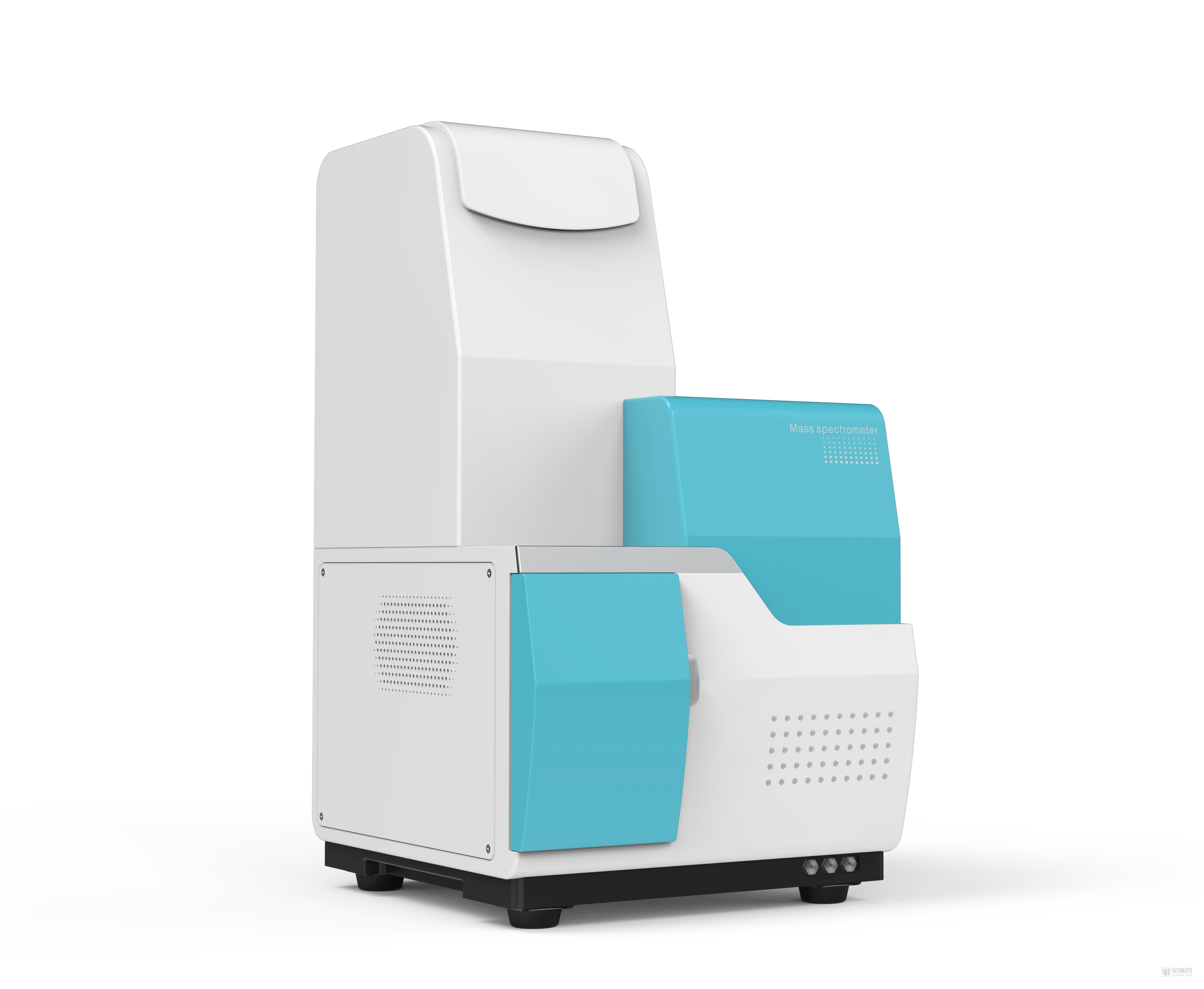
Human Breath Analysis Instrument
Previous studies have demonstrated that fingerprinting volatile organic compounds (VOCs) in exhaled breath can effectively distinguish whether patients have microbial infections. Following microbial infection, the VOCs present in human exhaled breath primarily originate from three sources: first, products of human physiological metabolism; second, metabolites generated by microbial and viral metabolic processes; and third, metabolic products resulting from the human body’s stress responses to infection and inflammation. Once microbes invade the human body, even during the latent period, heightened metabolic activity leads to significant differences in the metabolic profiles of exhaled breath. Therefore, analyzing trace volatile metabolic components in human exhaled breath holds promise for providing a simple and efficient method for the early and rapid detection of infectious diseases, offering substantial social value and broad prospects for clinical application.
In addition to infectious diseases, hypoxia, cellular hyperproliferation, excessive inflammation, reactive oxygen species activity, and other cancer-related pathological mechanisms can cause significant changes in the profiles and concentrations of local and systemic volatile organic compounds (VOCs). This implies that VOCs can serve as important biomarkers for a comprehensive assessment of human physiological and pathological conditions.
However, even though the guiding significance of VOC fingerprinting for precise disease diagnosis has been clearly established, achieving accurate detection of VOCs remains a challenging task. “Human exhaled breath contains high-concentration gases such as saturated water vapor, nitrogen, and oxygen, whereas VOCs are present at extremely low levels, typically in trace amounts. Under such complex matrix conditions, conventional mass spectrometers struggle to perform qualitative and quantitative analyses,” Wang Dongjian admitted.
After years of dedicated investment, Burui Technology has independently developed a core patented technology: “Novel High-Pressure Photoionization Source Based on Vacuum Ultraviolet Lamps.” This threshold photoionization technology emits photons with energy sufficient to efficiently ionize the vast majority of volatile organic compound (VOC) components in exhaled breath, while leaving background constituents such as water vapor, carbon dioxide, nitrogen, and oxygen un-ionized. By eliminating background interference, this approach enables precise VOC analysis and ingeniously overcomes the technical barriers associated with mass spectrometric analysis of exhaled breath.
SPI-TOFMS enables direct injection analysis of breath samples without enrichment, facilitating efficient ionization and broad-spectrum analysis of small-molecule VOCs with diverse types and properties. Meanwhile, the photoionization source employed is a soft ionization technique that predominantly generates molecular ions, thereby simplifying spectral interpretation and qualitative and quantitative analysis.
Introduction by Wang Dongjian: A single breath test using SPI-TOFMS can be completed in as little as 60 seconds, with the report available within one minute. In screening validations for diseases such as tuberculosis, lung cancer, and breast cancer, the method has achieved both sensitivity and specificity of 90%. The company is actively conducting clinical trials and expects to announce further positive developments in the near future.
Burui Technology has achieved trace detection of human volatile organic compounds (VOCs) based on SPI-TOF technology, demonstrating significant clinical application advantages. Literature and experimental studies have already validated its potential in multiple cancer types, digestive system diseases, pulmonary diseases, blood infections, and other conditions. Internationally, numerous companies and R&D teams are actively strategizing in these areas.
Currently, leveraging the distinct VOC profiles detected via exhaled breath SPI-TOFMS, Burui Technology has taken a leading position in laying out its strategic focus on three major areas: lung cancer, tuberculosis, and breast cancer, with several additional candidate indications actively under development.
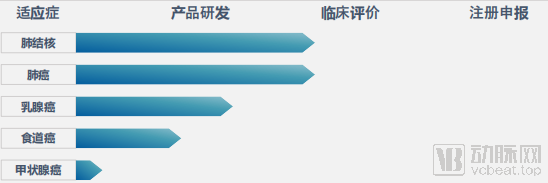
Burui Technology's Pipeline Layout
Based on the clinical data accumulated by Burui Technology to date, the sensitivity for lung cancer detection in a cohort of 1,000 cases ranged from 88% to 90%; the sensitivity for pulmonary tuberculosis detection in another 1,000 cases ranged from 92% to 97%; and the sensitivity for breast cancer detection in a cohort of 300 cases reached 90%. Notably, SPI-TOFMS can detect early-stage lung adenocarcinoma in situ as small as approximately 5 mm during lung cancer screening.
Notably, from September 14 to 17, 2020, Burui Technology collaborated with a local Center for Disease Control and Prevention (CDC) under the jurisdiction of Changde City, Hunan Province, to conduct tuberculosis screening among 1,564 newly enrolled students. This marked Burui Technology’s first prospective study in a real-world setting. In this study, SPI-TOFMS breath-based screening successfully identified the only case of active tuberculosis among more than 1,000 students, a result that was fully consistent with the CDC’s confirmatory testing. This achievement represents a significant milestone for Burui Technology.
Regarding the future, Burui Technology will strategically position itself toward multi-cancer and multi-infectious disease screening. Multi-cancer testing refers to the simultaneous screening for multiple types of cancer in a single test, which can effectively reduce cancer incidence and mortality rates and represents the prevailing trend in early cancer screening. Wang Dongjian acknowledged that the detection and analysis methods for different cancer types using the SPI-TOFMS system are essentially the same, with differences lying only in the post-acquisition mass spectrometry data analysis software. This implies that Burui Technology is poised to enable early screening for multiple cancers through a single sample collection in the future.
It is reported that Burui Technology received angel-round investment from Miracle Light Venture Capital Fund in 2019 and has currently launched its Pre-A financing round to further accelerate the R&D and regulatory approval of its product pipeline.