

GeneUs Tech Unveils China's First Clinical-Focused Nanopore Sequencer Prototype in Chengdu

Geneus Technologies
Gene Sequencing Instrument R&D and Manufacturer
For just a few hundred yuan and a few hours, whole-genome sequencing of humans can be achieved, unlocking all the “secrets” encoded in our genes. This is the vision presented by Geneus Technologies (hereinafter referred to as “Geneus Tech”) at the launch event for its engineering prototype of a nanopore gene sequencer held on December 24.
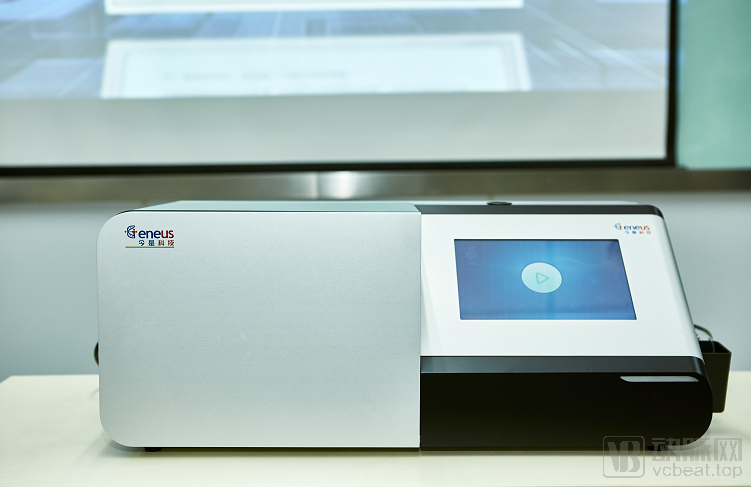
Reportedly, this is the first engineering prototype of a gene sequencer in China designed for broad clinical medical applications. With a clear technological roadmap, it holds promise for overcoming the current bottleneck wherein the data quality of nanopore sequencers fails to meet widespread clinical demands, thereby laying a solid foundation and providing momentum for precision medicine. Guided by its vision and mission to make gene sequencing a routine tool in precision medicine and improve human health, Geneus Technologies may contribute to breaking the long-standing monopoly of foreign companies on high-end gene sequencers.
“Full Version of the Geneus Technologies Product Launch Event,” click the link to watch:https://url.cn/ekdiuSDG?sf=uri
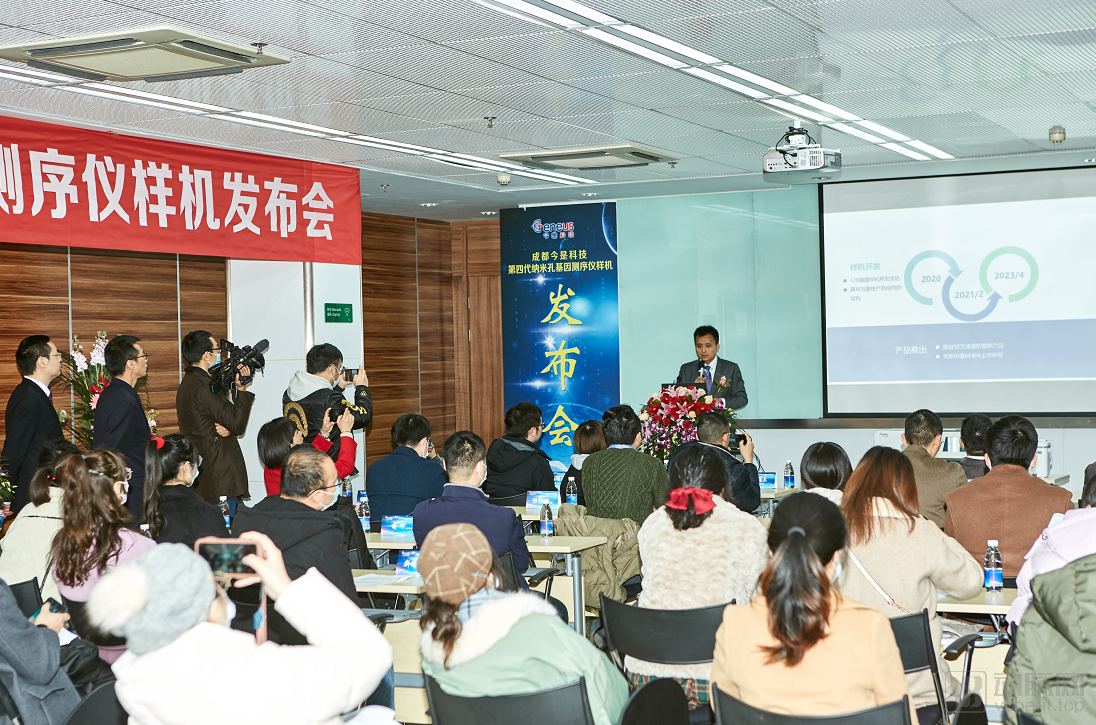
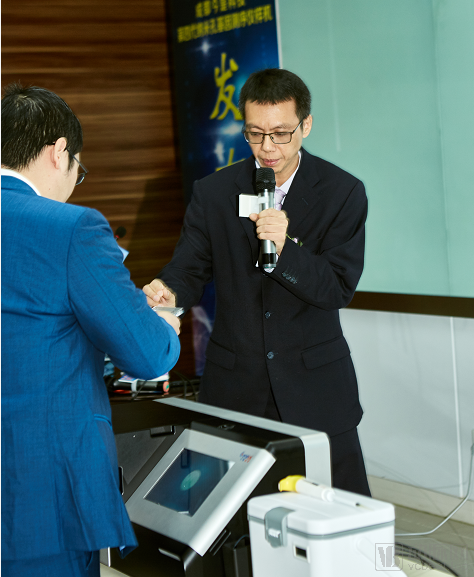
At the press conference, relevant company executives explained and demonstrated the principles, system architecture, sequencing workflow, and data output of the engineering prototype sequencer. According to the introduction, the prototype is capable of automatically completing the entire long-read sequencing process using a predetermined “protein nanopore sequencing-by-synthesis” approach. As shown in the live demonstration, the entire sequencing procedure requires no manual intervention other than loading the test sample, demonstrating a very high level of automation.

According to the person in charge, the target product corresponding to this prototype is a nanopore gene sequencer with independent intellectual property rights and exceptionally high design performance parameters. Building upon the framework of the released prototype and adhering to a clear technological roadmap, subsequent optimizations will enable the instrument to achieve a design sequencing accuracy of over 99.9999% and an average read length exceeding 10 kbp. It will be capable of meeting various testing requirements, including genomics, metagenomics, transcriptomics, and methylation analysis, positioning it to become China’s first nanopore gene sequencer widely applicable in clinical medical practice.
What benefits will the commercialization of such a sequencer bring to the general public? A company representative summarized it as follows: “Human whole-genome sequencing can be completed within hours at a cost of just a few hundred yuan, providing precise data support throughout the entire precision medicine journey—from prevention, screening, and diagnosis to treatment and prognosis.”
Specifically, “a few hundred yuan” means that after the target product is launched, the current cost of human whole-genome sequencing, which is approximately USD 1,000, will be significantly reduced to under RMB 1,000. This will greatly promote its widespread application in clinical medicine and many other fields, gradually making it a routine diagnostic and therapeutic tool for precision medicine accessible to the general public.
“Hours” signifies that the entire workflow of the target product—from nucleic acid extraction, library preparation, and sequencing to data analysis and report generation—can be completed automatically within 10 hours. This approach is convenient and efficient, making it suitable for a broader range of clinical applications.
A company representative stated: The company has completed the first phase of its three-step R&D and commercialization strategy, which involved launching an engineering prototype with an architecture largely consistent with that of the final product. Moving forward, the team will continue its efforts to launch the first nanopore sequencer for the research market within approximately one year—by late 2021 or early 2022—and initiate the application for medical device marketing authorization from the National Medical Products Administration (NMPA).
Building on this foundation, we will spend approximately two more years to launch a high-end sequencer with a 10M throughput for the clinical market. This initiative aims to reduce the cost of human whole-genome sequencing to under RMB 1,000, complete the entire sequencing process within a few hours, and obtain marketing authorization from the National Medical Products Administration (NMPA). By breaking the monopoly of European and American enterprises on high-end gene sequencers, we aspire to become a leader in China’s gene sequencing industry and make meaningful contributions to improving the health of the entire population.
“If we liken each person’s genetic code to a unique book written in approximately 3 billion base pairs of ciphertext, the primary objective of gene sequencing is to decipher the information hidden within this book, thereby providing a big-data foundation for precision medicine and improving the health of the entire population. Nanopore sequencing technology based on sequencing-by-synthesis is currently the most promising approach to achieving this goal,” said a company representative.
Centered on the core project of developing and commercializing nanopore gene sequencers, Geneus Technologies has assembled a formidable R&D team since its establishment in 2017. Dr. Yaozhong Zou, Founder, Chairman, and Chief Scientist of Geneus Technologies, completed his undergraduate studies at Peking University and earned his Ph.D. in Biochemistry from the University of Illinois at Urbana-Champaign in the United States. He subsequently worked in Professor Kobilka’s laboratory at Stanford University, where he played a significant role in the research honored with the 2012 Nobel Prize in Chemistry. Later, he served as Senior Director Scientist in the Nanopore Sequencing Division of Roche in the United States, bringing extensive experience in related product development. Dr. Zou is the key figure leading the R&D efforts at Geneus Technologies.
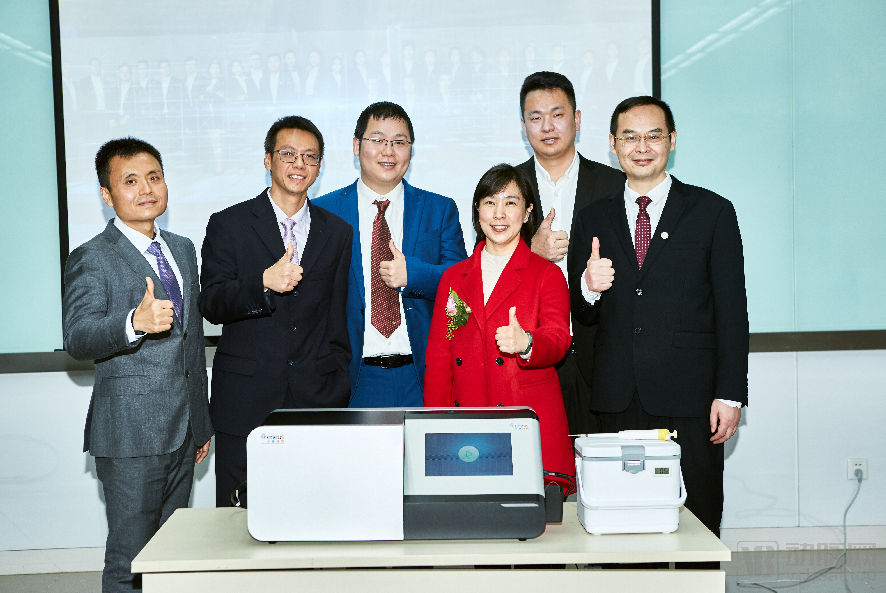
The founding team of Geneus Technologies also includes Dr. Su Yunpeng, an expert in materials science, and Mr. Jiang Ke, an expert in semiconductor chip design. Dr. Su completed his undergraduate through doctoral studies at Northwestern Polytechnical University. After graduation, he engaged in relevant research and development work at The Hong Kong Polytechnic University as an Associate Research Fellow and Research Fellow. He later held key R&D and management positions at Fortune Global 500 companies such as SAPA (Chalco Sapal) and P&W (Pratt & Whitney). Dr. Su served as the technical lead for multiple national-level R&D projects. In addition to serving as CEO and overseeing the overall management of Geneus Technologies, he is responsible for the development of supercapacitor electrodes used in chips.
Mr. Jiang Ke completed his undergraduate studies at Shanghai Jiao Tong University and earned a master’s degree in Very Large-Scale Integration (VLSI) from Tsinghua University. After graduation, he worked at Conexant Systems for many years, serving in various roles including R&D Director. He spearheaded the design and manufacturing of dozens of commercial chips, several of which achieved sales volumes exceeding ten million units. At the company, he led overall hardware research and development and was directly responsible for semiconductor chip design.
The three founders, who have been classmates and close friends for many years, have developed complementary professional skills. The founding team demonstrates exceptional cohesion and solidarity, which has subtly permeated the entire company.
In addition to the aforementioned founders, the company’s R&D team encompasses expertise in protein engineering, enzyme engineering, organic synthesis, semiconductor chips, MEMS, and deep learning—key disciplines required for the development and commercialization of nanopore sequencers. The leaders in each of these areas are elites from leading institutions such as Tsinghua University, Imperial College London, Shanghai Industrial µTechnology Research Institute (SITRI), the University of Colorado Boulder, and the University of Electronic Science and Technology of China.
Following a technology roadmap with independent intellectual property rights, and supported by the “2018 Sichuan Province Major Science and Technology Special Project on Biotechnology and Medicine” as well as Chengdu High-Tech Zone’s case-by-case policy support, the team collaboratively developed an engineering prototype of a nanopore sequencer. Meanwhile, they filed nine national invention patents and claimed priority under nine PCT international patent applications, secured two exclusive rights for integrated circuit layout designs and one computer software copyright. With the assistance of professional intellectual property agencies, Geneus Technologies has gradually established its IP portfolio and technological moat.