

Hansoh Pharma Submits NDA for HS-10568 (SHR6508), China's First Domestic CaSR Allosteric Modulator for SHPT in Hemodialysis Patients
Hansoh Pharma
Pharmaceutical Research, Production, and Sales

Hengrui Pharma
Innovative and High-Quality Pharmaceutical Developer

Author: Beike Society
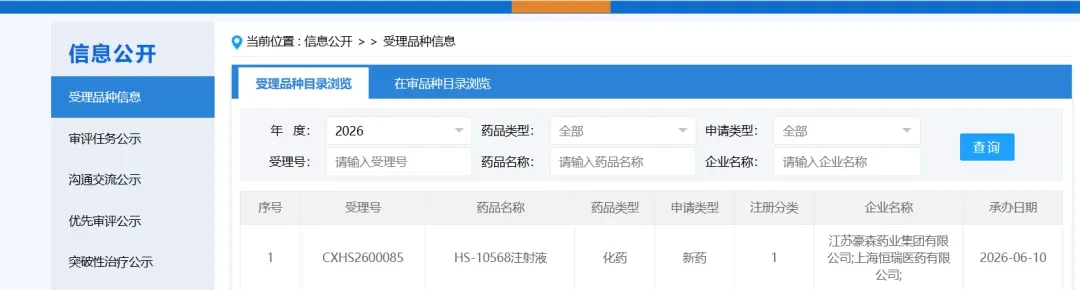
On June 10, according to the latest public announcement on the official website of the Center for Drug Evaluation (CDE) under the National Medical Products Administration, Hansoh Pharma (Hansheng Pharmaceutical) has submitted HS-10568 (SHR6508) for marketing approval.
Looking back to late December 2025, six months ago, Hengrui Pharma and Hansoh Pharma announced a significant collaboration: Hengrui Pharma granted Hansoh Pharma an exclusive, paid license for the rights to SHR6508 (now HS-10568), a calcimimetic allosteric modulator of the calcium-sensing receptor (CaSR), within mainland China. According to the terms disclosed at the time, the transaction included an upfront payment of RMB 30 million, with subsequent regulatory and commercial milestone payments totaling up to RMB 190 million. Additionally, Hansoh Pharma is required to pay Hengrui Pharma tiered royalties of up to 9% on net sales.
In the chronic kidney disease (CKD) market, what kind of impact will this new drug create?
CaSR Allosteric Modulators
With the aging population and the rising incidence of diabetes and hypertension, China has an extremely large base of patients with chronic kidney disease (CKD). When the disease progresses to end-stage renal disease (ESRD), hemodialysis becomes the primary means for patients to sustain life. However, dialysis can only replace part of the kidneys’ toxin-removal function and cannot correct the severe endocrine and metabolic disturbances caused by renal failure.
Secondary hyperparathyroidism (SHPT) is a prevalent and challenging complication in patients with end-stage renal disease (ESRD) undergoing maintenance hemodialysis. With the loss of renal function, phosphate excretion decreases and the synthesis of active vitamin D3 becomes insufficient, leading to hypocalcemia and hyperphosphatemia. This chronic metabolic disorder continuously stimulates the parathyroid glands, resulting in excessive secretion of parathyroid hormone (PTH).
Prolonged elevation of PTH leads to excessive osteoclast activity, resulting in osteitis fibrosa cystica, bone pain, and fractures. More critically, the calcium and phosphate released from bones have nowhere to go but to deposit on vascular walls and heart valves throughout the body, causing severe metastatic calcification. Cardiovascular complications are currently the leading cause of death among hemodialysis patients in China, with secondary hyperparathyroidism (SHPT) being a major contributing factor.
In the field of clinical treatment, this category of disorders primarily relies on active vitamin D and its analogs (such as calcitriol) for intervention. Although these drugs can suppress the secretion of parathyroid hormone (PTH), they simultaneously promote intestinal absorption of calcium and phosphorus, which may exacerbate hypercalcemia and hyperphosphatemia, thereby accelerating the process of vascular calcification. The emergence of allosteric modulators of the calcium-sensing receptor (CaSR) has effectively resolved this therapeutic dilemma.
CaSR is primarily distributed on the surface of parathyroid chief cells. As a CaSR allosteric modulator, HS-10568 functions by enhancing the receptor's sensitivity to extracellular calcium ions. The primary advantage of this mechanism is that it lowers PTH levels without increasing intestinal absorption of calcium and phosphorus, and may even reduce serum calcium levels, thereby mitigating the risk of vascular calcification.
However, first-generation oral calcimimetics (such as cinacalcet) exhibit pronounced gastrointestinal side effects in clinical practice. Many patients experience severe nausea, vomiting, and epigastric burning sensation after taking cinacalcet, leading to poor clinical compliance; a significant number of patients are forced to discontinue treatment due to intolerance.
HS-10568, as a next-generation CaSR modulator, derives its core clinical value from the “reduced toxicity and enhanced efficacy” achieved through structural optimization. It aims to provide a wider safety window by maintaining potent inhibition of PTH while reducing the incidence of gastrointestinal adverse reactions such as nausea and vomiting.
Business Logic
In recent years, in the oncology field, Hengrui Pharma has built an extensive pipeline of bispecific/multispecific antibodies and antibody-drug conjugates (ADCs); in the metabolic disease sector, its GLP-1/GIP multi-target agonist is in the final sprint phase. These therapeutic areas not only offer vast market opportunities but also possess high valuation elasticity and strong potential for global expansion.
In contrast, although the kidney disease and dialysis complication sector represents a market with inelastic demand, its commercialization logic differs significantly from that of the oncology and immunology fields. The medication administration scenarios for hemodialysis patients are highly concentrated in hospital-based hemodialysis centers, which means that to facilitate the commercial launch of SHR6508, companies must establish or maintain a specialized, grassroots sales team targeting nephrology departments and hemodialysis units. By licensing out SHR6508, Hengrui Pharma not only secures an immediate cash inflow of RMB 30 million as an upfront payment but also locks in subsequent milestone payments totaling nearly RMB 200 million, along with long-term royalty shares.
In the fields of oncology, central nervous system disorders, anti-infectives, and metabolic and renal diseases, Hansoh Pharma possesses strong market penetration and multi-category synergistic capabilities. More importantly, in last year’s transaction, Hansoh not only secured exclusive rights to HS-10568 but also obtained non-exclusive commercialization rights for another already-approved nephrology drug from Hengrui Pharma—paricalcitol soft capsules.
This move constitutes a highly precise strategic combination. In clinical practice,The combination of calcimimetics and vitamin D analogs has certain clinical value in the treatment of secondary hyperparathyroidism (SHPT), particularly for some refractory cases or patients who need to balance serum calcium and phosphorus levels.
Market Competition
China’s SHPT drug market is experiencing rapid growth. The market size reached RMB 2.2 billion in 2024, surged to RMB 4.5 billion in 2025—a year-on-year increase of over 100%—and is projected to reach RMB 5.1 billion in 2026. This growth rate far exceeds that of most sub-segments for chronic disease medications, highlighting the rigidity of clinical demand and the accelerating pace of product substitution.
However, the incremental growth primarily stems from the expansion of medical insurance coverage and improved diagnosis rates. In 2025, Zhejiang, Guangdong, and Jiangsu provinces took the lead in piloting volume-based procurement (VBP) specifically for secondary hyperparathyroidism (SHPT) medications. The winning bid prices were RMB 198.5 per box for cinacalcet and RMB 432.0 per box for paricalcitol, representing an average price reduction of 41.6%. Under the VBP framework, the market share of traditional active vitamin D declined from 51.3% in 2024 to 43.2% in 2025, while the combined share of calcimimetics and selective vitamin D receptor (VDR) agonists rose to 56.8%. The market pie is expanding, but the rules for its distribution are being rewritten.
SHR6508 enters a fiercely competitive battlefield. Currently, there are four CaSR-targeted drugs approved for marketing worldwide.
As the first-generation oral calcimimetic, cinacalcet received FDA approval in 2004 and entered the Chinese market in 2015; it has since been included in the centralized volume-based procurement program. Currently, multiple generic versions of cinacalcet are available in China, most of which have undergone the rigorous process of centralized procurement, resulting in relatively low prices. For a significant proportion of dialysis patients with modest financial means, “affordability and accessibility” remain the primary considerations.
Etelcalcetide is a second-generation intravenous calcimimetic agent developed by Amgen, with Fosun Pharma responsible for its commercialization in China. The drug was approved by the FDA in 2016 and received marketing approval in China in May 2023.Indicated for the treatment of secondary hyperparathyroidism (SHPT) in adult patients with chronic kidney disease (CKD) undergoing hemodialysis.
Therefore, HS-10568 faces competition from both the originator and generic versions, as well as challenges related to dosage form convenience.
A single line of acceptance publicity on the CDE website marks the finish line of the long R&D marathon for HS-10568, but for Hansoh Pharma, it is the starting point of the true commercialization test.

Click "Pharmadl" below”, follow for more exciting content
Disclaimer
The push notification rules of the WeChat Official Account have been changed yet again. If you don’t click“Liked”or not set to"Starred"Otherwise, we may fade into the vast sea of information. Click here to stay updated with the latest news from Pharmadule!??