

Lanfan Medical Launches Pivotal ISR Clinical Trial for BA9 Drug-Coated Balloon, Poised to Reshape the DCB Market
Bluesail Medical
Producers of Medium-Low Value Consumables and High-Value Medical Devices
On December 16, Jiwei Medical, a subsidiary of Bluesail Medical, officially launched the pre-market clinical trial for its Biolimus-eluting coronary balloon catheter (model DCB-BA9). The kickoff ceremony for the clinical research centers was held at the Chinese People's Liberation Army General Hospital (301 Hospital). Led by Professor Chen Yundai’s team at 301 Hospital as the coordinating center, the trial will be conducted simultaneously across 20 participating sites. The study aims to compare the safety and efficacy of the Biolimus-eluting coronary balloon catheter versus the Paclitaxel-eluting coronary balloon catheter in treating in-stent restenosis (ISR) of coronary arteries. The first patient was enrolled in December.
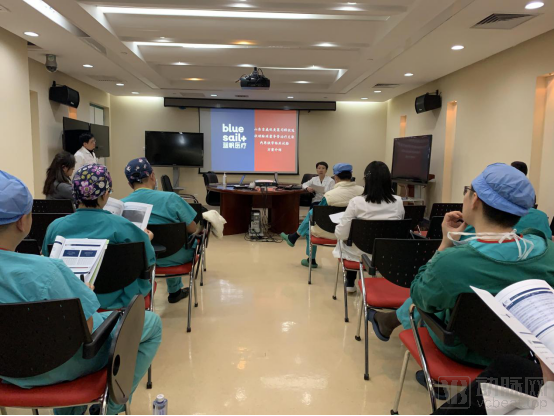
Launch Ceremony of the Clinical Research Center, presented by Professor Chen Yundai
Drug-coated balloons (DCBs) deliver anti-restenotic agents to the vessel wall at the lesion site via a matrix coating on the balloon surface, thereby inhibiting neointimal hyperplasia. Since balloon inflation temporarily occludes blood flow, the procedure must be completed within 60 seconds to avoid complications such as myocardial injury. This time constraint explains why paclitaxel, characterized by rapid absorption and prolonged tissue retention, has been the preferred coating agent. However, due to concerns regarding paclitaxel’s cytotoxic mechanism of action and its suboptimal performance in terms of safety and restenosis prevention, there is a clinical need for a superior alternative coating drug. Sirolimus (rapamycin), which has already replaced paclitaxel in coronary stents, was expected to serve as this alternative. Nevertheless, its low lipophilicity, slow tissue uptake, short retention time, and poor stability have posed significant challenges, hindering its adoption as a replacement for paclitaxel in drug-coated balloon applications.
Biosensors International, a subsidiary of Bluesail Medical, has developed the patented drug BA9, which effectively addresses these challenges. BA9 exhibits significantly higher lipophilicity than other sirolimus-based drugs, resulting in approximately tenfold greater efficacy. Furthermore, through a proprietary crystallization process, Biosensors International has enhanced the stability of BA9 and extended its retention time. The company has also optimized the carrier polymer to improve drug uptake. Finally, by employing a novel drug-coating technology that ensures uniformity and integrity of the coating, BA9 achieves markedly improved absorption efficiency. These attributes have established BA9 as the leading agent among sirolimus-based drug-coated balloons.
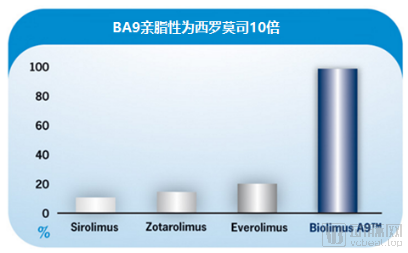
BA9 is 10 times more lipophilic than sirolimus
Public notices on the Ministry of Science and Technology’s government service platform indicate that the objective of this trial is “to evaluate the safety and efficacy of the Umirolimus-eluting coronary balloon catheter in treating in-stent restenosis, compared with the Paclitaxel-eluting coronary balloon catheter.” According to relevant executives at Bluesail Medical, the trial is led by Professor Chen Yundai and features several notable highlights. For instance, the product’s unique length enables one-time treatment of diffuse lesions. The OCT substudy design allows for more intuitive assessment of the causes of in-stent restenosis, as well as neointimal status pre-procedure, immediately post-procedure, and at 9 months. The executives further stated that, in light of the FDA issuing three warnings in 2019 regarding the potential increased risk of mortality associated with long-term paclitaxel exposure, the study incorporates a long-term follow-up period of up to three years. This is currently the only global trial establishing a three-year follow-up for both sirolimus-class drugs and paclitaxel to verify their long-term safety, setting a precedent in drug-coated balloon (DCB) clinical research. The first patient was officially enrolled in December, marking the formal entry of Bluesail Medical’s DCB-BA9 into the pre-market clinical trial phase in China.
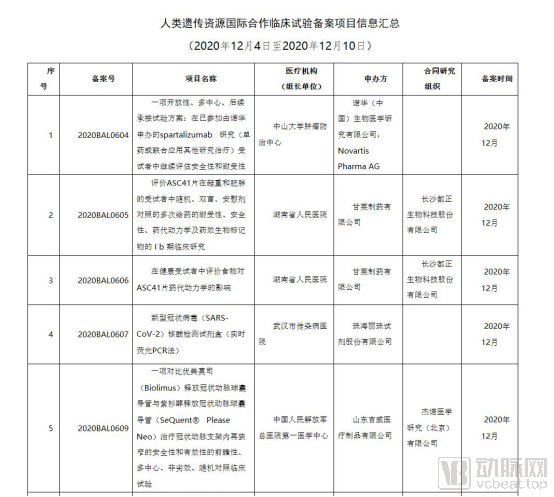
Jiwei Medical DCB-BA9 Clinical Trial Project, No. 2020BAL0609
As early as 2019, DCB-BA9 initiated a clinical trial on small vessel disease (SVD). The aim of the trial was to compare the safety and efficacy of Biolimus-eluting coronary balloon catheters versus conventional balloon dilation catheters in treating patients with coronary small vessel disease. The trial was led by Academician Han Yaling from the General Hospital of the Northern Theater Command, with joint research conducted by Professor Zhou Yujie and Professor Fu Guosheng, involving participation from ten hospitals. It is reported that an interim investigator meeting will be held soon to plan the next steps. The trial enrolled a total of 206 patients, with the last patient enrolled in late April 2020. Therefore, it is expected that the product will be submitted to the NMPA for SVD indication as early as mid-2021.
Since the launch of B. Braun’s first drug-coated balloon (DCB) in 2009, more than ten DCB products have become available internationally. In China, the DCB market is dominated by companies such as B. Braun, Lepu Medical, Shenqi Medical, and Grand Pharma. However, all currently marketed DCBs use paclitaxel as the coating drug. If Jiwei Medical’s DCB-BA9 receives approval for launch, it will become the first sirolimus-class drug-coated balloon on the Chinese market.
According to data released at the 22nd National Interventional Cardiology Forum, China performed 915,000 percutaneous coronary intervention (PCI) procedures in 2018, with a compound annual growth rate (CAGR) of 16.7% from 2009 to 2018, indicating an accelerating growth trend. We can roughly estimate the market potential for drug-coated balloons (DCBs). Currently, DCBs are primarily indicated for in-stent restenosis (ISR), simple vessel disease (SVD), and coronary bifurcation lesions (CBL). In PCI procedures, ISR accounts for 5–10%, SVD for approximately 20%, and CBL for 15–20%. Based on the current average market price of RMB 25,000 per DCB, the domestic DCB market size exceeded RMB 10 billion in 2020. However, DCB products in the Chinese market are currently dominated by treatments for ISR. In the RMB 2 billion SVD segment, Grand Pharma offers only one DCB product, which still utilizes a paclitaxel coating. We predict that when Jiwei Medical’s DCB-BA9 completes dual clinical trials for both SVD and ISR and enters the market, it will trigger a major reshuffling of the DCB market landscape.
In recent years, the field of cardiac intervention has proposed the innovative concept of “intervention without implantation,” and bioresorbable scaffolds (BRS) have been introduced in the coronary stent sector. However, numerous issues remain. In 2017, Abbott announced the complete withdrawal of its BRS product, which had been on the market for nearly a decade, due to clinical studies revealing an increased incidence of adverse events such as scaffold thrombosis. Therefore, the future prospects of BRS remain uncertain. In contrast, the therapeutic characteristics of drug-coated balloons (DCBs) align well with this concept. After addressing the Achilles’ heel of sirolimus-based drug-coated balloons, DCB-BA9 is poised to become one of the representative treatment options embodying the innovative philosophy of “intervention without implantation.”
Once this product is launched in the Chinese market, it will become a boon for hundreds of thousands of patients with relevant indications, leveraging Bluesail Medical’s robust domestic sales network.