

Strategic Pathways for IVD Manufacturers, Distributors, and Professionals Amid National Centralized Procurement of Medical Consumables
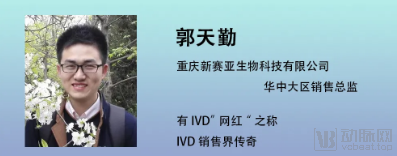
Author: Guo Tianqin
Foreword: This article was compiled and repeatedly revised over a period of nearly two months by Guo Tianqin, Sales Director for the Central China Region at Chongqing New Asia Biotechnology Co., Ltd. It provides an in-depth analysis of the transformations that centralized procurement of in vitro diagnostics (IVD) will bring to distributors, the industry, and hospitals.
Summary as follows:
I. The Logic Behind the State’s Aggressive Centralized Procurement of Medical Consumables;
II. The Future of China's IVD Industry in the Post-Centralized Procurement Era for Medical Consumables:
1. The Future Path for IVD Distributors;
2. Agglomeration Issues in China’s IVD Industry;
3. The Future of Chinese Hospitals.
A few days ago, I sponsored a conference and happened to meet Company A, which was also exhibiting. I am quite familiar with this company; it is one of the earliest IVD distributors in Henan Province to undergo business transformation. As a strong local distributor based in Luoyang, it has extensive coverage of hospitals in the region.
Taking advantage of a quiet moment, I had a chat with my boss, Mr. Xia, asking how business was going. Mr. Xia said, “The biochemical reagent market is becoming increasingly difficult to navigate due to intense competition. Although we conduct nationwide distributor recruitment and cover more than ten provinces and municipalities, relying on price wars and specialized projects, the provincial market remains relatively easier to penetrate, allowing us to effectively leverage our regional competitive advantages.” I replied, “You transformed your business model quite early by engaging in both manufacturing and distribution. With centralized procurement for IVD products just around the corner, biochemical reagents will undoubtedly be the first to be affected. Did you predict the advent of centralized procurement several years ago?” Mr. Xia responded, “I didn’t actually predict centralized procurement. However, I sensed the intensifying competition several years ago, particularly the bottomless low-price tactics employed by a certain company in the industry, which drastically reduced the profit margins of the biochemical reagents I distributed. That company, which disrupted the market with low prices, was also a distributor that had transitioned into manufacturing. Therefore, I also ventured into upstream production to ensure at least some profit margin for my own terminal sales.”
Conversations with Mr. Xia have prompted me to reflect on several issues, including centralized procurement of in vitro diagnostics (IVD), the transformation of IVD distributors, the ecosystem of China’s IVD industry, and the future of hospitals in the post-procurement era. These thoughts may not be entirely accurate and represent merely my personal views; readers are welcome to browse them at their leisure.
Drug centralized procurement has been implemented with great momentum, driving prices down to their lowest levels and leading many pharmaceutical companies to disband their sales teams entirely. The public has indeed benefited from these measures. When I took my son for medical care, far fewer medications were prescribed. In an effort to reduce the proportion of drug costs in total medical expenses, doctors even encouraged purchasing medications at pharmacies. Visits to the highly specialized Provincial Children’s Hospital sometimes cost only a few dozen yuan. I am truly grateful for the nation’s drug centralized procurement policy.
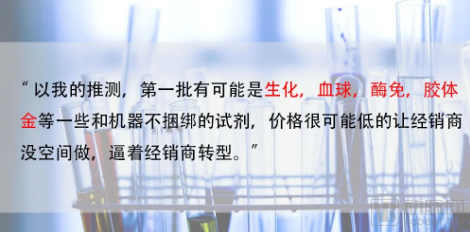
Drug prices have indeed fallen, bringing tangible benefits to the public. However, hospitals must operate profitably, and medical staff need to earn a living. Consequently, the volume of diagnostic tests and consumables has increased. The government has already initiated centralized procurement for medical consumables; for instance, the price of stents has dropped from tens of thousands to just a few hundred yuan. The next target will undoubtedly be reagents, and this shift is imminent. I speculate that the first batch will likely include reagents not tied to specific instruments, such as those for clinical chemistry, hematology, enzyme immunoassays (EIA), and colloidal gold tests. Chemiluminescence platforms may also be forced to adopt open systems. Prices are likely to fall so low that distributors will have no margin left, compelling them to transform their business models. I will elaborate below on the direction of this transformation.
The centralized procurement policy has sent shockwaves through the healthcare industry, causing widespread anxiety among professionals. It has forced many to leave the sector, with some even adopting a bearish outlook on its future. Personally, I remain long-term bullish on the healthcare industry. I have always believed that as long as humanity exists, we will face the inevitable realities of birth, aging, sickness, and death; thus, the healthcare industry will always endure. It is a perennial sunrise industry.
Why Implement Centralized Procurement? What Is the Underlying Logic? Here Are My Views.
To put it plainly, the phenomenon of over-treatment does indeed exist. Issues such as kickback-driven sales, artificially inflated prices for medical products, and high healthcare costs have led to public dissatisfaction. As our Party is dedicated to serving the people’s well-being, it must address these public concerns by reducing the cost of healthcare.
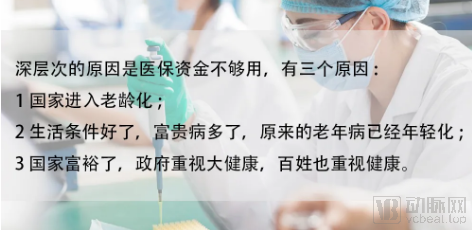
The underlying reason is the insufficiency of medical insurance funds, which can be attributed to three factors:
1. As the nation enters an aging society, the elderly suffer from a higher prevalence of diseases, leading to increased utilization of medical insurance funds.
2. As living conditions improve, lifestyle-related diseases are on the rise; formerly age-associated conditions such as diabetes, cancer, and cardiovascular and cerebrovascular diseases are now affecting younger populations.
3. The most important reason: As the country has grown wealthier, the government has begun to assume responsibility for public health, and citizens are now more willing to spend on medical care. The New Rural Cooperative Medical Scheme (NRCMS) stands out as a highly beneficial policy achievement, and its recent merger with urban employee basic medical insurance has further enhanced convenience.
All three of the aforementioned areas consume a substantial amount of basic medical insurance funds, many times more than before. Given the persistent deficits in the medical insurance fund, stringent cost-containment measures are inevitable.
Regarding the third reason, I would like to elaborate further based on my personal and painful experiences. My grandfather passed away from bladder cancer 16 years ago, after a three-year battle with the disease. My grandmother (maternal) passed away six years ago from cerebrovascular and cardiovascular diseases, having fought these conditions for ten years prior to her death. It was likely when I was in the fourth grade of elementary school that both my grandfather and maternal grandmother fell ill in succession. At that time, there was no medical insurance coverage; all expenses were paid out-of-pocket. Within just a few years, our once moderately prosperous family was plunged into heavy debt. My father’s livestock farming business had just begun, and to raise money for medical treatment, he sold pigs that had not yet reached market weight. I also accompanied my mother on several occasions to borrow money. In fact, both my grandfather and maternal grandmother had been aware of their health issues for several years but were reluctant to spend money on medical care, so they delayed treatment. This procrastination allowed minor ailments to develop into serious illnesses, ultimately costing them their lives. To avoid repeating the tragedies experienced by my grandfather and maternal grandmother, my parents have regularly taken my paternal grandmother to village clinics and township health centers for check-ups, ensuring timely treatment for any minor health issues, especially since she is covered by the New Rural Cooperative Medical Scheme (NRCMS). My paternal grandmother is now 87 years old and in good health; it is highly likely that she will live to be 100.
The underlying logic of centralized volume-based procurement is to address the contradiction between the public’s pursuit of health and longevity and the scarcity of medical insurance funds, thereby achieving cost savings for the medical insurance system through centralized procurement.
Following the centralized procurement of reagents, fees will inevitably decrease, potentially adopting a pricing model similar to that of COVID-19 testing—namely, reagent costs plus service fees—to further reduce healthcare expenses for the public and deliver tangible benefits. However, in the post-procurement era, what lies ahead for distributors, China’s IVD industry, and hospitals? Below are my personal reflections.
1. The Way Forward for IVD Distributors
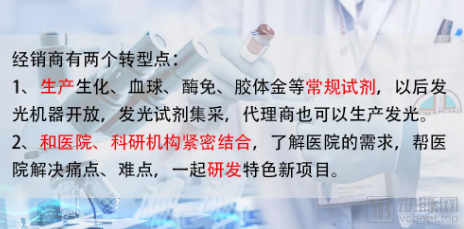
Following the implementation of centralized procurement, reagent prices will inevitably drop to levels that leave distributors with no profit margin. Major players are likely to consolidate in routine testing segments, capturing significant market share, while manufacturers will distribute directly through logistics platforms such as Sinopharm, China Resources Pharmaceutical, and Jointown Pharmaceutical, akin to the distribution model for generic drugs. However, given the vast depth and regional diversity of the Chinese market, a one-size-fits-all approach is unlikely. This will provide opportunities for agile and well-capitalized distributors to transform. I identify two key areas for transformation:
1. Manufacture routine reagents for clinical chemistry, hematology, enzyme immunoassay (EIA), and colloidal gold tests. In the future, with the opening of chemiluminescence platforms and the centralized procurement of chemiluminescence reagents, distributors will also be able to produce chemiluminescence reagents.
2. Forge close collaborations with hospitals and research institutions to understand their needs, address critical pain points and challenges, and jointly develop distinctive new projects.
My perspective is grounded in my years of market experience. Having worked in sales for many years, I have covered all levels from provincial down to village tiers. In primary care hospitals, distributors truly control the institutions. Hospitals use whichever brand the distributor supplies; these facilities prioritize price first and quality second. I have encountered many obscure small brands in primary care settings. While secondary and tertiary hospitals designate specific brands and remain price-sensitive, they place greater emphasis on quality. However, if a distributor’s own-brand reagents match the quality of major brands—even if produced by the same contract manufacturer—and are offered at a lower price, hospitals are highly likely to choose the distributor’s proprietary brand.
As mentioned at the beginning of the article with Company A, despite establishing its own manufacturing facilities and recruiting distributors nationwide, its primary profits still stem from its own terminal channels and the provincial market. Regarding innovative niche projects, Company B serves as an excellent example. The founder of Company B was originally a pharmaceutical distributor who recognized early on that the pharmaceutical business was becoming increasingly challenging and proactively transformed his business model. By focusing on gastrin-17, he generated hundreds of millions in revenue and maintained exclusivity for several years. Although there are now more manufacturers in this space, he has still amassed substantial profits. Such cases will become increasingly common in the future.
These two transformation directions are sound, but practical implementation presents certain challenges, including production cost control, quality assurance, and methodological improvements. Company A embarked on its transformation early, establishing its own manufacturing facilities and recruiting personnel for R&D, regulatory affairs, and quality control. However, high per-capita costs, slow new product development, and a relatively limited product portfolio have led to excessively high overall costs. Company B faces similar issues; despite having promising projects, it has been constrained by production capabilities, resulting in the prolonged release of small-scale, single-channel instruments based solely on lateral flow strips. Consequently, it has lost market share to later entrants offering chemiluminescence assays and fully automated systems. This issue relates to the industrial clustering of the IVD sector, for which solutions now exist. Please read on for details.
2. Clustering Issues in China's IVD Industry Chain
An article published a few days ago by Yiye Guancha, titled “How Long Can IVD Companies Survive Without Going Global?”, offered profound reflections on China’s IVD industry, highlighting numerous issues such as redundant competition and low technological content, with which I largely agree. However, I disagree with the author’s assertion that the COVID-19 pandemic likely marked the peak of the IVD industry. I believe the pinnacle of China’s IVD sector is still far from reach. Chinese IVD companies will inevitably expand overseas and lead the global market; that will be the true peak. Nevertheless, the pandemic undoubtedly served as the catalyst for transformation in China’s IVD industry. The centralized procurement of COVID-19 test kits has bolstered government confidence, accelerating the rollout of centralized procurement for IVD products and forcing structural reforms within the industry.Statistics indicate there are over 1,500 IVD manufacturers in China. When including raw material suppliers and equipment manufacturers, the total number reaches approximately 2,000. Yet, few giants have emerged. These 2,000 enterprises are highly fragmented, operating independently and engaging in redundant production. Currently, high profit margins allow even modest sales volumes of tens of millions of yuan to sustain comfortable operations, leading many companies to become complacent and stagnant. This status quo is abnormal and detrimental to the industry’s overall development. With each manufacturer handling its own production, R&D, and regulatory registration, substantial industry resources are wasted. Meanwhile, product quality has not seen significant improvement, costs have not decreased substantially, and companies lack the energy and capital to invest meaningfully in research and development.
Across China’s thriving industries, a common trajectory emerges: initial fragmentation with players operating independently across the country, followed by market consolidation through price wars, and ultimately the formation of clustered industrial ecosystems.
The most prominent example is the home appliance industry. Before the 1990s, home appliances were luxury items affordable only to the wealthy, sold at high prices in a seller’s market with substantial profit margins. Manufacturers were scattered across different regions, each generating its own revenue with minimal conflict. However, around the turn of the millennium, as household incomes rose and home appliances became accessible to the general public, the market size expanded significantly. Driven by greed, an inevitable and fierce industry consolidation ensued. I once spoke with a senior sales executive at TCL. Within just five years, TCL’s revenue surged from hundreds of millions to tens of billions of yuan, while television prices plummeted from over ten thousand yuan to merely thousands. The price war became so intense that the company was operating at a loss. When employees expressed concern about the company’s survival, leadership responded, “If we don’t engage in the price war, we will die immediately; if we do, we will survive a bit longer. As long as our competitors perish before we do, we win.” Ultimately, China’s home appliance industry not only survived but also developed a concentrated industrial ecosystem. Previously dispersed small companies nationwide clustered in hubs such as Hefei and Shunde District in Foshan for large-scale production, with supporting enterprises gradually following suit. These clusters became local economic pillars. For instance, a single white goods industrial park in Hefei generates output value worth hundreds of billions of yuan, accounting for more than half of China’s total production capacity. With this industrial clustering, quality and quantity were assured while costs were minimized. This made home appliances affordable to more people, rapidly popularizing them across China and expanding the market size. The surviving companies not only enlarged their market share and increased profits but also built strong brands, enabling reinvestment in research and development. Today, China’s home appliance industry has gone global, leading the world and conquering a market of six billion consumers with high-quality, affordable products.
The price wars driven by centralized procurement will inevitably force Chinese IVD companies to reform, foster industrial chain clustering, reduce costs, and increase profit margins, thereby enabling enterprises to allocate sufficient funds and energy toward R&D, academic marketing, and service provision.
Forward-thinking governments have begun to establish industrial ecosystem clusters for the in vitro diagnostics (IVD) sector. A prime example is the Chongqing IVD Industrialization Platform, the first of its kind in China dedicated to advancing IVD industrialization and building an IVD industry cluster. This platform assists pharmaceutical and medical device distributors in transitioning into IVD manufacturing, enabling them to develop their own brands and products. Equipped with mature teams for R&D, production, registration, and quality control, as well as large-scale automated manufacturing facilities, the platform allows distributors seeking transformation to launch their own branded products at minimal cost. As industrial agglomeration expands further, more supporting enterprises will settle in, driving down production costs and enhancing technological processes. The platform will provide contract manufacturing services for industry giants, akin to how Foxconn assembles smartphones or TSMC fabricates chips. The production capacity of a single industrial park could potentially account for half of China’s total IVD output. Distributors with established terminal resources can confidently maintain their core businesses, while IVD manufacturers can pursue asset-light global expansion, focusing their efforts on R&D, marketing, and after-sales service.
Speaking of which, there is another case from a different industry that can serve as a reference: the Huzhou Zhili Children’s Wear City.
After having a child, I devoted myself wholeheartedly to providing the best for him, sparing no expense on food and clothing. My wife usually handled the purchases. On one occasion, while accompanying her to buy shoes for our child, I was shocked to find that a pair of branded children’s shoes cost several hundred yuan—more expensive than adult shoes. I complained to a junior female classmate about how costly children’s clothes were. Her child is slightly older than mine, and she has been running an e-commerce clothing business since college, so I hoped she could recommend some cost-effective brands. Hearing my complaint, she chuckled and said, “You’ve been ripped off. Those XX-brand shoes you bought for hundreds of yuan are actually produced in Zhili Town, Huzhou, with a factory price of only tens of yuan. I can buy you better children’s shoes in Zhili Town, Huzhou, for just tens of yuan. I’ve been in the clothing e-commerce industry for several years. Initially, I sold unbranded low-priced products or other brands at high markups on Taobao and Tmall. Back then, established brands controlled media channels and invested heavily in brand building, resulting in exorbitant prices. With the rise of self-media and live streaming, I am now cultivating influencer-driven sales and building my own brand. There are money-making opportunities everywhere; it’s just a pity that we’re short-staffed, otherwise we could scale up even more.” This junior classmate is indeed remarkable; within a few years of graduation, she moved into a luxury mansion and started driving a BMW.
While fast-moving consumer goods (FMCG) brands build their identity by cultivating internet celebrities, IVD distributors are themselves perceived as brands by their clients. Hospitals choose to collaborate based on their trust in the distributor’s integrity. With the establishment of clustered ecosystems for China’s IVD industry chain, distributors possessing terminal resources will thrive; retaining end-user customers is tantamount to securing profits.
Centralized procurement will compel China’s IVD industry to engage in price wars, with earlier and more intense competition being preferable. This pressure will drive the industry to consolidate and form industrial clusters, enabling the production of high-quality, affordable products that not only serve China’s 1.4 billion people but also capture the global market of 6 billion consumers.
3. The Future of Chinese Hospitals
Having outlined my thoughts on the transformation of IVD distributors and the ecosystem of China’s IVD industry, I will now explore the future of hospitals in China. Regarding the future of hospitals following volume-based procurement, Uncle Da has already published articles presenting his projections, arguing that private hospitals will rise in prominence. I strongly concur with Uncle Da’s viewpoint.
Following the centralized procurement of pharmaceuticals, consumables, and reagents, the next step should be to reduce various examination fees. Revenue-generating channels for public hospitals are being systematically blocked. While patients have indeed benefited from lower medical costs, doctors’ income sources have also been cut off one by one, leading to a decline in their earnings. Capable physicians will inevitably find this situation untenable, as their efforts are no longer commensurate with their compensation. In pursuit of a better quality of life, they will likely move to private hospitals. With an influx of talented doctors, private hospitals will attract more patients and provide superior services, such as eliminating waiting times and offering consultations with specialists. Although these services come at a higher cost, affluent individuals, who are not constrained by financial considerations, prefer not to spend time queuing alongside those with fewer means. For the wealthy, time is truly more valuable than money. However, given China’s large population and the Communist Party of China’s commitment to serving the people within a socialist framework, it is neither feasible to have a vast wealthy class nor acceptable to leave low-income individuals unable to afford medical care, as often seen in capitalist countries.
Following the implementation of centralized volume-based procurement, technical service fees for healthcare professionals are expected to rise, and government subsidies will likely increase to ensure the livelihoods of medical staff and the operational viability of hospitals. Public hospitals will continue to survive but will no longer pursue aggressive expansion for profit. Instead, they will gradually return to their fundamental nature as non-profit entities, focusing on providing routine medical care to the general population.
In fact, the government’s investment in public health has long been underway. As someone who is constantly out in the field gathering first-hand market information, I have witnessed numerous initiatives: the abolition of agricultural taxes, the introduction of the New Rural Cooperative Medical Scheme for farmers, free medical check-ups for individuals aged 60 and above, the establishment of Traditional Chinese Medicine clinics, the standardization of village clinics, the upgrading of township health center facilities, the implementation of a tiered diagnosis and treatment system, and the provision of free medical care for impoverished households. These measures have enabled people at the grassroots level to transition from a state of resigning themselves to death when ill to being able to afford medical treatment. Ordinary citizens like myself are easily satisfied and deeply grateful for the government’s beneficial policies. My grandmother often says that the Communist Party of China truly works for the welfare of the poor, and she never dreamed that life could become better than what even landlord families enjoyed in the past. However, given China’s vast size, it is impossible to address every issue simultaneously; priorities must be set, starting with the grassroots population most in need of medical care, as this pertains directly to people’s lives. My grandfather and maternal grandmother passed away prematurely without having the opportunity to benefit from these national policies, whereas my grandmother has been fortunate enough to do so, and she expresses her heartfelt gratitude to the government. Only after securing the lives and basic healthcare needs of the grassroots population can the nation further address the problem of high medical costs for the general public.
Although private hospitals are on the rise and public hospitals are returning to their non-profit nature, I believe top-tier public hospitals will continue to maintain their strength. After all, private institutions are profit-driven and may not devote substantial resources and financial investment to complex and refractory diseases that are not financially lucrative. To achieve rapid returns, private hospitals tend to focus on specialized departments and high-quality services, leaving the treatment of such complex conditions primarily to leading large public hospitals. Even before the implementation of centralized volume-based procurement (VBP) policies nationwide, top-tier public hospitals had already adopted similar practices. Leveraging their massive scale, they pressured suppliers to lower prices and conducted annual tenders, awarding contracts to the lowest bidders. This strategy ensured sufficient profits for these major public hospitals to further attract talent and acquire advanced equipment, thereby strengthening their leading positions both provincially and nationally. Due to their enormous size, hospital presidents cannot micromanage every detail; each department operates with significant autonomy, akin to a “hospital within a hospital.” A few days ago, I attended a conference where I had the privilege of hearing an insightful presentation by Dr. Liu Bingrong, President of the Digestive Disease Hospital at The First Affiliated Hospital of Zhengzhou University. He has led his team in overcoming numerous challenges in the field of digestive diseases, pioneering several surgical techniques worldwide. He has also represented Chinese gastroenterologists in global competitions, earning numerous awards. I am truly proud that China boasts such top-tier experts.
Post-Centralized Procurement Changes in Hospitals: A Coexistence Model with Clear Division of LaborIn my view, the healthcare landscape will evolve into a coexistence model characterized by a clear division of labor and distinct institutional specialties. Primary care institutions—including township health centers, community health stations, and clinics—will be responsible for basic healthcare services. Public hospitals at the general level will provide cost-effective medical services to the broader patient population. Private hospitals will focus on specialized disciplines and premium service experiences. Meanwhile, top-tier public hospitals will concentrate on diagnosing and treating complex and refractory diseases.
In summary, I remain bullish on the long-term prospects of China’s in vitro diagnostics (IVD) industry. I firmly believe that Chinese IVD companies will expand globally, capturing international markets with high-quality products made in China. I am also confident that the government will uphold its responsibility for public health and continue to improve the healthcare environment for the people.