

DXY Completes $500 Million Funding Round to Strengthen Professional Capabilities and Expand Upstream Health Initiatives

Hillhouse
Long-Term Structural Value Investment Institution
On December 28, DXY announced that it had recently completed a new round of financing amounting to $500 million. The round was led by Trust Bridge Partners, with participation from Tencent and Hillhouse Capital Ventures. The proceeds will be used to strengthen its professional moat, explore additional healthcare scenarios, and develop a more comprehensive suite of professional, trustworthy, and integrated health products.
It is understood that DXY has already achieved profitability at scale and is in a state of continuous growth. Against this backdrop, why is the company pursuing substantial financing? What are its short-term plans and long-term strategies? VCBeat interviewed Li Tiantian, founder and chairman of DXY, for a detailed analysis.
Looking back on DXY’s 20-year development journey, it started by serving physicians and gradually expanded to serve the general public and enterprises, undergoing multiple iterations in its business layout.
Founded in 2000, DXY initially served physicians and medical students by providing literature search tools and an academic exchange platform. Starting in 2006, DXY began offering recruitment services to healthcare institutions and health-related enterprises. In 2014, DXY formally expanded into the consumer market, delivering healthcare services to the general public through a new media matrix, DXY Clinics, and its internet hospital, while also supporting health consumer goods companies with digital marketing solutions. In 2019, DXY adopted “More Health, Better Life” as its new vision, placing greater emphasis on consumer health needs.
During this year’s pandemic, DXY leveraged its years of accumulated professional content production capabilities to create the widely recognized “Pandemic Map,” while its rumor-refuting and science-based public health information also gained widespread circulation.
Li Tiantian revealed that DXY has achieved profitability at scale and is experiencing steady year-over-year growth. Meanwhile, building on two decades of exploration and accumulation, and further accelerated by the pandemic, DXY has gained greater clarity in its strategic direction: If addressing disease is likened to the “downstream” of a river, while maintaining health corresponds to the “upstream,” then for DXY, the “upstream” presents more opportunities than the “downstream.”
“‘Upstream’ users include not only patients but also healthy individuals; ‘upstream’ scenarios occur outside of hospitals, encompassing daily life, work, travel, and more; ‘upstream’ can also generate greater product demand, extending beyond consultations and examinations to include products related to patient education, preventive medicine, and public health.” Li Tiantian believes that, given the organizational capabilities of the DXY team, the “upstream” sector offers a larger user base, richer service scenarios, and greater potential for product development.
Dingxiangyuan emphasizes “pooling professional expertise to create reliable products.” Taking Dingxiang Doctor’s flagship content offerings as an example, the platform has adopted a peer-review system akin to that of academic journals, requiring review and approval by a team of qualified physicians before publication.
Li Tiantian noted that as DXY moves “upstream,” it needs to further strengthen its supply-side capabilities. Therefore, the funds from this round of financing will primarily be used to continue reinforcing the core competitive advantages of professional expertise among physicians, thereby supporting the ongoing development of Chinese doctors; to better coordinate professional resources—including physicians, enterprises, and healthcare institutions—and explore additional healthcare scenarios; and, through its flagship brand DXY Doctor, to deliver professional, trustworthy, and comprehensive integrated product series that enhance the public’s quality of healthy living.
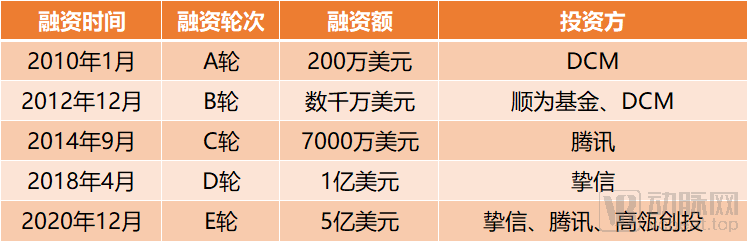 Dingxiang Yuan’s Financing History, Source: VCBeat Database
Looking back at DXY’s fundraising history, the company has completed five rounds of financing with a relatively small number of investors and a moderate pace. “We believe that a company’s success is not determined by the number or speed of its funding rounds, but by the user value it delivers. From our cash flow perspective, we could even operate without raising additional capital,” Li Tiantian admitted. However, healthcare is a unique industry that requires sustained professional expertise to build user trust. Therefore, DXY’s current fundraising aims to foster long-term user trust, rather than acquiring customers through short-term tactics such as burning cash or offering subsidies.
So, how will DXY realize user value? VCBeat has learned that in July this year, DXY unveiled a new strategy for its physician-facing and public-facing platforms, connecting the public brand “Dingxiang Doctor” with the professional brand “DXY” to form a D+C “dual-core strategy.” By aggregating B-side professional capabilities and leveraging its extensive accumulation of physician and public resources, DXY helps B-side clients reach the general public through physicians.
D-Side: Empowering Doctors’ Growth and Rewards
For physicians, DXY’s positioning is to empower the professional growth of Chinese doctors.
Doctors consult patients and earn consultation fees on internet healthcare platforms, which represents the most basic and common form of compensation offered by the digital health sector. VCBeat has learned that some physicians active online have anywhere from a few to over ten or twenty online consultation apps installed on their mobile phones.
As DXY focuses on the broader health sector, physicians on the platform can earn transparent income not only through online consultations but also via various other channels. For instance, doctors may participate in creating or reviewing popular science content, contribute to course design, or engage in the research and development of consumer health products.
Li Tiantian cited as an example a health food product jointly launched by Dingxiang Doctor and Wugu Mofang, which was co-developed with food nutrition experts.
“Medicine is a unique profession that requires lifelong learning,” said Li Tiantian. He noted that continuously enhancing one’s professional competence and service orientation is the fundamental prerequisite for earning more legitimate income. To this end, DXY has developed educational products and practical tools for physicians, such as DXY Open Courses and Medication Assistant, to help them improve their professional standards.
Meanwhile, physicians’ service capabilities also need to be enhanced. DXY has assembled a community of 2.1 million professional physician users and selected 50,000 physicians to serve the general public on the DXY Doctor platform. “These physicians have been individually screened and trained,” said Li Tiantian. The selection criterion focuses on whether they possess a service-oriented mindset—an attribute that is often undervalued in offline clinical settings. “Currently, among DXY’s physicians responding to questions online, 88% provide answers of at least 300 words, and more than 50% offer responses exceeding 500 words. This reflects an improvement in physicians’ service capabilities.”
Therefore, physicians are both providers and recipients of professional expertise; in the process of delivering or receiving such expertise, they either gain compensation or enhance their capabilities.
Consumer Side: Addressing Out-of-Hospital Health Concerns
For the general public, DXY offers more than just online consultations through its internet hospital; it primarily provides solutions to health issues encountered in everyday life.
Li Tiantian believes that as consumer spending power rises, the public has higher expectations for quality of life and will inevitably pay greater attention to their own health. Consequently, the medical and healthcare industry can no longer be confined to the traditional model of seeking medical care only when illness occurs. Therefore, DXY aims to offer options that better align with user habits, helping the general public address everyday health concerns in out-of-hospital settings.
Dingxiang Doctor is the most typical and earliest consumer-facing brand of Dingxiang Yuan. Addressing public health concerns, Dingxiang Doctor provides evidence-based, scientific health solutions through its team of professional physicians and content creators. Dingxiang Mama is a vertical brand launched in the maternal and child care sector, following the same approach as Dingxiang Doctor.
During the COVID-19 pandemic, DXY pioneered the launch of the “COVID-19 Map,” becoming a primary source of global epidemic data. It also introduced public welfare initiatives such as science-based rumor debunking, free online medical consultations, and open courses on COVID-19, cumulatively reaching over 8.6 billion users and contributing to the global fight against the pandemic.
Serving D+C Together with B-Side Partners
Li Tiantian stated that physician users and general public users have always been the core of DXY, forming a “dual-core drive.” Meanwhile, delivering professional services to end users requires not only the participation of physicians but also the collaborative involvement of B-side stakeholders, including pharmaceutical and medical device companies, health consumer goods enterprises, and healthcare institutions.
In the B2B sector, DXY strengthens collaboration with enterprises and works alongside physicians to leverage their professional expertise, serving as a guide for healthy living. For enterprises, DXY positions itself not as a vendor or distributor, but as a strategic partner.
Taking collaborations with pharmaceutical companies as an example, DXY is not a drug sales platform; rather, it leverages the professional expertise of pharmaceutical companies to jointly serve physicians and the general public. “Before initiating any collaboration, we first consider whether a given company or project can help physicians grow or improve the quality of life for the general public. At least one of these criteria must be met for the collaboration to be viable.”
In the health consumer goods sector, DXY has established a highly synergistic model with enterprises, collaborating with professional physicians to participate in product design and R&D. For instance, DXY has engaged in deep partnerships with Wugu Mofang, a health food brand, and Babycare, a maternal and infant products brand.
As evidenced by the above discussion, DXY continuously integrates the professional capabilities of its B-side partners to jointly empower physicians, working together with them to deliver products and services with more distinct health-focused attributes to the general public.
We can also see that DXY, as the earliest-established internet healthcare company, has carved out a path distinctly different from that of its peers.
First, DXY provides in-depth services to physicians. Most internet healthcare companies maintain cooperative relationships with physicians, offering them patient management tools and adopting a revenue-sharing model for consultation fees. Li Tiantian believes that DXY does not merely treat physicians as a supply-side resource but also supports their professional growth. When physicians derive a sense of fulfillment from the platform, it can then select suitable physicians to serve consumer-end users. This logic is coherent and sound.
Secondly, the target user positioning differs. Most internet healthcare companies primarily target patients, with further segmentation based on specific disease types. DXY’s user base includes both patients and healthy individuals. For the healthy population, segmentation is mainly driven by their daily health needs; for instance, Dingxiang Mama targets mothers and infants.
Finally, the revenue models differ. Pharmaceutical sales are a common revenue model in the internet healthcare industry and one that more readily achieves profitability. Other relatively prevalent revenue models include online consultations, consumer healthcare, information technology services, insurance sales, chronic disease management, and family doctor services. DXY primarily generates revenue from individual consumers (C-end) through health-related content and product sales, while its business-to-business (B-end) revenue is mainly derived from promotional services and partnerships.
Overall, it is difficult to judge which of these differences is superior or inferior; existence implies rationality. Each company’s business layout is closely related to its organizational capabilities and advantageous resources. However, DXY’s model is difficult to replicate. Its influence among both physician users and the general public cannot be established in the short term, nor can it be achieved simply by injecting substantial capital. This has further strengthened DXY’s resolve to consolidate its professional barriers.
Next year will see the intensive implementation of various internet healthcare policies introduced this year. For DXY, it will be a year to continue its existing strategy and further consolidate its professional capabilities. “We are highly strengthening the professional capabilities on the physician side, continuously exploring opportunities brought by consumer healthcare on the consumer side, and delving deeper into specific population segments... Whether for next year or the longer term, these are our choices in practice and iterative upgrading,” said Li Tiantian. He stated that, targeting specific populations, DXY will persist in the exploration initiated by DXY Mom, striving to maximize user value. The company will also focus on areas such as oral health, dermatology, sexual health, sleep, and mental health, seeking opportunities to expand in line with its existing strategic logic.
What Does the Vigorous Development of Internet Healthcare by Public Hospitals Since the Beginning of This Year Mean for Internet Healthcare Companies? Li Tiantian Believes That Public Internet Hospitals and Third-Party Platforms Will Exhibit a Trend Toward Synergy, Rather Than Direct Competition.
“Hospitals address in-hospital issues, focusing primarily on the diseases themselves; their organizational capabilities are structured around disease treatment. Looking further upstream, the medical education system is also designed to tackle diseases, with no specialized courses teaching physicians how to write popular science articles. This is a skill that doctors find difficult to develop on their own, necessitating cross-disciplinary participation from professionals in media, advertising, and other fields,” said Li Tiantian. He noted that internet healthcare companies like DXY focus on out-of-hospital settings, prioritizing health issues rather than diseases—a domain where public hospitals lack both the bandwidth and the capability to engage effectively.
From a long-term perspective on the internet healthcare industry, Li Tiantian believes it is akin to driving at night: although the headlights only illuminate 10 meters ahead, the vehicle can still travel hundreds of kilometers. Therefore, when assessing the industry’s future, even though only the short-term landscape may be clearly visible, companies with sufficient professional expertise and the ability to rapidly adapt to market changes are highly likely to go the distance. At the core of this success lies user value; regardless of how business models or technologies evolve, consistently focusing on user needs and core value remains a fundamental element for sustained growth.