

Gengmei APP Releases 2020 Medical Aesthetics Industry White Paper: China's Market Reaches RMB 197.5 Billion, Domestic Skincare Brands on the Rise
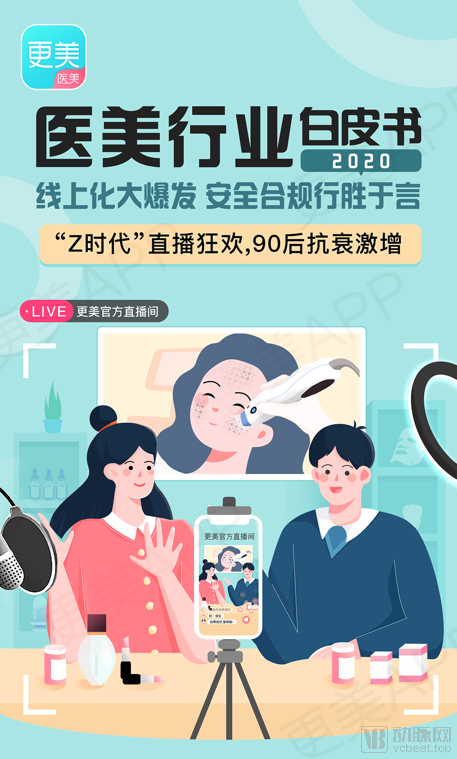
On December 29, Gengmei APP, a leading professional medical aesthetics platform in China, released the “2020 White Paper on the Medical Aesthetics Industry” (hereinafter referred to as the “White Paper”). The White Paper shows that despite the impact of the pandemic this year, the market size of China’s pure medical aesthetics industry still reached RMB 197.5 billion, accounting for 17% of the global market, with the potential to become the world’s largest medical aesthetics market. In the post-pandemic era, the trend toward online migration in medical aesthetics has become clear, with internet-based medical aesthetics platforms demonstrating their significant role in the industry. The medical aesthetics industry is developing toward an integrated model characterized by “online institutional operations, intelligent services, and technological industrialization.” Individuals born in the 1990s and 1995–1999 cohorts are gradually becoming the main consumers of medical aesthetics services; those born in 1995–1999 show strong enthusiasm for live-streaming promotions, while anti-aging treatments have surged among those born in the 1990s.
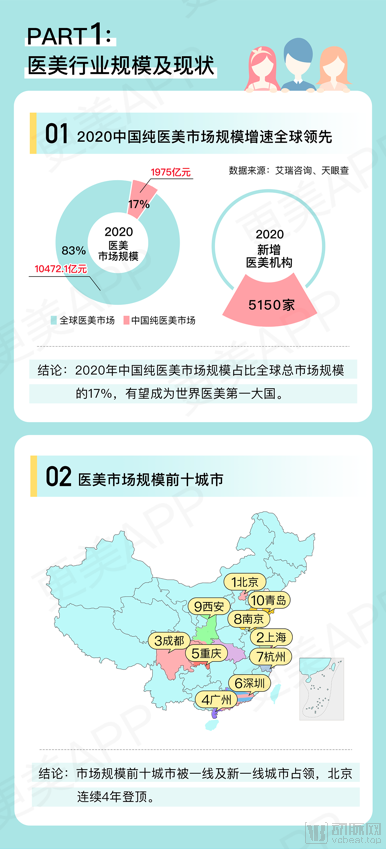
China’s Pure Medical Aesthetics Market Reaches RMB 197.5 Billion, with Beijing Ranking as the Top Consumption City for Four Consecutive Years
The white paper shows that in 2020, China added 5,150 new medical aesthetic institutions, with the market size reaching RMB 197.5 billion, accounting for 17% of the global market. Despite the short-term impact of the pandemic, its scale remains at a leading level globally. The top ten cities in terms of domestic medical aesthetic market size are Beijing, Shanghai, Chengdu, Guangzhou, Chongqing, Shenzhen, Hangzhou, Nanjing, Xi'an, and Qingdao. Although the growth rate in lower-tier markets is also considerable, the top ten cities by market size are still dominated by first-tier and new first-tier cities. Notably, Beijing has ranked first among the top ten consumer cities for four consecutive years, demonstrating significant consumption power and stability.
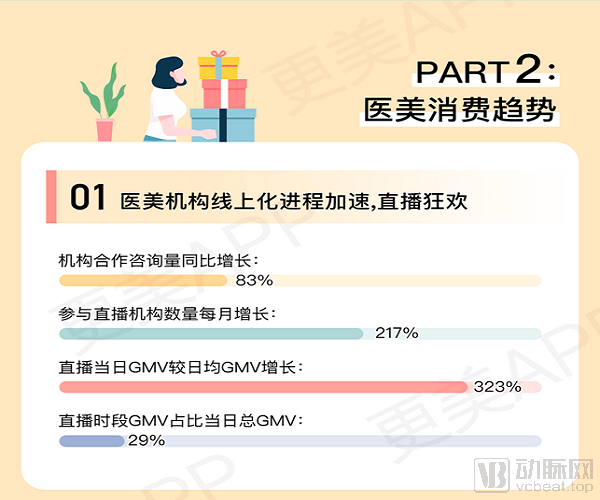
Online Medical Aesthetics Livestreaming Frenzy: Minimally Invasive Procedures and Anti-Aging Emerge as Key Beauty Trends
The pandemic has accelerated the digital transformation of the medical aesthetics industry, with live streaming emerging as a dark horse driver. According to the Gengmei White Paper, the number of institutions participating in live streams on the Gengmei platform grew by 217% month-on-month in 2020, while the gross merchandise value (GMV) on live-streaming days surged by 323% compared to the daily average GMV. It is reported that the Gengmei app achieved significant attention and exposure by inviting top-tier celebrities and streamers, such as Zheng Shuang and Zhu Xiaomu, to appear in its official live rooms. Taking Zheng Shuang’s live stream as an example, the total viewership of Gengmei app’s official live room reached millions, with four related topics trending on Weibo Hot Search and accumulating over one billion views. This marks the highest level of celebrity collaboration in the medical aesthetics industry to date.
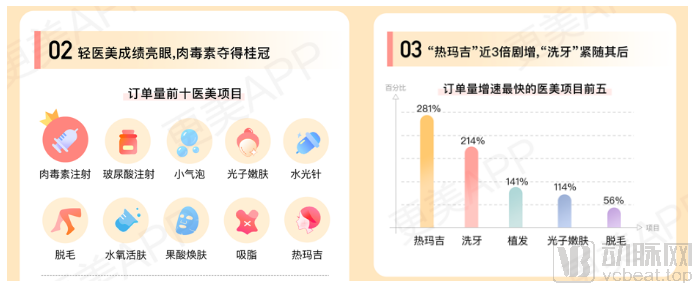
The most frequently searched terms in medical aesthetics consumption in 2020 were “non-surgical aesthetic treatments” and “anti-aging.” Data shows that the top ten medical aesthetic procedures by order volume on the Gengmei platform were botulinum toxin injection, hyaluronic acid injection, HydraFacial, intense pulsed light (IPL) skin rejuvenation, mesotherapy, hair removal, oxygen-infused skin revitalization, chemical peels with fruit acids, liposuction, and Thermage. Thermage recorded the fastest growth in order volume on the Gengmei platform, with a year-on-year increase of 281%, followed closely by dental cleaning, hair transplantation, IPL skin rejuvenation, and hair removal.
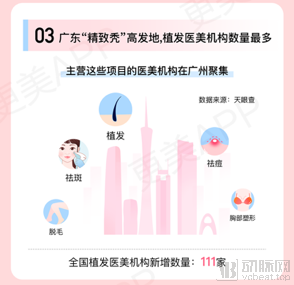
“Over 250 million people in China are affected by hair loss” and other hair-loss-related topics have frequently topped trending search lists. Sudden baldness has become a widespread issue among young people today. Data from the Gengmei White Paper also shows that in 2020, 111 new medical aesthetic institutions specializing in hair transplantation were established across China, with Guangzhou having the highest number of such facilities, making it a hotspot for “cosmetic baldness.”
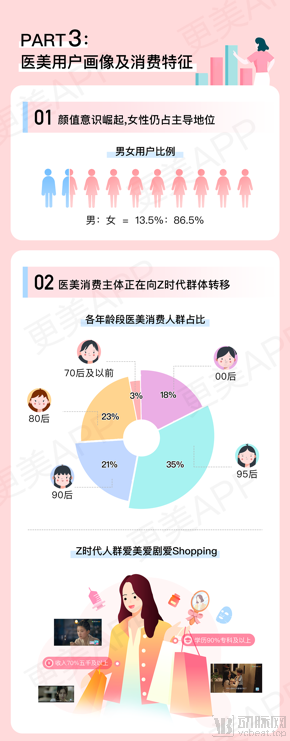
The Core Consumer Base of Online Medical Aesthetics Is Shifting to Generation Z: Enthusiastic About Appearance Ratings and Online Shopping
In recent years, the demographic of consumers in the internet-based medical aesthetics industry has trended younger. Among medical aesthetics consumers across all age groups, those born after 1995 and 2000 collectively account for more than half. Characterized by their love for beauty, shopping, and online dramas and variety shows, they are labeled with traits such as “personalization” and “authenticity.” Since May 2020, Gengmei has achieved significant success by targeting potential medical aesthetics consumers through advertising placements in nationally popular dramas and variety shows, including Sisters Who Make Waves, Nothing But Thirty, The Bad Kids, and The Romance of Tiger and Rose. Furthermore, with the rising awareness of appearance among men in recent years, male users now constitute 13.5% of Gengmei’s platform user base.
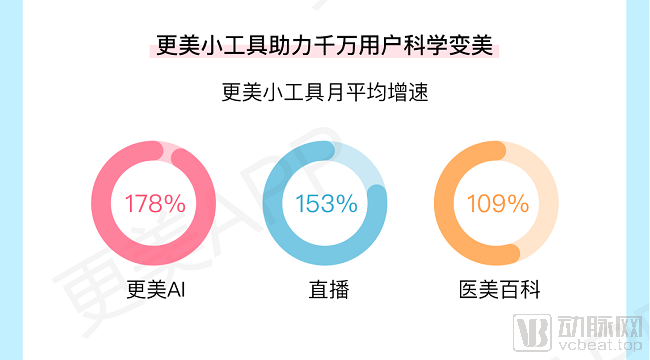
The new generation of medical aesthetics consumers are also active users of Gengmei’s intelligent mini-programs. Gengmei’s intelligent mini-programs have witnessed rapid month-over-month growth, with Gengmei AI surging by 178%, live streaming by 153%, and the Medical Aesthetics Encyclopedia by 109%. Accompanying this new consumer demographic is a shift in the medical aesthetics consumption journey from traditional offline channels to online platforms. This transition effectively mitigates multiple high-risk issues, such as unreliable information sources, opaque pricing, ambiguous customization processes, and lack of recourse for after-sales service complaints.
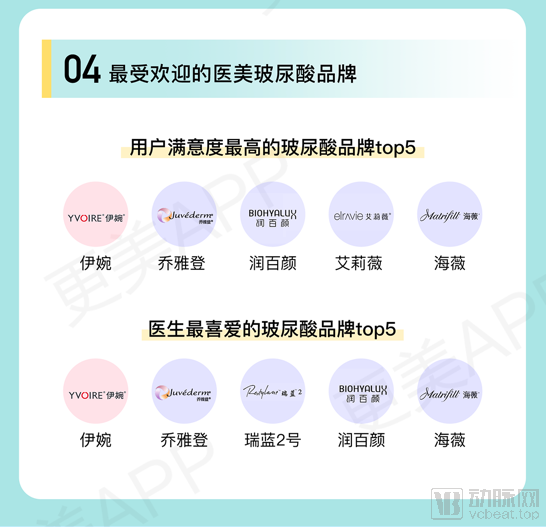
Yiwon Selected as the Most Popular Hyaluronic Acid Brand; Rise of Domestic Skincare Brands
The white paper reveals that Yvoire, a globally renowned hyaluronic acid brand, has become the most user-satisfying and physician-preferred hyaluronic acid brand. It is reported that Yvoire was the first injectable hyaluronic acid from South Korea to enter the Chinese market. It is independently developed and manufactured by LG Chem Life Sciences, a subsidiary of the LG Group. Its raw materials are certified by the U.S. FDA and the European EDQM, and its products have obtained CE certification as well as approval from China’s National Medical Products Administration (NMPA), ensuring safety and efficacy.
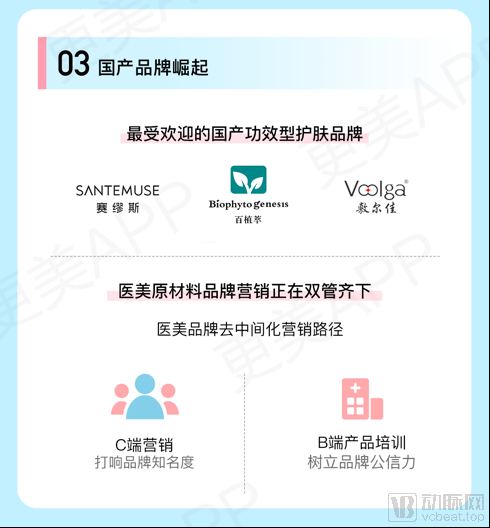
Furthermore, domestic skincare brands are on the rise, actively expanding brand awareness through consumer-facing (B2C) marketing. In the realm of Chinese functional skincare products, Simuise, Biophyto-genesis, and Fu'erjia are leading players in this sector. Founded in 2012, Biophyto-genesis has become a well-known domestic functional skincare brand, adhering to the brand philosophy of "simplified ingredients, safety and efficacy, and free from fragrances and colorants." Currently, in addition to stabilizing, soothing, and repairing sensitive skin, Biophyto-genesis has further explored solutions for brightening and anti-aging needs specific to sensitive skin, thereby meeting the diverse skincare requirements of different users. With an increasingly robust skincare supply chain in China and the world's most vigorous demand for beauty products, the ascent of domestic skincare brands is an inevitable trend.
It is reported that Gengmei was founded in 2013. Its flagship product, the Gengmei App, is a professional medical aesthetics platform offering consumer healthcare services such as plastic surgery, minimally invasive procedures, dentistry, ophthalmology, and anti-aging treatments. Over the years, Gengmei App has successively launched features including MeiGou (Beauty Shopping), Gengmei AI, and video consultations, aiming to help beauty seekers find suitable doctors more efficiently and reduce consumption risks, while also assisting physicians in building their personal brands. The Gengmei App has partnered with thousands of certified medical aesthetics institutions and over ten thousand licensed physicians. The platform has accumulated millions of real-life cosmetic surgery case studies, covering more than 300 cities globally as well as five overseas countries and regions, thereby helping users enhance their appearance. Gengmei’s historical investors include numerous listed companies and renowned investment firms such as Tencent, Sequoia China, CHJ Jewellery, Matrix Partners China, Vivo Capital, Meitu, Fosun Pharma, Legend Capital, and China Securities Co., Ltd.