

Shiqiang Pharmaceutical's Embrace of Internet Hospitals: Pioneering New Trends in Traditional Pharma Transformation
In “The Digital Transformation of Traditional Pharmaceutical Companies: Embracing Internet Hospitals After 25 Years of Offline Development,” VCBeat explores the development path of Shiqiang Pharmaceutical, a company with a 25-year history in offline operations, highlighting its digital transformation through full-scale adoption of internet hospitals. Going forward, VCBeat will continue to publish analyses examining what sets Shiqiang’s internet hospital—characterized by specialized andrology services—apart from others, and how Shiqiang Pharmaceutical’s self-developed mobile diagnosis and treatment platform, “Huihui Health,” addresses key pain points in online medical consultations.
In this article, we seek to explore what changes Shiqiang Pharmaceutical has made during its transformation, how it has driven its innovative businesses, and the underlying logic behind these strategies.
Following the impact of drug policies such as the “4+7 Volume-Based Procurement” on the industry, traditional pharmaceutical companies have embarked on exploration and transformation. For these enterprises, this shift is virtually a matter of survival. The “4+7 Volume-Based Procurement” policy directly targets the gray area of “secondary price negotiations” between pharmaceutical companies and hospitals. Consequently, a large number of pharmaceutical firms are required to reform their existing marketing models, transitioning away from the gray practice of kickback-driven sales toward an academically oriented sales model.
For Shiqiang Pharmaceutical, an integrated pharmaceutical enterprise encompassing R&D, manufacturing, and sales, the prevailing trend of declining drug prices and shrinking profit margins has likewise presented a pressing challenge of transformation:Shiqiang Pharmaceutical, which is half a beat ahead of its peers, needs to further ensure the compliance of medical representative sales while encouraging them to gradually shift from existing academic promotion to digital marketing, thereby identifying a second curve for growth.
In this process, we have also observed the challenges faced by traditional pharmaceutical companies and their strategic considerations for transformation.
Compared with other small pharmaceutical companies, Shiqiang Pharmaceutical’s advantages are evident: few pharmaceutical firms have achieved annual sales of RMB 1 billion for a single self-pay drug product, yet Shiqiang Pharmaceutical has accomplished this with its flagship product, Compound Xuanju Capsules. This success is attributable to its 25 years of deep cultivation in the field of andrology.
However, limitations in its product portfolio have prevented it from achieving further sales growth, unlike other large pharmaceutical companies. In fact, addressing these product portfolio limitations is not the primary issue that Shiqiang Pharmaceutical needs to resolve.
Companies deeply entrenched in the pharmaceutical industry have long recognized the “Sword of Damocles” hanging overhead, poised to fall at any moment:Even pharmaceutical companies with annual sales exceeding RMB 10 billion must confront the same dilemma. A strict red line lies before them: any “kickback-driven” sales practices by medical representatives, whether tacitly accepted by the company or resulting from inadequate regulatory oversight, will become a ticking time bomb for the enterprise.To ensure long-term survival, enterprises must move away from the kickback-driven sales model.
Shiqiang Pharma recognized the importance of compliance and transparency in the pharmaceutical industry at an early stage, actively promoting the transition of medical representatives toward academic-based promotion.Against the backdrop of volume-based procurement (VBP), should pharmaceutical companies follow the lead of those included in the VBP list by downsizing their offline sales teams to further mitigate potential offline risks, or adopt other more reasonable approaches? Yu Luping, founder of Shiqiang Group, has undoubtedly chosen the latter: while retaining its competitively advantaged medical representatives in the offline channel, the company is actively seeking solutions to promote professional transparency and compliance.
In 2018, the successive introduction of internet healthcare policies provided Shiqiang Pharmaceutical with the answer to its challenges:By establishing internet hospitals, pharmaceutical companies are driving medical representatives to further transform their roles, promoting academic detailing while gradually shifting toward digital marketing—ultimately benefiting patients through enhanced services for physicians.
For Shiqiang Pharmaceutical, once the primary issue is resolved, the remaining challenges will be readily addressed.
During Shiqiang Pharmaceutical’s transformation, two distinct paths are clearly visible:Online, Shiqiang Pharmaceutical has built the Huixiang Health platform and an internet hospital based on it; offline, Shiqiang Pharmaceutical focuses on scientific research and production, expecting to produce drugs around 7 product lines for various departments while engaging in scientific research cooperation. The two paths are interdependent., by integrating offline resources, Shiqiang Pharmaceutical has gradually achieved a closed-loop service encompassing medical care, pharmaceuticals, patients, and rehabilitation.
Online: Bringing together doctors and patients to meet user needs
Establishing an internet hospital was no easy feat. As early as 2008, Shiqiang Pharmaceutical had already begun contemplating its digital transformation. However, at that time, relevant policies governing internet healthcare had not yet been introduced, and existing players in the sector were primarily focused on lightweight online consultations. Policy restrictions prevented the “medical care + pharmaceuticals” business model from gaining traction. Additionally, the unique characteristics of andrology posed further obstacles across multiple fronts. Consequently, Shiqiang Pharmaceutical had to temporarily shelve its internet healthcare initiatives.
In fact, even in 2015, internet hospitals represented by WeDoctor were still in the early stages of exploration. After WeDoctor integrated online follow-up consultations, remote consultations, and electronic prescriptions with offline hospitals through its app and established an internet hospital in Wuzhen, its founder, Liao Jieyuan, even stated in public speeches that it faced dilemmas arising from conflicts with existing laws and regulations in the medical regulatory field.
The dawn emerged in July 2018. The issuance of three sets of administrative measures and standards for online diagnosis and treatment, internet hospitals, and remote medical services provided a regulatory framework for the development of internet healthcare. During this period, Shiqiang Pharmaceutical also rapidly followed suit, after comprehensively evaluating various policy factors,Shiqiang Pharmaceutical selected Hainan as the location for its first internet hospital, where supporting facilities are more comprehensive and tax policies are more favorable to business development. Shiqiang Pharmaceutical was among the first batch of enterprises to establish an internet hospital in Hainan.
Subsequently, Shiqiang Pharmaceutical reached a cooperation agreement with the Tonglu County Government in Hangzhou, Zhejiang Province, and established its second internet hospital in Tonglu.In September 2019 and July 2020, Shiqiang Pharmaceutical successively obtained the licenses for Hainan Shiqiang Internet Hospital and Tonglu Shiqiang Internet Hospital.
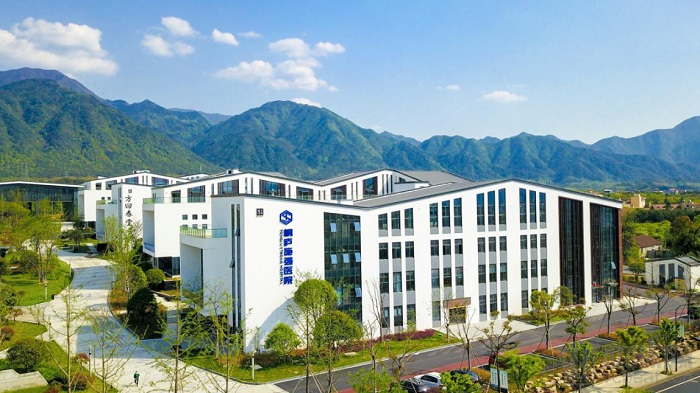
Tonglu Shiqiang Internet Hospital's Offline Physical Hospital
Building an internet hospital is aimed at addressing survival challenges, but how it is built will determine its future development. The Shiqiang Internet Hospital, which ultimately emerged with a specialty focus on andrology, is in fact the result of leveraging Shiqiang Pharmaceutical’s inherent strengths: over the past two decades, its deep engagement in the field of andrology has enabled Shiqiang Pharmaceutical to accumulate substantial resources of andrology specialists.After Shiqiang Pharma launched its internet hospital, it was able to rebuild an online physician resource pool by rapidly onboarding doctors.
Compared with the past, Shiqiang Pharmaceutical can reach doctors more directly. With the accumulation of online resources of andrology specialists, this will further broaden Shiqiang Pharmaceutical's moat.. Moreover, it is difficult to find comparable competitors for Fufang Xuanju Capsules, a single andrology product with annual sales exceeding RMB 1 billion. Replicating this model successfully within a short period would undoubtedly be extremely challenging.
Facts have also proven the correctness of maintaining offline sales channels. The number of doctors registered on Shiqiang Internet Hospital rapidly exceeded 20,000, with nearly 8,000 active physician users.
The development of internet hospitals has further unlocked the potential of Shiqiang Pharmaceutical’s offline medical representatives. In the past, Shiqiang Pharmaceutical’s more than 2,000 medical representatives needed to devote their time and energy to promoting their flagship product, Compound Xuanju Capsules.The current development of internet hospitals is further driving pharmaceutical representatives to transition from academic promotion to digital drug marketing, enabling them to participate in the healthcare delivery process and thereby further alleviating physicians’ workload. While empowering Shiqiang Pharmaceutical’s representatives to better serve the pharmaceutical market, internet hospitals are also facilitating functional upgrades that, in turn, strengthen Shiqiang Pharmaceutical’s team.
Meanwhile, physicians can reasonably receive compensation and pay taxes by providing medical services to patients, thereby further promoting transparency in their profession. Patients using internet healthcare platforms often have the need to obtain prescription medications.When meeting this demand, the hospital-side platform of an internet hospital often needs to procure various types of drugs, thereby addressing the limitation in Shiqiang Pharmaceutical’s drug portfolio.By aggregating substantial patient demand, it has also enabled the company to distribute pharmaceuticals from Europe, the United States, and other regions that were previously untapped.
As the platform delivering Shiqiang Internet Hospital services, it was built directly by Shiqiang Pharmaceutical.The Huihui Health Platform will play an increasingly pivotal role in the future, serving as a big data resource platform for andrology, providing standardized training from the perspective of andrologists, and conducting real-world studies.The capabilities of the Huihui Health platform aptly address the insights shared by Professor Wang Qi, an academician of the Chinese Academy of Engineering, regarding the critical challenges and pain points in the development of andrology as a specialized discipline.
Shiqiang Pharmaceutical also plans to further open the Huihui Health platform to third-party hospitals. In scenarios where third-party hospitals join the Huihui Health platform,Huihui Health Platform seeks to further empower both patients and physicians by offering services such as patient education and physician training, thereby better meeting user needs.
Offline: Expand multiple product lines and develop a diverse portfolio of products
The limited product portfolio has constrained Shiqiang Pharmaceutical’s revenue growth from the billions to the hundreds of billions. Shiqiang Pharmaceutical recognized this issue early on and invested significant time and capital in the research, development, and manufacturing of innovative drugs. However, its R&D outcomes have been underwhelming: one of its products for treating fatty liver disease remains in Phase III clinical trials after decades of development.
In fact, this is not an issue unique to Shiqiang Pharmaceutical alone.Virtually all pharmaceutical companies strive for high product pricing and extended product life cycles. Historically, to achieve these objectives, pharmaceutical firms have tended to prioritize the development of proprietary dosage forms and specifications, while investing heavily in product marketing.
However, with the rise of the volume-based procurement model, policy-driven price reductions in exchange for guaranteed volumes have further driven down the prices of generic drugs and other pharmaceuticals. For pharmaceutical companies to maintain overall high pricing across their product portfolios and extend product life cycles, they must rely on continuous innovation and cost advantages derived from significant economies of scale.Shiqiang Pharmaceutical has identified the issue.
In terms of product research and development,Shiqiang Pharmaceutical has adopted a dual-pronged approach, combining in-house R&D with collaborations with prominent domestic research institutions.Shiqiang Pharmaceutical stated,Currently, it has five chemical drug candidates, three traditional Chinese medicine (TCM) products, and three TCM health supplement projects under development. Among these, the TCM projects are disclosed to be exclusive varieties in China.Recognizing the importance of R&D, Shiqiang Pharmaceutical also announced plans to establish a 100-member R&D team in the future to strengthen the development of classic TCM prescriptions and innovative products.
In terms of product manufacturing,Shiqiang Pharmaceutical plans to develop and manufacture products across seven therapeutic lines: urology and andrology, gastroenterology, gynecology, orthopedics, cardiology and cerebrovascular diseases, hepatobiliary medicine, and dermatology and venereology., with a plan to develop five variants for each product line, ensuring that the company’s overall product portfolio reaches more than 30 items.
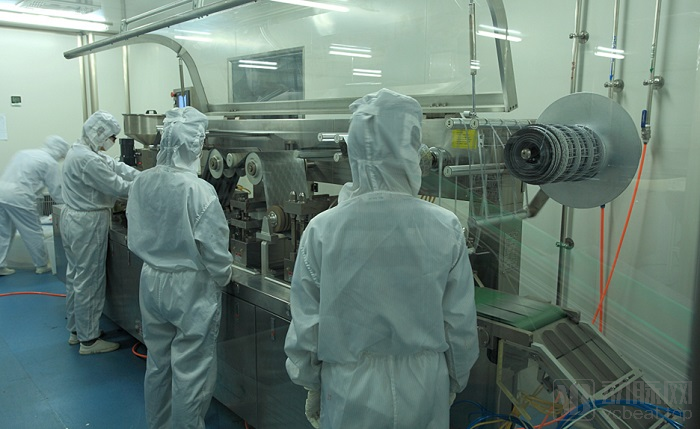
Shiqiang Pharmaceutical Production Workshop
In fact,Shiqiang Pharmaceutical’s emphasis on developing its offline channels stems not only from the impact of the volume-based procurement model but also from its close association with the development of internet hospitals.It is foreseeable that the growth in patient numbers at Shiqiang Internet Hospital will drive increased demand for various medications, thereby prompting Shiqiang Pharmaceutical to place greater emphasis on the production of generic drugs.
In Shiqiang Pharmaceutical's planning,It is expected to adopt a "purchase-and-generic" strategy: first, it will meet user demands by procuring medications required by physicians, thereby strengthening the pharmaceutical supply chain of its internet hospital. Second, when developing generic versions of drugs, it will select either a collaboration model or an in-house generic development model based on the actual needs of the internet hospital.
In addition to producing generic versions of Western medicines, Shiqiang Pharmaceutical is also seeking to expand into the field of Traditional Chinese Medicine (TCM). Currently, it is collaborating with Jiangyin Tianjiang to produce TCM formula granules. Once a TCM prescription is issued via the Shiqiang Internet Hospital, Shiqiang Pharmaceutical will deliver the TCM formula granules—produced in partnership with Jiangyin Tianjiang—to patients through the Shiqiang Internet Hospital platform.In the later stages, Shiqiang Pharmaceutical also plans to deeply cultivate the manufacturing and production technologies of formula granules.
In fact, in recent years, driven by policies such as the consistency evaluation, volume-based procurement, and zero-markup pricing, drug price reductions have further squeezed pharmaceutical companies’ profit margins, compelling them to intensify their innovation efforts. Pharmaceutical companies have had no choice but to enhance their self-awareness, reshape their development strategies, and adjust their growth trajectories.
In the current era of fierce competition among pharmaceutical companies, it is not uncommon to see large pharmaceutical firms undergoing mixed-ownership reforms, failing in their IPO attempts and subsequently being acquired, or listed pharmaceutical companies selling off properties to bolster their cash flow. In 2020, we also witnessed a significant number of medical representatives and physicians facing penalties due to professional compliance issues.In the current era of transformation within pharmaceutical companies, three trends are emerging: the professionalization and compliance of medical representatives; a dual-track strategy integrating online and offline channels for synergistic development; and leveraging the scale advantages of generic drugs while simultaneously investing in innovative drug R&D to drive profitability.
During the transition, Shiqiang Pharmaceutical happened to align with the critical timing for accelerating the development of internet hospitals.Starting with the Internet hospital, we have laid out innovative businesses and established a strong logical connection among them.. But this may only be the beginning. In today’s era of digital transformation in pharmaceutical companies,Traditional pharmaceutical companies still have much to do in areas such as empowering patients and the public through digitalization, accelerating drug research and development, safeguarding healthcare information security, and optimizing the experience of healthcare professionals.