

Amazon and Google Enter the Market, NMPA Approvals Hit Record Highs, Wearables Remain a Hot Sector | 2020 Annual Review
In 2020, the wearables sector welcomed a new major player. On August 27, 2020, tech giant Amazon launched the “Halo” smart band, primarily designed for health and fitness tracking. Concurrently, Amazon introduced a companion mobile app and subscription service. This marked Amazon’s first-ever wearable device, signifying a significant step forward in its expansion into the healthcare and medical field.
Meanwhile, other major players in the wearable sector have not been idle. Global leading wearable device brands such as Apple, Fitbit, and Huawei have recently launched a wave of new products or technologies. Both the NMPA and the FDA have also given the green light to the approval of wearable medical devices. As a result, the wearable device industry is currently showing vibrant signs of growth.
In fact, this boom did not start today. As early as 2019, when wearable devices experienced a resurgence driven by the healthcare sector, VCBeat summarized the landscape of health and wellness wearables at that time (direct link:《Apple, Huami, and Huawei Place Heavy Bets! 14 Investments in Six Months: Health Wearables Back on the Fast Track》). A year later, what changes have occurred in wearable medical and health devices in 2020?
An increasingly prominent trend this year is the entry of major cross-industry giants into the wearable medical and health device market. Among these, Amazon’s entrance stands out as one of the most significant developments in the field.
On August 27, 2020, Amazon released the “Halo” smart band. This health-monitoring wearable is not merely a standalone device; rather, it serves as the platform for Amazon’s new health services initiative. When paired with its mobile app, the device offers five health monitoring features—including activity assessment, sleep tracking, and body fat measurement—to help users improve their personal health.
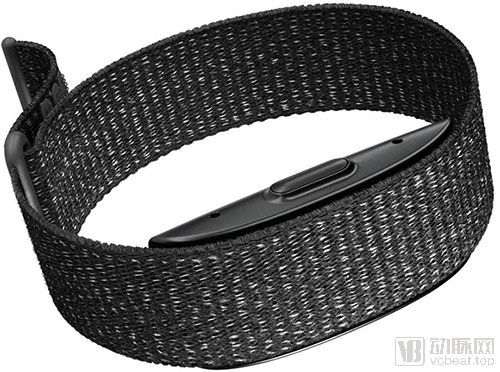
Amazon Halo Band (Image from Amazon's official website)
Unlike most fitness bands or smartwatches, Halo features a minimalist design with no display screen. The designers prioritized health monitoring capabilities. This approach minimizes distractions from frequent notifications and concentrates battery power on core functions, enabling at least seven days of operation on a single charge. The device is also water-resistant, allowing users to wear it while showering or swimming.
The absence of a screen means you cannot interact with it through conventional visual interfaces. However, Halo features a unique “Tone” voice assessment capability. It leverages AI-powered speech recognition to record and analyze users’ vocal data throughout the day, providing feedback within the app on emotional fluctuations—such as periods of high energy, hopefulness, or hesitation—thereby helping users better manage their personal emotions and interpersonal communication.
To address public concerns over privacy, Amazon has specifically emphasized that all voice-based snippets are not stored in the cloud. Once processed, these data are automatically deleted. Furthermore, these recordings will never be used for targeted advertising.
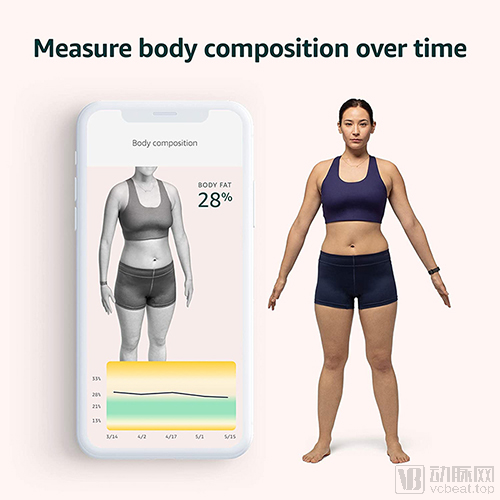
The Amazon Halo band features body fat measurement capabilities (Image from Amazon's official website)
Another featured function, “Body Composition,” leverages the smartphone’s camera to provide users with 3D renderings of their bodies, along with metrics such as weight and body fat percentage. The Halo App guides users to take photos from different angles (front, back, and side) and delivers results within seconds. As data accumulates, Halo ultimately generates a time-series-based body model.
Compared to the flawed approach of traditional body fat scales that rely solely on BMI (Body Mass Index) to estimate body fat percentage, Halo’s method is more precise and practical. This is because BMI often misidentifies muscle as fat, leading to bodybuilders frequently being mislabeled as obese.
In addition, Halo can also perform some routine health monitoring functions, such as tracking sleep patterns and physical activity. Notably, Halo provides a scored assessment of users’ exercise performance. Furthermore, Amazon has partnered with renowned healthcare institutions, including the Mayo Clinic and Harvard Health Publishing, to provide users with daily exercise tasks. Through a points-based incentive system, Halo may offer more effective motivation for users to engage in regular exercise.
To address the historically low adoption rates of wearable devices, Amazon opted for a subscription-based model for Halo: customers can purchase the device along with six months of complimentary service for $99, after which a monthly subscription fee of $3.99 applies.
As Amazon’s initial foray into the market, Halo places a relatively greater emphasis on health features, with limited focus on medical applications. Therefore, this product does not currently require FDA clearance.
Amazon’s entry is largely a response to Google’s high-profile push into the wearable market. As early as November 1, 2019, Google announced it would acquire Fitbit, once dubbed the “first stock of wearables,” for $2.1 billion. The announcement sent shockwaves through the industry.
Although Fitbit’s current market share is far from its peak, it remains a leading giant in the industry. Therefore, this acquisition requires approval from major markets worldwide. In particular, the European Union has raised objections to the deal on grounds of data privacy and security.
To secure approval, Google engaged in multiple rounds of negotiations with the European Commission and made several commitments. These commitments include Google’s agreement not to use health data collected from Fitbit and other wearable devices for advertising purposes, granting EU users the right to deny Google services access to their health data, and requiring that both Google and third parties obtain user consent before accessing health data through Fitbit’s data interfaces.
Furthermore, Google must ensure support for third-party wearable device manufacturers based on the Android platform and shall not intentionally degrade the user experience of third-party wearables, nor engage in bait-and-switch tactics by leveraging software outside the Android Open Source Project (AOSP).
Google has committed to continuously complying with these regulations for the next ten years. Meanwhile, the EU reserves the right to impose new requirements when deemed necessary. Ultimately, the acquisition received EU approval in December 2020. Although Google still needed to secure regulatory approvals in other markets, it faced significantly less resistance in the United States and other jurisdictions compared to the EU. Therefore, barring any major unforeseen developments, we can consider that Google has completed its acquisition of Fitbit.
During this period, Fitbit products received FDA clearance for the first time, marking a strategic shift from general fitness and wellness to professional medical applications. Concurrently, preparations involving relevant personnel were intensively underway. In December 2020, Google recruited Dr. Jacqueline Shreibati, Chief Medical Officer of the wearable device startup AliveCor. Dr. Shreibati joined the tech giant’s clinical team, reporting to Dr. Karen DeSalvo, Chief Health Officer at Google Health and a former official at the U.S. Department of Health and Human Services (HHS).
Google and Amazon, the two tech giants, have adopted vastly different strategic paths in wearable devices based on their respective characteristics and needs. With no prior accumulation in this area, Amazon chose to enter the market directly, testing the waters with its Halo health band and a suite of underlying services. In contrast, Google, having already established a robust mobile ecosystem, opted to rapidly scale up by acquiring Fitbit, which had a solid foundation. Nevertheless, the ultimate goal of both companies’ distinct approaches converges on the increasingly hot market for wearable medical and health devices, demonstrating that different routes can lead to the same destination.
It is worth noting that Google has no successful track record in acquiring hardware companies. On the contrary, after Google acquired Motorola for a hefty $12.5 billion, it failed to revive Motorola’s former glory as expected; instead, just two years later, it sold the company to Lenovo at a much lower price of $2.9 billion. From this perspective, Fitbit’s prospects remain to be proven over time.
In any case, the entry of these two tech giants will clearly have a significant impact on the market landscape of wearable health devices.
As a major manufacturing powerhouse, China holds a pivotal position in the global wearable health device market, with Xiaomi and Huawei consistently ranking among the top five in global shipments in recent years. Notably, although Xiaomi has recently begun to engage independently in the research, development, and production of wearable devices, its primary focus remains on the AIoT sector. In the realm of wearable medical and health devices, Huami, part of the Xiaomi ecosystem, continues to be the main supplier.
Within this specific domain, we can equate Xiaomi with Huami. As a pioneer among consumer electronics giants venturing into the medical device sector, Huami’s wearable medical devices received NMPA certification as early as 2018.
In 2020, the “Chinese force” in wearable health devices welcomed several new high-potential players: OPPO, vivo, and Goertek. Needless to say, even in terms of global smartphone shipments, OPPO and vivo rank among the top five. Goertek is a global giant in acoustic contract manufacturing for consumer electronics, producing 30% of Apple’s AirPods. Meanwhile, Huawei made its first appearance in NMPA certifications.
In March 2020, OPPO launched its first wearable smart device, the OPPO Watch, which enables 24-hour heart rate monitoring with alerts for abnormal readings, as well as real-time exercise tracking. Starting with fitness features is a traditional approach adopted by many wearable device brands.
VIVO, a sister company and major competitor of OPPO, also responded swiftly. On September 22, 2020, VIVO launched its first smartwatch, the VIVO Watch. In addition to sports and health features, the device supports all-day heart rate monitoring and continuous blood oxygen saturation monitoring.
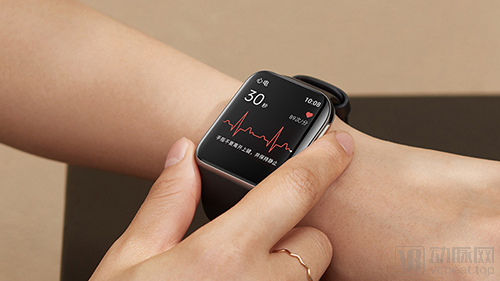
OPPO Watch ECG (Image from OPPO's official website)
Just two days later, on September 24, OPPO announced the global debut of the OPPO Watch ECG and revealed that this smartwatch, featuring continuous ECG monitoring capabilities, had obtained a Class II medical device certification from the National Medical Products Administration (NMPA). On the NMPA website, the product is registered under the name of its subsidiary, Shenzhen Zhongke Mingwang Communication Software Co., Ltd.
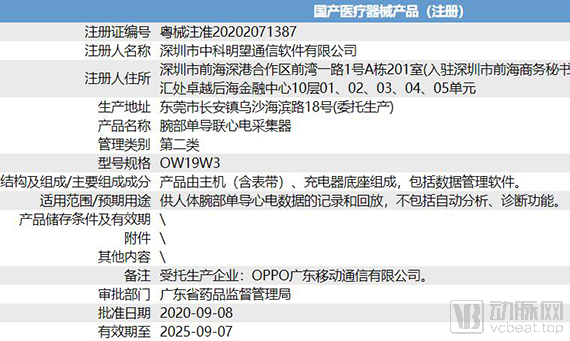
OPPO Watch ECG Medical Device Registration Certificate Information (Screenshot from the NMPA Official Website)
It is worth noting that, compared with the speed at which other brands have transitioned from sports and general wellness to professional medical care, OPPO took only six months. This not only demonstrates exceptional efficiency but also indicates that OPPO had long since mapped out its product upgrade and iteration roadmap.
The single-lead ECG continuous monitoring provided by the OPPO Watch ECG can display users’ electrocardiogram waveforms and offer paid expert interpretation and free algorithm-based analysis services for those in need. In addition to ECG functionality, the OPPO Watch ECG also features routine health monitoring capabilities, including heart rate monitoring, sleep tracking, menstrual cycle management, sedentary reminders, and breathing exercises for stress relief.
On October 30, just over a month later, Huawei unveiled a new lineup of wearable devices alongside the domestic launch of its Mate 40 series. Among them, the Huawei Watch GT2 Pro ECG drew significant attention as Huawei’s first wearable device to obtain a Class II medical device registration certificate from the National Medical Products Administration (NMPA). In addition to standard monitoring of exercise, sleep, and stress, it provides continuous 24-hour ECG (electrocardiogram) monitoring and blood oxygen saturation measurement.
Huawei has also partnered with the National Telemedicine and Internet Medicine Center to provide users with manual ECG interpretation services. Professional physicians will deliver manual ECG interpretations and issue reports bearing their signatures, helping users identify high risks of arrhythmia at an early stage and independently manage their heart health.
Leveraging the Watch GT 2 Pro ECG, Huawei and medical institutions continue to explore new research initiatives. Among these, the vascular health study—jointly initiated by the China Medical Promotion Association based on Huawei wearable devices and the HUAWEI Research innovative research platform, with participation from top-tier (Grade 3A) hospitals such as Peking University People’s Hospital and Beijing Anzhen Hospital—marks the industry’s first breakthrough in arterial stiffness risk screening technology based on wrist-worn ECG and PPG signals, providing participants with professional health guidance.
After joining the vascular health research project, users can perform self-assessments under resting conditions via the app to compare their vascular health status with that of age-matched peers. They can also access historical test data at any time to monitor their vascular health. For high-risk users, the project offers a one-stop integrated management service that proactively provides early prevention and intervention for arteriosclerosis, enabling users to manage their vascular health at home.
Furthermore, the 301 Hospital, a long-term partner of Huawei in wearable devices, has launched a cardiac health study based on Huawei’s high-performance ECG sensors. By meticulously recording and analyzing electrocardiogram waveforms, the study identifies cardiac rhythm abnormalities such as atrial fibrillation and premature beats, thereby helping users detect high risks of arrhythmia at an early stage and proactively manage their heart health.
As early as the first half of 2020, the cardiac health research project, conducted in collaboration between the PLA General Hospital (301 Hospital) and Huawei’s Cardiac Health Research Team, had already achieved new research progress in cardiovascular disease management via mobile medical technologies, particularly in the early monitoring and treatment of atrial fibrillation.
The research team utilized Huawei wearable devices to apply photoplethysmography (PPG) technology for atrial fibrillation screening, providing users with long-term, comfortable heart rhythm monitoring. The atrial fibrillation management platform, supported by a multidisciplinary team, offers integrated management strategies for individuals identified with atrial fibrillation, thereby enabling primary and secondary prevention of atrial fibrillation as well as patient-engaged self-management.
These two research findings were published in April and May 2020, respectively, in the Journal of the American College of Cardiology (JACC), a top-tier journal in the field of heart and cardiovascular systems, and the European Heart Journal (EHJ), a leading international medical journal, garnering recognition from the international medical community.
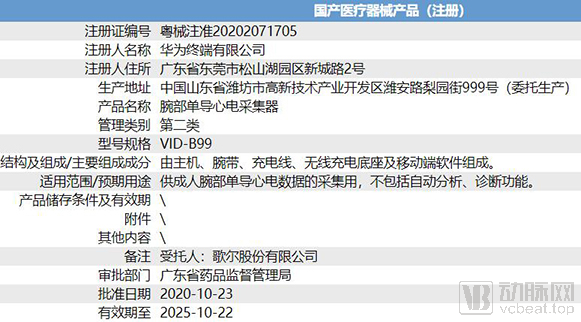
Huawei Watch GT2 Pro ECG Medical Device Registration Certificate Information (Screenshot from the NMPA Official Website)
A closer look reveals that the NMPA Class II medical device registration certificate for the Huawei Watch GT2 Pro ECG clearly lists “Entrusted Party: Goertek Inc.” This indicates that the product is contract-manufactured by Goertek, a leading OEM giant. In fact, Goertek itself has an ECG-enabled smartwatch that has obtained NMPA certification.
Goertek holds a prominent industry position in the fields of acoustics, optics, and micro-sensors, manufacturing over 30% of Apple’s AirPods. It is also highly likely to be the exclusive manufacturer for the newly released Apple AirPods Max.
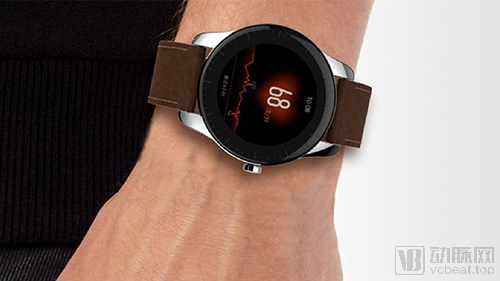
Goertek's ECG watch has also received NMPA certification (Image source: Goertek official website)
In fact, Goertek has long had ambitions in the healthcare sector. As early as 2017, Goertek obtained ISO 13485 certification for its medical device quality management system. The acquisition of the NMPA certificate in 2020 marked the transition of its wearable products from consumer electronics to medical devices. Moreover, this was the first NMPA medical device certificate for an ECG smartwatch issued in Shandong Province.
VIVO and OPPO have launched wearable devices, meaning that the top-ranked brands in the smartphone market have all entered this field, highlighting the booming market for wearable health devices. Meanwhile, Goertek, a giant in consumer electronics contract manufacturing, has obtained NMPA certification. With Huawei and OPPO also having passed NMPA certification, the market for wearable devices featuring medical-grade ECG as a key selling point will gradually be dominated by consumer electronics manufacturers that have secured NMPA certification.
In our early September 2019 article on wearable devices (direct link:“Apple, Huami, and Huawei Place Major Bets! 14 Investments in Six Months as Health Wearables Return to the Fast Lane”), which had previously taken stock of NMPA and FDA certifications up to that point. More than a year later, this list has undergone significant changes.
It should be noted that there are still differing views within the industry regarding the definition of “wearable devices.” The National Medical Products Administration (NMPA) also provided an explanation in its “Letter in Response to Proposal No. 1219 (Medical and Sports Category No. 139) of the Third Session of the 13th National Committee of the Chinese People’s Political Consultative Conference,” issued on September 22, 2020.
“Letter in Response to the Proposal” points out that wearable medical products are a general term for a class of products that use wearable technology to intelligently design daily devices, employing specific algorithmic technologies, and are worn by or attached to patients during operation. These products cover a broad range, with functions including monitoring of motion data, environmental data, physiological information processing, and collection of medical information, among others. Their product forms include software, hardware, and integrated software-hardware solutions.
In accordance with the relevant provisions of the Regulations on the Supervision and Administration of Medical Devices, only products explicitly intended for purposes such as disease diagnosis and monitoring are regulated as medical devices based on their intended use; other ordinary electronic products (such as massagers, fat-burning machines, and exercise heart rate monitors) are not regulated as medical devices.
Meanwhile, the scarcity of regulatory approvals explicitly defined by the keyword “wearable” has posed certain challenges for corresponding statistical analyses. Building on the 2019 keyword set, we further expanded the list of potential approval-related keywords in this study; however, the results showed only minor differences. Nevertheless, the NMPA and FDA certifications listed herein do not claim to encompass all certified wearable devices. Should any omissions exist, relevant stakeholders are welcome to contact us.
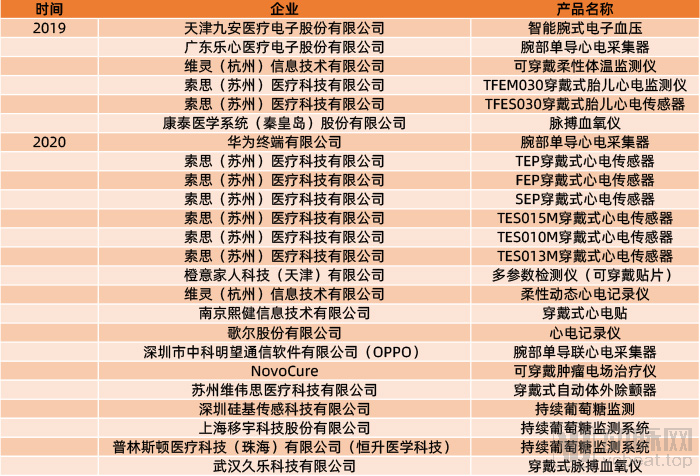
List of NMPA Certifications for Wearable Devices in Recent Years
Let’s first examine NMPA certification. In 2019, we initially recorded only one wearable product that had obtained NMPA certification, which was approved in June 2019. In this retrospective study, we have updated the data and now record a total of six wearable medical devices approved in 2019. Among these, except for one case that was previously omitted, the registration dates of the other four products all fell after the publication of the 2019 article.
While the National Medical Products Administration’s (NMPA) approval data in 2019 remained at a level comparable to previous years, this trend changed significantly in 2020, with a total of 18 wearable medical devices receiving NMPA certification throughout the year. This figure is nearly equivalent to the sum of all products approved from 2017 to 2019, clearly illustrating the surging interest in wearable devices.
In addition to well-known manufacturers such as Huawei, Goertek, and OPPO (Zhongke Mingwang), Sothink Medical obtained six NMPA certificates for wearable devices in 2020, with two additional NMPA certificates approved in 2019. Prior to 2019, Sothink Medical was also among the enterprises with the highest number of approved NMPA certificates, totaling five. Furthermore, since its first approval in 2017, Sothink Medical has secured new NMPA certifications every year. This demonstrates the company’s substantial investment in research and development.
In terms of product categories, wearable devices that received NMPA approval in 2020 also saw significant breakthroughs. In addition to more conventional products such as ECG sensors and blood oxygen monitors, continuous glucose monitoring systems, automated external defibrillators (AEDs), and tumor treating fields (TTF) devices were also approved.
Among these, Suzhou ViVest Medical Technology Co., Ltd.’s wearable automated external defibrillator and Shenzhen SiBionics Inc.’s continuous glucose monitoring system were approved through the innovative medical device approval pathway. In addition, two other continuous glucose monitoring systems were also approved in 2020.
We believe that, following electrocardiogram (ECG) monitoring, continuous glucose monitoring (CGM) is likely to become a key development direction for future wearable devices. However, current CGM technologies still rely on minimally invasive sampling, resulting in a less-than-ideal user experience. The future advancement of this field will depend on the maturation of non-invasive biosensing technologies.
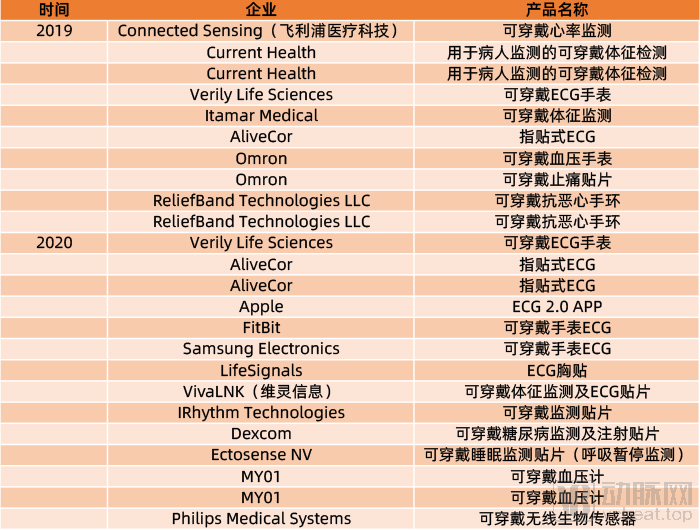
List of FDA Certifications for Wearable Devices in Recent Years
In contrast to the rapid advancements made by the NMPA in the approval of wearable devices, the FDA has maintained a relatively stable and consistent pace. In 2019, our search identified a total of 10 products that received FDA clearance. Among these, seven had already been cleared at the time we authored our article last year.
In 2020, 14 products received FDA approval, an increase from the 10 approved in the previous year. However, this did not represent a recent peak in approvals; in 2017, the FDA approved 17 wearable devices throughout the year, setting a record.
Interestingly, similar to the NMPA certification process, several giants in the wearable device sector prominently appeared on this year’s approval list. In 2018, Apple Watch’s ECG app was approved as an innovative medical device. In 2020, in addition to the upgraded Apple ECG 2.0, wearable ECG watches from Fitbit and Samsung also received regulatory approval.
Two traditional medical device manufacturers, Dexcom and Philips, are also on the list—the former has received approval for its wearable glucose monitoring system and injection patch, while the latter has gained approval for a wearable wireless biosensor compatible with multiple devices.
Notably, in 2020, Hangzhou Weiling Information’s flexible wearable patch received FDA approval. In the NMPA approval process, Weiling Information also holds two NMPA certificates, both based on flexible wearable technology. Due to its ability to conform more closely to the skin, thereby enhancing comfort and monitoring accuracy, flexible technology will play a decisive role in the future development of wearable devices.
The RelifeBand Technology wristband, which previously garnered attention at CES, has also received FDA approval. When used with hypoallergenic conductive gel, the device helps users prevent or alleviate symptoms associated with anxiety, hangovers, migraines, motion sickness, chemotherapy-induced nausea, and morning sickness.
Furthermore, Ectosense NV’s wearable sleep monitoring patch is quite innovative—this product can be used for monitoring sleep apnea (commonly known as snoring during sleep). Compared with traditional monitoring methods, utilizing the continuous electrocardiogram (ECG) monitoring capability of wearable devices to monitor sleep apnea is obviously more comfortable, as well as more accurate and reliable.
Since August 2020, there have been 20 acquisitions and financing deals in the wearable device sector, with a total value approaching $2.4 billion. Among these, Google’s acquisition of Fitbit for $2.1 billion stands as the largest financing and M&A transaction in this field in recent years.
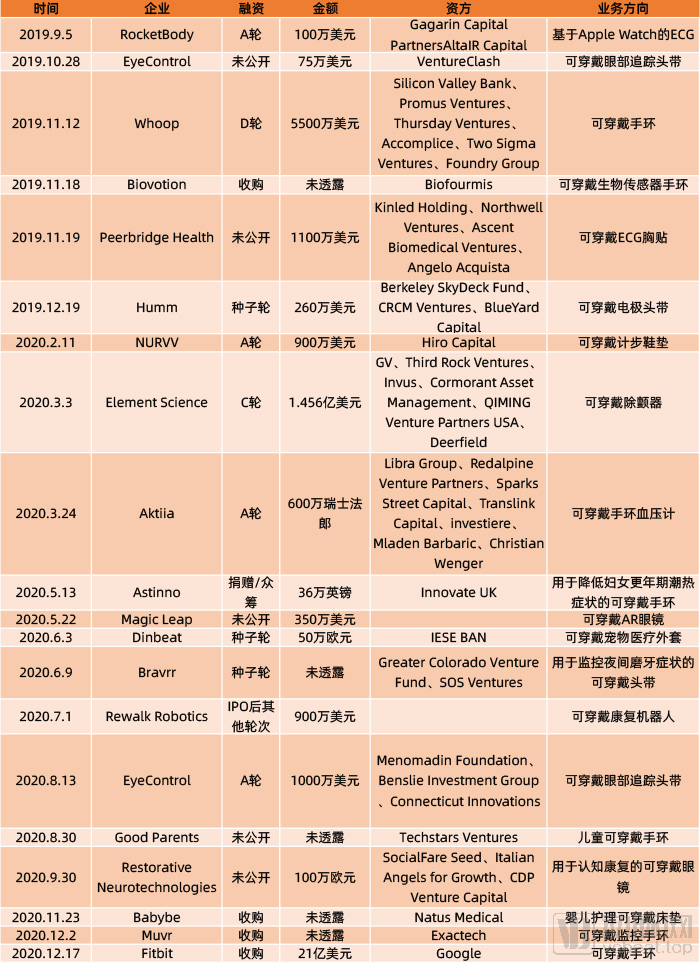
Wearable Device Financing Overview
An analysis of recent financing and M&A activities clearly indicates that wearable devices are evolving toward more diverse and practical functionalities. Take Element Science, which secured a substantial $145.6 million in funding in 2020, as an example. The company plans to leverage this capital to complete clinical studies on its wearable cardioverter-defibrillator (P-WCD). This unobtrusive personal defibrillator not only detects but also offers therapeutic benefits for atrial fibrillation, marking a substantive advancement over previous atrial fibrillation detection technologies.
Among existing wearable medical and health devices, head-mounted types are relatively rare. EyeControl’s wearable eye-tracking headband is an AI-enabled remote communication device. With only a simple AI learning process, it allows users to select menu options by moving their eyes, thereby facilitating assisted communication. This offers significant benefits for specific patient groups, such as those requiring round-the-clock home care, ICU patients, and healthcare staff at nursing stations.
Furthermore, some imaginative startups have extended their target applications to pets. Although Dinbeat has raised limited funding, its wearable pet jackets enable real-time wireless monitoring of pets’ health status, collecting metrics such as electrocardiograms (ECG), heart rate, respiratory rate, and body temperature, thereby helping veterinarians provide better care for animals. Given the enormous potential size of the pet market and the current supply shortage in the short term, this could represent a promising and innovative direction for development.
In contrast to financing and M&A activity, the market size for wearable devices is expanding rapidly. According to IDC’s Global Wearable Device Market Report for Q3 2020, global shipments of wearable devices reached 125 million units in the third quarter, representing a 35.1% year-on-year increase. IDC forecasts that full-year 2020 shipments will reach 396 million units, rising to 631.7 million units by 2024, with a five-year compound annual growth rate (CAGR) of 12.4% from 2020 to 2024.
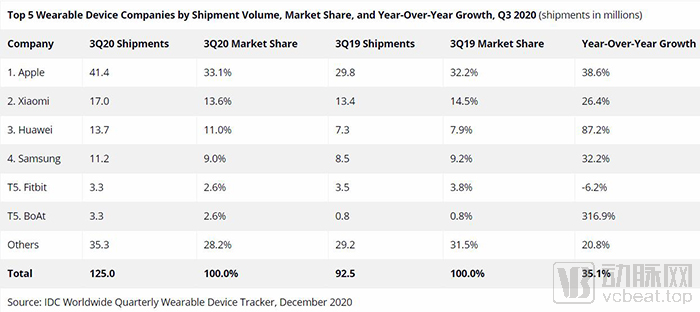
Global Wearable Device Shipments Ranking and Market Share in Q3 2020 (Screenshot from IDC Official Website)
According to data released by IDC, the top five wearable device vendors in Q1 2019 were Apple, Xiaomi, Huawei, Samsung, and Fitbit, in that order. The landscape of the global top five remained largely unchanged in Q3 2020, with only slight shifts in rankings. The top four wearable device vendors were Apple, Xiaomi, Huawei, and Samsung, while Fitbit and the Indian vendor BoAt tied for fifth place, each holding a 2.6% market share.
With the exception of Fitbit, whose shipments declined by 6.2% year-over-year from 2019, the top five vendors all recorded substantial growth in shipments compared to the same period in 2019. Indian brand BoAt surged by 316.9%, boosting its market share from 0.9% in the same period of 2019 to 2.6%. Even Xiaomi, which posted the lowest growth among the group, still achieved a significant year-over-year increase of 26.4% compared to the same period in 2019.
As technology advances, wearable devices are continuously striving to enhance their performance and functionality, evolving from merely monitoring body temperature, heart rate, blood pressure, and respiratory rate to tracking blood glucose, electrocardiogram (ECG), electroencephalogram (EEG), and blood oxygen levels. Moreover, some wearable devices are increasingly venturing into the therapeutic domain.
During the COVID-19 pandemic, the Internet of Medical Things (IoMT) played a significant role, both in direct epidemic prevention and control efforts and in supporting other areas such as internet-based healthcare. As a crucial component of the IoT, wearable devices have also made substantial contributions. For instance, Fitbit has been validating the feasibility of using wearable devices for the early detection and screening of COVID-19 patients, and similar research is being conducted by the U.S. Department of Defense and Philips.
Relevant authorities in China have also recognized the significant potential of wearable devices and have intensified their approval efforts. Furthermore, regarding standards for wearable medical devices, the State Administration for Market Regulation (Standardization Administration of China) and the National Medical Products Administration are actively advancing the development and revision of relevant standards in the field of wearable products. To date, China has issued nine national standards and 17 industry standards, covering areas such as blood pressure monitors, electrocardiogram (ECG) recorders, blood glucose meters, cardiac ultrasound, peripheral vascular ultrasound, ventilators, and electroencephalogram (EEG) machines.
In terms of basic standards for wearable medical device products, China has issued three national standards, including the Application Service Framework for Wearable Products (GB/T 37344), Data Specification for Wearable Products (GB/T 37037), and Classification and Identification of Wearable Products (GB/T 37035). Additionally, China is actively promoting the development of the national standard Terminology for Information Technology—Wearable Devices, thereby establishing a foundational standard framework for wearable devices.
In the future, relevant regulatory authorities will also accelerate the development of the regulatory framework for medical devices, the technical support system for regulation, and inspection and testing capabilities, while formulating a five-year plan for the development and revision of guidelines. Barring any unexpected developments, we are poised to witness an explosive growth period for wearable medical health devices in the coming years. VCBeat will continue to closely monitor developments in this field and provide first-hand updates.
References:
NMPA: Letter in Response to Proposal No. 1219 (Medical and Sports Category No. 139) of the Third Session of the 13th National Committee of the Chinese People's Political Consultative Conference
IDC:Shipments of Wearable Devices Leap to 125 Million Units, Up 35.1% in the Third Quarter, According to IDC
IDC:Worldwide Wearables Market Forecast to Maintain Double-Digit Growth in 2020 and Through 2024, According to IDC
mhealthintelligence.com:Philips, Defense Department Expand mHealth Project for Infection Tracking
mhealthintelligence.com:Fitbit Study Uses mHealth Wearables to Detect COVID-19 Symptoms