

Huami Releases 2020 China Health Report: Women Excel in Body Management Despite Men Showing Greater Confidence
Recently, Huami Technology (NYSE: HMI), a global leader in smart wearables and health cloud services, released the “2020 Report on the Health Status of Chinese People” (hereinafter referred to as the “Report”). The Report is based on tens of millions of data points from Huami’s Zepp digital health management platform and tens of thousands of online surveys.
Impacted by the pandemic, significant changes occurred in the exercise and health habits of Chinese residents in 2020: average daily step counts dropped substantially, while the pandemic motivated some individuals to start exercising, reflecting a heightened focus on personal health. Against this backdrop, the Zepp digital health management platform conducted an in-depth analysis across multiple dimensions, including the Personal Activity Intelligence (PAI) index, stress levels, and blood oxygen saturation. This report comprehensively presents the exercise and health data of Chinese residents in 2020.
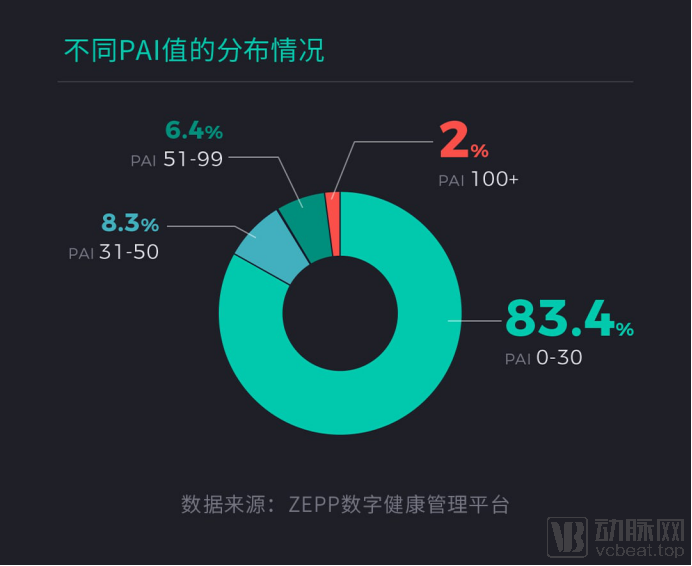
Zepp’s digital health management platform, through monitoring and analysis, found that 83.4% of users have an average daily PAI score between 0 and 30, with only 2% achieving or exceeding the ideal daily PAI score of 100; among this latter group, individuals born in the 1970s or earlier account for a significantly higher proportion compared to other age groups.
PAI (Personal Activity Intelligence) refers to the Personal Activity Intelligence score. As a revolutionary personal health assessment system, it integrates daily activity intensity and other physiological data, using intelligent algorithms to convert heart rate into a PAI score. This helps users easily and intuitively monitor their physical health status. Maintaining a PAI score above 100 is theoretically sufficient to sustain optimal health levels. Although individual assessments are personalized, overall, the comprehensive health evaluation scores for the population have room for improvement over the past year.
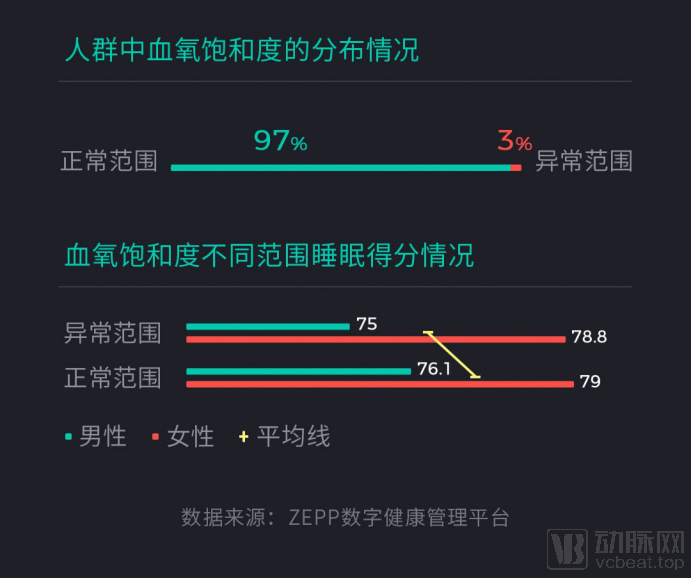
Blood oxygen saturation (SaO2), which refers to the concentration of oxygen in the blood, is a vital physiological parameter of the human respiratory and circulatory systems. The normal range for blood oxygen saturation is 90–100%. Low blood oxygen saturation can lead to symptoms of hypoxia, such as shortness of breath, fatigue, chest tightness, and dizziness; in severe cases, it may cause respiratory distress and symptoms of heart failure. Monitoring data from the Zepp Health Management Platform’s blood oxygen feature indicates that while the majority of individuals have SaO2 levels within the normal range, 3% of users exhibit blood oxygen saturation below the normal threshold. Furthermore, an analysis of the correlation between blood oxygen saturation and population sleep scores reveals that the average sleep score among individuals with abnormal blood oxygen levels is lower than that of individuals with normal blood oxygen levels.
Numerous factors can lead to low blood oxygen saturation. Common causes include cardiopulmonary conditions such as heart failure, severe pulmonary infection, pulmonary embolism, chronic obstructive pulmonary disease (COPD), and asthma, all of which can result in decreased blood oxygen saturation. If symptoms such as shortness of breath, fatigue, or dizziness occur, further evaluation at a hospital’s cardiovascular medicine outpatient clinic is recommended.
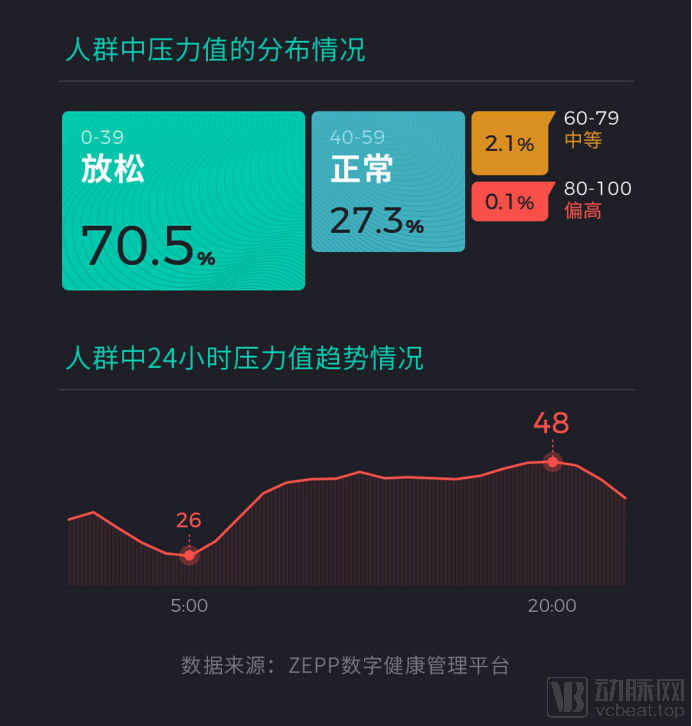
Among users who have enabled all-day stress monitoring on the Zepp Health management platform, 97.8% maintain their average daily stress levels within the normal range (relaxed and normal states). Throughout the 24-hour day, most individuals experience their lowest stress levels around 5:00 AM and their highest around 8:00 PM. The stress metric on the Zepp Health management platform serves as an indicator for assessing changes in physiological status. It is advisable to take appropriate rest when stress levels are elevated. Stress levels below 60 are classified as normal and relaxed, while levels above 60 are considered moderate to high.
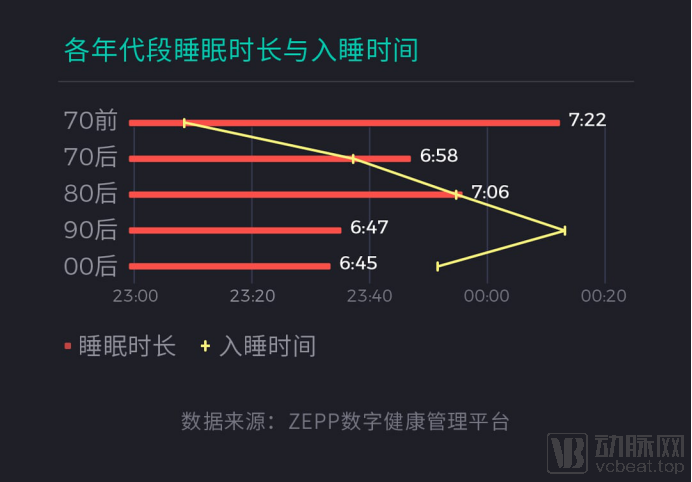
In terms of sleep habits, individuals born before 1970 exhibit the healthiest patterns, although only 46% of this group adheres to an early-to-bed, early-to-rise schedule. They enjoy the longest average daily sleep duration, reaching 7 hours and 22 minutes. Only those born before 1970 and those born in the 1980s average more than 7 hours of sleep per night. Individuals born after 2000 have the shortest sleep duration, averaging just 6 hours and 45 minutes per night, while those born in the 1990s, known for their vibrant nightlife, have the latest bedtimes.
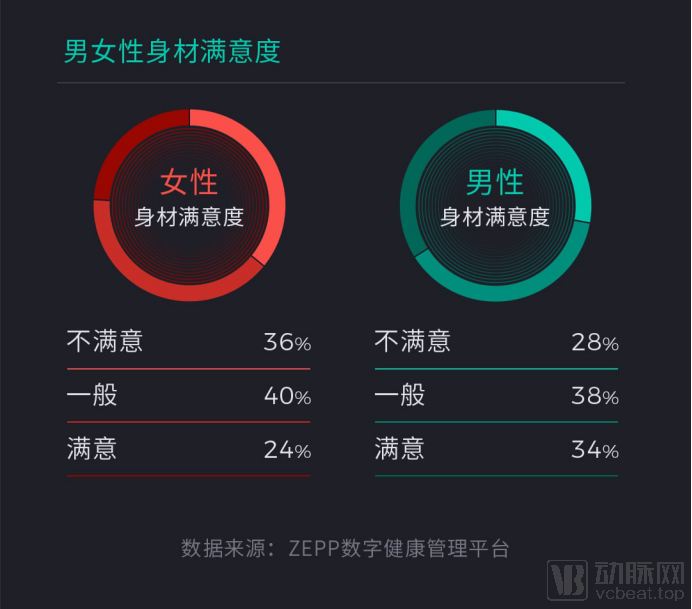
Survey data reveal that 31% of respondents are dissatisfied with their body shape. Among women, 24% report satisfaction with their body shape, whereas among men, the figure stands at 34%. Men exhibit higher levels of satisfaction with their current body shape than women and also engage in physical exercise more frequently on a weekly basis.
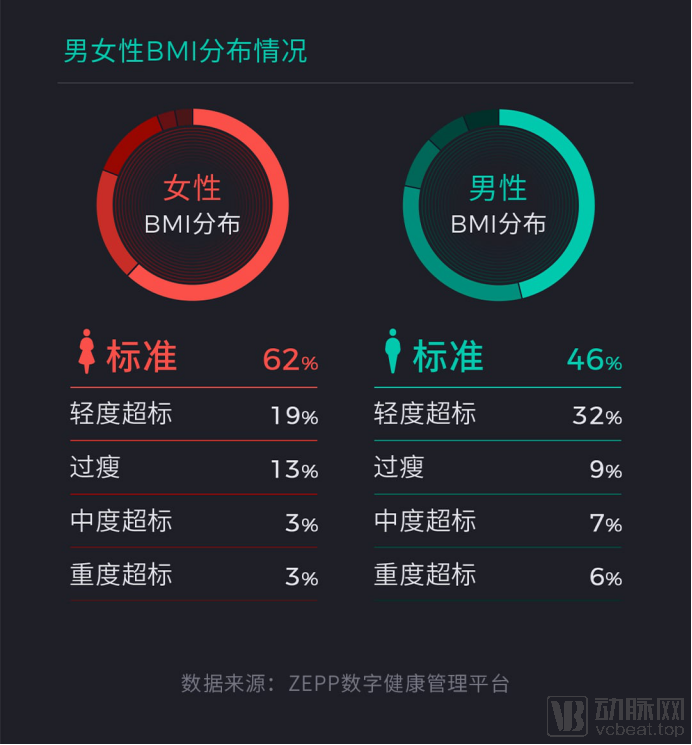
Although men tend to be more confident about their body shape, data monitored through the Zepp Health management platform reveals that women actually manage their physique better than men. The data shows that 62% of women have a BMI within the standard range, compared to only 46% of men. Men should pay greater attention to weight management. In particular, men born in the 1970s have the lowest proportion of individuals with a standard BMI, while among women, those born before the 1970s and those born after 2000 have relatively lower proportions of standard BMI.
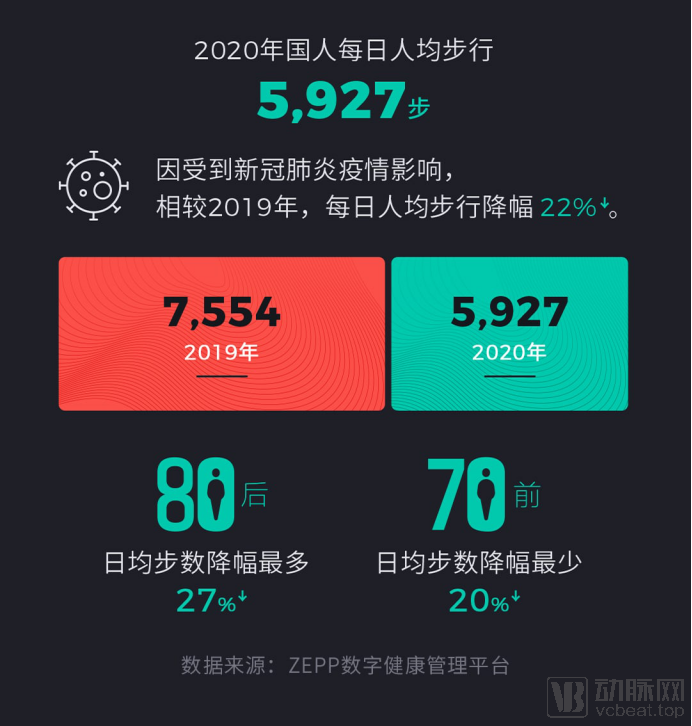
2020 was an unusual year. Due to the impact of the COVID-19 pandemic, the average daily step count per person in China was 5,927 steps, representing a 22% decrease compared to 2019. The province with the highest average daily step count was Tibet, with an average of 8,689 steps per day; this region was also less affected by the pandemic in China. The province with the lowest average step count was Taiwan, with an average of only 6,414 steps per day.
By gender, women had a lower average step count than men in 2020, with women born in the 1980s and 1990s recording the lowest daily average. The largest year-on-year decline in average daily steps was observed among those born in the 1980s, with a 27% decrease compared to 2019, while the smallest decline was seen among those born before the 1970s, at 20%.
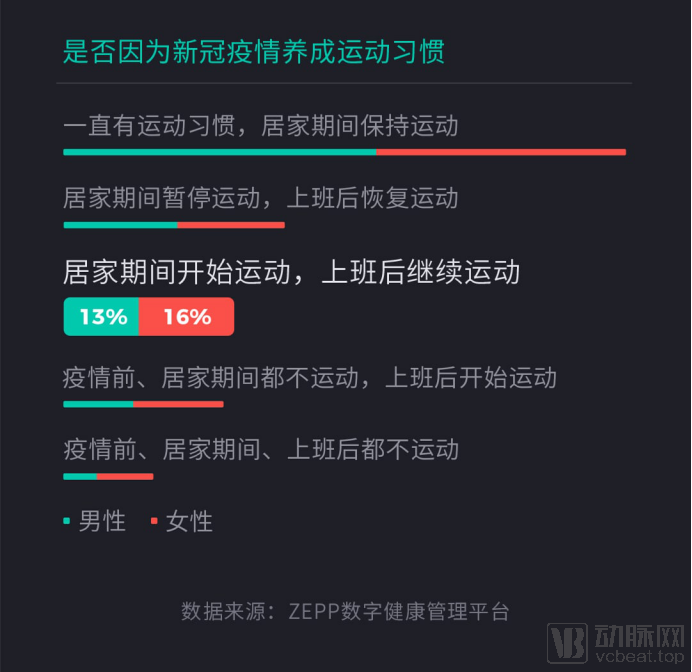
The survey revealed that in 2020, the majority of individuals with established exercise routines maintained their physical activity during the home-based epidemic prevention and control period. Some resumed exercising after returning to work, while 14% were motivated by the COVID-19 pandemic to start participating in physical activity. Health improvement and fat loss were the primary drivers for exercise participation. “Laziness” was identified as the foremost barrier to exercise, followed by lack of companionship and insufficient access to facilities, indicating significant procrastination tendencies among many individuals regarding physical activity. In terms of exercise preferences, aerobic exercises attracted the largest number of participants. Additionally, men showed a greater preference for strength training, whereas women favored flexibility exercises.
Huami Technology, founded in 2013, is driven by the mission of “Connecting Health with Technology.” Its health-focused IoT devices have achieved coverage across multiple scenarios. Leveraging robust artificial intelligence algorithms and big data analytics capabilities, the company is committed to providing global users with 24/7 health monitoring services, thereby enabling wearable devices to play a significant role in personal health management. This marks the third consecutive year that Huami Technology has released reports on the sports and health status of the Chinese population. Additionally, the company has previously published sports and health reports focused on specific groups, such as women and marathon runners.