

Public Internet Hospitals Accelerate Market Entry: Three Major Shifts and Trends in Online Healthcare | 2020 Annual Review
There is no doubt that internet hospitals experienced rapid development in 2020.
As of October 2020, there were nearly 900 internet hospitals across China, compared to 269 during the same period in 2019. Spurred by the pandemic, the development of internet hospitals accelerated at an unprecedented pace, with a significant influx of public hospitals. Given the dominant role of public hospitals in the healthcare service system, public internet hospitals have also emerged as a force to be reckoned with.
The healthcare services market is an imperfectly competitive market, requiring a combination of government intervention and market mechanisms. In the field of internet healthcare, the role of the government is more prominent in public internet hospitals, while market mechanisms play a greater role in enterprise-led internet hospitals. Therefore, although both can directly provide medical and health services to the public, their development logics differ significantly.
Based on the above considerations, VCBeat distinguished between the two in its 2020 annual review and examined the year’s changes from multiple perspectives. This article focuses primarily on public internet hospitals, whose development has mainly exhibited the following characteristics:
1. Enhanced policy continuity and shortened implementation cycles
2. Participating entities range from top-tier hospitals to grassroots-level institutions
3. Internet Hospitals Drive Changes in Access, Quality, and Cost
4. Three Major Trends Will Emerge in Service Volume, Service Content, and Other Areas
Policy is the direct driver behind the rapid development of public internet hospitals. In 2020, a total of 56 policies were issued in the internet hospital sector, characterized by strong continuity and short implementation cycles.
Overall Tone: Strengthening New Business Formats and Models
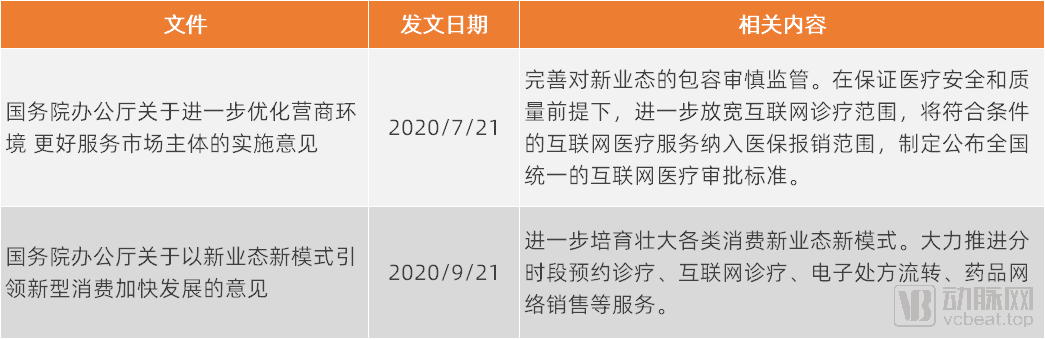
Content related to internet hospitals in documents issued by the General Office of the State Council. Source: State Council Policy Document Database; graphic by VCBeat
In 2020, the General Office of the State Council issued two documents that addressed internet-based medical consultations, defining them as a new form of consumer consumption. The documents called for further expansion of the scope of internet-based medical services, vigorous promotion of this new business model, and improvement of inclusive, prudent, and regulatory frameworks tailored to it. Viewed in the context of both documents, the definition of this new business model implies that internet hospitals are not merely a convenience service for the public. Compared with the policy orientation established in 2018, these two documents more strongly affirm the role of internet-based medical consultation services in economic operations, underscoring their greater significance for industrial development.
Continuous Promotion: Three Stages Progressing Sequentially
In response to the needs of epidemic prevention and control, the National Health Commission and the National Healthcare Security Administration have issued a substantial number of policies to facilitate the implementation of internet hospitals, which can be examined in three phases:
In February and March, amid the emergency response to the epidemic, the National Health Commission issued two policy documents encouraging internet hospitals and online consultation services to reduce the risk of cross-infection associated with in-person visits. The National Healthcare Security Administration included eligible “Internet+” medical service fees within the scope of medical insurance reimbursement and encouraged designated medical and pharmaceutical institutions to provide contactless medication purchasing services.
From May to June, as the epidemic entered a stable phase, the National Health Commission issued a document calling for a summary of beneficial experiences gained during the outbreak, promoting the development of internet-based diagnosis and treatment and internet hospitals, and supporting normalized epidemic prevention and control efforts.
In November, a major breakthrough was achieved in medical insurance policy as the National Healthcare Security Administration issued guidelines detailing the inclusion of internet-based medical services in the national health insurance scheme, marking the transition of reimbursement for such services into the practical implementation phase.
The three phases progress sequentially, with policies demonstrating strong continuity.

Review of Policies from the National Health Commission and the National Healthcare Security Administration; Source: Official Government Websites; Graphic by VCBeat
Local Follow-Up: Accelerated Implementation of Medical Insurance Policies
At the local level, VCBeat has compiled a total of 43 policies issued in 2020, among which 29 are related to medical insurance payment, which has greatly promoted the implementation of medical insurance policies.
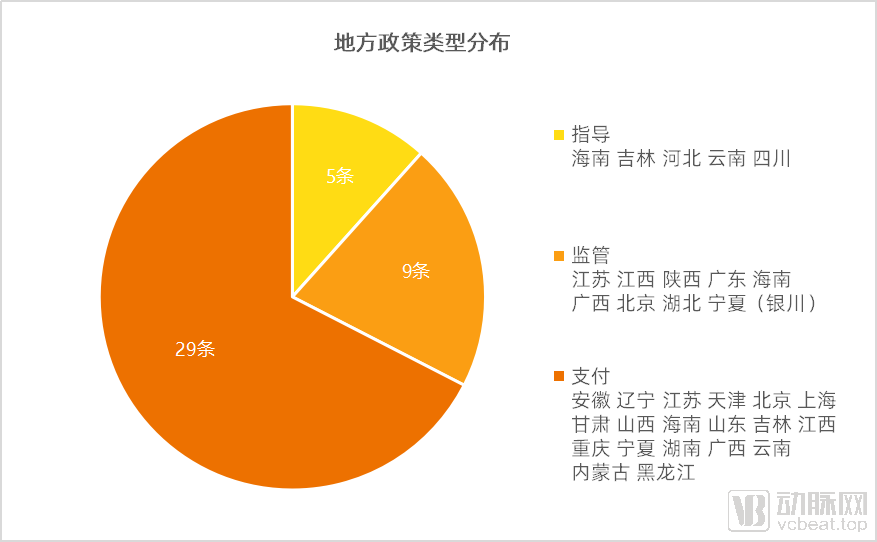
Distribution of Local Policy Types. Source: Official websites of local Health Commissions and Healthcare Security Administrations; graphic by VCBeat
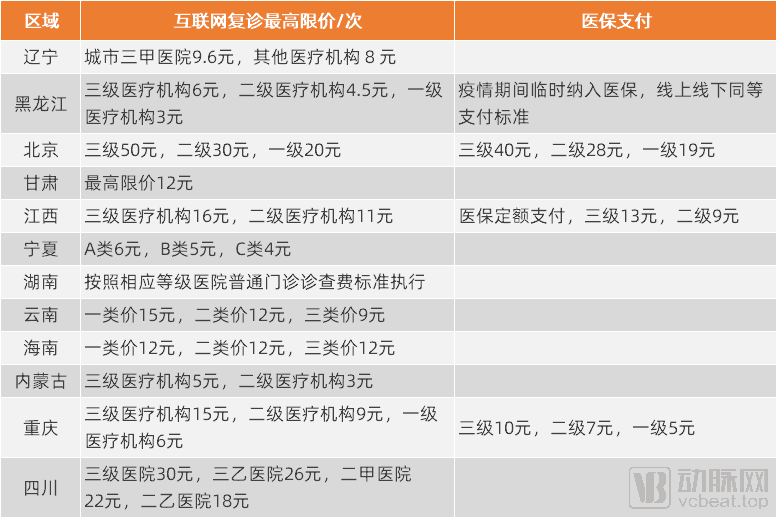 Fee Standards and Reimbursement Policies for Online Follow-up Consultations Across Regions, Source: Official Websites of Local Healthcare Security Administrations; Graphic by VCBeat
In accordance with regulations, internet-based follow-up consultations are provided by medical personnel of varying professional levels and are priced according to the fee schedule for general outpatient consultation services. Consequently, internet follow-up consultation fees established across different regions are differentiated by hospital tier. In Beijing, the pricing fully aligns with that of offline general outpatient visits, and the reimbursement policy is identical to that for offline services. Regions such as Shanghai, Zhejiang, Jiangsu, Tianjin, Sichuan, Guangdong, and Ningxia have taken the lead in integrating online consultations and online medication purchases into the medical insurance system. This indicates that the implementation cycle for these policies is shortening.
Regarding local guidance and regulatory policies, various regions continue to refine the access and management requirements for internet hospitals. On key issues such as defining follow-up consultations and balancing physicians’ online and offline practice relationships, Hainan Province has stipulated six conditions for follow-up consultations, meeting any one of which is sufficient. Jiangsu Province adopts the most open stance toward physicians’ online practice: as long as physicians do not disrupt the normal operations of offline medical institutions, they may provide online consultations both within and outside their affiliated hospitals, during or after working hours.
Yinchuan has issued China’s first regulatory framework for internet-based diagnosis and treatment services. During its more than three years of exploring internet healthcare, Yinchuan identified several issues affecting the industry’s healthy development, prompting the formulation of corresponding regulations. The framework provides detailed provisions on the appropriate use of artificial intelligence technologies, time limits for online physician consultations, and the handling of complaints and negative reviews.
Driven by both policy incentives and the demands of epidemic prevention and control, public internet hospitals in 2020 expanded their reach upward to top-tier hospitals and downward to community healthcare institutions.
Top Hospitals’ Enthusiasm Surges
In fact, since the introduction of internet hospital policies in 2018, the number of public internet hospitals has gradually increased. However, before 2020, the regional distribution of public internet hospitals showed distinct characteristics, with Guangdong, Shandong, Jiangsu, and Zhejiang being early adopters and having a larger number of such facilities. In 2020, regions like Beijing and Shanghai, which are rich in high-quality medical resources, also accelerated their participation in the development of internet hospitals, with many top-tier hospitals joining the initiative.
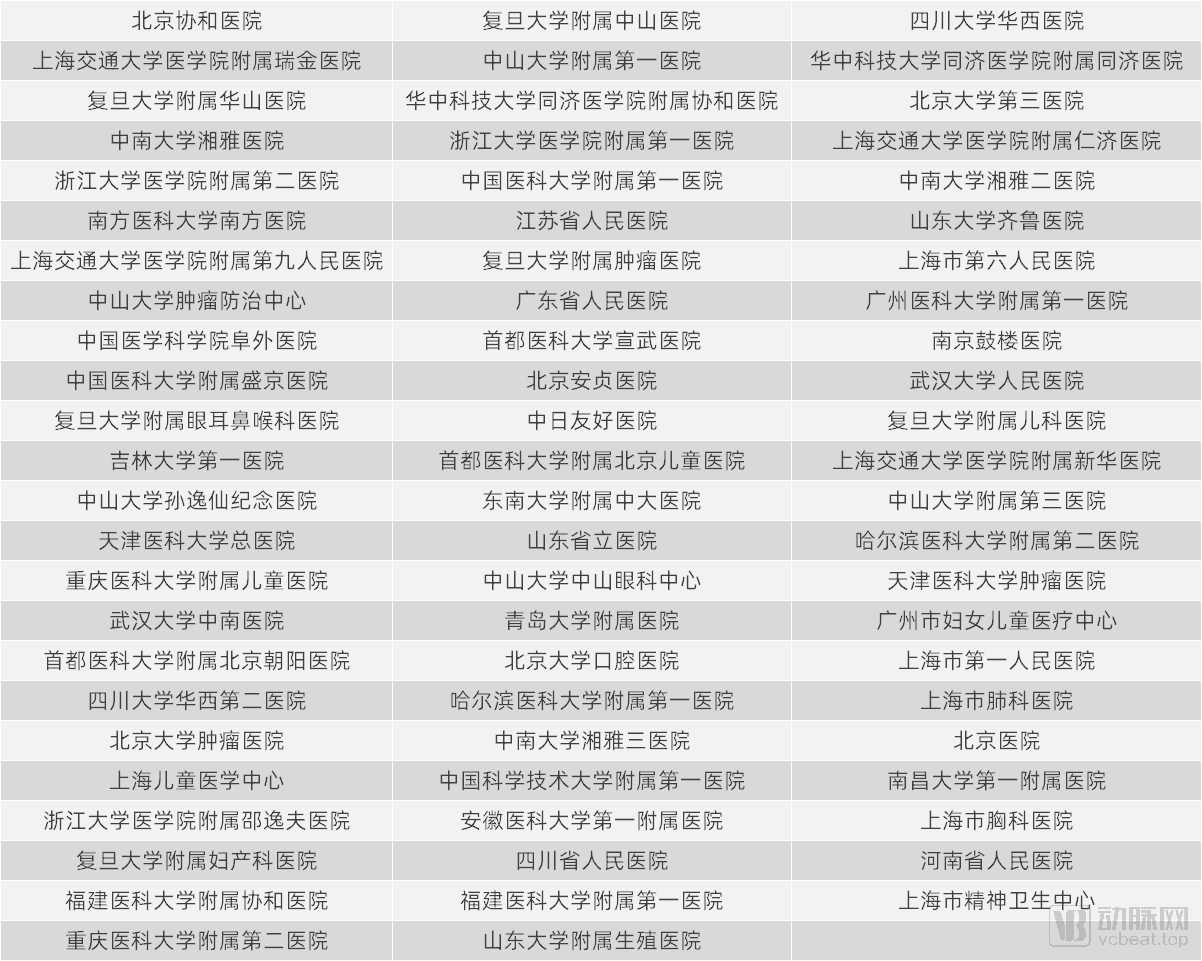
Top 100 Hospitals Offering Internet Hospital or Online Medical Consultation Services, Source: Public Information, Graphic by VCBeat
As of the end of December 2020, 71 of the top 100 hospitals in China (according to the Fudan University Hospital Rankings) had launched internet hospitals or online diagnosis and treatment services.
For example, Peking Union Medical College Hospital launched online consultations in February 2020 and initiated internet-based medical services in May. By October 31, it had completed 130,000 online consultations, with online diagnosis and treatment services provided to 9,213 patients. Notably, after the Department of Clinical Nutrition went online in August, it gradually transferred all patients from its offline Peripherally Inserted Central Catheter (PICC) catheter clinic to the online platform, completely discontinuing the offline outpatient units.
Huashan Hospital, affiliated with Fudan University, launched its internet hospital in February 2020. By March 2, it had completed the development of its information systems and integrated with medical insurance payment interfaces, becoming the first tertiary general internet hospital in Shanghai to enable online medical insurance payments. As a result, patients who have visited Huashan Hospital within the past three months and meet the diagnostic criteria for chronic diseases can obtain follow-up consultations and prescription refills online. Ten months after its launch, the internet hospital recorded 16,000 patient visits.
For top-tier hospitals, internet hospitals not only provide patients with more convenient services but also enable triage and patient分流 (diversion), facilitating the efficient allocation of medical resources and fully leveraging their own advantageous resources.
Primary Healthcare Institutions Keep Pace
During the pandemic, primary healthcare institutions in cities such as Hangzhou and Wenzhou launched online consultation services, allowing enrolled patients to receive medical insurance reimbursement for follow-up visits conducted remotely.
In April 2020, the Pengpu Xincun Community Health Service Center in Jing’an District, Shanghai, launched the first community-based internet hospital in the city. With a wide service coverage and a solid foundation in health informatics, the internet hospital was built on the Jing’an District Government’s information platform, offering online follow-up consultations and home medication delivery services.
Primary healthcare institutions face constraints in outpatient volume, informatization levels, and funding when conducting internet-based diagnosis and treatment. Consequently, they primarily integrate with regional platforms, as the feasibility and necessity of building independent platforms are low. Primary healthcare institutions across China play a crucial role in tiered diagnosis and treatment systems and public health services. Exploring how internet-based solutions can reinforce the role of primary care in basic medical services is a direction worthy of exploration.
VCBeat previously proposed the “Impossible Triangle of Healthcare” model to analyze innovation in the healthcare sector. This model posits that within a closed system, expanding access to services, improving the quality of medical care, and reducing the growth rate of healthcare costs are inherently contradictory. These three objectives cannot achieve equilibrium within the same dimension; achieving balance requires introducing new incremental resources from outside the system.
So, can internet hospitals become a new source of incremental growth for the public healthcare system, delivering benefits in three key areas? In this article, we will illustrate this through data and case studies.
Increased Service Channels, Yet Low Utilization Rate
Internet hospitals typically use mobile apps, mini-programs, and WeChat official accounts as entry points. Compared with traditional face-to-face service delivery, this approach clearly expands patients’ access to healthcare services. Moreover, some hospitals have enabled mobile consultation features for physicians, allowing them to communicate with patients during fragmented time slots, thereby also increasing the channels through which doctors can deliver services.
Through new channels, internet hospitals have provided patients with a wide range of medical services.
In Wuhan, internet hospitals have played a particularly crucial role. Following the outbreak of the epidemic, Wuhan No. 1 Hospital accelerated the development of its internet hospital platform. As epidemic prevention and control measures became routine, the volume of online consultations has maintained a steady upward trend. As of December 4, the internet hospital of Wuhan No. 1 Hospital had established 39 online departments and onboarded 656 physicians. The total number of online consultations reached 62,761, with 22,062 prescriptions issued and 17,951 medication deliveries completed.
Due to the specialized nature of its patient conditions and high follow-up visit rates, Peking University Cancer Hospital has seen rapid development in its internet-based medical services. In July 2020, the hospital officially launched its online consultation platform. By January 8, 2021, a total of 185 physicians from 31 departments were providing online services. The daily volume of internet-based consultations peaked at 423 visits, accounting for up to 30% of the hospital’s total outpatient volume. Within six months, the hospital completed over 41,886 online follow-up consultations, issued 13,538 prescriptions, 59,832 laboratory test orders, and 50,493 diagnostic imaging orders, generating RMB 60.12 million in revenue from internet-based medical services.
It can be seen that, compared with offline outpatient services, internet medical services have played a relatively important role, even partially replacing them.
Certainly, the range of scenarios that individuals can exhibit is limited. We have also compiled the overall service volumes for certain regions.
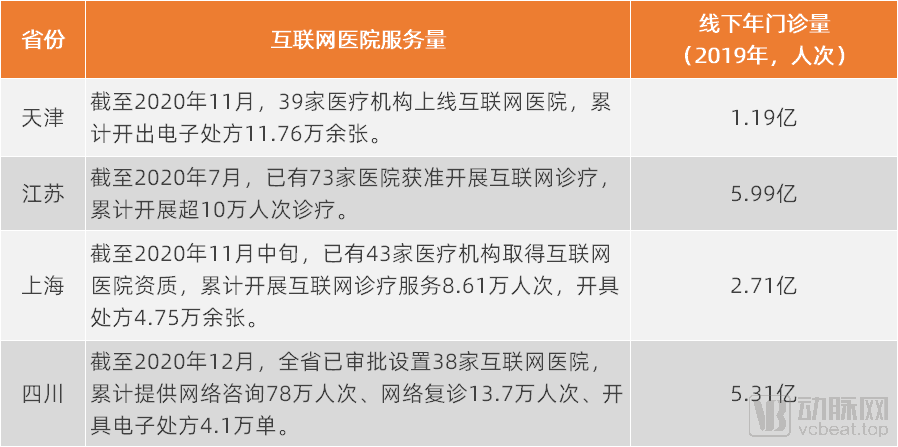
Volume of Online and Offline Services in Multiple Regions, Source: CNR, China Health Statistics Yearbook 2020, Chart by VCBeat
As shown in the table above, the volume of internet-based medical consultations in each province ranges from tens of thousands to over one hundred thousand visits, with follow-up prescriptions also numbering between tens of thousands and more than one hundred thousand. From a macro perspective, the service volume of internet hospitals across various regions remains relatively small compared to the hundreds of millions of annual offline outpatient and emergency department visits.
Gao Jiechun, Director of the Institute of Hospital Management at Fudan University, stated in a media interview that two types of medical consultations can be conducted online. The first involves prescription refills for patients with chronic conditions, such as those requiring monthly medication pickups. These patients account for approximately 30% of outpatient visits at large hospitals. The second category comprises patients who have completed diagnostic tests following an initial consultation and need to review the results with their physician. Since the initial history-taking and examination have already been performed during the first visit, the subsequent review of test reports and prescription issuance can be handled online. Together, these two patient groups represent nearly 40% of the daily service volume at most public hospitals.
If measured by the aforementioned ratio, although internet hospitals opened up an increasing number of new channels in 2020, the utilization rate of these new channels remained just the tip of the iceberg.
Increased Information Transparency Drives Improvement in Healthcare Service Quality
For common diseases and follow-up visits for chronic conditions, internet hospitals replicate offline clinical pathways online, maintaining a consistent standard of care with offline services. From a broader perspective, the quality of medical services can be enhanced through digital transformation.
In the healthcare services market, information asymmetry exists among multiple stakeholders, most typically manifested in three key relationships.
First, there is information asymmetry between the supply and demand sides. Patients lack professional medical knowledge and find it difficult to accurately determine which treatments they need. In contrast, healthcare institutions possess specialized expertise and are able to determine the quantity and quality of medical services provided.
Secondly, there is information asymmetry between the demand side and the financing institutions. Within the scope of this analysis, financing institutions primarily refer to medical insurance authorities. In this relationship, although patients are aware of their own disease symptoms, they face uncertainty regarding treatment. With the support of medical insurance, they may opt for excessive services, leading to the medical insurance system bearing costs that exceed normal levels.
Finally, information asymmetry between providers and regulators. In offline settings, the entire process of medical service delivery is not recorded in real time but is primarily retained in the form of medical records, which may result in missing information. Consequently, regulatory authorities may be unable to obtain authentic and comprehensive information during oversight.
The expansion of the scope of internet hospital construction can effectively improve the aforementioned information asymmetry.
For instance, internet hospitals display information such as physicians’ areas of clinical expertise, patient consultation volumes, and patient reviews, with some even equipped with AI-powered triage functions. When seeking medical care, patients can make informed decisions about physician selection by comprehensively evaluating this information. Greater transparency of information between supply and demand sides not only incentivizes individual physicians to improve the quality of medical services but also encourages healthcare institutions to place greater emphasis on optimizing service workflows, thereby enhancing their reputation among patients.
Regarding the latter two types of relationships, in 2020, new medical insurance regulations stipulated six basic conditions for the reimbursement of internet-based diagnosis and treatment expenses, emphasizing real-name patient verification, full traceability of the diagnostic and treatment process, and data exchange with the medical insurance information system. The new regulations also require that medical insurance handling agencies comprehensively leverage technologies such as big data and the internet, and employ intelligent medical insurance audit and monitoring systems to conduct real-time supervision of settlement details for “Internet+” medical services, including drugs, consumables, medical service items, and outpatient medical records.
Furthermore, as of October 2020, 30 provinces across China had established provincial-level regulatory platforms for internet medical services. Connecting to these platforms, uploading data, and accepting real-time supervision by health administrative authorities have become one of the basic requirements for the operation of internet hospitals.
The internet’s ability to transcend spatial barriers makes real-time regulation possible. By leveraging technological means to achieve comprehensive recording and full traceability, post-event oversight can access complete and authentic information. This significantly enhances information transparency, both between patients and health insurance authorities, and between healthcare institutions and regulatory bodies. Improved information flow among all stakeholders leaves no room for irregular diagnostic and treatment practices, ultimately promoting the enhancement of healthcare service quality.
Patient Costs Decrease, While Changes in Hospital Costs Remain to Be Verified
This article examines healthcare costs from two perspectives: the costs incurred by hospitals and those borne by patients. At the current stage of internet hospital development, their impact on reducing patient costs is significant, while the reduction in hospital costs is not yet apparent.
The reduction in patient costs is highly intuitive. Since patients can undergo follow-up consultations via the internet, their time and transportation costs are nearly zero. This is particularly beneficial for patients seeking medical care outside their local area, who would otherwise need to spend several days traveling by plane or train and staying in hotels. Under conditions that permit online follow-up consultations, these expenses are entirely eliminated.
In a research project, Fujian Provincial Government Hospital conducted a comparative study on the diagnosis and treatment costs of public internet hospitals based on value chain theory. The study analyzed the transportation and time costs borne by chronic hypertension patients and their caregivers in addition to medical expenses for both online and offline consultations, as well as differences such as increased medication delivery fees for online visits. A comprehensive comparison showed that each online consultation at an internet hospital could save 91.6 yuan compared to offline visits.
Regarding hospital costs, during the initial phase of building internet diagnosis and treatment services, the primary expenditures incurred by hospitals include information system development and human resource investment. Among these, information system development is the most significant and direct cost. VCBeat compiled statistics on 37 winning bids related to internet hospitals published on the China Bidding and Procurement Network since 2020. The bid amounts ranged from hundreds of thousands to millions of yuan, with an average amount of 2.38 million yuan.
In terms of revenue for internet hospitals, fees for online follow-up consultations include consultation fees and medication costs. Regardless of the level of medical personnel providing the follow-up care, charges are based on the pricing standards for general outpatient consultation services, and medication costs remain unchanged regardless of whether the visit is conducted online or offline. In other words, revenue from online follow-up consultations is equal to or less than that from offline follow-ups. When comparing overall inputs and outputs, the operational costs of internet hospitals in the early stages actually increase rather than decrease.
Looking further ahead, the widespread implementation of either Diagnosis-Related Groups (DRG) or Big Data Diagnosis-Intervention Packet (DIP) will require hospitals to strictly control inpatient costs while balancing cost containment with medical quality. In light of this trend, shifting certain previously in-hospital processes to pre-admission and post-discharge phases can optimally achieve a balance between cost control and quality assurance. Pre-admission, internet hospitals can facilitate precise triage and preoperative guidance; post-discharge, they can provide continuous patient management and even offer “Internet Plus Nursing” services.
Therefore, internet hospitals can achieve full synergy with offline services, and under effective and scalable operations, they can drive long-term cost reductions.
Where Will Public Internet Hospitals Head After the Concentrated Construction Efforts in 2020? Heng Fanxiu, Director of the Information Department at Peking University Cancer Hospital, believes that 2021 will be a year for the continued implementation of internet healthcare policies. If 2020 was the year for system construction across major hospitals, then 2021 is the period for consolidating and strengthening services.
With the established platform as a foundation, public internet hospitals are poised to achieve improvements in both scale and quality.
Health Insurance Informatization Drives Growth in Internet Service Volume
Reimbursement through medical insurance has long been considered a bottleneck hindering patients’ adoption of internet-based healthcare services. In 2020, the implementation of medical insurance reimbursement policies accelerated; however, information systems still require further improvement in the specific settlement processes.
Taking Beijing as an example, although more than 20 hospitals had their internet-based diagnosis and treatment services covered by medical insurance in 2020, the inability to process card-free settlements meant that some insured patients using online follow-up consultations still needed to visit hospitals for reimbursement.
The electronic medical insurance certificate, developed based on the national unified medical insurance information platform, can effectively remove barriers in the settlement process. As of November 2020, the electronic medical insurance certificate was available for use in 208 cities across China, at over 30,000 designated medical institutions and 70,000 designated retail pharmacies.
Recently, the electronic medical insurance certificate has seen intensified promotion through channels such as official WeChat accounts of hospitals and pharmacies across various regions, with nationwide implementation expected by the end of 2021. Beijing also activated the electronic medical insurance certificate on January 1, 2021, enabling online reimbursement for internet-based follow-up consultations.
The electronic medical insurance certificate not only enables the widespread implementation of cardless payments but also lays the foundation for future payment settlements in cross-regional internet-based healthcare services.
“Internet-based medical services will inevitably evolve toward greater convenience, and patients’ usage habits will continue to strengthen,” said Heng Fanxiu. He noted that the resulting surge in data volume will pose a significant test for hospital information systems, cybersecurity systems, health regulatory systems, and medical insurance payment systems.
Diversification of Service Types and Levels
Health insurance policies have imposed price caps on routine internet-based medical services provided by public hospitals, which has dampened institutional enthusiasm to some extent. In practice, special-needs medical care can also be offered as a supplementary option.
The National Healthcare Security Administration’s “Guiding Opinions on Improving the Pricing of ‘Internet Plus’ Medical Services and Health Insurance Payment Policies” proposes that “Internet Plus” medical services primarily catering to personalized and high-level demands, as well as those provided to overseas markets, shall comply with requirements for controlling the scale of special-needs medical services and adhere to market-regulated pricing policies.
Public hospitals may provide medical services characterized by relatively robust market competition and strong demand for personalized care, with prices determined by market mechanisms. For instance, the Sichuan Provincial People’s Hospital has launched a special-needs online outpatient clinic, building upon its standard internet-based follow-up consultation services. These special-needs clinics are staffed by specialist physicians, and their consultation fees, which have been filed with the relevant authorities, are higher than those for routine follow-up visits. This initiative not only addresses patients’ multi-tiered healthcare needs but also better incentivizes physicians.
Furthermore, personalized service packages developed through hospital-enterprise collaborations can serve the same purpose. This indicates that for public internet hospitals to balance their public welfare mandate with financial sustainability, offering diversified and multi-tiered services is a preferable solution.
Internet Hospitals Are Key to Hospital Influence
As information becomes more transparent among various stakeholders, internet hospitals will play a significant role in shaping hospital brands and influence. In the past, geographic location was one of the factors patients considered when choosing a hospital; however, the internet has broken down spatial barriers, diminishing the role of geographic location in patients’ decision-making processes.
Lu Yongtao, President of Shandong Provincial Third Hospital, stated in an interview with VCBeat that internet hospitals will become a competitive tool for public hospitals in the future; the more innovative initiatives currently deployed, the greater the opportunities ahead.
Of course, the development of public internet hospitals is not entirely independent; various needs emerge during this process that must be addressed by digital health enterprises. As mentioned in the aforementioned trends, how can systems withstand the test as data volumes surge? How can special-needs and personalized services maximize both social and economic benefits? How can hospital brand influence be enhanced? These are all areas where industry integration can play a role. We will also release an annual review of the digital healthcare sector, examining changes and trends in how enterprises serve hospitals and patients.