

Chronic Disease Management Accelerates in 2020: Baidu and JD Enter the Market, User Base Grows Exponentially
Unlike physical clinics in sectors such as medical aesthetics and dentistry, which are struggling to survive,The chronic disease management industry experienced a major boom in 2020.
First, the chronic disease management platform witnessed a substantial surge in its user base due to the impact of the COVID-19 pandemic. During the outbreak, offline medical visits posed risks of cross-infection and were often hindered, making services provided by chronic disease management platforms—such as epidemic prevention education, online consultations, psychological counseling, follow-up visits for chronic conditions, and medication delivery—highly popular. According to data released by the National Health Commission in March, the volume of internet-based diagnosis and treatment at hospitals under its administration increased 17-fold year-on-year during the pandemic, while consultation volumes on some well-known internet healthcare platforms grew more than 20-fold. Objectively speaking, the COVID-19 pandemic accelerated market education and habit formation for the digital management of chronic diseases.It is expected that internet platforms and chronic disease management platforms will become the preferred choice for users to address common and chronic diseases.
Second, government endorsement has accelerated the development of online chronic disease management. During the pandemic, government agencies frequently issued policies to encourage residents to adopt “Internet + Healthcare” services. In February, the National Health Commission encouraged medical institutions across various regions to launch online services to provide urgent support for epidemic prevention and control. In March, the National Healthcare Security Administration included internet-based healthcare services in the national medical insurance scheme, addressing the need for prescription renewals among patients with chronic diseases. In June, the National Health Commission called for the promotion of best practices from online services implemented during the pandemic to support normalized epidemic prevention and control efforts.Policies rolled out successively indicate that “Internet + Healthcare” is not merely a temporary measure during the pandemic; its role as a standard, ongoing component will be increasingly emphasized in the future.
Third, the market has surged, with over 900 internet hospitals established across China. To date, the telemedicine collaboration network has covered more than 24,000 medical institutions in all prefecture-level cities, and over 5,500 hospitals at Level II and above provide online services.Data indicate that residents have highly convenient access to internet-based medical services.
Fourth, supported by policy initiatives, internet healthcare platforms have streamlined the entire online process for chronic disease management. In 2019, the National Healthcare Security Administration issued documents clarifying the principles for including internet-based medical services in health insurance reimbursement. In 2020, online health insurance payment mechanisms began to be implemented: “Internet + Medical Services” were incorporated into the health insurance coverage, and numerous internet hospitals enabled online health insurance payment functions.Ultimately, the chronic disease management platform has integrated the payment process, achieving a closed-loop workflow that encompasses online consultations, follow-up visits for chronic conditions, online medication purchases, and drug delivery.
Fifth, as the sector approaches a tipping point, giants such as Baidu and JD.com are entering the chronic disease management market. In 2020, Baidu Health launched products including an online consultation service platform, a Diabetes Center, and the Baidu Health Medical Encyclopedia, thereby creating a new ecosystem for internet healthcare. Meanwhile, JD Health established an internet hospital, set up centers for Traditional Chinese Medicine, Respiratory Care, and General Practice, and introduced family doctor services to deepen its engagement in internet-based medical services.With the resource backing of internet giants, online chronic disease management is ushering in a new wave of opportunities.
Driven by the aforementioned favorable factors, the chronic disease management industry is experiencing rapid expansion. Moving forward, how can companies in this sector enhance operational efficiency? How can they improve patient adherence? How can they achieve profitability? Should they pivot toward serious medical care or lean toward lightweight medical services? These are challenges that chronic disease management enterprises must address one by one.
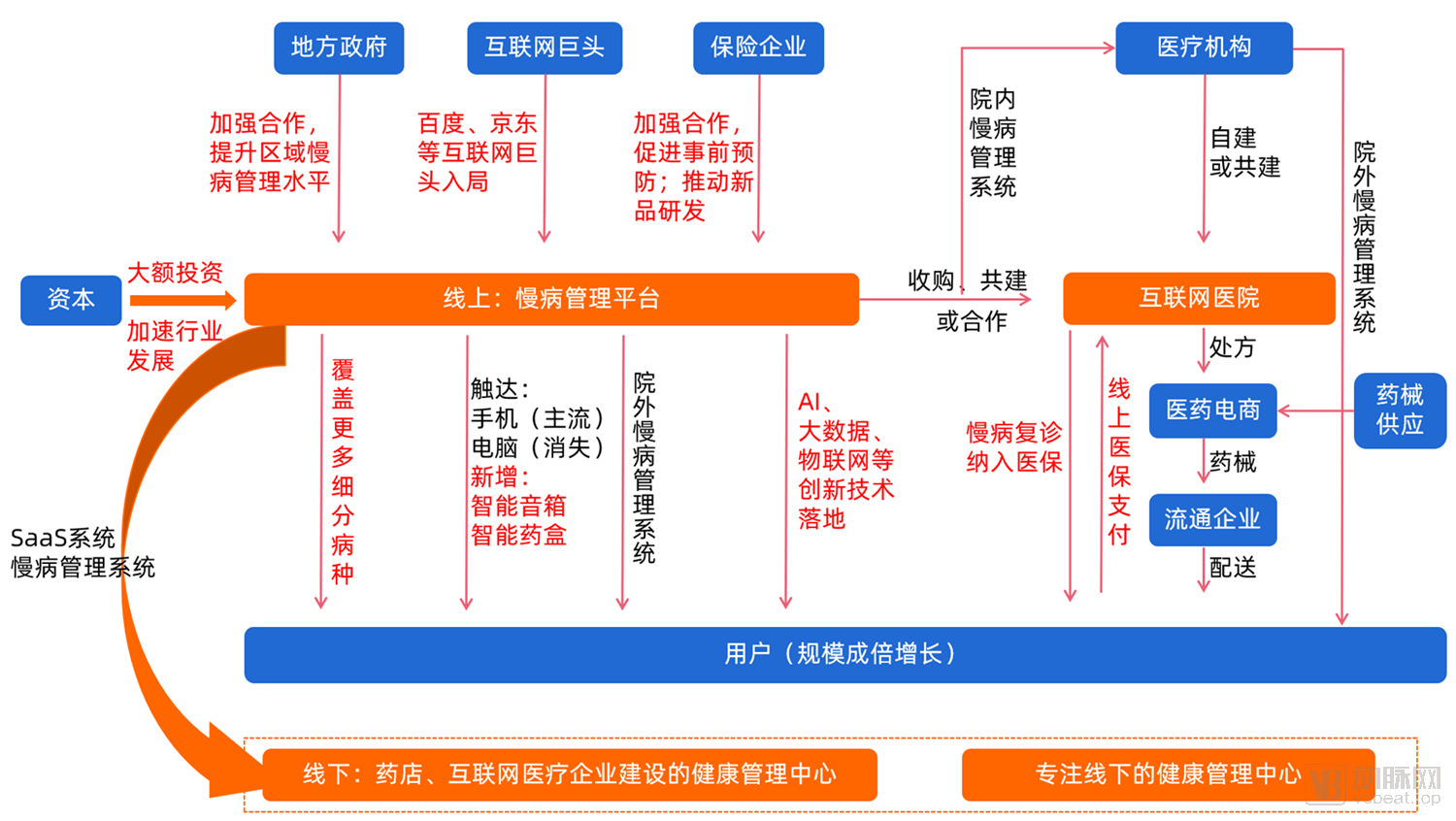
New Changes in the Chronic Disease Management Industry in 2020 (Note: Red text indicates new changes)
Looking back at 2020, partial answers to these questions may be found in the new trends within the chronic disease management industry. This article will explore the changes in the field of chronic disease management in 2020 from the perspectives of specific disease categories, relevant policies, new user acquisition, business standards, and new technologies and scenarios.
Core Views:
1. Multiple large-scale financing rounds have occurred, intensifying industry competition;
2. Chronic disease management platforms are expanding their coverage to include more specialized disease categories, enabling companies to strengthen their professional barriers and core competitiveness;
3. Implementation of online medical insurance payments creates development opportunities for internet-based chronic disease management;
4. Internet healthcare platforms leveraged their advantageous resources to support epidemic prevention and control efforts, resulting in a multiple-fold increase in new users;
5. Standardization of online chronic disease management, gradually penetrating into serious medical care;
6. Enhance management efficiency and patient compliance through innovative technologies and scenarios.
In 2020, there were 12 financing events in the field of chronic disease management. Among them, Zhiyun Health secured a cumulative RMB 1 billion in Series C+ and D funding, marking the largest financing deal in this sector for that year.
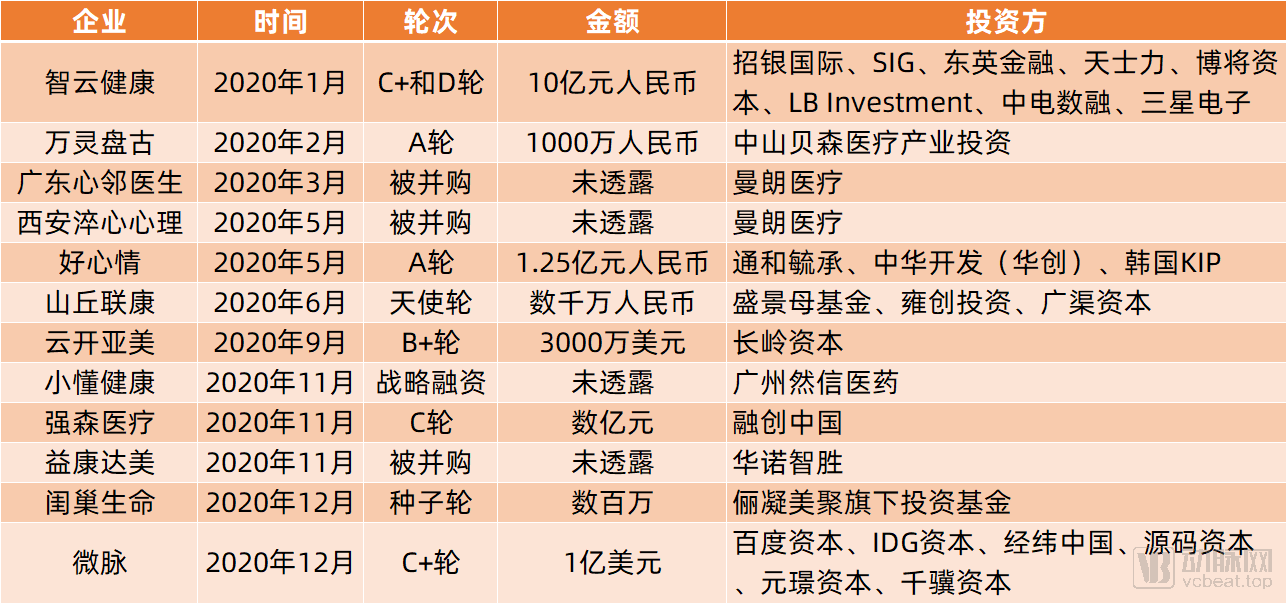
(Data source: VCBeat Orange Database)
An analysis of financing and M&A activities in 2020 clearly reveals that the chronic disease management sector is characterized by later-stage funding rounds and predominantly large-scale investments. For instance, Johnson Medical, Weimai, and Zhiyun Health all secured Series C or D financing, with each deal exceeding RMB 100 million. This trend suggests that the chronic disease management sector is entering its latter half, where competition among enterprises is likely to intensify.
In addition, several companies that have completed early-stage financing are primarily focused on specific disease niches, having already established viable business models and built professional competitive barriers. For instance, Haoxinqing specializes in the field of mental health, providing rehabilitation management and online medical services to users with psychiatric and psychological disorders. Shanqiu Liankang focuses on diabetes, leveraging big data and AI algorithms to deliver health management solutions for patients with metabolic diseases, predominantly those with type 2 diabetes. Guichao Life is dedicated to women’s health, mainly offering services centered around common gynecological conditions and the three major female cancers.Huanuo Zhisheng and Yikang Damei Complete Merger, Establishing a Development Pathway from Diabetes Care to Weight Management.
It is foreseeable that early-stage financing in the field of chronic disease management will focus on companies that specialize in specific disease segments and have established certain barriers to entry.
Notably, in 2020, Manlang Medical, an “overseas powerhouse,” began entering the Chinese market. With 14 specialized psychiatric and psychological hospitals in Australia, Manlang Medical has accumulated over 40 years of professional service experience and established a mature, comprehensive multidisciplinary evidence-based diagnosis and treatment system. The company formally entered the Chinese market in March 2020 by acquiring Guangdong Xinlin Doctor, a private psychological healthcare institution.
According to available information, Manlang Medical plans to introduce its mature mental health treatment system and model into China, implementing a “mergers and acquisitions + organic growth” development strategy. It aims to provide personalized, comprehensive care for patients with depression, anxiety, perinatal mood disorders, attention deficits in children and adolescents, sleep disorders, and other conditions.
In 2020, chronic disease management companies expanded their coverage to include more specialized conditions and served a larger number of patients with chronic diseases.
For example,Yunkai YameiIts vertical disease-specific pipeline already covers rheumatology and orthopedics, neurology, and oncology, with future expansion planned into reproductive medicine.
MedLinker Chronic Disease Management PlatformThe coverage has expanded from its initial focus on liver disease to include multiple therapeutic areas such as cardiovascular diseases, diabetes, respiratory conditions and asthma, oncology, chronic kidney disease, HIV, pediatrics, gynecology, general practice, traditional Chinese medicine (TCM), and mental health. From a strategic entry point perspective, Medlinker initiated chronic disease management by engaging physicians, gradually capturing market share through its stable doctor-patient relationship network. Specifically, after offline consultations between doctors and patients, Medlinker establishes a binding connection between them, enabling the assigned physicians to provide ongoing medical services for chronic disease follow-up care.
Compared to YiLian,JD HealthA late entrant, yet making a forceful impact. After jointly establishing the Cardiology Center with Professor Hu Dayi, JD Health accelerated its entry into the health management sector by intensively launching specialized centers and chronic disease management hubs: In April 2020, it launched the Diabetes Center; in May, it entered into a strategic partnership with Allergan, focusing on the prevention and treatment of ophthalmic diseases; in June, it established the Otolaryngology Center and the Traditional Chinese Medicine Center; in August, it founded the Stomatology Center and introduced family doctor services; in September, it set up the Respiratory Center and the General Practice Center; and in November, it reached a strategic cooperation agreement with AstraZeneca to co-create innovative patient services and chronic disease management solutions... To date, JD Health has collaborated with leading experts to establish 16 specialized centers.
JD Health’s Aggressive Entry into Health Management Demonstrates Strong Breakthrough Capabilities. A fundamental principle is that enterprises unable to achieve long-term profitability cannot sustain themselves. Currently, the profit model for internet medical services remains unclear, making it a common challenge to realize “industry development driven by corporate profitability.”
JD Health has offered a replicable solution: by enhancing user experience and cultivating habits of personal health management, it increases user stickiness, ultimately guiding users to purchase health-related products—such as weight-loss meals, hyaluronic acid, bird’s nest, and dietary supplements—under the guidance of health managers. In this way, users enjoy healthier lifestyles through health management; physicians generate income by advising users on appropriate product purchases; and JD Health realizes profits from increased sales volume, achieving a win-win outcome for all three parties. Furthermore, under effective health management, the likelihood of minor ailments progressing into severe or critical conditions is reduced, which may also lead to a substantial decrease in medical insurance expenditures.
In terms of specific disease categories,Baidu HealthLaunched in July 2020, the Diabetes Center was established to create a specialized internet hospital. Baidu Health has aggregated hundreds of authoritative endocrinology experts and partnered with Tangyouyun Health to build an integrated doctor-patient service platform. This platform provides patients with online consultation services and equips doctors with professional tools such as text-and-image messaging, video consultations, and monitoring capabilities, enabling physicians to track patients’ conditions remotely. In terms of online consultations, in addition to doctors directly affiliated with Baidu Health, online consultation products from platforms such as Ping An Good Doctor, Haodf Online, and JD Health have all been integrated into the Baidu Health Ask-a-Doctor platform.
Unlike JD Health’s development trajectory, Baidu Health has built a content ecosystem through Baidu Health Medical Encyclopedia and a service ecosystem through Baidu Health Ask-a-Doctor. By leveraging this dual-ecosystem strategy of “content + services,” Baidu Health channels high-frequency content searches into medical service conversions. Under this strategic framework, the integration of content and services has enabled Baidu Health to carve out a differentiated growth path. Currently, Baidu Health offers a comprehensive suite of medical services, including online consultations, medication delivery with appointment scheduling, hospital registration appointments, psychological counseling, and health insurance.
Established chronic disease management companies such as Tanghushi, Zhiyun Health, and Yuanxin Technology also achieved major breakthroughs in 2020. The diabetes chronic disease management company founded in 2013Sugar NurseIn July 2020, the SPUG Blood Glucose and Uric Acid Meter was launched. This device enables simultaneous measurement of blood glucose and uric acid levels, facilitating comprehensive management for patients with both diabetes and gout. Drawing on the experience of the overseas company Vida, “Among diabetic patients, many suffer from comorbidities (such as diabetes with depression), making it difficult to meet patient needs with a single diabetes management approach.” Therefore, Tang Hushi’s SPUG Blood Glucose and Uric Acid Meter provides significant benefits to numerous patients with diabetic comorbidities. Furthermore, the Tang Hushi software has added uric acid monitoring options and professional knowledge resources, such as guidelines for gout prevention and uric acid control, thereby helping patients with both diabetes and gout achieve better self-management. Perhaps Tang Hushi will expand its focus toward managing diabetes comorbidities in the future.
Similar to Sinocare, Tang Hushi (Sugar Nurse) also enters the field of chronic diabetes management through smart hardware. The difference lies in that Sinocare is evolving from a popularizer of blood glucose meters to a diabetes management expert, while Tang Hushi leverages its smart hardware products to acquire more patient data for developing more precise management plans. Additionally, Sinocare has built an integrated diabetes management solution covering both in-hospital and out-of-hospital settings, whereas Tang Hushi focuses exclusively on out-of-hospital diabetes management.
Established in 2014,Zhiyun Health, after five years of exploration, a suitable chronic disease management model was finally developed and implemented. In 2020, Zhiyun Health began to vigorously promote its innovative model, rapidly expanding its novel chronic disease management approach across China through city partners. According to publicly available corporate information, as of September 1, Zhiyun Health had signed city partners in 46 cities across 23 provinces nationwide.
From its entry point, Zhiyun Health has entered the chronic disease management sector through its independently developed hospital SaaS system, pharmacy SaaS system, and internet hospital platform. By aggregating medical B-side stakeholders—including hospitals, pharmaceutical companies, insurers, and pharmacies—it provides patients with integrated chronic disease management services.
Established in 2015,Yuanxin TechnologyBy fully integrating medical services, pharmaceutical care services, and insurance services, we have currently connected the physician, patient, medication, and insurance sectors, thereby establishing a “Medical-Patient-Pharmaceutical-Insurance” service ecosystem.
In addition, mental health garnered significant attention in 2020. According to a previously published article by VCBeat, the digital mental health sector witnessed 51 financing events in 2020, with total funding reaching $1.048 billion, a year-on-year increase of 76%. Benefiting from strong national emphasis, terms such as “psychological intervention,” “psychological assistance,” and “mental health services” became buzzwords of the year. Online counseling services offered by platforms like Yi Xinli and Yi Dian Ling have gradually gained user recognition. Unlike chronic disease management areas such as diabetes and hypertension management, the mental health sector demonstrates stronger user willingness to pay. Consequently, related companies primarily target the consumer (C-end) market, while some are also developing in-hospital mental health systems. In terms of business models, some companies focus on offline physical stores, whereas others have migrated mental health services online, delivering care via telephone, video, and text-based communications.
Overall, chronic disease management has expanded from its initial focus on diabetes and hypertension to encompass a broader range of specialized conditions, including orthopedics, dermatology, stroke, and mental health.
In 2020, policies for chronic disease management also achieved a breakthrough.
On August 30, 2019, the National Healthcare Security Administration issued the “Guiding Opinions on Improving Price and Medical Insurance Payment Policies for ‘Internet Plus’ Medical Services,” clarifying the overarching principles for including internet-based medical services in medical insurance coverage.In 2020, in response to the needs of epidemic prevention and control, the National Health Commission, the National Healthcare Security Administration, and other departments intensively issued a series of policies to vigorously promote the development of internet-based healthcare.
In March 2020, the National Healthcare Security Administration and the National Health Commission issued the Guiding Opinions on Promoting “Internet+” Medical Insurance Services During the Prevention and Control of COVID-19, incorporating eligible fees for “Internet+” medical services into the scope of medical insurance reimbursement to enhance residents’ willingness to utilize internet-based healthcare. In November 2020, the National Healthcare Security Administration released the Guiding Opinions on Actively Advancing the Reimbursement of “Internet+” Medical Services through Medical Insurance, marking the entry of internet-based healthcare into the practical implementation phase of medical insurance coverage.
Driven by supportive policies, China has established more than 900 internet hospitals. The telemedicine collaboration network now covers over 24,000 medical institutions across all prefecture-level cities, with more than 5,500 hospitals at the secondary level or above providing online services. Influenced by policy incentives and the trends toward digitalization and smart healthcare, the number of internet hospitals is experiencing accelerated growth.
Furthermore, with the implementation of online medical insurance payments, internet healthcare companies have leveraged internet hospitals to integrate the entire process, including online consultations, follow-up visits for chronic diseases, online medication purchases, medical insurance payments, and drug delivery. For example, on February 28, 2020, under the guidance of the Chengdu Medical Insurance Bureau, Medlinker pioneered the integration of an online payment channel using personal medical insurance accounts at the Chengdu High-Tech Haiersen Internet Hospital. This enabled local patients to access services such as online consultations and medication purchases, real-time payment via their personal medical insurance accounts, and home delivery of medications—all without leaving their homes.
It can be foreseen that,With the inclusion of internet-based follow-up consultations for chronic diseases in medical insurance coverage and the reimbursement of online medication purchases, an increasing number of patients with chronic conditions will utilize chronic disease management platforms for follow-up care and ongoing management. Meanwhile, the habitual nature and convenience of online shopping will significantly stimulate patients’ desire to purchase medications online.
Notably, in 2020, insurance companies deepened their involvement in health management (particularly chronic disease management), thereby driving industry development. For instance, the “Huimin Bao” supplementary medical insurance schemes, which rolled out in over 50 cities across China in 2020, concurrently provided health management services such as intelligent health consultations, disease risk assessments, and delivery of medications for chronic conditions. Similarly, the CPIC·Canada Health Management Centers, underwritten by China Pacific Insurance Company, successively opened in Hangzhou and Zhengzhou in January 2020, further supporting health management for insurance customers.
As insurance companies deepen their involvement in health management (chronic disease management), users (patients) will achieve a higher level of prevention against major diseases, insurance companies will reduce claims risk, and health management (chronic disease management) companies will find new payers, resulting in a win-win situation for all parties.
Li Bin, Deputy Director of the National Health Commission, stated at a press conference on December 23: “During the epidemic prevention and control period, ‘Internet + Healthcare’ provided the public with a range of services, including pandemic-related health education, online consultations, psychological counseling, remote consultations, follow-up visits for chronic diseases, and medication delivery. These measures effectively prevented crowd gatherings, reduced the risk of offline infection, and ensured that the public’s healthcare needs were met.”
During the epidemic prevention and control period, platforms including Alibaba Health, JD Health, Ping An Good Doctor, Medlinker, WeDoctor, Tencent WeChat, Dingxiangyuan, 111.com, and Haodaifu all launched online consultation services, providing free medical consultations and advisory services to users.
Meanwhile, internet healthcare platforms have also leveraged their respective strengths to support epidemic prevention and control efforts and serve users. For example, chronic disease management platformsMedLinkLeveraging its physician resources and chronic disease management capabilities, and in collaboration with the People's Daily Health Client and Health Times, it has launched a national chronic disease assistance channel to address challenges such as consultations and prescription refills for chronic conditions, providing patients with services including online follow-up visits, home medication delivery, and health management.
Digital Precision Health Management PlatformMiao HealthBy leveraging its advantages in the Internet of Things (IoT) and big data, Miao Health has integrated data from the Healthy Wuhan app, enabling it to support home-based self-testing and remote monitoring. In response to health management needs during the pandemic, Miao Health introduced lifestyle medicine from the Canadian Wellness Institute (CWI) and launched the CWI Training Camp.
Integrated Service Provider for the Out-of-Hospital Supply Chain of Prescription Drugs for Chronic DiseasesAikang HealthLeveraging its supply chain capabilities to serve internet healthcare platforms and patients. During the pandemic, the average daily shipment volume for prescription transfers on internet healthcare platforms exceeded 10,000 orders. Aikang Health ensured timely and safe medication delivery for online patients by relying on its supply chain expertise accumulated over many years.
Psychological Service PlatformYi XinliLeveraging its extensive professional resources, the organization launched a dedicated psychological support hotline to address anxiety and tension caused by the pandemic, released the Psychological Support Manual for COVID-19 and the Online Psychological Assessment for Pandemic Mental Health, and assembled a team of psychological counseling experts. Through authoritative institutions and media outlets such as People’s Daily Online, it disseminated professional and authoritative guidelines for psychological relief.
In addition, Tencent launched a fever clinic map in Guangzhou, allowing users to navigate via mobile phones to the nearest fever clinic; Baidu, in collaboration with the National Clinical Research Center for Infectious Diseases and the State Key Laboratory for Diagnosis and Treatment of Infectious Diseases, released the Self-Check Manual for Novel Pneumonia Protection, providing one-stop authoritative knowledge on epidemic prevention...
In this nationwide campaign, internet healthcare has opened up a “second battlefield,” with various online healthcare platforms contributing significantly, acquiring a large number of new users, and educating the market. According to publicly available data from these companies: during the peak of the pandemic, the Ping An Good Doctor app recorded over 1.11 billion visits; its registered user base grew tenfold compared to pre-pandemic levels, and the average daily number of consultations by new users was nine times higher than before the outbreak; Chunyu Doctor’s online consultation service saw a 15-fold year-on-year increase in traffic during the pandemic; and in the first quarter of 2020, the Alipay Healthcare channel had more than 390 million cumulative unique active users...
Fu Hongqiao, an Assistant Professor at the School of Public Health, Peking University, stated in an interview with VCBeat: “During the pandemic control period, the overall scale and penetration rate of internet healthcare users reached a historic high. Third-party internet healthcare platforms have reached a turning point, and public hospitals are also accelerating the launch of their online medical services. In the long run,”Internet healthcare will differentially influence patients’ healthcare-seeking behaviors depending on regional characteristics. In large and medium-sized cities, particularly those with a high concentration of major hospitals, patients will gradually develop the habit of directly using online consultations, making it their preferred option for managing common and chronic diseases. In smaller cities and rural areas, an increasing number of patients will leverage internet healthcare platforms to access top-tier specialists across China for the diagnosis and treatment of complex and refractory conditions.”
In 2020, a significant shift in the field of chronic disease management was the initiation by enterprises to explore the establishment of relevant standards. For instance, Medlinker embarked on developing standards for internet-based chronic disease management, while Zhiyun Health promoted the creation of industry standards for chronic disease data.
A relevant executive from Medlinker stated, “To date, Medlinker has established comprehensive disciplinary frameworks covering more than 15 medical specialties and over 30 disease types. Under the guidance of experts in various specialties, Medlinker has developed scientific, effective, and standardized protocols for internet-based chronic disease management. In 2020, it launched expert consensus projects on online chronic disease management for multiple specialties, including diabetes, oncology, and nephrology, thereby providing an evidence-based foundation for online chronic disease management.”
In September 2020, the Expert Consensus Project on Standardized Management of Diabetes in Internet Hospitals was launched; in October, the Out-of-Hospital Internet Follow-up Management Project for Cancer Patients was initiated; and in December, the Chronic Kidney Disease Management Center Project was commenced... By collaborating with specialists across various disciplines, Medlinker has introduced standardized management protocols for chronic disease specialties, providing a basis for online chronic disease management. It is foreseeable that these standardized protocols will promote positive industry development and enhance patient satisfaction.
Furthermore, as a chronic disease management platform, Medlinker is increasingly moving toward serious medical care. By collaborating with clinical experts, pharmaceutical companies, medical device manufacturers, scientific laboratories, and multidisciplinary expert associations, Medlinker gains insights into clinical pathways, medication guidelines, and expert consensus for various diseases, ultimately providing patients with scientific, standardized, and normative chronic disease management services.
Unlike Yilian, Zhiyun Health has chosen to start with standardized data to drive efficient and precise chronic disease management. Zhiyun Health stated, “China’s chronic disease management industry lacks regulated, standardized chronic disease data, and the absence of such normalized data significantly undermines the effectiveness of chronic disease management.”
Based on this, Zhiyun Health is actively promoting the establishment of data standards for chronic diseases and has jointly built a big data center for chronic diseases with CEC Data. These efforts aim to address industry-wide challenges such as “data silos” and “non-standardized information,” with the goal of improving hospital diagnosis and treatment efficiency, reducing chronic disease recurrence rates, and lowering medical insurance expenditures.
In 2020, another major change in the field of chronic disease management was that companies explored new scenarios, applied innovative technologies such as AI and big data to chronic disease management, and implemented new management models.
New Scenarios and New Technologies
Prior to and including 2019, the typical pathway for patients with chronic diseases to access chronic disease management services was via personal computers or mobile devices. This posed a significant barrier for elderly individuals who lacked proficiency in using such technologies. Given that the majority of patients with chronic diseases are elderly, facilitating more convenient access to chronic disease management services has become a critical issue.
In 2020, PC-based chronic disease management essentially exited the market. In terms of new scenarios, Alibaba Health, Baidu Smart Healthcare, and JD Health successively launched customized smart speakers to provide health services to users and their families. Compared with traditional PC and mobile platforms, smart speakers can be operated via voice commands, greatly facilitating use by elderly populations. Additionally, in 2020, the “Internet+” smart pillbox model for chronic disease management, developed by Beijing Fuleyun Data Technology Co., Ltd., expanded rapidly. It is now widely applied across 17 provinces and municipalities in China, with full coverage achieved in five of these provinces.
From mobile devices to smart speakers, and from text-based to voice-based interactions, chronic disease management has explored new application scenarios.Smart speakers with voice interaction capabilities offer greater usability for the elderly and are better suited to accommodate the operational habits and health needs of diverse populations. Leveraging AI technology, chronic disease management companies can utilize smart speakers as a new platform to deliver tailored, comprehensive chronic disease management solutions that encompass diet and exercise guidance, medication management, regular monitoring, and follow-up consultations with prescription renewals.
In terms of implementing new technologies, AI and big data have gradually become “standard features.” For instance, Medlinker has established specialized chronic disease departments leveraging artificial intelligence and big data technologies, providing patients with customized chronic disease management services through standardized data such as personal electronic health records and indicator feedback. Miao Health delivers precise health management services to patients by integrating technologies including the Internet of Things (IoT), artificial intelligence, and big data. Leveraging internet, big data, and AI technologies, Weimai collaborates with hospitals to offer services such as outpatient care, online consultations, family doctor programs, home-based medical and nursing care, and full-cycle closed-loop management for specific diseases, thereby enhancing hospital service efficiency.
Overall, the field of chronic disease management is exploring the application of various innovative technologies to improve management efficiency and patient adherence.
New Model
In 2020, the exploration and upgrading of the "online + offline" closed-loop model for chronic disease management.
Previously, Miao Health and the Canadian Wellness Institute (CWI) established a joint venture in China. By combining CWI’s extensive offline clinical expertise with Miao Health’s online health management tools, big data, and artificial intelligence technologies, the partnership provides Chinese users with services such as fitness and exercise, chronic disease rehabilitation, health management, and new retail health solutions. In 2020, offline physical stores jointly launched by Miao Health and CWI began operations in Beijing, Shiyan (Hubei Province), and other locations, creating an “online + offline” closed-loop system for chronic disease management.
In October 2020, Weimai, an internet-based medical and health service platform, opened its self-operated pharmacy offline. Weimai aims to gradually achieve “"Online Consultation + Offline Medication Purchase"synergy, to address the challenges faced by more chronic disease patients in accessing necessary medications and bearing high long-term medication costs. Specifically, Weimai leverages centralized drug procurement, DTP (Direct-to-Patient) services, and platform subsidies to align chronic disease medication prices with the “4+7” centralized procurement price levels, aiming to enable chronic disease patients to purchase reliable medications at lower prices.
In addition to exploring a closed-loop service model that integrates online and offline channels, chronic disease management companies have also partnered with local governments to pilot large-scale chronic disease management programs. In 2019, WeDoctor officially launched its Digital Health Community strategy. By integrating various stakeholders—including local governments, medical insurance agencies, healthcare institutions, elderly care service providers, commercial insurers, and pharmaceutical manufacturers and pharmacies—the WeDoctor Digital Health Community has established a digital healthcare service system that spans both online and offline platforms and facilitates the coordinated interaction of “medical care, pharmaceuticals, medical insurance, and eldercare.” This initiative aims to ultimately enhance regional healthcare standards, improve population health indices, and curb the growth rate of medical insurance expenditures.
In 2020, the Digital Health Community had been implemented in multiple regions, including Tianjin, Longyan in Fujian Province, Tai’an and Dezhou in Shandong Province, Huanggang in Hubei Province, Yinchuan in Ningxia Hui Autonomous Region, and Kedong County in Heilongjiang Province, achieving certain results.
For example,WeDoctorThe chronic disease management model explored in Tai’an, Shandong, provides online and offline follow-up and management services for 250,000 outpatients with major chronic conditions. This initiative has reduced the time required for follow-up visits and medication purchases from the original 2–3 hours to just 10–20 minutes, alleviated approximately 20% of the outpatient pressure on large hospitals, and lowered the average prescription cost per follow-up visit from RMB 550 to RMB 480, thereby effectively reducing medical insurance expenditures for chronic diseases.
Looking Ahead to 2021: Many Companies Establish New Strategies and Plans. In the Field of Chronic Disease Management, Some Companies Plan to Increase Capital Investment.
In November 2020, Medlinker, a chronic disease management platform, announced the establishment of the “Hubei Zhaoyin Medlinker New Medical Industry Investment Fund,” with a total size of RMB 500 million. Key partners include Changjiang Zhaoyin and Wuhan Science & Technology Investment Co., Ltd. According to reports, the newly established investment fund will primarily focus on specialized chronic disease management, targeting high-quality assets in niche sectors such as digital therapeutics, innovative out-of-hospital medical services, intelligent medical devices, and testing and inspection.
In December 2020, Jianke Group unveiled a new strategy: investing RMB 100 million to cultivate 100 branded physicians, and allocating another RMB 100 million toward the digital and intelligent technological applications in chronic disease management. Physicians are central to the chronic disease management process; building branded physician practices will help drive patient engagement through physician leadership. Upgrading hardware and software for chronic disease management will significantly improve patient adherence and satisfaction, thereby helping to attract more users.
In addition to Yilian and Jianke, industry moves suggest that giants such as JD Health, Baidu Health, and AliHealth will also make substantial investments in chronic disease management. The market landscape, innovative technologies, physician tools, and novel models in the field of chronic disease management may undergo significant changes in 2021.