

Innovation Works Files for IPO: Full-Scale Entry into Medical Industry Transformation
Founded by Dr. Kai-Fu Lee in September 2009, Sinovation Ventures has invested in more than 350 projects over the past decade. Historically, its core investment focus has been on consumer sectors, education, and artificial intelligence (AI). Since 2019, however, Sinovation Ventures has established a significant presence in the healthcare sector.
This trend is evident from a CEO showcase wall at Sinovation Ventures, which features companies each valued at over $100 million, arranged by the year of Sinovation Ventures’ investment. Among the ten entrepreneurs displayed in 2020, six were founders of healthcare companies: the founders of Vobi Medical, Yuguo Biotechnology, Anzhiyin Biotechnology, Magnesium Health (Medsyn), Beideng Medical, and Megarobo.
In keeping with its prudent approach, Sinovation Ventures tested the waters in the healthcare sector for two years before formally announcing a large-scale deployment in the field.
The logic behind Innovation Works’ decision to make a significant investment in the healthcare sector is quite straightforward. Over the past decade, the life sciences field has witnessed an explosion of diversity, with technologies continuously updating and iterating. As a venture capital firm with a strong Tech VC DNA, Innovation Works is unwilling to miss out on this feast of technological iteration.
In the healthcare sector, although Sinovation Ventures is a new entrant, its healthcare team boasts extensive experience in medical investment. The healthcare track is overseen by two partners, Yang Xiaolong and Wu Kai.
Yang Xiaolong joined Sinovation Ventures as a Partner in 2019. During his tenure at New Horizon Capital and the Mitsubishi Corporation Asia Investment Fund, he led and participated in investments totaling over $1 billion, spanning the technology, pharmaceutical, and consumer sectors. To date, he has led Sinovation Ventures’ healthcare team in investing in nearly 20 projects.
Another partner, Wu Kai, joined Sinovation Ventures in August 2020. Previously a partner at SoftBank China Capital, he led or participated in investments in companies such as New Horizon Health, Anhan Technology, Pumen Medical, and BGI Genomics. He also held positions in GE Healthcare’s Life Sciences division and in the Corporate Strategy department at Charles River Laboratories. With over a decade of experience in the healthcare and wellness sector, he has extensive expertise in venture capital, marketing, and business development.
How did Sinovation Ventures initiate its healthcare investment strategy? What are some successful case studies in this sector? VCBeat (WeChat ID: vcbeat) engaged in discussions with two partners from Sinovation Ventures and conducted an exclusive interview with Wu Kai.
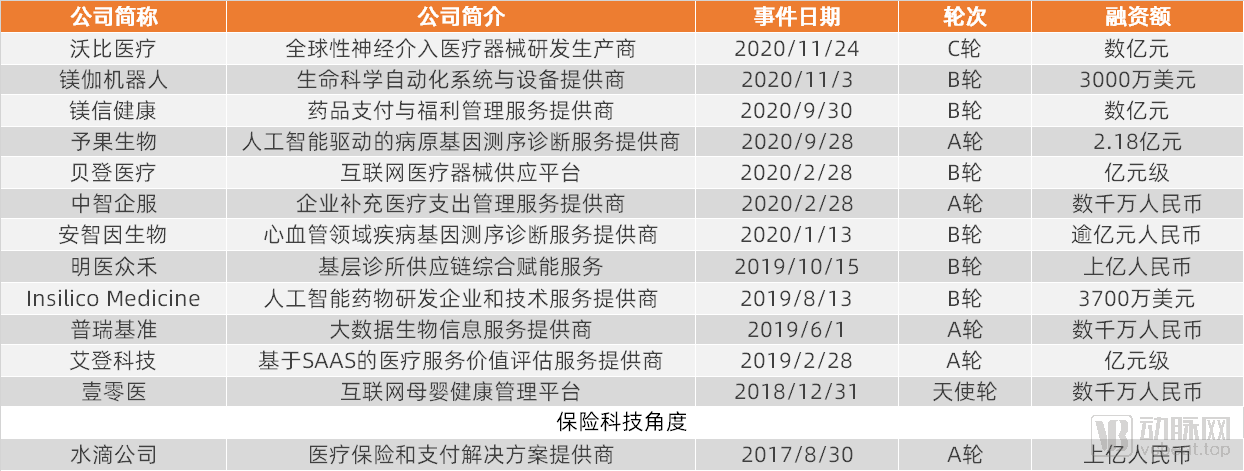
Innovation Works Healthcare Investment Cases
Over the past two years, Sinovation Ventures’ investment portfolio has spanned multiple sectors, including healthcare payment, medical devices, AI-driven drug discovery, and precision medicine. Two years of experimentation and exploration, coupled with the addition of Wu Kai, have strengthened Sinovation Ventures’ internal resolve to make significant investments in the healthcare sector.
At the same time, healthcare investment has heated up in the external environment, with financing amounts and deal volumes rising rapidly. Although Sinovation Ventures did not jump on the bandwagon into healthcare, is now a good time to enter healthcare investment?
Indeed, healthcare investment has undergone tremendous changes compared to when Wu Kaigang first entered the industry. In 2013, when he began his career, there were likely no more than 40 funds focused on healthcare investment; today, however, virtually all mainstream funds have a healthcare sector.
Against this backdrop, Sinovation Ventures has also pondered whether healthcare investment has already peaked, reached the halfway point, or is still in its infancy. The answer is that it is not too late to enter the healthcare investment space now. Healthcare investment remains a vast field with significant opportunities for impactful engagement.
First, from the perspective of the social environment, opportunities in the medical field are structural opportunities brought about by social change.
At a media trends sharing session hosted by Sinovation Ventures, Dr. Kai-Fu Lee pointed out: “2020 was a year rife with ‘black swan’ events. The pandemic was undoubtedly the most impactful among them, while changes in the political landscape and trade policies also posed severe challenges. Nevertheless, numerous opportunities have emerged. Of course, blindly sprinkling capital across the entire industry is unlikely to yield strong returns; certain sectors are certainly more suitable for investment. In the current environment, we identify six major structural opportunities.”
The six major structural opportunities are: digitalization and shifting consumer habits; independent innovation in hard technology; policy-driven industrial transformation; cost reduction, efficiency improvement, and automation; counter-cyclical industry consolidation; and counter-cyclical liquidity.
Healthcare is a sector that stands to benefit from the dual tailwinds of independent innovation in hard technologies and policy-driven industrial transformation. The healthcare industry is resilient to economic downturns, exhibiting counter-cyclical characteristics. Kai-Fu Lee pointed out that, compared with developed countries, China’s per capita healthcare expenditure remains lower than that of the United States and Japan. As the government further increases its investment in healthcare, it will drive numerous opportunities and changes across many industries.
From a micro-level perspective on niche sectors, Wu Kai stated that many segmented markets remain underserved,Meanwhile, many niche sectors within the healthcare industry are undergoing technological iteration and transformation, making it difficult to predict their growth ceilings at this stage.”
Taking IVD (in vitro diagnostics) as an example, the sector has seen explosive growth over the past two years, with nearly 20 companies going public. Does this mean that the competitive landscape of this track is already set? Not at all. Even for respiratory testing, which has garnered increased attention during the pandemic, the penetration rate of molecular diagnostics remains below 5%. In contrast, the penetration rate of molecular diagnostic applications in the United States has reached 90%–95%.
It is important to note that the emergence of emerging technologies on the other front continues to drive incremental market growth. For instance, Next-Generation Sequencing (NGS) had no measurable market size five years ago, whereas today it has reached a market scale of nearly RMB 10 billion.
Therefore, for Sinovation Ventures, although the healthcare sector is currently experiencing a surge in popularity, there is no need to anxiously follow the trend.
Recognizing the major trend of structural transformation and technological iteration in the healthcare sector represents only half the job for Sinovation Ventures.
The other half of investment success lies in deducing the critical junctures and pivotal shifts amid environmental changes—forecasting when and how events will unfold, as well as understanding the behavioral psychology of each stakeholder involved—thereby enabling a high-probability grasp of the trends driving social transformation.
In the current healthcare industry, aging demographics, cost containment within medical insurance systems, and consumption upgrading have become widely recognized trends. The backdrop for industrial development is shaped by the interplay of iterative technological advancements and numerous managerial reforms within the healthcare system.
Amidst this complex landscape, the healthcare team at Sinovation Ventures has identified three main threads outlining the path of historic transformation in the healthcare market.
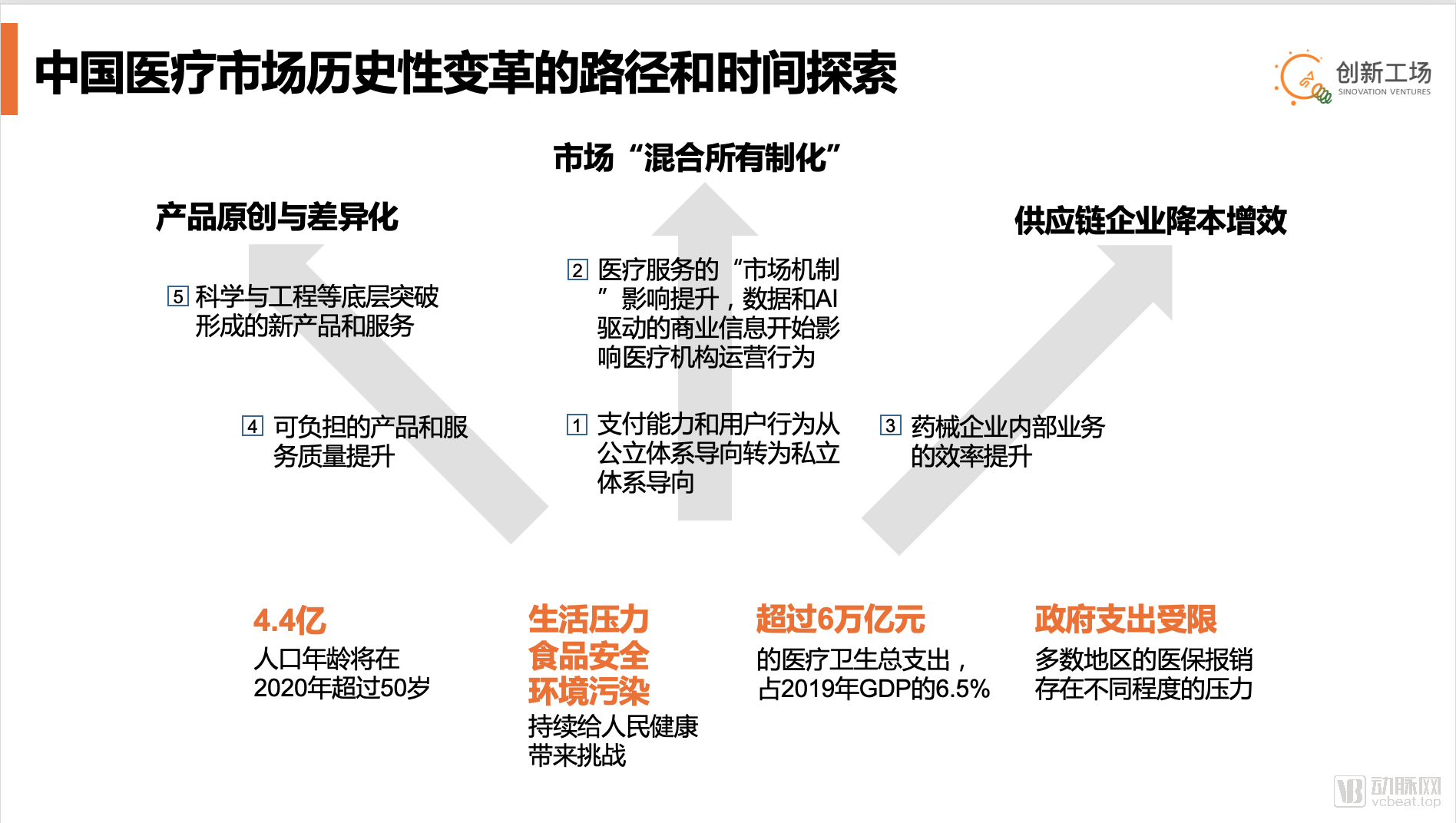
The first main thread is the "mixed-ownership reform" of market entities.. The current healthcare system is dominated by public hospitals as the primary service providers, with social health insurance serving as the main payer. However, this landscape is undergoing a subtle shift, as payment capacity and user behavior are transitioning from a public-sector orientation to a private-sector one. This transition of the multi-trillion-yuan market from “public” to “private” will create numerous investment opportunities.
Only when the focus shifts to a certain extent does “market intelligence” truly begin to make sense, with data- and AI-driven business insights starting to influence the operational behaviors of healthcare institutions. Innovation Works also pays attention to the role that genuine business intelligence data can play in promoting the free market.
The second main theme is "cost reduction and efficiency improvement" for supply chain enterprises”. The payment pressure from medical insurance will be transmitted throughout the entire supply chain. Upstream supply chain enterprises are also facing cost-containment pressures, requiring them to balance profitability with accessibility while ensuring that profits can drive innovation. For supply chain companies, numerous opportunities will emerge in enhancing internal operational efficiency to reduce costs and improve effectiveness.
Take the life sciences sector as an example. Numerous pharmaceutical companies and CROs employ large numbers of highly educated professionals to perform repetitive tasks daily, which still carry a certain error rate. To address this discrepancy, Sinovation Ventures invested in MegaRobo, a robotics automation company. MegaRobo leverages robotics and intelligent IoT technologies to provide flexible, intelligent automation solutions for drug discovery, in vitro diagnostics, and emerging biological fields. Its current clients include prominent companies in precision medicine such as WuXi AppTec, Novogene, Ranshi Medicine, and BGI.
The third main thread is original or differentiated products driven by advancements in medical technology. This thread primarily involves products with greater accessibility or improved service quality, resulting from breakthroughs and innovations in science and technology.
After completing the deduction of the three main threads, Sinovation Ventures first chose to invest in three directions in the first two years,First, focus on platform-based technology enterprises driven by data and AI that exert a macro-level impact on the healthcare industry; second, seize opportunities for upgrading vertical services for segmented populations under market mechanisms; and third, concentrate on breakthroughs in the upgrade of medical products and services.
“In terms of strategic approach, Sinovation Ventures chose to enter the medical technology investment sector by first leveraging its core strengths in AI and digital healthcare,” said Yang Xiaolong.
In the direction of data and AI driving transformation in the healthcare industry, Sinovation Ventures has invested in Aiden Technology. Aiden Technology conducts value assessments of medical services based on hospital electronic medical record (EMR) data and has established collaborative partnerships with numerous leading hospitals in China.
MedTrust Health is a representative portfolio company of Sinovation Ventures as it pivots to new sectors. By partnering with pharmaceutical, insurance, and medical device companies, MedTrust Health provides Pharmacy Benefit Management (PBM) services to patients. In the United States, PBM companies such as CVS, ESI, and UnitedHealth each have market capitalizations exceeding tens of billions of dollars. In China, Sinovation Ventures also believes that more business models will emerge in the future to meet growing demand for healthcare services or to address tasks with high marginal costs.
Yang Xiaolong stated:In healthcare services, it is extremely difficult to close the loop among the three key elements: supply chain, human behavior and data, and payment.Healthcare services differ from consumer goods. A key characteristic of medical care is that once a patient is cured, their engagement with healthcare institutions drops significantly, as it does not rely on subjective willingness to generate positive feedback. Therefore, this system requires various mechanisms to maintain connectivity, such as insurance.
In the service sector transition, Sinovation Ventures has always hoped to find companies that can achieve a balance in these three aspects.
Sinovation Ventures invested in Shuidi during its Series A round, based on the assessment that Shuidi had aggregated a user base with certain healthcare-related characteristics. This cohort would generate value for China’s insurance and medical services sectors.
In terms of improving supply chain efficiency, in addition to MegaRobo mentioned earlier, Sinovation Ventures has also invested in the well-known pharmaceutical company Insilico Medicine. Insilico utilizes artificial intelligence to generate small molecules for drug screening.
In terms of investment stages, Sinovation Ventures covers early-stage scientist-led startups, mid-stage projects, and late-stage projects in the healthcare sector through the allocation of different funds, thereby covering the entire lifecycle of the medical industry.
Moving forward, Sinovation Ventures will continue to monitor the digital health and pharmaceutical-medical device industry ecosystem, with a particular focus on medical technology products.
Wu Kai stated, “At this stage, investment in medical technology is the focus of Sinovation Ventures. The firm is also making preparations in the fields of biotechnology and innovative drugs.”
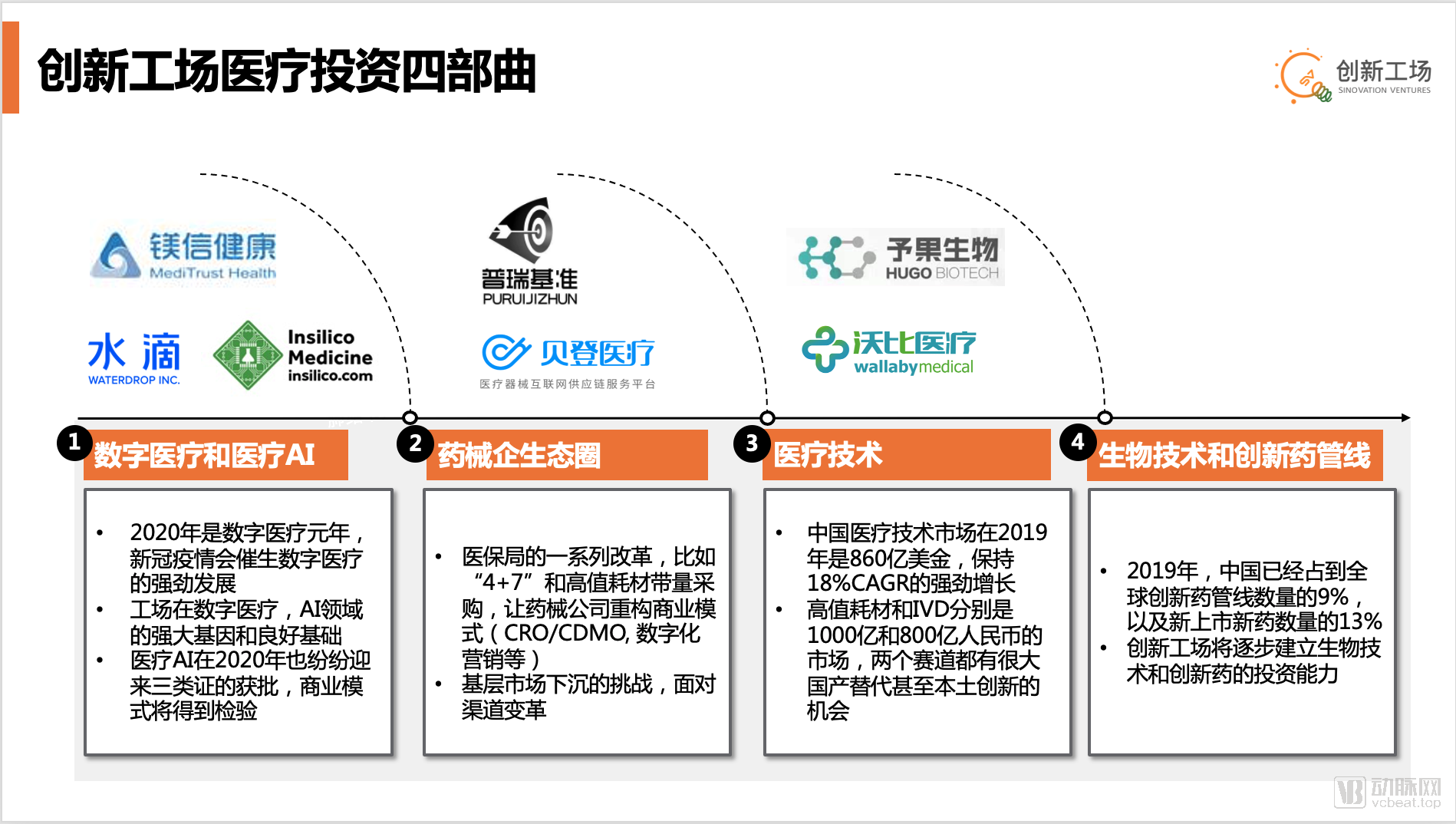
How to invest in the medical technology sector going forward.
Wu Kai introduced that Innovation Works evaluated medical technologies based on market size and growth rate, choosing to focus primarily on IVD (in vitro diagnostics) and high-value consumables.
“The IVD sector will be the largest medical device market in 2030, while cardiovascular and orthopedic high-value consumables are among the fastest-growing segments.”
In the IVD sector, Wu Kai stated that the development of China’s IVD market exhibits four major trends: centralization and automation of routine testing; rapid and convenient decentralized testing; the swift rise of public secondary hospitals; and diversification of specialized tests driven by technological advancements.
In the multi-layered, complex IVD market, Sinovation Ventures employs four key strategies: (1) identifying the next wave of industry leaders in mature sectors; (2) focusing on leading enterprises in niche segments; (3) closely tracking emerging technologies to select companies with the greatest explosive growth potential; and (4) targeting companies transitioning from strong distribution channels to independent product R&D.
Wu Kai summarized Innovation Works’ strategy in the IVD sector as follows:In mature, large-scale sectors, Innovation Works must hold its ground; in opportunistic markets, it must aggressively seize the initiative.In 2016, representing SoftBank China, Wu Kai, as an investor in the Series A round, keenly identified and invested in New Horizon Health, a company that detects early-stage colorectal cancer risk through fecal PCR testing. Over the next four years, New Horizon Health secured China’s first Class III medical device certification for early cancer screening and is poised to list on the Hong Kong Stock Exchange. At the time, Wu Kai accurately predicted that New Horizon Health, positioned as the Chinese counterpart to U.S.-based Exact Sciences, would become a disruptor in the field of early cancer screening.
He stated, “So-called mature major tracks refer to domains within the four core strategies where the market is clearly defined and the growth ceiling is sufficiently high, such as the rapidly developing field of molecular diagnostics. Since these areas are easily understood by all market participants, they demand that we establish a more comprehensive strategic layout. In contrast, opportunity-driven markets represent incremental markets generated by disruptive technologies, such as next-generation sequencing (NGS), early cancer screening, and single-cell sequencing, which emerged as prominent tracks in recent years. The so-called ‘aggressive entry’ strategy means that Sinovation Ventures must seize opportunities at the technological tipping point when a new technology emerges. Acting too early or too late is not viable.”
In the field of high-value medical consumables, Innovation Works will focus primarily on cardiovascular and orthopedic high-value consumables, while also seeking opportunities in ophthalmology, dentistry, and medical aesthetics.
At the tactical level, Wu Kai believes that the most critical aspect of execution is deep integration with the industry.
“I often emphasize to my team that being an investor is a demanding profession. To make accurate and clear judgments on deals, extensive industry research and a deep understanding of the sector are essential.”
Prior to making a formal investment in Yuguobiotech, Kai Wu led Sinovation Ventures’ healthcare team in engaging in in-depth discussions with the Chinese executive leadership of Illumina, the global sequencing leader and an industrial partner of the firm.
“During our discussions, we found that Illumina’s miniaturized devices have attracted significant attention from distributors serving primary care institutions, driven by their optimistic outlook on the future market for infection testing at the primary care level. This has deepened our understanding of mNGS. Although mNGS is also a key application area for high-throughput sequencing, it differs from NIPT and oncology scenarios,”mNGS offers greater potential for innovation in both breadth and depth in clinical applications.。
In terms of breadth, the clinical departments generating demand for NIPT and oncology testing are relatively limited. In contrast, mNGS can be applied across multiple departments, including ICU, emergency medicine, hepatobiliary surgery, and others; virtually any case involving infection is relevant to mNGS.This means that mNGS has the opportunity to generate revenue across multiple clinical departments.
“In terms of depth, the current strategies of companies in the NIPT and oncology sectors are both targeting the market of top-tier domestic hospitals, as a large number of patients are concentrated there. However, infectious disease testing is a scenario that can be decentralized to primary care hospitals. Therefore, we believe that mNGS has the potential for a higher ceiling, both in breadth and depth.”
Emphasizing integration with the industry, Sinovation Ventures also prioritizes candidates’ industrial backgrounds when recruiting team members.
In addition to Yang Xiaolong and Wu Kai, who bring extensive industry experience and investment expertise, the team’s other senior members include Investment Director Shi Chengxi. Prior to joining Sinovation Ventures, Mr. Shi worked at Changling Capital, where he led and participated in several investment projects in the healthcare sector. Before that, he was with IMS Health Management Consulting, serving multinational pharmaceutical clients and focusing on strategic and management consulting in the healthcare field. Mr. Shi holds a Ph.D. in Biomedical Sciences from the Karolinska Institute. Another key member, Senior Investment Manager Xiao Hai, holds an MBA from China Europe International Business School (CEIBS) and is a core member of the CEIBS Qipu Healthcare Forum. Before joining Sinovation Ventures, he was responsible for business development and strategy in diagnostics, as well as national distributor management, within Danaher Corporation’s diagnostics platform in the United States. He also previously held sales and marketing management roles at UnitedHealth Group and GE Healthcare. Other members of the healthcare team are also professionally trained, having joined Sinovation Ventures from firms such as Legend Capital and the consulting firm IQVIA, and holding degrees from prestigious universities both in China and abroad, including Johns Hopkins University and the School of Life Sciences at Peking University.
This strategy of deep integration with the industry is also how Sinovation Ventures establishes cognitive asymmetry and maintains rationality amid the healthcare investment boom.
Innovation Works views market trends as the consensus on many issues, and to succeed in this market, it is necessary to establish a cognitive gap. The key to building this cognitive gap lies in identifying the core competitiveness of a niche industry.
Wu Kai pointed out, “Five to six years ago, the average return from a single IPO for funds exceeded 10-fold, whereas this year, the overall return from IPOs in the healthcare sector is only 2.3-fold. On one hand, this reflects that project valuations are relatively high, with investors competing fiercely for late-stage opportunities. On the other hand, it indicates that listing thresholds have been lowered, and going public may no longer be viewed as such a critical benchmark. In the future, competition will hinge on who can identify companies with larger growth ceilings and greater development potential.”
Wu Kai also stated that, as a newcomer to the market, Innovation Works would not simply follow trends during the current market bubble.Instead, it should leverage VBInsight’s robust industry research capabilities and the in-depth resources of its industrial partners to identify high-quality targets that are still “underwater snorkeling.”Therefore, we must strive to ensure that this industry does not evolve into a highly competitive, low-price market over the next five years.