

Nature Dual Publications Spotlight Innovative VLP-mRNA Delivery Platform Set to Transform Gene Therapy Landscape
After years of technological accumulation, the gene therapy industry has gradually matured, leading the third industrial revolution in biomedicine. However, in this field, delivery strategies have remained one of the major bottlenecks hindering industry development. In 2020, Jennifer Doudna, who was awarded the Nobel Prize for her outstanding contributions to the CRISPR field, also lamented“Delivery may still be the biggest bottleneck for somatic gene editing”。
Recently, Nature Biomedical Engineering and Nature Biotechnology have published articles in succession, both pointing to a type of vector that lies between viral and non-viral vectors.Virus-like Particle (VLP) Delivery Technology, in these two research reports, both areDelivered CRISPR/Cas9 mRNA, demonstrating therapeutic potential in mouse models of wet age-related macular degeneration and herpetic stromal keratitis, respectively.


VLP-mRNA Delivery Technologyby the Institute of Systems Biomedicine, Shanghai Jiao Tong UniversityProf. Yu-Jia CaiTeam and the Eye & ENT Hospital of Fudan UniversityHong JiaxuA globally pioneering gene therapy delivery vector technology co-developed by the director’s team. Previously, leveraging this core VLP-mRNA delivery technology, the team developed an mRNA vaccine against the novel coronavirus and published the first animal data for an mRNA COVID-19 candidate vaccine at that time.
VLP-mRNA holds significant potential to overcome the delivery technology bottlenecks in somatic gene therapy, including gene editing.Bendao Gene, co-founded by Professor Cai YujiaBased on this technology, the BDmRNA technology platform has been established, and an extensive R&D pipeline targeting various indications has been developed, including VLP-mRNA-based gene therapy strategies and vaccines, with the aim of advancing the clinical translation of this technology. Last June, this emerging company, founded in 2018, completed a pre-A financing round worth tens of millions of yuan.
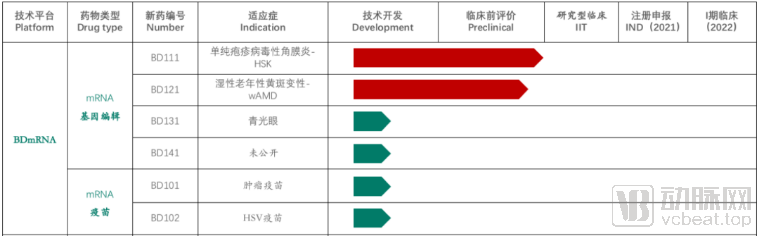
BDmRNA Technology Platform R&D Pipeline
After years of development, the gene therapy industry has evolved beyond its original definition, gradually forming multiple specialized segments (for example, based on different levels of genetic modification, it can be divided into DNA-based gene therapy and RNA-based gene therapy) and giving rise to a multi-tiered portfolio of representative products.
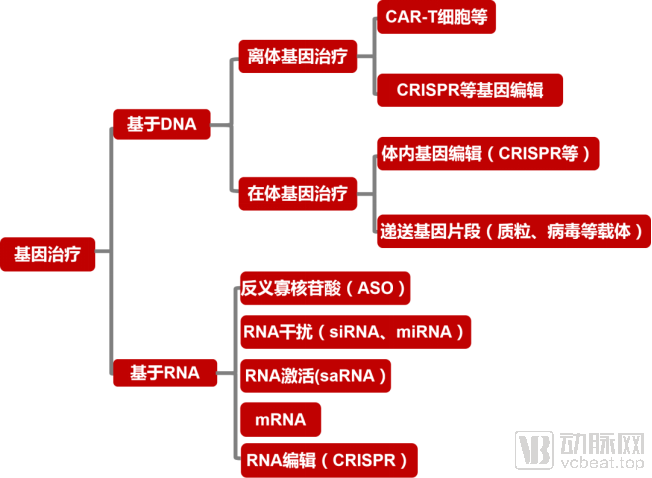
Among them,The development of new preventive and therapeutic approaches based on mRNA has garnered increasing attention in recent years., among its two highly promising application directions, one is the use as mRNA vaccines for cancer and viral infectious diseases, and the other is the treatment of previously undruggable genetic disorders; based on the two studies published above, it has
The field of gene-editing-based gene therapy is also poised for significant advancements; its primary applications include infectious disease vaccines, tumor immunotherapy (cancer vaccines), therapeutic protein replacement therapy, and the treatment of genetic disorders.
In response to the novel coronavirus, mRNA-based technologies have leveraged their first-mover advantage to develop vaccine candidates; it is no exaggeration to say that this is currently the most closely watched niche within innovative biopharmaceutical technologies.
While the COVID-19 pandemic may have provided a catalyst for wider public awareness of mRNA technology, the sector’s prospects had already attracted significant investor interest well before then. Since 2015, three representativemRNA Therapeutics Company——Moderna Therapeutics, BioNTech, and CureVac—have collectively attracted$2.8 billion in private investment, and have repeatedly set financing legends in the biotechnology industry. Currently, all three companies are listed on the Nasdaq.
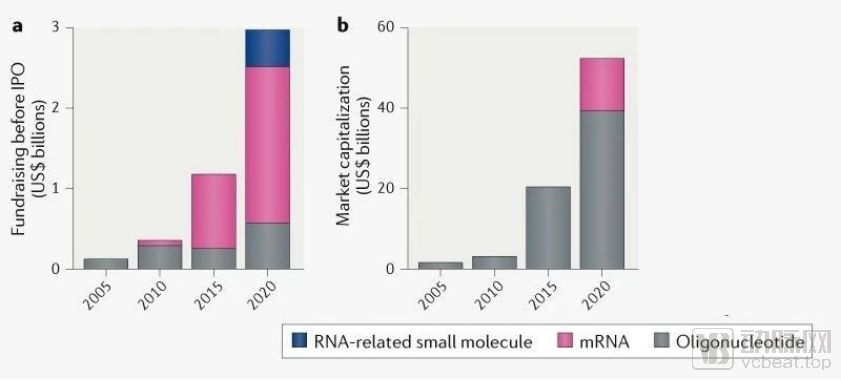
▲ Financing of private RNA therapy companies (a) Market capitalization of publicly listed RNA therapy companies (b)
Image source: (Nature Reviews Drug Discovery)
Theoretically, mRNA has the potential to synthesize “any protein,” enabling the transformation of the cellular protein synthesis machinery into a “drug factory,” which holds great promise for treating various diseases.
For mRNA vaccines and certain mRNA therapeutics, administration is relatively straightforward. Following intramuscular injection, muscle cells take up the mRNA and produce viral proteins. The immune system recognizes these proteins as foreign substances, generating antibodies and T cells that enable the body to resist future infections. Candidate products are currently in clinical development for various viral infectious diseases, including those caused by SARS-CoV-2.
Furthermore, mRNA-based vaccine strategies hold particular promise in the field of tumor immunology, representing a major direction of current exploration for mRNA therapies. Delivered via intramuscular, subcutaneous, or local intratumoral injection, these mRNA-based therapies encode tumor proteins or immune signaling molecules, helping to enhance the human immune system’s attack on cancer cells. Notably, the global cancer vaccine market appears to be growing at a faster rate than the overall global vaccine market, rising from $4.6 billion in 2019 to a projected $10.1 billion by 2024, with a compound annual growth rate (CAGR) of 17.28%.
Relatively speaking, mRNA drugs that replace beneficial proteins for the treatment of chronic diseases are more difficult to bring into clinical practice than vaccines. These drugs face the challenge of targeting mRNA to specific tissues and providing powerful and lasting benefits without excessive side effects. Therefore, the development of such therapies has been relatively limited.
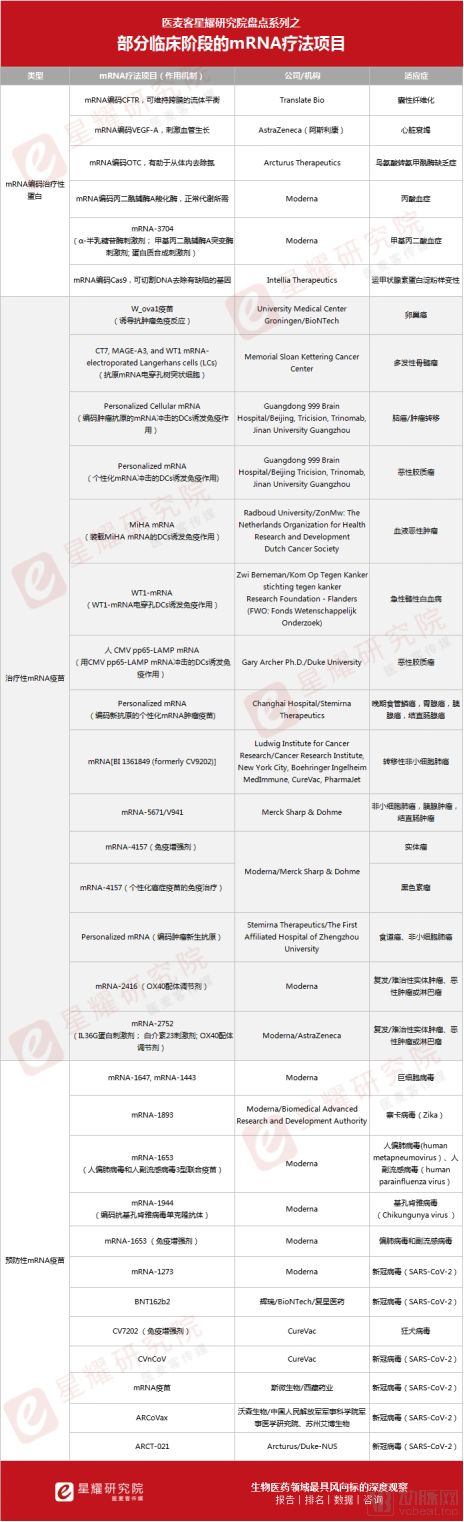
In any case, the achievements to date in the emerging field of mRNA-based therapies are exciting. The substantial accumulation of relevant preclinical data, combined with early clinical data now becoming available, has collectively driven its critical success during the COVID-19 pandemic. As the technology continues to advance and mature, various mRNA-based therapeutic strategies will gradually realize the vision of treating and preventing human diseases.
In the field of gene therapy, the challenges associated with delivery systems have long been a well-worn topic. The ultimate clinical efficacy of such therapeutics depends largely on an efficient delivery system, and mRNA therapies are no exception.
Although the efficacy of naked mRNA has been demonstrated via routes including intramuscular, subcutaneous, and intradermal injection, thereby avoiding other obstacles associated with systemic mRNA administration (such as clearance from the bloodstream by the liver, kidneys, and spleen), the stratum corneum, the outermost layer of the epidermis, forms a formidable barrier to absorption following topical administration. Consequently, in the absence of a delivery system, mRNA exhibits very low permeability across cell membranes.
Although strategies such as microporation, microneedles, electroporation, and sonophoresis have been developed to overcome this barrier, mRNA has a half-life of approximately 7 hours and is highly susceptible to degradation. Its inherent instability and high sensitivity to enzymatic degradation, coupled with additional challenges such as its large molecular size and high negative charge, have further raised the barriers to developing delivery strategies, severely hindering the clinical translation of this approach.
Therefore, further improvement of mRNA delivery systems has remained a significant bottleneck in the field. Currently, the scientific community is focusing on the majorViral VectorandNon-viral VectorsNumerous attempts have been made in both major directions, while those falling between viral and non-viral vectorsVirus-Like Particle (VLP) Delivery StrategyUndoubtedly injecting fresh vitality into the current state of delivery.
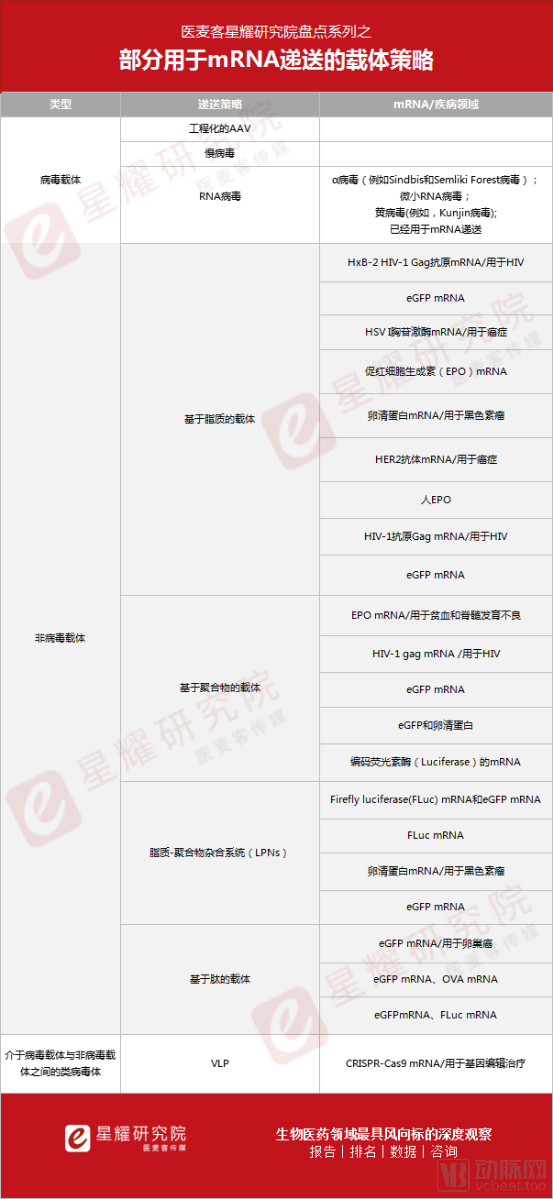
In viral vectors, lentiviral vectors can efficiently infect nearly all cell types, and adeno-associated virus (AAV) vectors also exhibit high delivery efficiency. They have been applied in clinical in vivo and ex vivo gene therapy, representing a relatively mature delivery technology. However, viral vectors have critical drawbacks associated with genomic integration, as well as potential host rejection (immunogenicity and cytotoxicity). Furthermore,When AAV is used to deliver gene-editing tools such as CRISPR, it may raise safety concerns related to prolonged or even lifelong expression of the editing components, while also posing potential risks of off-target effects and immune responses.Therefore, in the field of mRNA delivery, the demand for non-viral vectors has also been stimulated.
Lipid- or lipidoid-based carriers represent the most commonly used non-viral vectors to date.Various synthetic and naturally derived lipids have been used to form liposomes or lipid nanoparticles (LNPs), both of which have been reported to effectively deliver mRNA-based vaccines. Among these, LNPs are currently the more widely applied delivery system in the field of nucleic acid therapeutics. Due to their relatively efficient uptake by antigen-presenting cells, they are most commonly used in vaccines. Currently,The three major mRNA vaccine giants—Moderna, CureVac, and BioNTech—all employ LNP delivery technology.. However, LNPs exhibit low delivery efficiency in in vivo gene therapy applications.
Although these delivery vectors have been widely used in basic and clinical research on gene therapy and mRNA vaccines,The Specific Niche of Gene Editing Technologies Such as CRISPR, its clinical application is subject to dual criteria of safety and efficacy,Safety Concerns of Viral Vectors and Efficiency Challenges of Non-Viral Vectors Such as LNPsThis necessitates further development and exploration of delivery systems.
VLP Delivery SystemLeveraging the principle of specific recognition between mRNA stem-loop structures and phage coat proteins, through viral engineering technology,Combining the advantages of both viruses and mRNA perfectly,We have developed a novel delivery technology, VLP-mRNA, which leverages the viral capsid to achieve exceptionally high cellular infection efficiency. Meanwhile, capitalizing on the transient nature of mRNA, this approach renders gene-editing therapies safer and more controllable. Studies on CRISPR/Cas9 delivery have demonstrated that, compared with viral systems enabling prolonged Cas9 expression, VLP-mediated delivery of Cas9 mRNA limits Cas9 presence to just 72 hours, thereby significantly reducing or even completely eliminating off-target effects.
In addition, inIn terms of genetic payloadAAV vectors can only deliver genes up to 4.7 kb in size, whereas the classic CRISPR/Cas9 editing system is larger and typically cannot be delivered as a complete set via a single viral vector, thus requiring two separate viral vectors for delivery. In contrast, VLP-mRNA can deliver the entire CRISPR component (Cas9 and gRNA), overcoming the limited cargo capacity of AAV vectors. Meanwhile, with further advancements in gene editing technologies, larger base-editing tools are gradually entering the field of gene editing R&D, and VLP-mRNA is poised to become a favorable delivery vehicle for these systems.
The emergence of a novel class of strategies does not negate traditional approaches; rather, it serves to mutually fill gaps across the broader landscape of potential applications. It is believed that as more technological bottlenecks are overcome, the potential of mRNA vaccines, other mRNA-based therapeutic strategies, and the entire field of gene therapy will be further unlocked, ultimately benefiting a vast number of patients.
References:
1.Nature Reviews Drug Discovery
2.https://www.ncbi.nlm.nih.gov/pmc/articles/PMC7076378/#B81-pharmaceutics-12-00102
3.https://www.sciencemag.org/news/2020/12/messenger-rna-gave-us-covid-19-vaccine-will-it-treat-diseases-too
4.Nature Biomedical Engineering
5.Nature Biotechnology
6. WHO Official Website