

Hangzhou Biotech Backed by AZ-CICC Fund and Hillhouse Capital Seeks Hong Kong IPO

Highlightll Pharma
Innovative Drug Developer
On June 8, 2026, Hangzhou Highlightll Pharmaceutical Co., Ltd. submitted its second listing prospectus to the Hong Kong Stock Exchange.
Like many biotech companies, Highlightll Pharma has not yet launched any commercial products. According to its prospectus, the company recorded zero operating revenue in 2024. In 2025, it generated operating revenue of 107 million yuan, stemming from a USD 15 million milestone payment from the licensing deal with Biohaven of the United States. Its operating revenue fell back to zero in the first quarter of 2026.
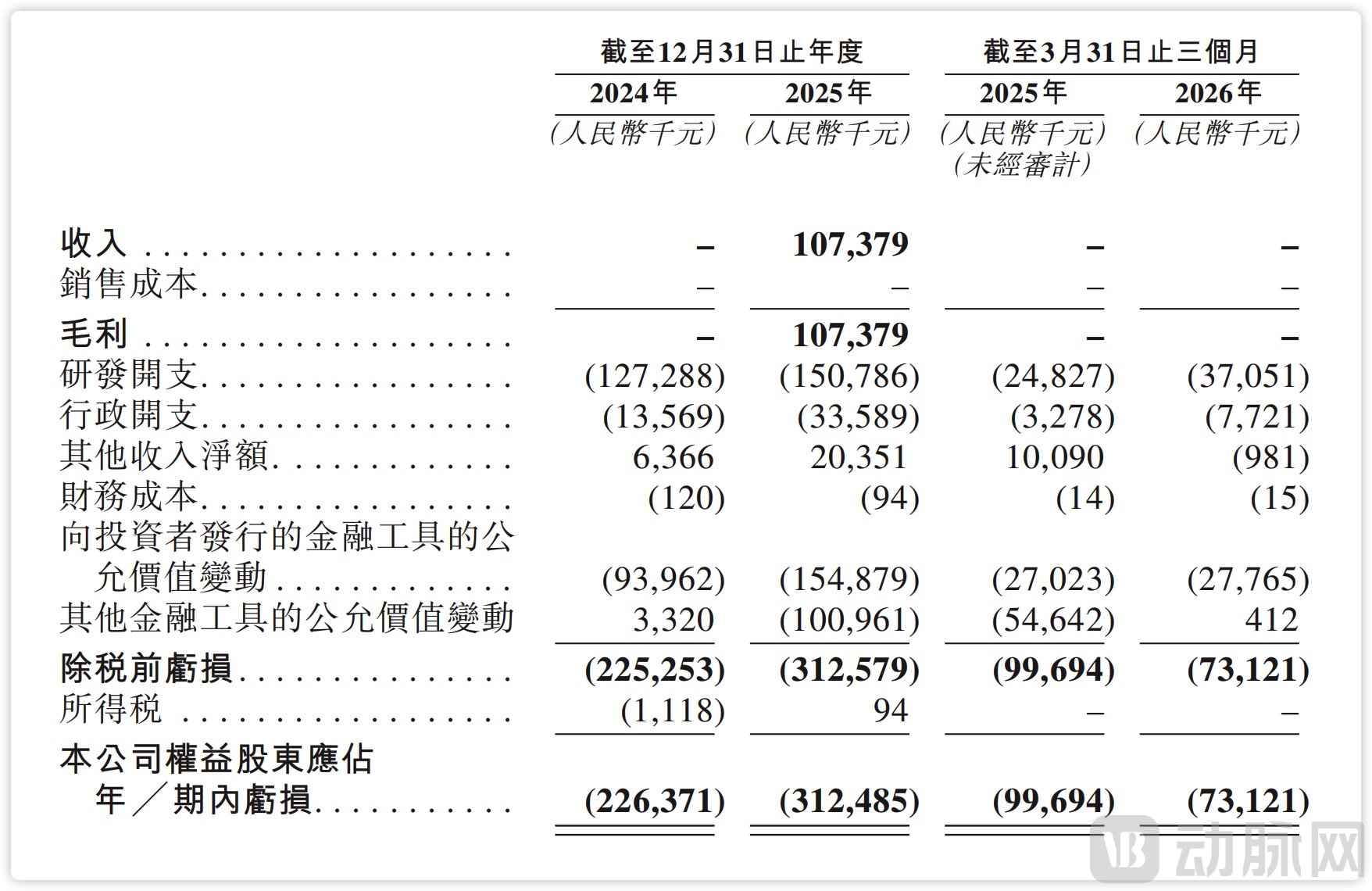
Recent Corporate Revenue, Source: Prospectus
The core assets driving the company's Hong Kong IPO are TLL-018, TLL-041 and TLL-009, explicitly labelled as "world-exclusive" in the prospectus. This portfolio consists of highly selective TYK2/JAK1 inhibitors. Notably, TLL-041 is the world’s first and only selective TYK2/JAK1 inhibitor with brain penetration, developed for the treatment of neurodegenerative diseases.
To date, Highlightll Pharma has completed six financing rounds, raising a total of approximately 662 million yuan with a post-money valuation of around 2.46 billion yuan. Its investors include Kaitai Capital, Hankang Capital, AZ-CICC Fund, Efung Capital and Hillhouse Capital .
Dr. Liang Congxin, the founder of Highlightll Pharma, is a 62-year-old serial entrepreneur with multiple blockbuster drugs under his belt, each generating annual sales exceeding $1 billion.
From 1996 to 2004, Dr. Liang served as Director of Medicinal Chemistry at Sugen later acquired by Pfizer. There, as the primary inventor, he led the development of sunitinib (Sutent). The drug was approved for marketing in Europe and the United States for the treatment of gastric cancer and renal cell carcinoma, achieving annual sales exceeding $1 billion for several consecutive years after its launch.
By 2006, he had founded Xcovery as its scientific founder. During this period, as the sole inventor of ensartinib (for non-small cell lung cancer) and vorolanib (a multi-kinase inhibitor), he led the entire process of these two drugs from molecular design to global development. In 2017, Betta Pharmaceuticals acquired a controlling interest in Xcovery, and ensartinib and vorolanib were subsequently approved for marketing in China and the United States.
Highlightll Pharma was founded by Liang Congxin and registered in Qiantang District, Hangzhou at the end of 2017, when he was 53 years old. While most scientists at his age chose to step back or enjoy a settled career, he embarked on his third entrepreneurial venture. Drawing on his years of experience in new drug design and development, he secured investments from AZ-CICC Fund, Efung Capital, Hillhouse Capital and other institutions, a strong market recognition of his personal reputation and expertise.
Highlightll Pharma has chosen to focus on autoimmune and inflammatory diseases, a red ocean market dominated by giants and characterized by fierce competition.
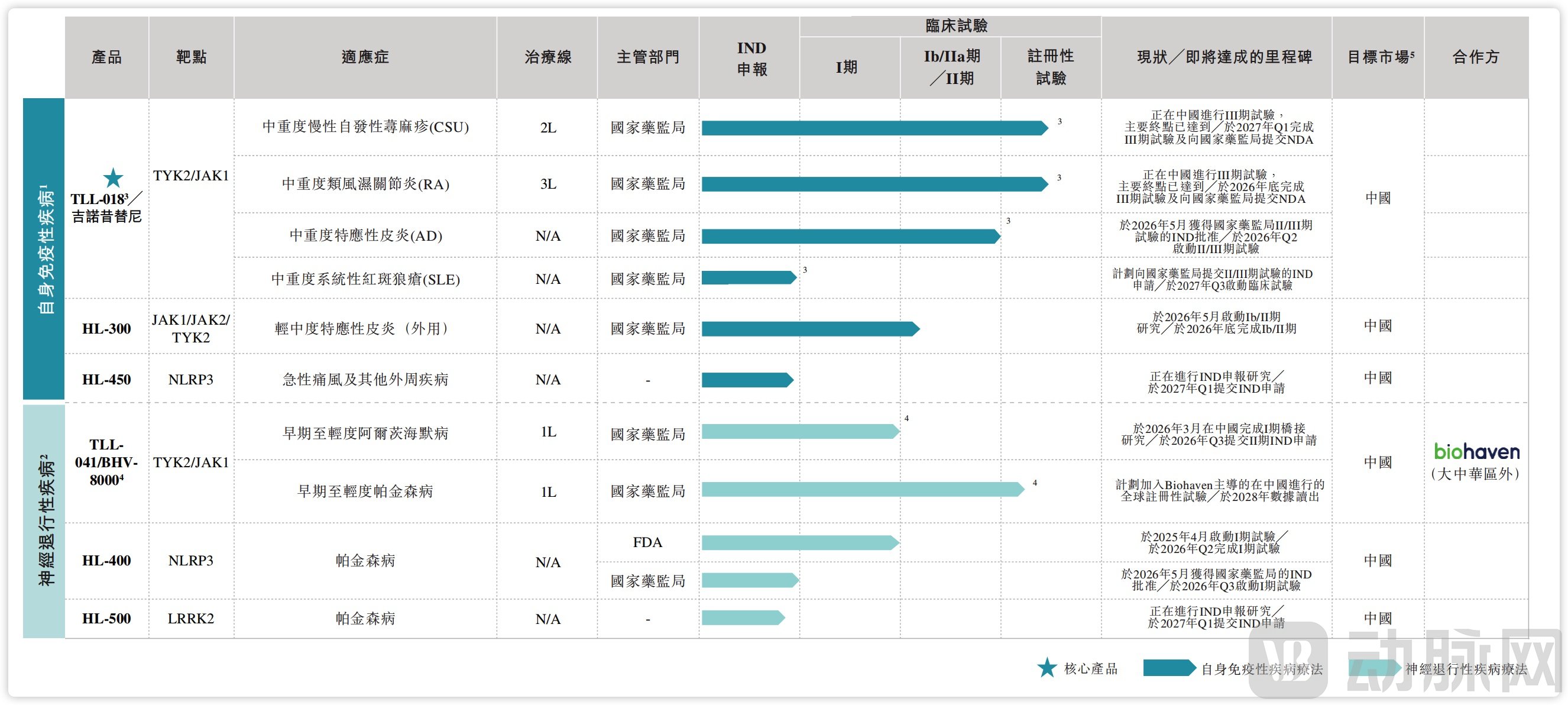
Corporate R&D Pipeline, Source: Prospectus
The sector is deemed a red ocean, as the track of JAK inhibitors targeting mainstream targets has become extremely crowded.
Listed products such as AbbVie's upadacitinib (Rinvoq), Pfizer's abrocitinib (Cibinqo) and Eli Lilly's baricitinib (Olumiant) have established first-mover advantages in indications including rheumatoid arthritis and atopic dermatitis. As a latecomer, BMS's deucravacitinib (Sotyktu), the first approved TYK2 inhibitor, has also gained traction in the psoriasis treatment space.
Highlightll Pharma’s strategy is embedded in the molecular design of TLL-018.
As disclosed in the prospectus, TLL-018 is a highly selective dual TYK2/JAK1 inhibitor. Compared with currently marketed JAK inhibitors, TLL-018 exhibits higher selectivity, meaning it can achieve a better balance between efficacy and safety. Meanwhile, the mechanism of dual inhibition of TYK2 and JAK1 is theoretically expected to deliver superior efficacy compared to single-target inhibitors.
Another key pipeline asset of Highlightll Pharma also warrants attention. TLL-041 is the world's first and only brain-penetrant selective TYK2/JAK1 inhibitor, indicated for neurodegenerative diseases such as Alzheimer's disease and Parkinson's disease. In March 2023, Highlightll Pharma entered into a co-development agreement with Biohaven, licensing the global rights to TLL-041 outside Greater China to Biohaven. The latter paid a $10 million upfront fee, provided a portion of Biohaven stock, committed to milestone payments of up to $950 million, and agreed to pay sales royalties in the mid-single-digit to low-double-digit percentages.
This is one of the largest publicly disclosed out-licensing transactions in China's neurodegenerative disease field.
For a biotech company in the R&D stage, the significance of this deal lies not only in the revenue exceeding hundreds of millions of yuan, but also in the industry’s endorsement of the commercial value of TLL-041. Currently, Biohaven is conducting a global, multicenter, Phase 2/3 registrational study targeting patients with early-stage Parkinson's disease.
In addition, Highlightll Pharma’s pipeline includes HL-400 (an NLRP3 inhibitor based on molecular glue technology for Parkinson's disease, currently in Phase I clinical trials in the United States), HL-500 (a highly selective LRRK2 inhibitor for Parkinson’s disease, in the preclinical stage), and HL-300 (a topical formulation targeting TYK2/JAK1/JAK2 for dermatological conditions).
A clear view of the company’s pipeline reveals that its core competitiveness stems from its proprietary, in-house developed kinase chemistry platform. This platform features capabilities in designing highly selective kinase inhibitors, optimizing blood-brain barrier penetration, and enabling precise dual-target modulation, thereby systematically addressing unmet clinical needs in the fields of autoimmune and neurodegenerative diseases. The prospectus indicates that the company has successfully identified multiple small-molecule drug candidates based on this platform, with some having already entered clinical development.
With JAK inhibitors carrying a black box warning and neurodegenerative diseases constrained by the blood-brain barrier, the greatest obstacle also harbors the greatest opportunity.
Highlightll Pharma's strategic focus on the high-barrier, high-return sectors of autoimmune diseases and neurodegenerative disorders is well-founded. Taking JAK inhibitors as an example, the prospectus discloses that more than ten JAK inhibitors for autoimmune diseases have been approved globally, including five single-target inhibitors and six dual-target or multi-target inhibitors. Mainstream JAK inhibitors have achieved rapid sales growth.
Meanwhile, the industry's pain points are also evident. First, existing targeted biologics lack sufficient enzyme selectivity. Broad-spectrum JAK inhibitors can suppress multiple JAK enzymes, leading to the unintended inhibition of various cytokine pathways and resulting in severe side effects. Several marketed JAK inhibitors carry FDA black box warnings. Second, there are unmet medication needs in specific indications. For instance, in China, the prevalent population of patients with chronic spontaneous urticaria exceeds 5.3 million, the overall response rate to first-line therapies is only 55%, and patient adherence to long-term medication regimens remains insufficient.
From an industry development perspective, dual-target and multi-target inhibitors represent a major future direction. By simultaneously modulating multiple immune pathways to enhance therapeutic precision, these agents can more specifically act on interconnected inflammatory cascades, thereby addressing key limitations such as incomplete efficacy and high risk of disease recurrence. Furthermore, although small-molecule drugs account for only 25% of the global autoimmune market share, their market share in China reaches as high as 46%, highlighting the domestic market’s emphasis on routes of administration.
Among the domestic investigational molecules of the same class included in the prospectus, TLL-018 is the only product that has simultaneously completed Phase 3 clinical trials and reported positive results for two major indications: rheumatoid arthritis and chronic spontaneous urticaria. It holds promise for addressing three core challenges long plaguing the industry: medication safety risks, insufficient supply for specific indications, and imbalanced target effects.
In the field of neurodegenerative diseases, although the prospectus cites Sullivan data showing that the global market size for neurodegenerative disease drugs has grown from $47.1 billion in 2019 to $55.8 billion in 2024, and is projected to reach $74.5 billion by 2028, this large market is underpinned by a severe scarcity of clinical treatment options.
Currently, clinical interventions for Alzheimer's disease and Parkinson's disease are extremely limited, with no effective drugs proven to slow disease progression in patients. The fundamental pain point of the industry lies in insufficient blood-brain barrier penetration capability, which is the root cause of the over 90% failure rate in global neurological drug development. The vast majority of small-molecule drugs worldwide fail to effectively cross the blood-brain barrier, making it difficult to achieve therapeutic concentrations within brain tissue. This has become a major technical barrier constraining industry development.
Current R&D directions in the industry can be broadly categorized into three types. αβ and Tau-targeting antibodies are limited by the physical properties of large molecules, making them inherently unable to cross the blood-brain barrier. Symptomatic treatments such as levodopa and donepezil only alleviate external symptoms like cognitive decline; they cannot block neuronal apoptosis triggered by excessive microglial activation, nor can they reverse disease progression. Additionally, inhibitors targeting novel pathways such as NLRP3 and LRRK2 remain largely in early-stage development, with a considerable time still required before clinical implementation.
The prospectus conducted a horizontal comparison of several investigational dual-target TYK2/JAK1 molecules, noting that they lacked lipophilicity optimization for blood-brain barrier penetration, resulting in low cerebrospinal fluid (CSF) permeability. Building on its proprietary molecular scaffold, Highlightll Pharma fine-tuned the lipophilicity parameters of TLL-041, achieving high CSF-to-plasma penetration while maintaining high target selectivity, thereby holding promise to overcome technical barriers that have plagued the industry for years.
Furthermore, from a policy perspective, the prospectus also disclosed the company's risk-mitigation logic behind its dual-pipeline strategy. Although oral small-molecule drugs in the domestic autoimmune field have been included in China's National Reimbursement Drug List (NRDL) centralized procurement for four consecutive rounds, with an average price reduction of over 52% in each round, the price advantages in this sector are rapidly diminishing, and market competition is becoming increasingly intense. In contrast, innovative drugs for neurodegenerative diseases have not yet been included in the centralized procurement list, ensuring a stable product pricing system and more guaranteed profit margins.
Highlightll Pharma is simultaneously deepening its presence in the fast-paced, fiercely competitive autoimmune disease sector while strategically positioning itself in the neurodegenerative disease sector, which benefits from a favorable policy environment and offers significant long-term value. This dual-track strategy, combining "red ocean" and "blue ocean" markets, effectively hedges against policy fluctuations and operational risks associated with reliance on a single therapeutic area.
Over nearly nine years, Liang Congxin has led Highlightll Pharma through every stage of its journey — from breakthroughs in molecular design at the lab, to data validation in clinical trials, and now the push for a Hong Kong IPO. The question remains whether this scientist can translate the company's first-in-class technological edge into accessible therapies for patients, market recognition and returns for shareholders. As this seasoned entrepreneur stakes his reputation entirely on the dual TYK2/JAK1 target, will his moment in the spotlight finally arrive?