

Huami Technologies Leverages Big Data to Support the Release of Tsinghua City Health Index
Recently, the "Tsinghua Urban Health Index," jointly researched and compiled by the Institute for New-Type Urbanization at Tsinghua University and the Vanke School of Public Health and Health at Tsinghua University, was officially released. Against the backdrop of the global spread of the COVID-19 pandemic, this study relies on“Big Health + Big Data” has established a scientific and objective metric for urban health, enabling the first-ever comprehensive assessment of the overall health levels of 80 major cities in China. As a collaborating partner, Huami Co., Ltd. provided big data support on lifestyle factors, including physical activity, sleep patterns, and obesity rates.
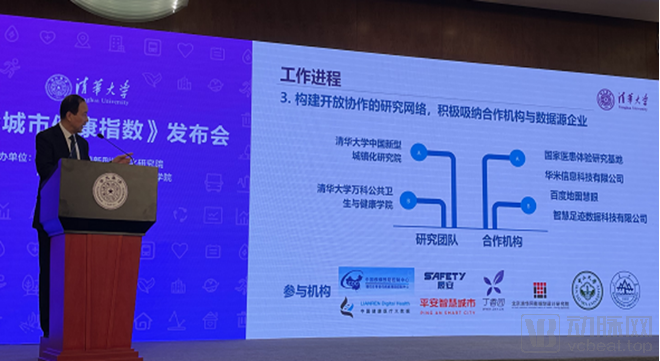
At the press conference, Dr. Li Dong, Senior Research Fellow at the Institute of New-Type Urbanization of Tsinghua University, introduced the overall framework of the study: the “Tsinghua Urban Health Index” centers on key elements of urban health in its indicator system, encompassing five major evaluation dimensions: health services, health behaviors, health facilities, health environment, and health outcomes.
Among these, health behaviors reflect the health status and attitudes of individual residents and represent one of the key innovative highlights of this study. It is understood that the study conducted a comprehensive analysis of data on urban residents’ lifestyle habits to understand the overall health characteristics of citizens’ lifestyles across different regions. The evaluation was performed from two perspectives: the behaviors themselves and their outcomes. For instance, the proportion of physically active individuals reflects the overall physical activity level of urban residents; the proportion of people with insufficient sleep indicates residents’ sleep conditions; and the prevalence of obesity among adults is closely associated with exercise and dietary habits.
Research has found a correlation between citizens' health habits and economic development. As the overall economic level of cities rises, citizens' income and health awareness continue to improve. Residents in central cities pay more attention to health-related issues and their behaviors are more aligned with health recommendations.
The report also points out that the overall level of healthy behaviors in cities is currently not high, with only 19% of cities ranked as excellent or good. Among them, only five central cities—Hangzhou, Shanghai, Shenzhen, Guangzhou, and Chongqing—have reached an excellent level, and no prefecture-level cities have made it to this category.
Meanwhile, in line with the recommendations of the World Health Organization’s recently released Guidelines on Physical Activity and Sedentary Behaviour, the study also focused on the proportion of residents in each city who engage in physical activity at least three times per week for more than 30 minutes per session. It found that Guiyang, Hangzhou, Dalian, and Qingdao had relatively higher proportions of physically active populations.
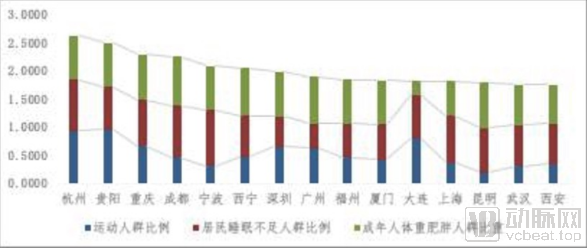
At the press conference, Dr. Li Dong told the media that data sharing and collaboration with partners was another key feature of this study. For instance, through its partnership with Huami Co., Ltd., the institute leveraged big data from smart wearable devices to compile statistics on users’ physical activity, sleep patterns, and other metrics across various cities, while ensuring robust protection of user privacy.
As a global leader in smart wearables and health cloud services, Huami Technology has provided robust support for research efforts by leveraging its artificial intelligence algorithms and big data analytics capabilities. The relevant study focused on individuals who had worn smart wearable devices for more than 60 days in 2019, with each city’s sample size exceeding 10,000 participants.
Wang Yu, a distinguished professor at the Health City Research Center of the Institute for New-Type Urbanization at Tsinghua University and former director of the Chinese Center for Disease Control and Prevention, stated, “In the future, we will continue to vigorously advance research on the Urban Health Index, gradually extending its scope to rural areas, with the ultimate goal of achieving comprehensive health assessment and monitoring that covers all regions, populations, and life stages across China.” The long-term plan for the “Tsinghua Urban Health Index” includes continuously optimizing and refining the indicator system, sustaining the output of research findings, further expanding collaborative networks, and strengthening policy recommendations.