

SinoVisionAI Breaks Pixel Limits in X-ray Medical Imaging with Next-Gen Hardcore Sensor Chip
In existing X-ray medical imaging, there has always been an unresolved challenge. When a patient undergoes an X-ray examination, the X-rays pass through the body part being examined and strike the flat-panel detector, forming an X-ray image within the detector. This image is ultimately converted into electrical signals, processed accordingly, and transmitted to a computer monitor, thereby displaying the X-ray information of the patient’s examined area. However, in this process,The sensitivity of flat-panel detectors to X-rays and the clarity (i.e., image resolution) of the resulting X-ray images can never be maximized simultaneously; a compromise must be struck.。
The underlying cause of this outcome lies in the technological limitations of the core sensors behind flat-panel detectors. These sensors are composed of complex sensing elements. The prevailing technology principle for modern medical imaging flat-panel detectors largely adopts the X-ray sensor technology developed in the 1990s by Siemens and Trixell, a French subsidiary of Philips. This innovation replaced film processing methods and ushered in the era of digital medical imaging.

However, it is self-evident that X-rays exceeding safe dosage levels are harmful to humans. Radiologists who are exposed to X-rays over the long term are particularly vulnerable and constitute a high-risk group for radiation injury. ToReduceThe radiation dose released by the X-ray source during imaging requires the flat-panel detector receiving the X-rays to have high sensitivity.Increase, enabling imaging with low-dose X-rays. However, the sensitivity of flat-panel detectorsImprovementwhich means that the area of its sensors must beEnlargement, to be sufficiently sensitive to capture the emitted X-rays; sensor areaIncreaseThis also leads to imaging pixelsEnlargement, which means that the final imaging clarity/resolution willReduce。
After comprehensively balancing radiation dose and image clarity, the resolution of current clinical X-ray imaging is generally maintained at approximately 120–130 µm. However, this resolution is insufficient for detecting microcalcifications as small as ~150 µm, such as those encountered in early breast cancer screening.
Led by Dr. Sang Junsheng, the team spent several years exploring and researching before ultimately finding a way to break through the limitations of existing sensor technologies. They revolutionized the core underlying technologies of sensors and developed a new generation of TFT sensor technology. In late 2017, they founded Zhongke Airui, which is dedicated to the design and manufacturing processes of semiconductor sensor chips and their applications in the healthcare sector. The company produces and manufactures globally leading high-end core components and equipment for medical imaging, providing first-class products and comprehensive solutions to the global market.
Sang Junsheng graduated from Peking University. He holds a Master’s degree in Biology from the Chinese Academy of Sciences, a Ph.D. in Biomedical Sciences from Brown University in the United States, and an MBA from the Wharton School of the University of Pennsylvania. With nearly two decades of extensive experience in entrepreneurship and frontline business management in the Chinese market, he has served as a director and advisor for numerous startups, growth-stage companies, large state-owned enterprises, and publicly listed firms. His background combines rigorous scientific training from top-tier research institutions with practical expertise honed in the competitive marketplace.
“Only sectors with high barriers to entry will have competitive opportunities in the future,” said Sang Junsheng. “‘Semiconductor chips’ and ‘healthcare’ are two fields with very high technological and industry barriers, so we are targeting application opportunities in medical scenarios based on semiconductor chip technology.”
Dr. Sang Junsheng briefly introduced to VCBeat the self-developedCore Technology of Next-Generation TFT Sensors, and how this technology can overcome the challenge of achieving both high sensitivity and high resolution simultaneously.
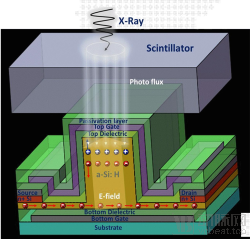
Schematic Diagram of the Three-Dimensional Structure of the Sensor
“First, our sensor chips adopt a three-dimensional structure, replacing the conventional planar semiconductor devices. This innovation embodies the concept of ‘structure as function,’ representing a fundamentally different design approach. It achieves a 3D active pixel architecture that integrates sensing, storage, and computational transmission, thereby enhancing both resolution and sensitivity.”
“Second, we achieved optoelectronic gain using a single transistor that would otherwise require the integration of three transistors even with CMOS technology, and the gain factor is very high.”
Empowered by these two effects, the new-generation TFT sensor chip developed by the Zhongke Airui team achieves a high signal-to-noise ratio under conditions of high gain and high resolution, thoroughly surpassing all existing technologies and enabling a 60% to 90% reduction in X-ray dose.Achieve a resolution with pixel sizes ranging from 30 µm to 75 µm, exponentially increasing photon utilization efficiency to achieve ultra-high sensitivity, thereby truly revolutionizing underlying sensing technology.
Zhongke Airui has redefined the new global standard for TFT sensor technology, becomingThe world's only active pixel sensor (APS) capable of single-transistor signal amplification, maintaining a high signal-to-noise ratio even at minute pixel sizes, surpassing other similar sensors globally, particularly those mainstream products still based on Trixell’s technical principles, thereby completely breaking the “Radiation Dose Reduction and Resolution Improvement Cannot Be Achieved Simultaneously” deadlock, is poised to usher in a new cycle of upgrades and iterations for global medical imaging equipment.
Leveraging this core technology, Zhongke Airui has manufacturedThe World's First 3D Smart Pixel Sensor Chip and Corresponding Flat Panel Detector, this flat-panel detector boasts six major advantages:Higher-resolution images with greater clarity (50 µm already achieved, ultimately reaching 30 µm), safer ultra-low radiation doses (radiation dose reduced by two-thirds, with a potential reduction of up to 90%), faster dynamic response (reaching 34 frames per second), more stable indirect imaging, more consistent large-area seamless imaging, lower power consumption, and high yield rate。
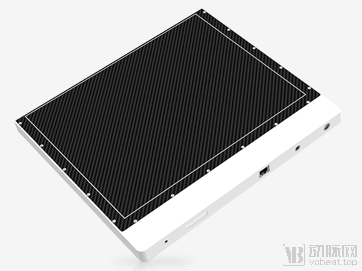
3D Intelligent Pixel Flat Panel Detector
This type of flat-panel detector offers unique advantages in interventional medical imaging equipment, such as DSA, C-arms, and various medical robots, which are increasingly used in clinical practice.
Complementing this detector are various complete X-ray medical imaging systems independently developed by Zhongke Airui. The company has successfully developed an ultra-high-definition, low-dose full-field digital mammography system. This system not only achieves both high resolution and low radiation dose but also holds promise for truly addressing the challenge of visualizing the boundaries and fine structures of dense glandular tissue, which is common in East Asian women and often difficult to discern with conventional mammography.
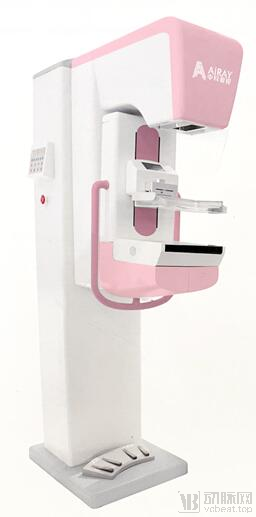
Mammography System
Having mastered underlying sensing technologies and independently developed sensor chips, flat-panel detectors, and complete mammography systems, Zhongke Airui has moved toward providing comprehensive solutions for early breast cancer screening. The company has developed a “Mobile Breast Cancer Screening System” that integrates four components—“shared resources, mobility, remote connectivity, and AI”—and has launched pilot implementations in Shandong Province.
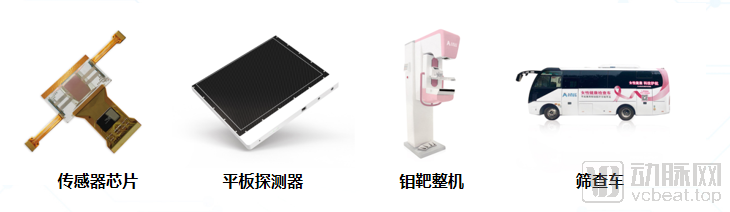
Looking ahead, Zhongke Airui aims to leverage this globally leading core technology in hard-tech innovation to develop more competitive, high-quality healthcare products, provide more valuable solutions for specialized medical sectors, and enable the public to access cutting-edge, premium healthcare services worldwide.
It is reported that Zhongke Airui has completed its Series A financing and is currently undertaking a new round of fundraising. The proceeds will be primarily allocated to the research and development of new products, product registration and certification, and market promotion. It is believed that good news will follow soon.