

Sinopharm Dental Positions Itself as China's Henry Schein with Integrated Midstream Platform and DSO Innovation
As a highly marketized sector, the oral care industry has never lacked attention.
FromInvestment EnvironmentAs seen, in the just-concluded year of 2020, star investment firms such as Sequoia Capital China, Qiming Venture Partners, and Matrix Partners China all placed significant bets on the dental care sector, with the industry recording a total of 18 financing deals throughout the year.
FromEntrepreneurial EnvironmentLook, benefiting from the introduction of relevant policies in recent years, a large number of doctors have joined the entrepreneurial wave. Data from Qichacha shows that 17,100 new dental medical-related enterprises were registered in China in 2020.
Based on the development experience of the dental industry in the United States, the dental healthcare market tends to expand rapidly when a country’s per capita GDP reaches $6,000–$10,000. As China’s economy has now reached this same level, its dental industry is entering a phase of sustained and rapid growth.
Seizing this opportunity, Sinopharm Capital officially announced the establishment of Sinopharm Dental Medical Devices (Shanghai) Co., Ltd. (hereinafter referred to as “Sinopharm Dental”) in October 2017. This represents a major strategic initiative by Sinopharm Capital to position itself in China’s dental market through its “integration of capital and business operations” strategy, with the aim ofBy fully integrating capital with industry resources, we aim to build an oral health ecosystem tailored to China’s dental industry.
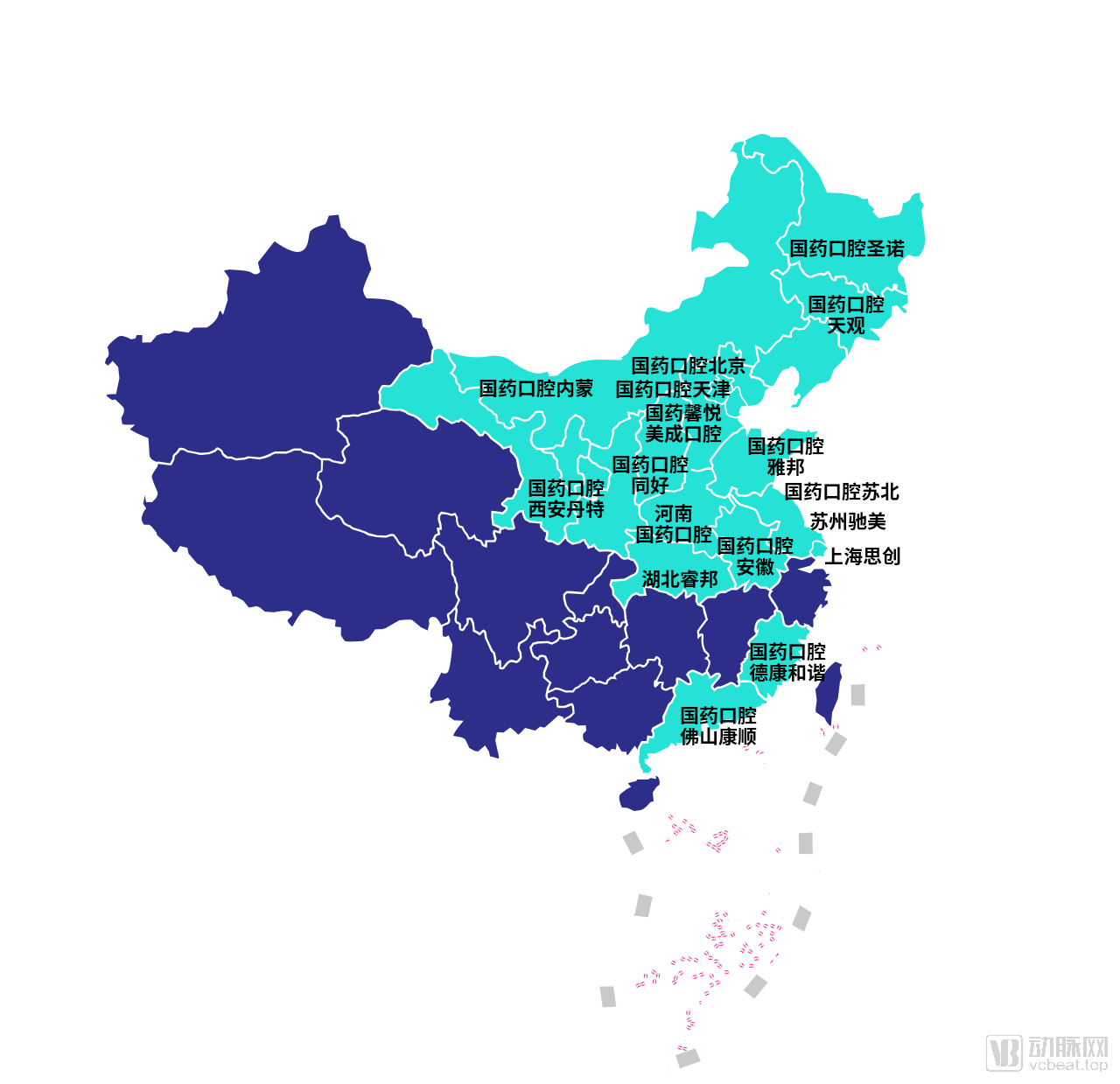
(Nationwide Subsidiary Network Map of Sinopharm Dental as of January 2021)
After three years of development, Sinopharm Dental has leveraged its capital advantages to target the demands and gaps in the dental industry, rapidly integrating mid-stream distributors within the sector. By utilizing a service network of subsidiaries covering key provinces and municipalities across China, it has successfully establishedA One-Stop Integrated Solution Platform for Professional Dental Products and Value-Added Services.As of January 2021,Sinopharm Stomatology has acquired subsidiaries in 16 different provinces/municipalities and established eight second-tier subsidiaries.
How has Sinopharm Dental achieved such remarkable results in just over three years? What are the pain points in the midstream of the dental industry? How can these challenges be addressed through empowerment? And how will industry trends evolve in the future? To address these questions, VCBeat conducted an exclusive interview with Lü Sang, Director and General Manager of Sinopharm Dental.

(Lu Sang, Director and General Manager of Sinopharm Dental)
The upstream of the dental industry comprises R&D enterprises for dental consumables, the midstream consists of distributors, and the downstream includes dental medical service providers.The most prominent issue facing the entire industrial chain is “fragmentation.”
On the upstream side, manufacturers are fragmented, and there is a wide variety of dental products., with over 100,000 SKUs alone. “Except for a few product lines, most upstream products cannot be effectively distributed to the numerous dental endpoints,” Lv Sang told VCBeat.
Downstream, the chain affiliation rate in the dental sector remains low, with 60% to 70% of institutions being private clinics., these small and fragmented dental clinics face challenges such as poor customer acquisition capabilities, weak bargaining power, high operational costs, rising rent and labor expenses, a wide variety of clinical SKUs, and difficulties in cash flow turnover.
The fragmented nature of the upstream and downstream sectors makes midstream distributors critically important.“Distributors in the midstream of the oral care industry play a crucial role in ensuring stable supply chain flows and service support for both upstream and downstream partners. However, the midstream segment remains fragmented.” Lu Sang stated that this is becauseDespite their large number, distributors primarily cover their respective regions, with limited service scopes and customer bases, leaving a vacancy for industry-leading enterprises.
Meanwhile, influenced by the national centralized procurement and distribution policies and the “two-invoice” system, the survival space for independent regional distributors has been shrinking year by year.Traditional distributors urgently need to transform and seek new growth drivers.In addition, emerging dental e-commerce platforms have faced challenges with inventory overstock in recent years, exhausted by price wars among competitors, and their profitability models are still undergoing validation.
Moreover, as the number of medical institutions and dentists has increased in recent years, downstream dental providers have placed more diverse service demands on distributors. In other words, beyond traditional distribution services, downstream dental institutions now require support from midstream distributors in areas such as technology enablement, equipment procurement and leasing, information system management, and personnel training. Therefore,Faced with 1,000 specialized dental hospitals, 10,000 stomatology departments in Grade IIIA hospitals, and 100,000 private dental clinics across China, the integration and innovation of traditional midstream distributors have become an inevitable trend.
“Amid the overarching trend of integration, it is essential for traditional distributors to innovate their business models. By adopting the perspectives of both public hospitals and private institutions, they can provide one-stop delivery of dental consumables and equipment, along with other comprehensive services. This approach leverages professional teams to empower dental clinics in managing non-clinical business operations,” said Lv Sang.Future dental institutions and practitioners, empowered by third-party services, will devote greater focus to clinical care and patient experience.
However, achieving integrated innovation in the oral care sector is no easy task. ThisParticipants are required not only to be well-versed in every segment of the midstream distribution industry but also to have an in-depth understanding of the upstream and downstream sectors of the dental industry., particularly with sufficient experience in a range of entrepreneurial challenges such as downstream brand representation, market relations, team building, and capital management.
It is against this backdrop that the market urgently needs the emergence of a game-changer.
“A major mission of Sinopharm Dental is to assist dentists in launching their own practices by identifying and fulfilling their needs throughout the entrepreneurial journey.“It is important to recognize that this addresses the needs of 100,000 dental clinics downstream in China, and even more so, the needs of the 170,000 practicing dentists behind them.” Lu Sang stated that empowering dentists to better launch and grow their practices is the mission of the midstream dental sector.
As mentioned above, to achieve integrated innovation in the midstream sector, participants must have a thorough understanding of the midstream distribution processes.. Let’s take a look at Sinopharm Dental. Although it has been established for only three years, Mr. Wu Aimin, President of Sinopharm Capital and Chairman of Sinopharm Dental, personally witnessed the transformation in the pharmaceutical industry nearly two decades ago.
“Amid the wave of scale effects brought about by the consolidation of pharmaceutical distribution enterprises,Sinopharm has emerged as the leading pharmaceutical distributor in China through mergers and acquisitions, securing a stable position on the Fortune Global 500 list.“Lu Sang stated that the oral care industry bears strong resemblance to the pharmaceutical industry of over a decade ago, which allows Sinopharm Dental to leverage its transferable experience.”
Of course, when it comes to the specific industry of oral health,M&A integration experience alone is far from sufficient; deep cultivation of the dental industry is also required.. Based on this,Sinopharm Dental has proposed an “Integration + Innovation” development model to empower and innovate within the dental industry.
Integration Aspects, by partnering with leading midstream dental distributors across various regions to gradually consolidate channels and build network effects. Coupled with unified strategic planning, information management, financial management, and talent management, this approach enhances platform operational efficiency, reduces costs, improves effectiveness, and simultaneously boosts profitability.
InnovationBy benchmarking against the mature models and methodologies of overseas enterprises, Sinopharm Dental is building a Chinese-style DSO (Dental Service Organization). In addition to introducing new products, it will provide dental medical institutions with diversified solutions, including professional medical engineering design, equipment procurement and leasing, B2B e-commerce, information system management, patient referral services, a platform for multi-site practicing physicians, insurance coverage, and professional education. The range of applied solutions will continue to expand, comprehensively meeting the standardized and personalized needs of dental medical institutions.
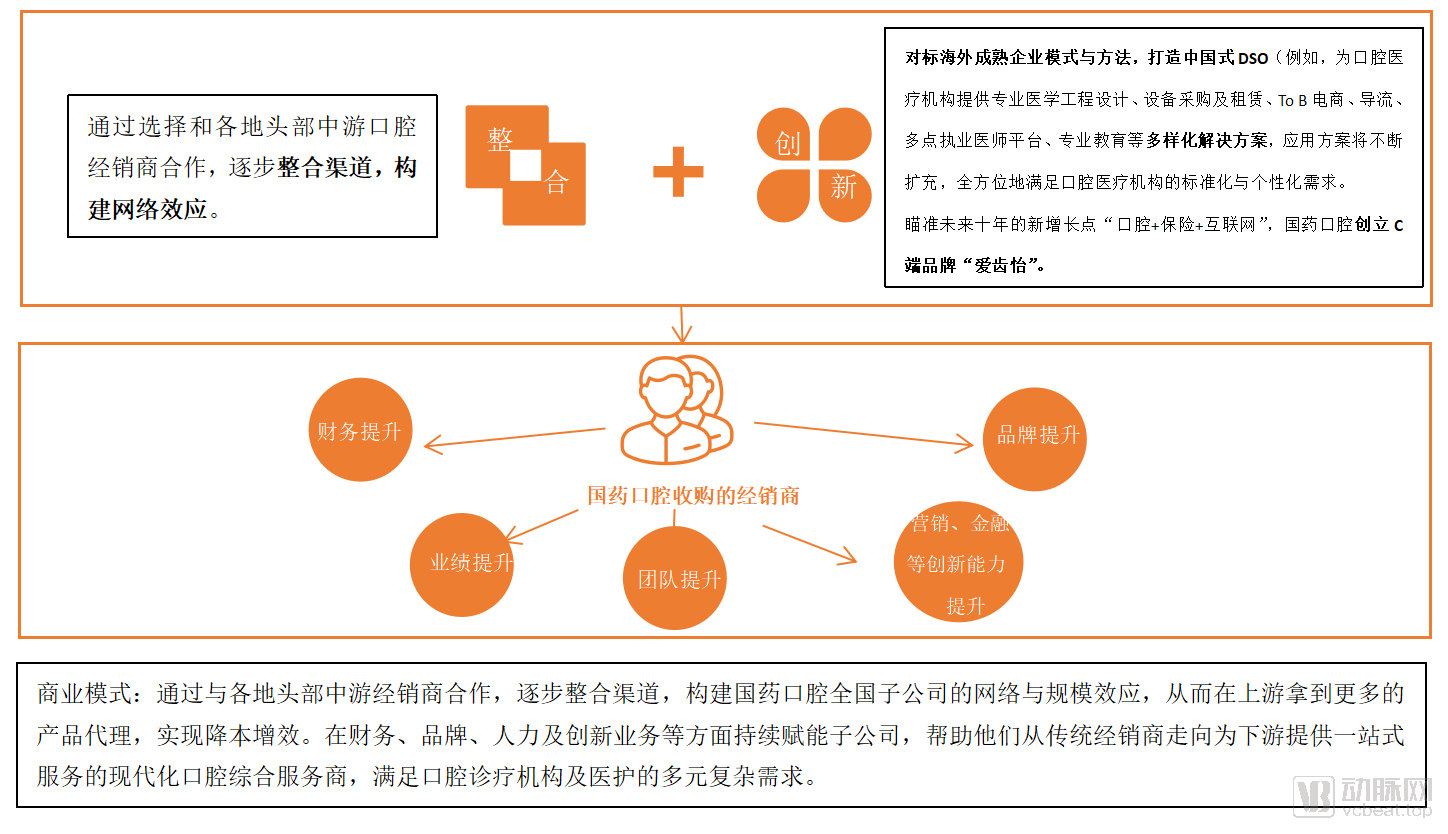 (Sinopharm Dental's Business Model Logic, Chart by VCBeat)
In terms of specific implementation,Addressing the core pain points faced by private dental clinics, Sinopharm Dental’s headquarters has led its subsidiaries across China in conducting in-depth analyses to help them achieve comprehensive improvements.“‘Empowerment’ has always been a keyword in the development of Sinopharm Dental, serving as the core competitiveness of the enterprise,” said Lü Sang.
First, it addresses issues faced by partners in their independent operations, such as a limited range of agency products and an overly simplistic product portfolio structure, thereby helping them optimize their layout across the dental care ecosystem.“Unlike the common model of direct equity acquisition, Sinopharm Dental chooses to co-found ventures with partners who have a strong willingness to transform.” In Lu Sang’s view, as Sinopharm Dental evolves from a small regional distributor into a large-scale regional service provider, and from a traditional distributor into a comprehensive service provider offering one-stop solutions to downstream clients, it needs to help its partners build their own core competitiveness.
To this end, following the integration of its subsidiaries, Sinopharm Dental’s headquarters will actively coordinate resources to systematically assist the majority of its subsidiaries in securing distribution rights for several globally renowned dental consumables, thereby optimizing their product portfolios. Through this process, subsidiaries will mutually expand coverage of contracted upstream manufacturers, achieving a synergistic effect where “1+1>2,” and introducing numerous high-quality distributed products, such as Angelalign, B. Braun sutures from Germany, and extraction gel patches.
Online sales enablement is also advancing in tandem. Currently, Sinopharm Dental’s headquarters has established a professional project team of over 50 members and built a B2B e-commerce platform. This e-commerce segment empowers traditional business operations by leveraging data analytics to identify long-tail, low-consumption demand, thereby providing better insights into the product portfolio structure of regional distributors. Furthermore, it extends market reach through internet penetration, freeing traditional consumables sales personnel to engage in higher-value activities and enabling more efficient allocation of human and other resources.
As more subsidiaries join, network effects are becoming increasingly prominent. Subsidiaries have seen improvements in the quantity and quality of agency products within their coverage areas, business scale, and local influence—advantages that were unattainable for traditional distributors operating independently within regional markets.
In terms of business enhancement, Sinopharm Dental will continue to integrate the regional needs of its subsidiaries in the future, acquiring product resources through investment, OEM, centralized procurement, and other means, thereby gradually improving the regional dental ecosystem layout of its subsidiaries.
Second, it addresses partners’ financial management challenges, thereby facilitating their financial improvement.Benefiting from network effects and economies of scale, the vast majority of Sinopharm Dental’s subsidiaries maintained double-digit financial growth during the pandemic. Additionally, Sinopharm Dental enhanced the asset operational efficiency of its subsidiaries through various measures, including optimizing performance evaluation systems, conducting intra-group inventory analysis and sharing, and performing real-time accounts receivable analysis.
“Compliance in business operations is the lifeline of an enterprise. With the assistance of Sinopharm Dental, its subsidiaries have established and improved compliance and internal control management systems, resolving or eliminating various operational and management risks through process reengineering and optimization, thereby ensuring the company’s healthy and sustainable development.”
Third, address challenges such as difficulties in team building and management for partners, and carry out team development and enhancement from the overall perspective of Sinopharm Dental.“Attracting, gathering, and retaining talent are the cornerstones of the Group’s human resources development,” stated Lu Sang. Sinopharm Dental integrates its talent strategy into the daily operations aimed at empowering both the Group and its subsidiaries. Key talent initiatives focus on optimizing subsidiary organizational structures, building specialized talent pools, facilitating the recruitment and integration of personnel for critical roles, coordinating compensation and benefits, streamlining and establishing management systems and processes, implementing incentive mechanisms, and fostering cultural integration between the Group and its subsidiaries.
In addition to the initial recruitment of HR specialists for onboarding at various subsidiaries, Sinopharm Dental has been continuously building a learning-oriented organization. The Human Resources Department of Sinopharm Dental consistently invites external expert instructors to deliver multi-dimensional and comprehensive professional training tailored to employees in different positions and job levels. This initiative has overall enhanced the professional competencies of Sinopharm Dental’s workforce while further reducing talent training costs at the group level.
To date, Sinopharm Dental has launched two cohorts of its Management Trainee Program, a key initiative to attract high-potential talent and build a robust talent pipeline. Additionally, Sinopharm Dental has partnered with the School of Management at Fudan University and the ICSP (International Corporate Strategy Practice) program at CEIBS to establish an internship base. By leveraging the expertise of China’s top business schools, the company aims to jointly explore the integration of industry and academia in the dental sector.
Fourth, address issues such as partners’ lack of brand recognition and influence, and strengthen brand operations through enhanced management and empowerment.Since its establishment, Sinopharm Dental has adopted a multi-pronged approach to brand building, making professional appearances at events organized by the Chinese Stomatological Association, industry exhibitions, association gatherings, and in media outlets, thereby accumulating significant popularity within the industry.
“The pioneering of brand identity, along with the establishment of brand recognition and awareness, has provided significant support to our subsidiaries across China,” said Lu Sang. He noted that brand visibility facilitates local recruitment and attracts more top-tier talent. “The outcomes of brand building extend beyond visuals, copywriting, and processes; they are inextricably linked to business results. Currently, the Sinopharm Dental brand has successfully supported multiple key regional tenders, earning the trust of hospitals and clinical practitioners, thereby generating stable business revenue,” Lu Sang stated.
Fifth, provide one-stop services to address the challenges faced by oral healthcare service providers in marketing, finance, and customer acquisition.. Private dental clinics care not only about pricing but also about services and empowerment beyond mere transactions. In light of this, Sinopharm Dental has launched its DSO (Dental Support Organization) and consumer-facing businesses to provide one-stop, diversified services to local end customers.
For example, Sinopharm Dental established the consumer-focused professional dental brand “Ai Chi Yi,” which is betting on the industry’s future trend of “Dental + Insurance + Internet.” By aggregating high-quality industry resources—including insurance, innovative payment methods, personal oral care products, and dental clinics—the brand adopts an S2B2C model to provide services such as oral prevention, diagnosis and treatment, and daily care to insurance companies, large corporate clients, and other consumer traffic channels like points redemption platforms.
Currently, Aichi Yi has established strategic partnerships with PICC Property and Casualty Company Shanghai Branch, UnionPay Business Zhongjin Tongsheng, Wanda Information Manniu Technology, Ping An Mingyao, and Sinopharm Online. Its national service network has been deployed across 25 provinces in China, covering clinics in 85 cities.
Next, iDentify will further collaborate with insurance companies, employee benefits platforms, and third-party traffic channels (such as the already implemented China Mobile points redemption platform and Telecom’s BestPay) to provide dental clinics with more high-quality new patient leads.
“By actively engaging across five key areas, Sinopharm Dental aims to support the long-term growth of the dental industry,” said Lu Sang.
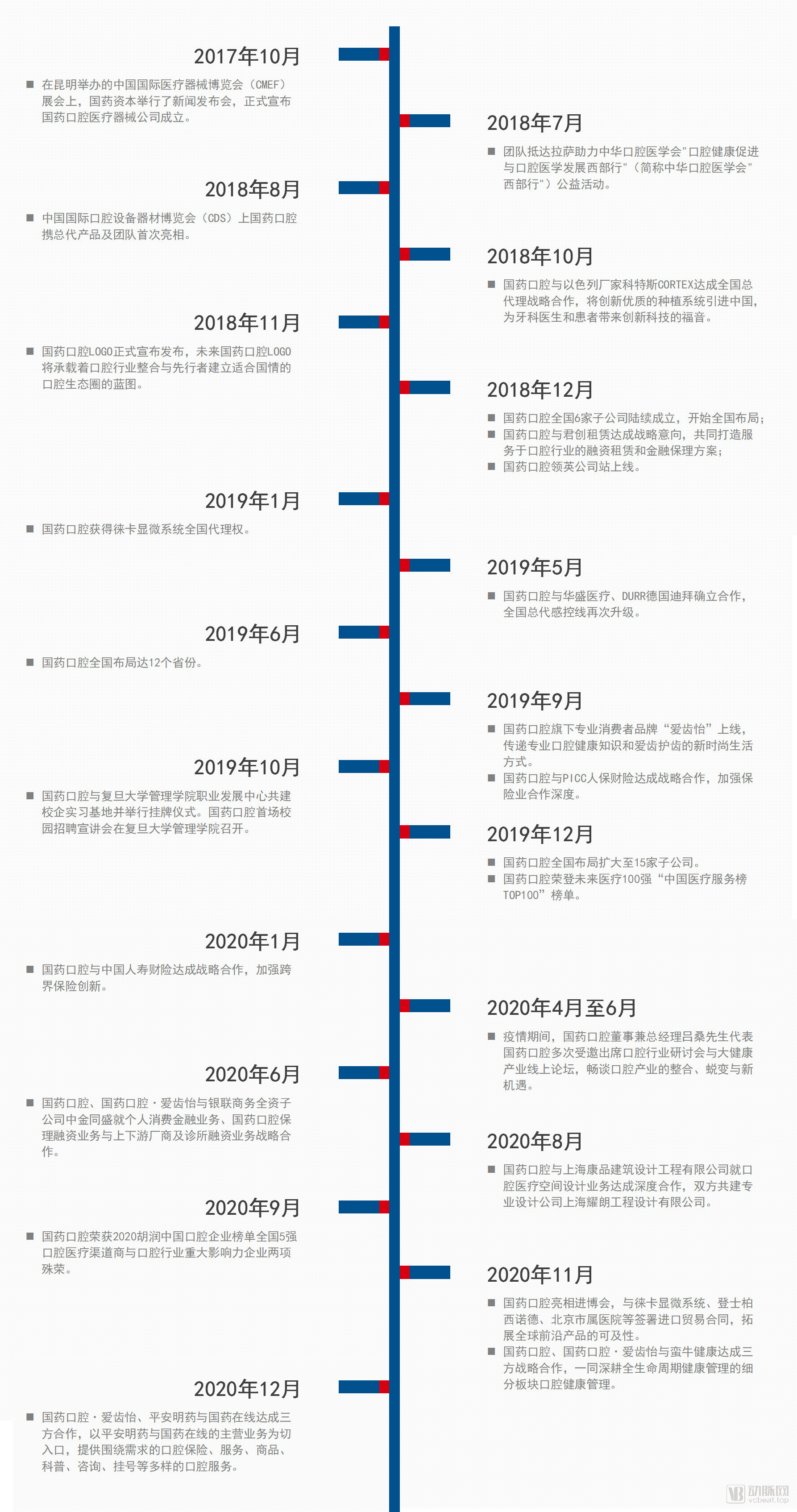
(Sinopharm Dental Development History)
The dental industry has consistently attracted a surge of startups, primarily for two reasons: first, dental care represents one of the most consumer-oriented segments within the healthcare sector, characterized by high-frequency user demand and substantial market potential; second, the industry features distinct attributes such as limited insurance coverage, high average transaction values, and high gross profit margins.The oral healthcare industry is relatively prone to producing industry giants, such as Henry Schein and Patterson in the United States.
As the world’s largest provider of dental medical products and services with a clinic-focused model, Henry Schein, founded in 1932, operates through two divisions: one dedicated to healthcare solutions and the other to technology and value-added services. Its dental business primarily serves dentists, dental laboratories, dental schools, and other institutions.
HRC is best known in the industry for its continuous acquisitions and expansion.In 1997, Henry Schein acquired Sullivan Dental Products, Dentrix Dental Systems, Caligor, and Medi-Quick Arzt GmbH (Germany), becoming the world’s largest distributor of dental equipment and supplies. In 2014, Henry Schein acquired five companies from Arseus to strengthen its European dental and technology business. By the end of 2017, Henry Schein reported annual revenue of $12.5 billion and net income of $406.3 million, with dental revenue reaching $6.048 billion.
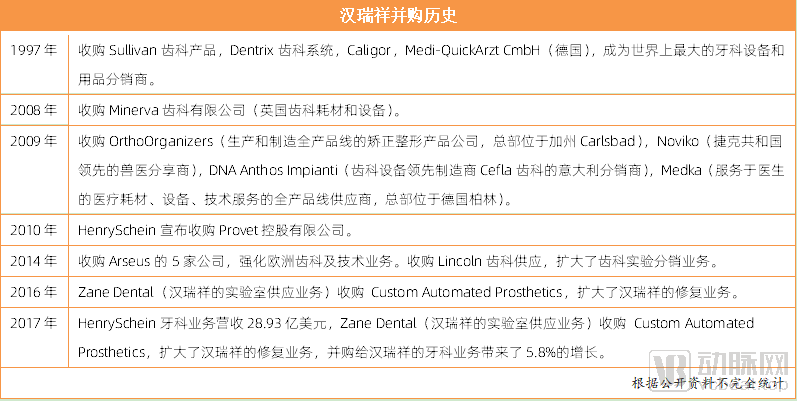
Similarly, as the second-largest dental equipment distributor in the United States, Patterson has been continuously acquiring companies since its NASDAQ listing in 1992. According to public information, Patterson aggressively acquired five dental-related enterprises in 2004.
Drawing on the U.S. experience, a large number of small and medium-sized dental enterprises in China, bolstered by capital, have attempted to capture greater market share through rapid expansion, yetConstrained by inadequate service capabilities and operational inefficiencies, countless enterprises have continuously vanished into the tide of entrepreneurship over time.
Logically speaking, the digital transformation underway in the dental industry in recent years has provided a significant boost to dental service providers. For instance, the data source for orthodontic treatment is gradually shifting from traditional plaster cast molds to intraoral scanning, a change that has undoubtedly yielded substantial efficiency gains. However,In contrast, looking at the downstream sector,“The fragmented landscape of ‘small, isolated, and scattered’ entities still requires greater impetus to change.”
The reason behind this is that,Digital dentistry is not merely a collection of digital devices and an accumulation of technological applications., it should instead step back from a purely technical perspective to reconstruct real-world dental medical services into the digital realm, integrate the upstream, midstream, and downstream sectors, and achieve comprehensive interconnectivity. In other words,"Digitalization may seem to connect technologies, but in reality, it connects ways of thinking."
By clarifying this logic and revisiting Henry Schein, the dental giant, it becomes easy to see that while its outward manifestation is expanding market position and broadening its product portfolio through extensive acquisitions, its core essence is actuallyHenry Schein provides services to dental clinics to foster customer dependency., including information management software, training, as well as equipment installation, maintenance, and repair.It is precisely these services that, from a digitalization perspective, address the challenges encountered in establishing dental clinics, fill a significant gap in the market, and enhance customer loyalty.
“Benchmarking against Hanruixiang, Sinopharm Stomatology hopes to join hands with peers in the dental field to promote the development of China’s dental industry.” Lu Sang stated candidly that, driven by integration and innovation, the dental industry is poised for rapid growth. However, this process will still require sustained investment and effort over a long period. This constitutes both a challenge and a barrier to entry.