

Zhanxing Bio's Tumor Early Screening Product Enters Market with Affordable Pricing to Enhance Screening Accessibility
China's cancer early screening industry has entered a phase of rapid development, with an increasing number of high-quality products being launched on the market.
On January 18, 2021, VCBeat learned that ZHANHANG BIOTECH, a molecular diagnostics company, has officially launched its microRNA-based ultra-early cancer screening test. The product can detect seven high-incidence cancers, including lung, esophageal, and gastric cancers, with average specificity and sensitivity exceeding 85%. It enables the detection of tumors at an ultra-early stage, helping to avoid the physical suffering and substantial medical costs associated with advanced-stage disease.
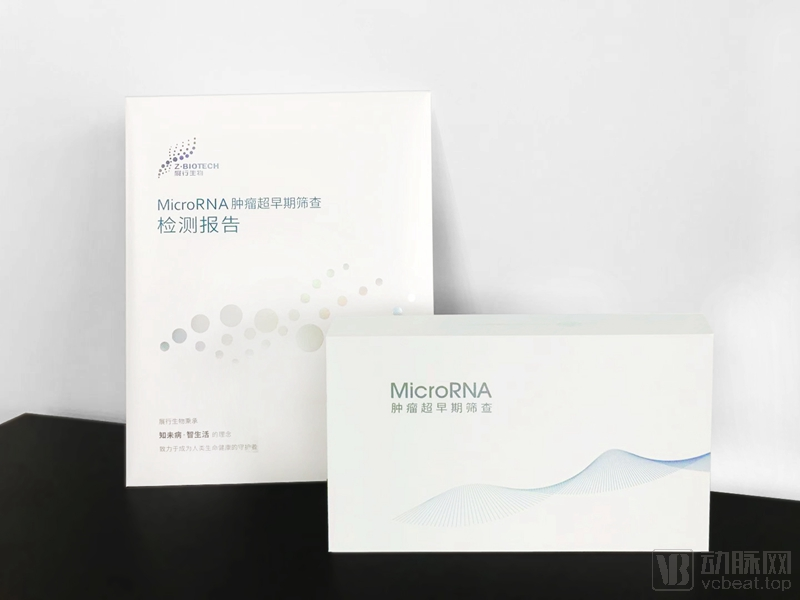
ZHANHANG BIOTECH microRNA Ultra-Early Cancer Screening Test Product
(Lung cancer, esophageal cancer, gastric cancer, colorectal cancer, liver cancer, cervical cancer, breast cancer)
According to the latest 2020 global cancer statistics released by the International Agency for Research on Cancer (IARC) of the World Health Organization, there were 19.29 million new cancer cases worldwide in 2020, including 4.57 million in China, accounting for 23.7% of the global total. In 2020, there were 9.96 million cancer deaths globally, with 3 million in China, representing 30% of the total number of cancer deaths.[1]
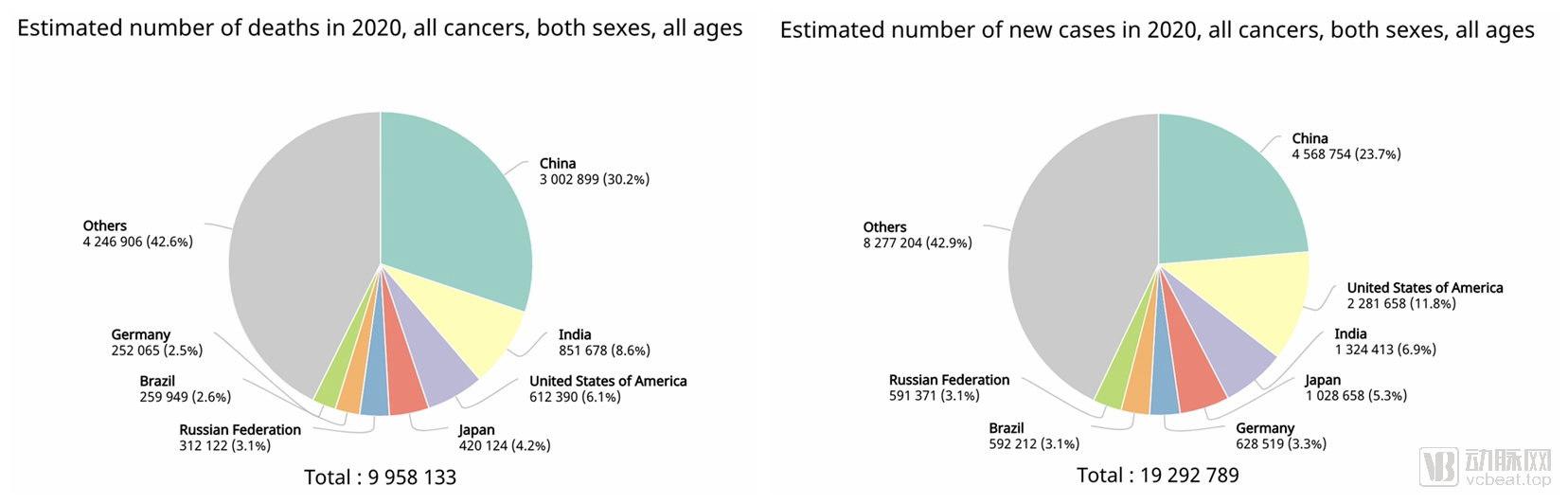
China Ranks First Globally in Both New Cancer Cases and Cancer-Related Deaths
The high incidence and mortality rates of cancer have made tumor prevention and control a key focus of China’s policy in recent years. The 2019 Government Work Report stated that “actions for cancer prevention and treatment should be implemented, promoting preventive screening, early diagnosis and treatment, and breakthroughs in scientific research, with a focus on addressing critical public livelihood issues,” bringing unprecedented attention to early cancer screening.
Traditional methods for early cancer screening include serum tumor marker testing and imaging examinations. Although there are numerous tumor marker assays, they suffer from low accuracy and a high rate of false negatives, while imaging techniques often struggle to detect early-stage tumors. These limitations have, to some extent, hindered the widespread adoption of early cancer screening.
As liquid biopsy technology continues to mature, novel tumor early-screening biomarkers such as circulating tumor cells (CTCs), circulating tumor DNA (ctDNA), and microRNA are rapidly evolving, becoming a key focus of the industry. Compared with traditional methods, liquid biopsy offers advantages including repeatability, minimal side effects, ease of operation, rapid detection, and broad indications, thereby facilitating earlier detection of tumors at initial stages and enabling timely treatment and improved prognosis for patients.
ctDNA and CTCs have emerged as popular biomarkers for early cancer screening, becoming the focus of intensive research by most companies. However, growing evidence indicates that although ctDNA is a tumor marker with high specificity, its susceptibility to degradation and low abundance impose stringent requirements on detection technologies, resulting in high testing costs [2]. Meanwhile, unresolved issues regarding tissue-of-origin identification further limit its clinical application.
Relatively speaking, other molecular substances derived from tumor cells, such as non-coding RNAs (ncRNAs), may be more suitable as biomarkers for tumor diagnosis. Among these, microRNA (miRNA), also known as tiny ribonucleic acid, is a class of endogenous non-coding small RNA molecules consisting of 19–25 nucleotides. miRNAs participate in the regulation of cell growth, proliferation, and apoptosis, and play a role in modulating the expression of oncogenes and tumor suppressor genes. Furthermore, certain characteristics of circulating microRNAs make them ideal biomarkers for early cancer screening.
First, microRNAs exhibit high stability in blood. The hairpin-like structure of microRNAs protects them from degradation by RNases. Meanwhile, 10% of microRNAs are contained within nano-sized exosomes, while the remaining up to 90% are bound to vesicles, platelets, and proteins in the blood, such as Ago2 and HDL; these associations further enhance the stability of microRNAs in circulation.[3]
Secondly, since microRNAs are actively secreted by cells into the bloodstream, their concentrations are relatively high, enabling precise and effective detection at the picogram level using conventional real-time quantitative PCR (qPCR) methods. This significantly reduces costs, thereby giving microRNAs greater advantages in terms of stability and cost-effectiveness.
However, due to the short length of microRNAs and their frequent binding to various tissue components, which pose challenges such as difficult isolation and extraction, poor specificity in PCR detection, and issues with long-distance transportation, few companies are currently engaged in the development of microRNA-based early cancer screening.
ZHANHANG BIOTECH is one of the earliest companies in China to develop microRNA-based products for early cancer screening. Since its establishment in 2014, the company has focused on exploring the potential applications of microRNA in disease diagnosis and treatment. Wei Zhanxing, the founder and chairman, has many years of experience in the field of genetic testing. He believes that while the advantages of genetic testing in early cancer screening are undeniable, affordable products are key to market penetration. Therefore, he favors microRNA testing, which offers lower costs along with high sensitivity and specificity.
The microRNA-based ultra-early cancer screening test is ZHANHANG BIOTECH’s inaugural product in the field of early cancer detection. Requiring only a 2–4 mL peripheral blood sample, this test screens for seven high-incidence cancers—lung, esophageal, gastric, colorectal, liver, cervical, and breast cancer—with a detection accuracy significantly superior to that of conventional tumor markers.
Notably, ZHANHANG BIOTECH’s microRNA-based early cancer screening product utilizes its proprietary PCR detection technology, which addresses the poor specificity of traditional quantitative fluorescence PCR assays caused by the short length of miRNAs. In this method, total RNA extracted from samples is polyadenylated, and target miRNAs are reverse-transcribed into cDNA using specific reverse transcription primers, thereby ensuring assay specificity. This straightforward S-Poly(T) Plus method, as a novel miRNA detection technology, can be employed for non-invasive screening of early-stage tumor markers. The detection of circulating miRNA tumor markers offers advantages such as high reproducibility, low cost, and ease of sample collection, processing, and management.
Furthermore, the company has amassed a large-scale microRNA database and developed advanced artificial intelligence algorithms to screen for molecules highly correlated with various cancers from over 2,600 human-derived miRNAs. It has also established a standardized testing system to ensure the accuracy of test results.
Meanwhile, ZHANHANG BIOTECH has collaborated with multiple Grade A tertiary hospitals to collect tens of thousands of clinical plasma samples, including thousands of serum and plasma-positive samples from clinical patients and negative samples from healthy volunteers. By detecting and comparing microRNA levels in the plasma of patients and healthy individuals, the company further identified microRNA biomarkers that are highly expressed and highly specific for the early detection of seven types of cancer. Multi-center clinical validation results demonstrated that these biomarkers achieve an average sensitivity and specificity of over 85% for various early-stage cancer screenings.

ROC-AUC Curves of ZHANHANG BIOTECH's microRNA Ultra-Early Cancer Screening Test for Various Cancers
ZHANHANG BIOTECH’s subsidiary, Noah Medical, has obtained qualifications for a medical testing laboratory and established a complete service loop, providing clients with one-on-one consultation services. In the future, ZHANHANG will continue to optimize its early cancer screening products to cover more types of cancer, while conducting clinical research on the use of microRNA markers for tumor prognosis monitoring. The company is committed to becoming a leader and driver in the fields of personalized cancer diagnosis and smart healthcare management.
China’s cancer early screening market boasts broad prospects. According to a report by Industrial Securities, the total potential market size for cancer early screening in China is projected to increase from $18.4 billion in 2019 to $28.9 billion in 2030, with a compound annual growth rate (CAGR) of 4.2%.
In recent years, research on microRNA has gradually increased both domestically and internationally. Many experts and academicians, including Academician Hao Xishan, highly recognize the potential of microRNA in early cancer screening, diagnosis, and treatment. MicroRNA-based detection for liver cancer has been included in the National "Guidelines for Diagnosis and Treatment of Primary Liver Cancer (2019 Edition)." Meanwhile, after review, microRNA testing has been incorporated into the pricing systems of many top-tier tertiary hospitals in China, such as Shenzhen Hospital of University of Chinese Academy of Sciences and Zhongshan Hospital in Shanghai. As of December 2020, microRNA testing had entered the medical service pricing systems of Guangdong Province and Shenzhen City [4,5], with implementation across all non-profit medical institutions in the province starting from January 1, 2021. These developments indicate that microRNA is poised to become a cornerstone of the early cancer screening industry.
Cancer screening is the most effective approach to reducing mortality from malignant tumors, and early cancer screening is widely recognized as a blue-ocean market. Currently, early cancer screening products remain in the “experience-based service” stage, but they are highly likely to replace traditional tumor screening techniques in the future and evolve into a routine medical diagnostic tool.
Beyond early cancer screening, microRNA holds broad application prospects in the diagnosis of other diseases, such as ultra-early screening for cardiovascular and cerebrovascular disorders. In the future, the company will continue to focus on microRNA detection technology, developing more low-cost, precise, and convenient diagnostic solutions to further benefit the Chinese population and advance the development of precision medicine in China.
About ZHANHANG BIOTECH
ZHANHANG BIOTECH was co-founded by Chinese and American biologists and medical scientists in 2014, focusing on the research and application of molecular diagnostic technologies. It was recognized as a National High-Tech Enterprise in 2017 and has obtained 14 national invention patents to date.
ZHANHANG BIOTECH’s core products encompass ultra-early screening for tumors and cardiovascular/cerebrovascular diseases via microRNA, as well as ultra-sensitive detection of HIV during the 72-hour window period using DNA nanosensors. The company has also established a presence in fields such as stem cell-based disease therapies. Notably, its independently developed ultra-sensitive HIV detection technology, based on novel nanobiosensors, can detect the HIV virus within the 72-hour post-infection window period. This globally unique technology received an award at the 8th China Innovation and Entrepreneurship Competition, guided by the Ministry of Science and Technology, the Ministry of Finance, and the Ministry of Education. Upholding the philosophy of “Knowing Pre-disease, Smart Living,” ZHANHANG BIOTECH is committed to providing comprehensive and personalized health solutions, serving as a guardian of human life and health.
References:
[1] World Health Organization International Agency for Research on Cancer https://www.iarc.fr/faq/latest-global-cancer-data-2020-qa/
[2] . Shigeyasu K, Toden S, Zumwalt TJ, Okugawa Y, Goel A. Emerging Role of MicroRNAs as Liquid Biopsy Biomarkers in Gastrointestinal Cancers. Clin Cancer Res. 2017 May 15;23(10):2391-2399. doi: 10.1158/1078-0432.CCR-16-1676. Epub 2017 Jan 31. PMID: 28143873; PMCID: PMC5433899.
[3] Christou N, Meyer J, Popeskou S, David V, Toso C, Buchs N, Liot E, Robert J, Ris F, Mathonnet M. Circulating Tumour Cells, Circulating Tumour DNA and Circulating Tumour miRNA in Blood Assays in the Different Steps of Colorectal Cancer Management, a Review of the Evidence in 2019. Biomed Res Int. 2019 Dec 4;2019:5953036. doi: 10.1155/2019/5953036. PMID: 31930130; PMCID: PMC6942724.
[4] Notice of the Guangdong Provincial Healthcare Security Administration on Publishing Newly Added and Revised Medical Service Price Items Including Iridodialysis Repair http://hsa.gd.gov.cn/gkmlpt/content/3/3162/post_3162286.html#465
[5] Notice of the Shenzhen Municipal Healthcare Security Administration on Publishing and Implementing Newly Added Medical Service Price Items in Our City http://www.sz.gov.cn/cn/xxgk/zfxxgj/tzgg/content/post_7804172.html