

MicroPulse Featured Doctor | Xu Kai: What to Embrace and What to Avoid — A Young TCM Practitioner’s Approach to the Internet Era
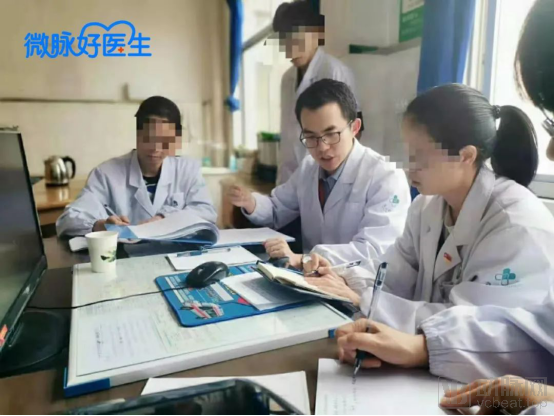
The COVID-19 pandemic has changed the attitude of Xu Kai, a young TCM practitioner, toward online medical consultation services.
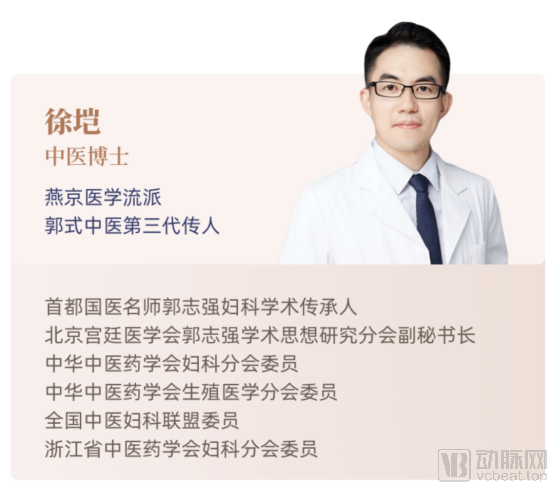
Dr. Xu Kai has the potential to become a star practitioner of Traditional Chinese Medicine (TCM). With a professional image and solid expertise, he is the third-generation inheritor of the Guo School of TCM within the Yanjing Medical Tradition. As a key specialist in the gynecology department at Zhejiang Provincial Hospital of Traditional Chinese Medicine, he has been frequently invited to participate in health science popularization programs on television.
A commercial company once approached Dr. Xu Kai, proposing to invest heavily in building him into an “internet-famous doctor,” but Dr. Xu firmly declined. In the face of the advent of the “Internet Plus” era, Dr. Xu has his own philosophy for engaging with external changes.
In the face of traffic monetization and live-streaming e-commerce, Xu Kai has chosen to steer clear.
In the face of “Internet + Traditional Chinese Medicine,” he chose to actively embrace and experiment with it.
During the critical period of COVID-19 prevention and control, Xu Kai leveraged the Weimai platform to extend the professional value of a traditional Chinese medicine practitioner through online services.
Amidst Change and Constancy, Action and Inaction, and the Online Noise, His Original Intention Remains Unshaken: Xu Kai Maintains the “Inner Stability” of a Young TCM Practitioner.
1. It is difficult to build trust without offline interaction
As a lecturer at Zhejiang Chinese Medical University, Xu Kai found that students had many questions requiring clarification upon their return to the classroom, even though the answers had already been explained multiple times during the online courses.
Online communication and interaction may appear instantaneous and convenient, yet it is difficult to establish deep trust through screen-mediated eye contact and brief exchanges; however, trust is precisely what is most essential in clinical diagnosis and treatment.
In the consultation room, Xu Kai met in person for the first time a patient who had previously consulted with him online. Although Xu Kai felt that the online communication had gone well, he realized upon their face-to-face meeting that a genuine trust relationship between doctor and patient had not yet been established.
“Purely online, it feels like doctors and patients are just buyers and sellers; the doctor-patient relationship is somewhat akin to a transactional one, with you asking and me answering.”
As a Doctor of Traditional Chinese Medicine (TCM), Xu Kai firmly believes that in-person interaction is the core of TCM. The essence of TCM lies in trust, companionship, and empathy—elements that cannot be achieved through a screen.
"Treat the person, not the disease; focus on the patient, not the illness."
“In the face of disease, doctors and patients form a unified community; patient cooperation is indispensable, and such cooperation hinges on sufficient trust in physicians. The internet is merely a tool and cannot fully replace offline care.”
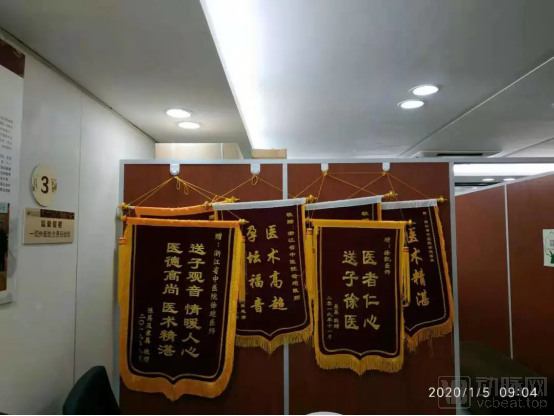
△ Silk banner presented to Dr. Xu Kai by a patient
2. No Online TCM Practitioners Will Remain Stagnant
“Drug efficacy accounts for only 30–40%, patient trust in the physician accounts for 30–40%, and doctor–patient communication accounts for 30–40%.” This is a statement made by Professor Guo Zhiqiang, the esteemed mentor of Xu Kai.
After beginning his independent medical practice, Xu Kai came to appreciate the weight of these words.
He has encountered many such patients: some failed to attend follow-up appointments on schedule, while others resumed staying up late after their symptoms resolved... Ultimately, the regained state of health quickly deteriorated.
In the world of herbal medicine, pharmaceuticals serve merely as a catalyst, and the consultation room is only the starting point; guiding patients back to the path of health often takes place beyond the clinic.
“What exactly is TCM diagnosis and treatment? Is it merely the four diagnostic methods of inspection, auscultation and olfaction, inquiry, and palpation performed in the consulting room?” Xu Kai once pondered this question.
“After engaging with VCBeat for several days, Xu Kai has also found his answer.”
“TCM diagnosis and treatment services should constitute a long continuum of care; beyond the consultation room, there must be regular communication, continuous monitoring, and consistent support—areas where the internet can play a pivotal role.”
Adhering to the principle that “physicians do not solicit patients,” for a long time, patients felt like kites with broken strings once they left the consultation room. In terms of diagnosis and treatment, maintaining regular contact, consistent attention, and continuous care provides the best guarantee for therapeutic efficacy.
Xu Kai specializes in gynecological disorders, TCM-assisted conception, and the regulation of spleen and stomach conditions. These conditions share common characteristics: prolonged treatment courses and high demands for precise medication.
"Prescribing medication is akin to deploying troops; to ensure therapeutic efficacy, prescriptions must be adjusted periodically. Xu Kai’s ideal scenario involves patients seeking conception consulting with him for prescription adjustments every three days, while patients with other conditions should return for follow-up visits at least once a week."
Xu Kai sometimes finds this “frequency” somewhat “demanding,” making it nearly impossible to achieve for office workers and out-of-town patients.
Leveraging “Internet+”-enabled traditional Chinese medicine diagnostics (inspection, auscultation/olfaction, inquiry, and palpation), Xu Kai has delivered long-term care that transcends geographical barriers through online follow-ups after patients’ initial in-person consultations.
On the Weimai platform, Dr. Xu Kai offers online consultations and specialized disease management services, ranking at the forefront in terms of consultation volume, number of followers, and positive review rates, making him a well-deserved “Top Physician” on Weimai. Beyond clinical practice, Dr. Xu has also become a prominent voice for Traditional Chinese Medicine (TCM) on the platform, earning recognition as the TCM practitioner most skilled in prescribing herbal pastes, most adept at explaining them, and most effective in communicating TCM principles.
“Offline clinics and the Internet are not contradictory or in conflict; there is no issue of online services replacing offline ones. The key lies in identifying their points of integration and addressing patients’ needs.” By integrating the four diagnostic methods, Xu Kai examines “Internet + Traditional Chinese Medicine (TCM)” through the holistic pattern-identification framework of TCM, revealing a distinct perspective.
Relocating from Beijing to Hangzhou did not cause Xu Kai to lose his existing patients; instead, he leveraged the internet to achieve long-term patient management and follow-up care.
3. “Online + Offline”: Returning to the Beauty of Traditional Chinese Medicine
During exchanges with peers, Xu Kai discovered that some hold a negative attitude toward “Internet + Traditional Chinese Medicine.”
“Doctors should not merely wait for patients to come to medical institutions; they need to take the initiative and not confine themselves to consulting rooms. Disease progression should be curbed during the preventive stage, rather than waiting until symptoms become severe before seeking consultation.” Xu Kai found that this goal can be achieved through internet participation, leveraging Traditional Chinese Medicine’s distinctive emphasis on “treating disease before it arises.”
Xu Kai has witnessed and looks forward to the changes that the internet will bring to the entire industry.
Traditional Chinese medicine (TCM) is shaped by its local environment, exhibiting distinct regional characteristics. The advent of the “Internet + TCM” era will gradually break down information asymmetry and expand the reach of high-quality TCM diagnostic and therapeutic resources.
“The greatest benefit of the internet to traditional Chinese medicine (TCM) is the breaking down of regional barriers to physicians’ brands, enabling the true cross-regional circulation of skilled practitioners, high-quality herbal medicines, and premium services. This fosters a competitive environment where the best thrive and the inferior are eliminated, ultimately allowing patients to access superior TCM diagnosis and treatment services.” A significant proportion of Xu Kai’s patient base consists of individuals from outside his local region.
What Xu Kai looks forward to even more is the genuine return of the traditional doctor-patient relationship in Traditional Chinese Medicine.
“Wang, the first of the four diagnostic methods in Traditional Chinese Medicine (inspection, auscultation/olfaction, inquiry, and palpation), can also be understood as a vigilant watch over health. A TCM practitioner may intersect with a family’s full life cycle across multiple generations.” Xu Kai hopes to leverage the connectivity of the internet to foster truly companionate, family-oriented, and clan-based doctor–patient relationships.
4. Becoming a True "Guide" to Health
“A single consultation room and one practitioner can create a ‘small world’ for Traditional Chinese Medicine (TCM) to serve the public. By embracing the Internet and fostering team collaboration, the horizons for TCM and its practitioners will become even broader.”
Xu Kai once expressed such a concern: After “going online,” the power of choice rests with patients; unlike fixed locations and scheduled times in consultation rooms, doctors become the party waiting to be summoned.
“When we first launched our online consultation services, I always felt that there were patients waiting online, which became a burden.”
Xu Kai’s concerns are no longer an issue on the Weimai platform. With the involvement of physician assistants, a genuine patient management service team has been established, enabling doctors to make rational use of fragmented time and provide online patient services in a reasonable and efficient manner.
“On the internet, both doctors and patients need a period of adaptation.”
Opening WeChat and Douyin, Xu Kai came across numerous popular science posts interspersed with product promotions. In online consultations, he also encountered many patients who had experienced adverse physical reactions due to the indiscriminate use of tonic traditional Chinese medicines.
“Disease prevention does not rely on taking medications; one should not purchase drugs for the sake of purchasing them.” As the notions that “herbal pastes are the ultimate health regimen” and “they offer benefits without any harm” gained widespread traction, Xu Kai chose to promote science-based health education to correct these misconceptions. He launched live-streamed educational courses on Weimai to explain the culture of herbal pastes and advise the public against their indiscriminate use.
With the participation of the Weimai team, Xu Kai spent 300 hours polishing the video-based popular science course “A TCM Doctor’s Guide to Health Preservation with Herbal Pastes,” which distills herbal paste conditioning methods derived from his many years of clinical experience as a Doctor of Traditional Chinese Medicine. The course has accumulated nearly 100,000 views and has been hailed by listeners as a “national collection-worthy” popular science resource on herbal pastes.
In addition, on the Weimai platform, Xu Kai also offers a public course titled “Aspects of Traditional Chinese Medicine You Didn’t Know,” providing listeners with a clear understanding of the true nature of TCM clinical practice.
Amidst the hustle and bustle of daily life, with its simple meals and cups of tea, the medical journey is long and arduous, refined by time. Xu Kai aspires to be a “guide” who leads people toward the right path to health, hoping that patients will trust him and follow his guidance.