

Zhongpuda Files IPO Prospectus Amid the Booming Billion-Dollar Post-Diagnosis Healthcare Market
As living standards continue to improve, modern healthcare demands are no longer confined to the treatment phase alone; instead, greater attention is being directed toward post-diagnosis care and health rehabilitation.
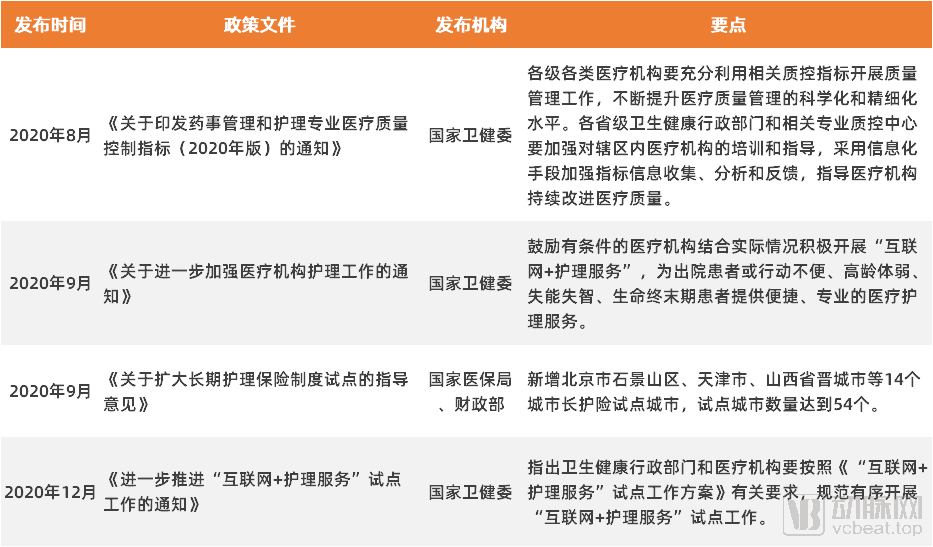
2020 Nursing-Related Policy Compilation
In 2020, functional departments led by the National Health Commission issued four policies related to nursing care within a single year, explicitly requiring health administrative departments and medical institutions to strengthen nursing services and to conduct pilot programs for “Internet + Nursing Services” in a standardized and orderly manner.
Meanwhile, long-term care insurance (LTCI), a payment mechanism based on nursing services, has recently seen significant developments. On November 8, 2020, the Standing Committee of the Shenzhen Municipal People’s Congress promulgated the Regulations on Elderly Care Services in the Shenzhen Special Economic Zone, explicitly stipulating that LTCI, known as the “sixth social insurance,” would be officially implemented citywide starting March 1, 2021. This made Shenzhen the first city in China to launch an LTCI program. On January 7, 2021, the Shanghai Municipal Healthcare Security Administration, in conjunction with the Civil Affairs Bureau and the Health Commission, issued the Regulations on Elderly Care Services of Shanghai Municipality, initiating a pilot program for the extended direct settlement of LTCI expenses for elderly Shanghai residents admitted to elderly care institutions in the Yangtze River Delta region.
With the successive rollout of various new policies, “post-consultation services” have rapidly become a focal point in the healthcare sector and are gradually integrating into people’s daily lives. However, the advancement of any new initiative is often accompanied by a variety of questions. Regarding “post-consultation medical care,” what is its current market outlook? What services will it provide to patients? How is its operational mechanism structured? And what are its future development trends? All these questions await answers.
Since the integration of internet technology into the healthcare sector, the innovative “Internet + Healthcare” model has continued to achieve new progress. Beginning in 2012, driven by the impact of the new healthcare reform, hospitals collaborated with internet healthcare companies to vigorously advance informatization initiatives, continuously optimize patient care processes, and deliver online services such as appointment scheduling, registration, and consultations via PC-based platforms.
By 2015, with the widespread adoption of mobile internet, mobile smart devices had made simple medical services such as online consultations possible; however, the overall focus remained centered on diagnosis and treatment.
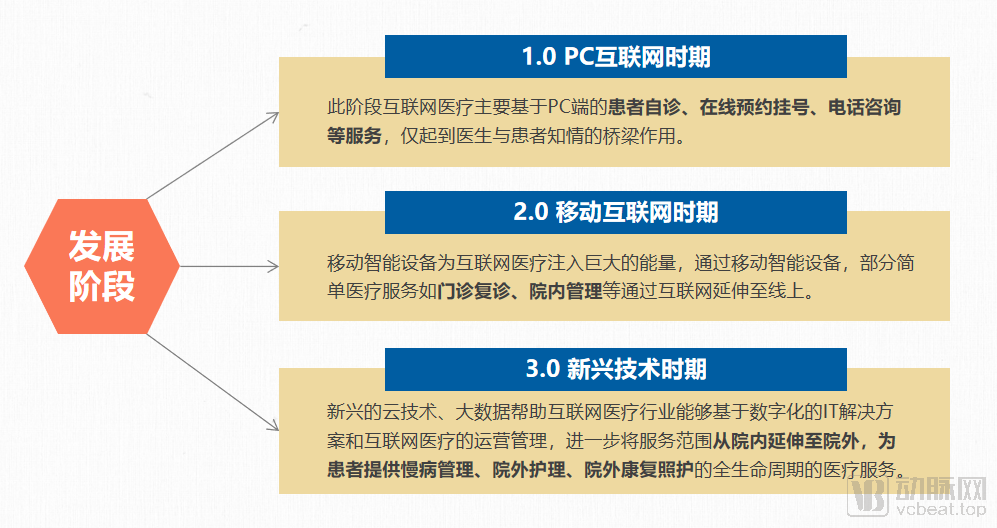
Overview of the Development Stages of Internet Healthcare in China from 2012 to 2020
In recent years, as internet healthcare has entered the 3.0 era, it has begun to focus on lifecycle health management. By coordinating platforms with physician teams, service offerings have expanded from purely medical care to encompass the entire health journey, including chronic disease management, out-of-hospital nursing, and post-discharge rehabilitation care, thereby comprehensively establishing a true resident-health-centered service loop.
As Liu Fan, Visiting Professor at the Peking University Center for Health and Medical Big Data Research, stated at the “2020 China Hospital Information Network Conference,” “Providing continuous services centered on an individual’s life cycle constitutes high-quality medical care and represents an inevitable trend for future development.”
As a Crucial Component of the Full Lifecycle, Why Is "Post-Diagnosis Care" Necessary?
1Healthcare Resources Continue to Rise Year by Year, Yet Gaps Persist
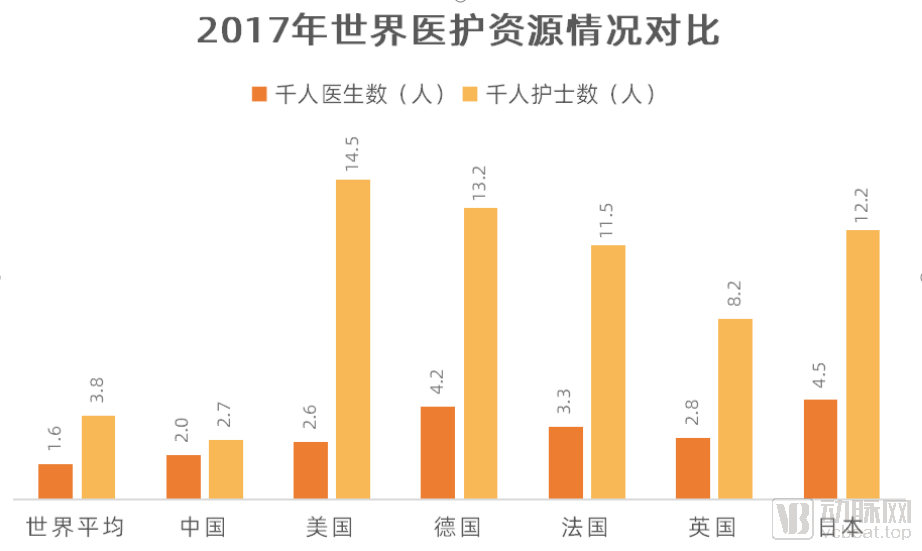
Data source: iResearch; Chart by VCBeat
Driven by strong government initiatives, China’s medical technology and healthcare resources have shown a sustained upward trend in recent years. According to data from iResearch Consulting, as of 2019, the number of physicians per 1,000 population in China had reached 2.4, and the number of nurses per 1,000 population had reached 3.2, both exceeding the global average. However, there remains a significant gap in overall healthcare resources compared to developed countries in Europe and the United States, with a particularly acute shortage of nurses. While nurses account for approximately 5‰ of the total population in most countries worldwide, this figure stands at only around 3‰ in China. Therefore, optimizing information system processes in the post-diagnosis phase and increasing opportunities for doctor-patient communication would maximize the utilization of healthcare resources, effectively alleviating the adverse situation of resource scarcity.
2Average Length of Stay Continues to Decline, Yet Medical Efficiency Remains Inadequate
Since 2015, the average length of hospital stay in China has continued to decline, and bed turnover rates have gradually increased. However, compared with developed countries, China’s healthcare efficiency remains at a disadvantage. According to data from iResearch, over the past two decades, the total number of hospitals in the United States has decreased by approximately 23%, and the number of hospital beds has dropped by about 39%, yet the average length of stay has continued to fall. In contrast, during the same period, China saw an approximately 86% increase in the total number of hospitals and a 165% rise in hospital beds, while the reduction rate in average length of stay remained lower than that of the United States. This highlights a significant gap in healthcare efficiency between the two countries. Therefore, through post-consultation interventions via internet-based healthcare, some patients can manage their conditions outside the hospital setting, further reducing the average length of stay, effectively improving healthcare efficiency, and extending high-quality services to a broader population in need.
3Significantly Reduce Healthcare Costs and Drive Efficient Development in the Health Sector
The online consultation model, particularly during follow-up visits and the post-diagnosis phase, can effectively reduce patients’ medical, caregiving, transportation, and time costs. According to data from iResearch, the average per-visit medical cost for individuals in the post-diagnosis phase using online services is only RMB 395, whereas the average cost for offline consultations reaches RMB 1,080 per visit. By comparison, adopting internet-based healthcare for post-diagnosis care conserves medical resources and enhances overall societal healthcare efficiency. This enables patients suffering from diseases and requiring post-diagnosis medical and nursing care to receive more effective treatment and enjoy a more comfortable healthcare experience, thereby promoting healthier and more efficient societal development.
4Starting from the Source: Precision Maintenance of Personal Health and Medical Care
Literally understood, “post-diagnosis care” is the final link in the medical service chain. However, from the perspective of a complete service loop, it can also mark the beginning of everything. On one hand, patients in the recovery phase often experience suboptimal rehabilitation outcomes due to low proactive engagement in personal care and insufficient continuity with healthcare resources after discharge from the hospital, thereby necessitating “repeat medical visits.” On the other hand, healthy individuals may develop illnesses requiring treatment due to a lack of professional nursing knowledge and neglect of personal health management. Therefore, delivering high-quality post-diagnosis care services can reduce the incidence of repeat medical visits at the source, thereby improving individual health outcomes.
The continuous accumulation of rigid demand will inevitably drive a significant expansion in the scale of the post-diagnosis healthcare industry, which constitutes the fundamental pattern of market development.
With the growing demand for nursing care and support from medical insurance policies such as long-term care insurance, the post-diagnosis medical market is poised for explosive growth. Data indicates that internet-based post-diagnosis care services will experience rapid expansion over the next three years, with their share steadily increasing. The proportion of internet-based post-diagnosis care within the overall internet healthcare sector is projected to reach 17.8% in 2022. Meanwhile, the total supply-side market size of the industry is expected to hit RMB 112.41 billion in 2022, truly achieving a market scale exceeding RMB 100 billion.
The market has established a basic framework, but whether it can truly realize its value depends on companies’ precise strategic positioning in this sector.
Unlike the pre-consultation and intra-consultation markets, which have matured, the post-consultation healthcare market remains in an exploratory phase, with very few companies focusing on this sector. Among them, Beijing ZPD Technology CO.,LTD is undoubtedly an “industry pioneer” that has taken the lead and already achieved a considerable market scale.
Tracing the Roots: Why Has Beijing ZPD Technology Co., Ltd. Rapidly Captured This Emerging Sector, and What Service Mechanism Will It Establish for Post-Diagnosis Patients?
Beijing ZPD Technology Co., Ltd. was established in 2008 as a technology enterprise dedicated to digital healthcare services. The company engages in the research, development, and manufacturing of digital healthcare software and hardware products based on 4G/5G private wireless networks and medical-exclusive cloud technology architectures. Building on this foundation, it provides health informatics products featuring comprehensive smart hospital solutions, as well as internet-based medical services powered by an integrated smart healthcare and elderly care service platform.
1On-site: Empowering healthcare professionals to fulfill hospital informatization assessment requirements
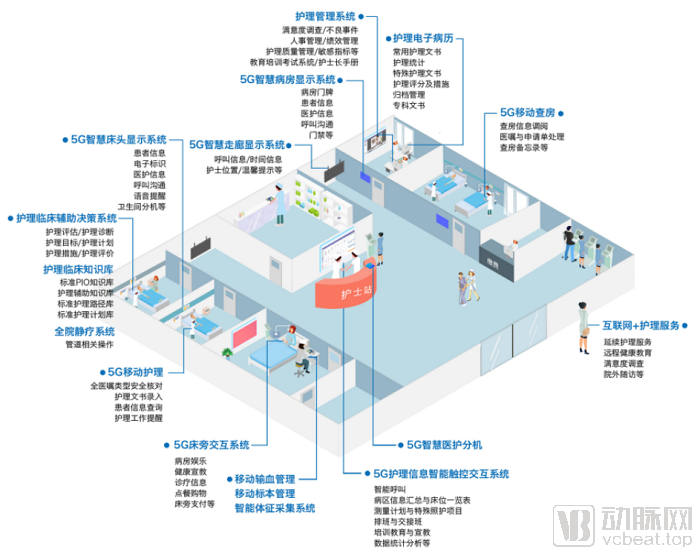
ZPD In-Hospital Nursing Care Service Products
The essence of the Internet is to enhance efficiency. In the healthcare industry, the role of the Internet lies in leveraging information technology to revolutionize medical technologies and services, thereby reducing the complexity of clinical decision-making and empowering healthcare professionals and hospital administrators.
For post-consultation services, hospital-based information systems are particularly important.
To address their personalized needs, Beijing ZPD Technology CO.,LTD. provides a comprehensive suite of inpatient clinical informatics products for both mobile and PC platforms to secondary and tertiary hospitals or medical consortia, meeting the daily operational requirements of healthcare professionals. The products and solutions include: Mobile Nurse Station, Mobile Ward Rounds, Intelligent Touch-Interactive Nursing Information System (Nursing Interactive Large Screen), Nursing Collaborative Decision Support, Nursing Management, Nursing Electronic Medical Records (EMR), Nurse Education, Training and Examination, Intravenous Therapy Management, and Base Stock Medication Management.
On the other hand, with the continuous advancement of healthcare informatization, various data-centric assessments have emerged one after another and become a key priority for hospitals. Drawing reference from policies such as the “Notice on Further Improving the Appointment-based Diagnosis and Treatment System and Strengthening the Construction of Smart Hospitals,” the “Notice on Issuing the Evaluation Scheme for Standardization and Maturity of Hospital Information Interconnectivity (2020 Edition),” the “Notice of the National Health Commission on Issuing the Accreditation Standards for Tertiary Hospitals (2020 Edition),” and the “Notice of the General Office of the National Health Commission on Collecting Performance Assessment Data for Secondary and Tertiary Public Hospitals in 2019,” clear compliance requirements have been specified for hospital informatization construction across different hospital tiers in terms of “EMR System Application Level Grading,” “Standardization and Maturity of Hospital Information Interconnectivity,” and “Smart Service Level Grading.”
Therefore, for enterprises focused on healthcare informatization, helping medical institutions meet compliance standards and addressing their needs in the graded evaluation of hospital electronic medical record (EMR) systems, the assessment of standardization and interoperability maturity, and the graded evaluation of smart services have become top priorities. Zhang Guangyue, Chief Operating Officer of Beijing ZPD Technology Co., Ltd., stated, “Our products must be forward-looking while closely aligning with policy requirements.”
2Extending Beyond the Hospital: Fully Mobilizing Medical and Nursing Resources to Build an Integrated Aggregation Service Platform
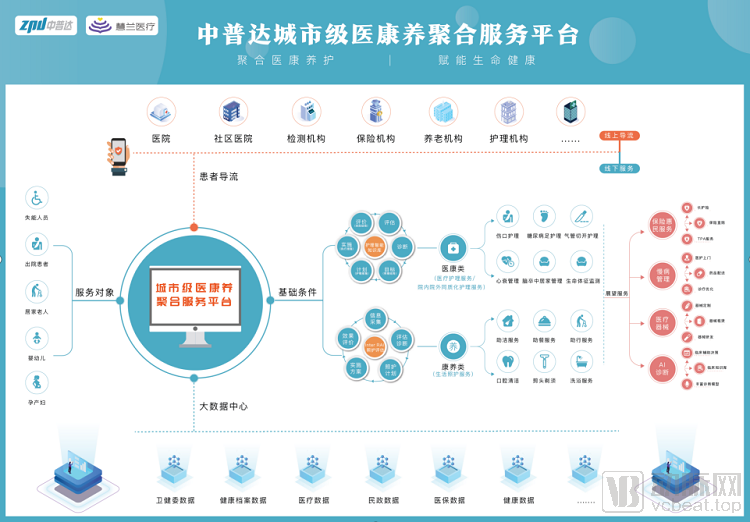
ZPD City-Level Integrated Medical, Elderly Care, and Health Service Aggregation Platform
Beijing ZPD Technology Co., Ltd.’s core strengths and distinguishing features lie in leveraging its technical capabilities to ensure continuous, homogeneous, and holistic post-discharge care services both within and outside the hospital. Consequently, while delivering high-quality in-hospital services, it is equally essential to maintain high standards for transitional care provided outside the hospital setting.
In response to market demands, Beijing ZPD Technology Co., Ltd. has fully leveraged medical and nursing resources to build a comprehensive, integrated aggregation platform for medical care, rehabilitation, elderly care, and health maintenance. This service platform provides smart healthcare and wellness services based on clinical data and professional medical nursing guidance for post-diagnosis rehabilitation patients, individuals with chronic diseases requiring long-term management, the elderly, and infants. The platform’s offerings span over 80 specialized services across more than ten disciplines, including elderly care, chronic disease management, maternal and child health services, postoperative rehabilitation, traditional Chinese medicine physiotherapy, health check-ups, and hospice care. It is currently the first internet-based digital healthcare service platform in China that relies on medical data and professional medical guidance, features a clear profit model, is scalable and replicable, and effectively meets societal demands for healthcare and wellness services.
In the critical area of care quality, Beijing ZPD Technology Co., Ltd. (ZPD) has established stringent access mechanisms and evaluation systems. Li Shuo, Board Secretary of ZPD, told VCBeat, “For patients, care quality is always the primary concern. Therefore, when building its out-of-hospital care system, ZPD placed particular emphasis on maintaining high standards in this sector. Regarding entry thresholds, ZPD formed a specialized team to conduct rigorous audits of medical institutions, focusing primarily on relevant qualifications and internal operational conditions. Furthermore, ZPD has implemented a user evaluation system to indirectly regulate the conduct of out-of-hospital healthcare providers.”
The establishment of a post-discharge transitional care sector can effectively facilitate the decentralization of high-quality nursing resources, serving as a springboard to enhance the capabilities and service standards of primary healthcare institutions, thereby meeting the surging demand for rehabilitative nursing care. This holds significant importance and value for the development of medical consortia and medical communities.
As of the end of 2019, Beijing ZPD Technology CO.,LTD. had expanded its business coverage to 22 provinces and autonomous regions across China, serving 1,000 medical institutions. It had provided services to nearly 2 million healthcare professionals, and its medical big data platform had integrated clinical medical record data for over 20 million patients.
It can be said that while the post-diagnosis healthcare market was still in its exploratory phase, Beijing ZPD Technology Co., Ltd. had already taken a leading position. The company’s remarkable achievements are attributable not only to its innovative collaboration model with telecom operators but, more importantly, to the significant value delivered by its nursing knowledge base during application.
1Connect with carriers, fully leverage advantages, and establish a “low-cost, high-efficiency” service mechanism
Unlike traditional informatization products, Beijing ZPD Technology CO.,LTD. has pioneered a novel operational model closely integrated with telecom operators. By deeply converging in-hospital smart hospital services with operators’ cloud-network resources (such as private wireless networks, dedicated lines, and medical-exclusive clouds), it has enabled the transition of smart hospital health IT applications from local area networks to wide-area 4G/5G cloud-network applications.
Leveraging the market resources and cutting-edge technologies of telecom operators, Beijing ZPD Technology CO.,LTD. has rapidly captured a broad hospital market through its cost-effective pricing and efficient nursing services, yet this represents merely the “tip of the iceberg” of its advantages.
On the one hand, a new operational model connected with telecom operators can break through industry bottlenecks such as the difficulty in promoting to hospital clients and the lengthy bidding cycles for informatization projects, laying a solid foundation for market expansion. On the other hand, by transforming the traditional mindset of hospital informatization project construction—shifting from capital expenditure on projects to expensed expenditures through service coverage and service purchasing models—and leveraging the billing channels of telecom operators, the pain points of long payment terms and difficult collections in the medical informatization industry can be effectively addressed, thereby improving accounts receivable periods and reducing collection difficulties.
More importantly, this will provide strong support for the establishment of its nursing knowledge base system.
2“Industry-Academia-Research” Collaboration to Centrally Develop a “Nursing Knowledge Base”
Leveraging Beijing ZPD Technology CO.,LTD.’s strong industry reputation in in-hospital nursing services and its extensive medical private network coverage, a comprehensive clinical data system has been established. Through collaborations with leading medical universities and hospitals, these clinical data are professionally integrated and undergo standardized, normalized, and systematic calibration to create a “Nursing Knowledge Base.”
The nursing knowledge base includes a standard nursing terminology database, a health education library, a standard nursing pathway library, an alert medication database, a traditional Chinese medicine (TCM) nursing library, a standard nursing plan library, and a risk database. Its development relies on the standardized organization and integration of extensive clinical data. Applications based on this nursing knowledge base have been integrated into Beijing ZPD Technology CO.,LTD.'s smart nursing product series, providing functionalities such as intelligent alerts, smart reminders, intelligent interconnectivity, intelligent early warnings, and decision support.
By precisely matching optimized and refined intelligent care plans, which are based on nursing knowledge bases and assessments, with corresponding social medical and healthcare service resources, we empower medical institutions, social elderly care facilities, nursing institutions, and other healthcare resources.
Beijing ZPD Technology CO.,LTD.’s integrated medical, elderly care, and health management service platform is built upon a core technical foundation: a nursing knowledge base developed over many years. By integrating national standards and international professional assessment tools (such as the InterRAI assessment system) with clinical care experience, the platform has refined its knowledge graph for assessments and nursing plans. The assessment system, developed through years of longitudinal tracking of the Chinese population, includes multi-level assessment models, screening models, and intervention protocols for common chronic diseases, thereby establishing a comprehensive post-diagnosis health assessment framework that safeguards medical, elderly care, and health services for patients after diagnosis.
Currently, the Zhongpuda Nursing Knowledge Base system can automatically generate nursing care plans based on user data, serving as a guide for business decomposition and standardized processes within the Zhongpuda Medical, Health, and Elderly Care Platform. Meanwhile, Zhongpuda is committed to leveraging this knowledge base system to enhance the overall capabilities of the post-diagnosis nursing service market.
Beijing ZPD Technology Co., Ltd. has carved out its own path to sustained profitability by focusing on post-diagnosis care. Its strong background in medical informatics serves as the cornerstone for its entry into the internet healthcare sector. Leveraging years of accumulated in-hospital data and a nursing knowledge base developed through substantial R&D investment, ZPD has established a core support system for its out-of-hospital medical, elderly care, and health management platform. This ecosystem encompasses smart nursing products for in-hospital and post-discharge settings, extends to the “Internet + Nursing” service brand “Huilan Medical,” and includes a city-level medical, elderly care, and health management service platform. Buoyed by the favorable winds of continuously emerging policies, ZPD’s city-level platform is poised to become another vital tool for public welfare, integrating internet healthcare with the broader big health industry to deliver patient-centered post-diagnosis services through seamless connectivity between in-hospital and out-of-hospital care.
Beijing ZPD Technology CO.,LTD.'s corporate vision is to create a one-stop post-diagnosis service platform for users.
However, as Li Shuo, Board Secretary of Beijing ZPD Technology CO.,LTD, noted, the current post-diagnosis and treatment market has not yet matured, facing challenges such as insufficient public awareness, an underdeveloped business infrastructure, and difficulties in medical payment. Nevertheless, as an industry pioneer, Beijing ZPD Technology CO.,LTD has already begun its strategic layout and will focus its efforts on three key sectors in the future.
First, deepen post-diagnosis services within the hospital to lay a solid foundation for expanding the out-of-hospital nursing market.
Compared to the emerging out-of-hospital care services in recent years, Beijing ZPD Technology Co., Ltd. has cultivated the in-hospital nursing service sector for many years, establishing a mature product and market system while serving nearly 1,000 medical institutions. Looking ahead, the in-hospital nursing informatics segment will deepen its development on the existing foundation. While providing optimal services to users, it will continuously expand the number of served medical institutions, thereby extensively accumulating medical data to provide effective support for the out-of-hospital transitional care segment.
Second, deeply explore the value of data and continuously expand the market for transitional care services.
Based on current market trends and policy directions, the continuum of care segment will be a key focus for Beijing ZPD Technology Co., Ltd. in the coming years. Therefore, while effectively implementing pilot services, Beijing ZPD Technology Co., Ltd. will continue to strengthen its technical capabilities and unlock the value of clinical data. By attracting more potential users through efficient, high-quality services, the company aims to lay a solid foundation for expanding into the post-diagnosis healthcare market.
3. Focus on the chronic disease sector and expand new businesses in the healthcare segment
Due to the lack of supporting platforms, out-of-hospital monitoring for chronic diseases has long been a persistent pain point in the industry. To break this impasse, Beijing ZPD Technology Co., Ltd. has begun to ramp up its efforts. Leveraging its existing platform advantages and technical capabilities, the company will collaborate with third-party medical institutions to jointly provide chronic disease management services, including capsule endoscopy, patch-based remote ECG monitoring, and remote diabetes monitoring.
Big data, the Internet, and other technologies are driving traditional healthcare toward a diversified path characterized by personalization, human-centricity, and dynamism. Internet-enabled medical technologies are being increasingly applied across various scenarios, aiming to create a new healthcare model that enhances health management experiences for healthy individuals, those in sub-health conditions, and patients through an integrated online-offline approach covering the entire care continuum.
In the post-diagnosis healthcare sector, due to its heavy reliance on medical resources, it is often costly for the vast healthcare industry chain to depend solely on the external efforts of a single internet company. Therefore, internet-based post-diagnosis healthcare requires deep collaboration and joint efforts among multiple internal industries.
Therefore, given that the market has not yet matured, the post-diagnosis healthcare sector requires the entry of more specialized internet companies, such as Beijing ZPD Technology Co., Ltd., to bolster overall market development and establish an integrated service platform for full-cycle health management across society.