

Third-Party Medical Testing Institutions Gain Spotlight Amid Pandemic: Ping An Health (Diagnostics) Center’s Rise and Innovation
On the recently released “Baidu Hot Search 2020: Top Ten Trending Terms of the Year” list, “nucleic acid testing” ranked third. This previously obscure term rapidly entered public awareness due to the sudden outbreak of the pandemic.
As the "main force" in nucleic acid testing, third-party medical institutions have also made the leap from unfamiliarity to familiarity. In early last year, the domestic epidemic entered a phase of rapid escalation, and epidemic prevention and control reached its most critical juncture. Nucleic acid testing for the novel coronavirus became key to implementing the principles of "testing all who should be tested" and "treating all who should be treated." To proactively respond to sudden emergencies,On January 22, 2020, the National Health Commission issued a document permitting provincial authorities to incorporate third-party institutions capable of conducting SARS-CoV-2 nucleic acid testing into viral diagnostic services through procurement, thereby accelerating the confirmation of COVID-19 cases.
It is precisely due to the rapid entry of these third-party institutions,China’s daily nucleic acid testing capacity once reached 4.84 million tests, providing strong support for epidemic prevention and control. According to data,As of September 2020, nucleic acid testing conducted by third-party medical laboratories in China accounted for approximately 40% of the national total., fully deserving of its role in supporting “half the sky” of nucleic acid testing.
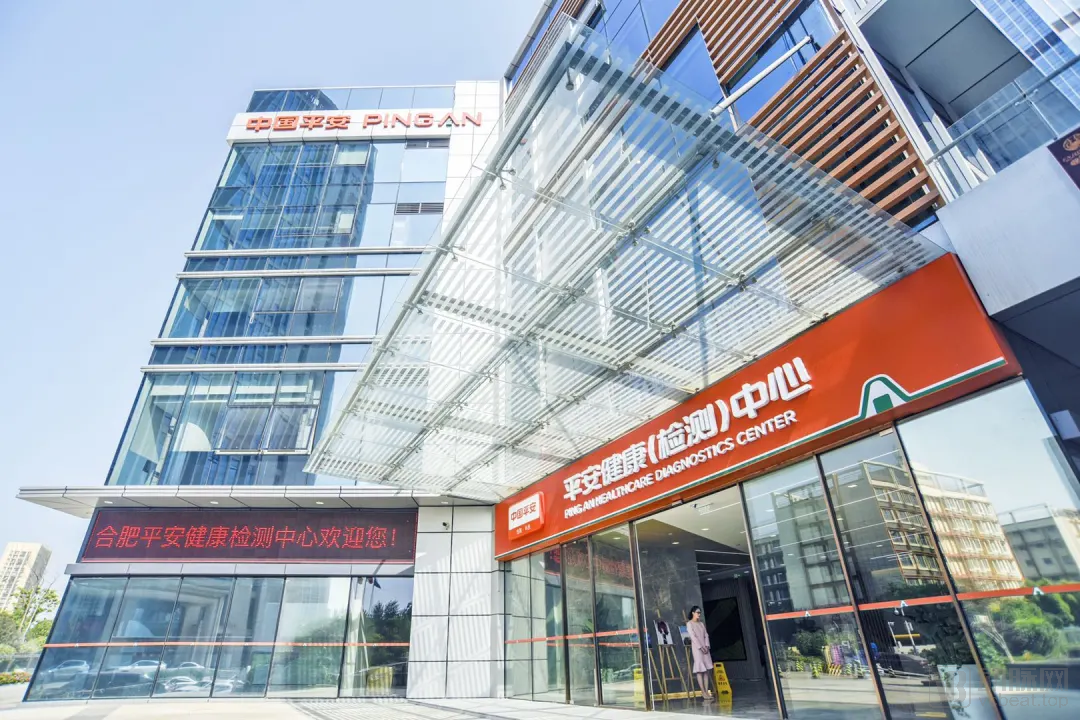
Hefei Ping An Health (Testing) Center
The outstanding performance of third-party medical institutions during the pandemic has rapidly increased their social visibility. Recently,CCTV's "Economic Half-Hour"The report focused on the innovative health screening services offered by the Hefei Ping An Health (Screening) Center, a subsidiary of Ping An Health (Screening) Center under Ping An Medical and Healthcare Management Co., Ltd. (hereinafter referred to as “Ping An Medicare Technology”).
Looking Beyond the Surface: Why Have Third-Party Medical Institutions Been Highlighted by State Media, and What Sets Them Apart? In the “Post-Pandemic Era,” Where Will These Institutions Focus Their Efforts to Sustain Their Current Positive Momentum? The Answers Unfold Below.
Modern medical health diagnosis and treatment are primarily based on the results of clinical laboratory tests, with each diagnosis founded upon the analysis of a series of diverse examination data. From simple blood tests to advanced imaging studies—including X-ray, computed tomography (CT), magnetic resonance imaging (MRI), ultrasound, and nuclear medicine—these diagnostic procedures constitute essential components of patient consultations and physical examinations.
However, since China’s medical resources are predominantly concentrated in public hospitals, the routine examination departments in outpatient clinics of Grade A tertiary hospitals are often operating under excessive load. In stark contrast, primary healthcare institutions, unable to bear the high costs of advanced diagnostic equipment, face a predicament where they are “left with no viable options” for medical testing. This pronounced disparity between the two tiers has resulted in a severe imbalance between supply and demand in health testing across China.
On the other hand, due to the lack of interconnected platforms among medical institutions, laboratory data cannot be effectively utilized, resulting in the non-recognition of test results across facilities. Over time, “redundant testing” has become an accepted norm for both patients and healthcare providers. This not only wastes medical resources but also severely diminishes patients’ care experiences, creating multiple challenges for health screening and diagnosis.
To break through the current impasse, the national government has begun to exert significant efforts. Since 2016, the state has successively issued documents such as the “13th Five-Year Plan for Health and Wellness,” the “Opinions on Promoting the Continuous, Healthy, and Regulated Development of Socially Run Medical Institutions,” the “Decision on Amending the Detailed Rules for the Implementation of the Regulations on the Administration of Medical Institutions,” the “Notice on Further Reforming and Improving the Approval Process for Medical Institutions and Physicians,” and the “Action Outline for Promoting High-Quality Development of the Health Industry.” These policies have spurred various social forces to enter the third-party medical services market.
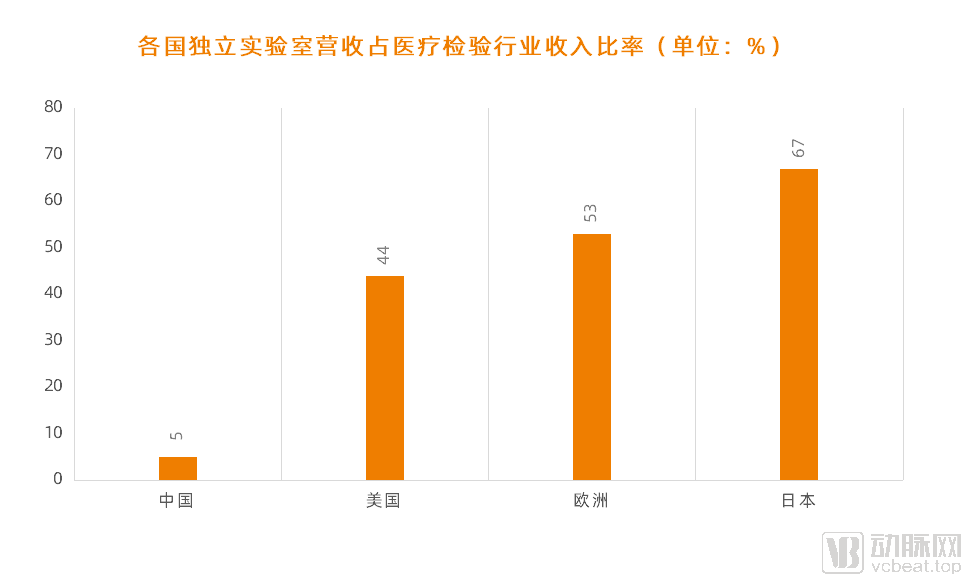
Data source: Qianzhan Industry Research Institute; Chart by VCBeat
Nevertheless, due to their late start, third-party medical testing laboratories in China still lag significantly behind international standards in terms of overall scale and market maturity. According to data from the National Health Commission,As of September 2020, there were 1,537 independent clinical laboratories in China, accounting for approximately 7% of the country’s medical testing market by size, while their business volume represented only about 3% of the total medical testing market.In developed countries such as Japan and the United States, third-party institutions account for over 35% of the medical laboratory testing market, with their business volume representing approximately 50% of the overall market, essentially creating a landscape where they share the market equally with public hospitals.
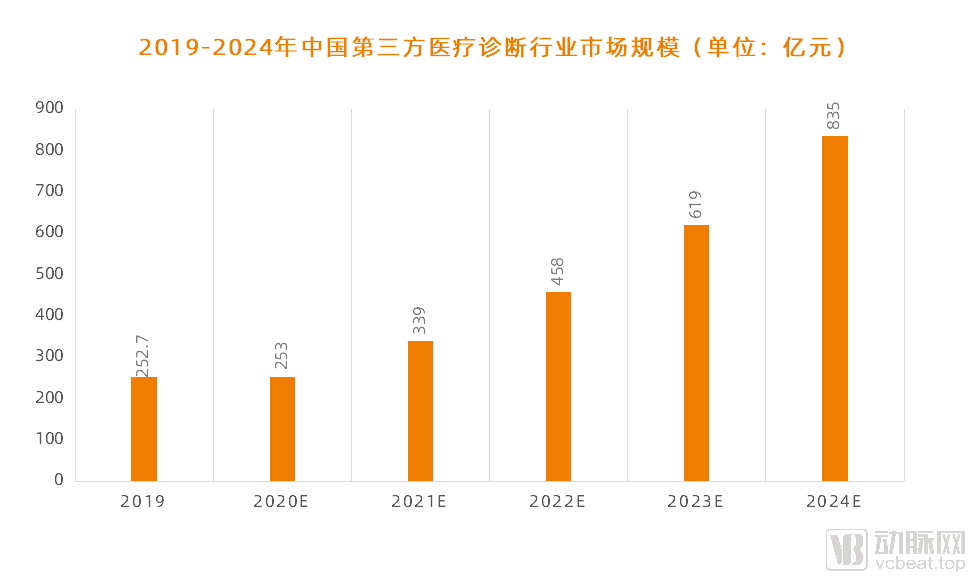
Data Source: Qianzhan Industry Research Institute; Chart by VCBeat
Driven by these existing overt gaps, the penetration rate of third-party medical testing laboratories in China has substantial room for growth, and the market size is expected to maintain a rapid growth trajectory in the short term.According to the "Report on Market Prospects and Investment Strategic Planning for China's Third-Party Medical Diagnostics Industry," the market size of third-party medical testing reached RMB 25.27 billion in 2019, with a compound annual growth rate (CAGR) of 29.26%. It is projected that by 2024, the market size will exceed RMB 80 billion, accounting for approximately 14% of the total revenue in the medical testing industry.
Leveraging the vast market prospects in the third-party medical testing sector, Ping An Group, committed to enhancing healthcare services, began deploying its Ping An Health (Testing) Centers nationwide in 2017, providing a comprehensive solution for users with diverse needs.
As a key member of Ping An Group’s healthcare sector, Ping An Health (Testing) Center is guided by the mission to advance tiered diagnosis and treatment, promote the development of the health service industry, and facilitate the sharing of regional medical resources, making it a scarce offline service resource within the healthcare ecosystem.
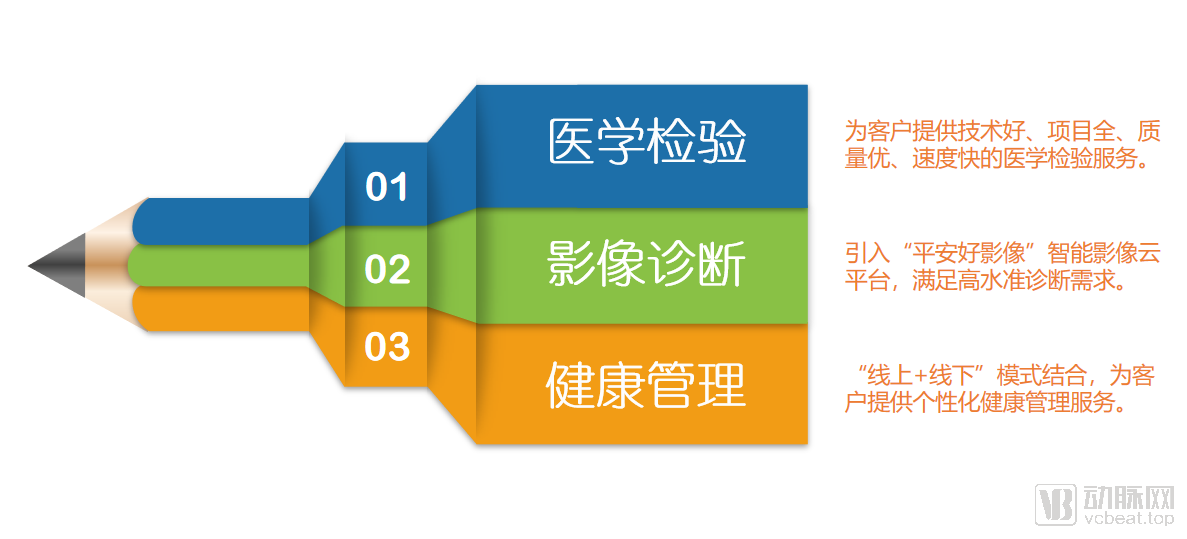
"Trinity" Innovative Business Model
Ping An Health (Testing) Center pioneered in China an innovative business model integrating medical imaging diagnostics, clinical laboratory testing, and health management into a “trinity” framework.In terms of imaging diagnosis, established a dedicated medical and nursing team composed of authoritative experts from Grade A tertiary hospitals and core young and middle-aged professionals, made substantial investments in introducing world-class medical equipment, and built a solid foundation for medical quality.
In the field of medical laboratory testing, through strategic cooperation with world-leading medical testing service providers, we introduce internationally top-tier business processes and management systems to deliver medical testing and pathological diagnostic services that are more comprehensive, higher in quality, faster in turnaround, and lower in cost.
In Terms of Health ManagementLeveraging its professional expertise in medical imaging and laboratory testing, the company delivers truly “meaningful and compassionate” health screening services by providing “clinical-grade” in-depth examinations, “gold-standard” diagnostic accuracy, high-quality care that integrates humanistic and medical compassion, and intelligent analytics powered by big data.
Currently, Ping An Health (Testing) Center empowers and continuously strengthens the medical technical service capabilities of healthcare institutions at all levels through a diversified terminal network comprising flagship centers, satellite centers, franchised outlets, managed facilities, and mobile units. On one hand, leveraging the leading hospitals in various counties and districts within the Medical Consortium and its own medical technical service capabilities, it adopts co-construction and independent third-party models to improve regional imaging and laboratory testing platforms, thereby establishing a regional medical technology ecosystem. This enables the provision of standardized services to healthcare institutions within the Medical Consortium, gradually building a one-stop, diversified health service system covering medical care, elderly care, and wellness, thus delivering one-stop medical and health services to the public.
On the other hand, targeting primary public health service programs, Ping An Health (Testing) Center leverages internet, IoT technologies, and mobile public health vehicles to mobilize medical equipment, providing more flexible primary healthcare services to residents in remote areas. This approach brings medical resources closer to communities, making them truly accessible at people’s doorsteps.In 2020, Ping An Health (Testing) Center actively participated in the “Ping An Health Guardian Initiative” and the “Medical Care Across Thousands of Miles” public welfare program. To date, its coverage has expanded to 14 provinces, spanning more than 600 impoverished mountain villages, with 657 free clinic events organized, serving over 100,000 individuals cumulatively.
In December 2020, the Political Bureau of the CPC Central Committee proposed for the first time to prioritize “demand-side reform.” From a healthcare perspective, the pandemic has spurred the emergence of new ecosystems such as online consultations, medical testing, and third-party laboratory services. Currently, in response to the increasingly prominent national health needs, third-party medical services have become a key focus for the state in promoting tiered diagnosis and treatment and encouraging private participation in healthcare delivery.
Against the broader market backdrop, Ping An Health (Testing) Center has achieved rapid growth by gaining deep insights into users’ nuanced needs and delivering precise, reliable, clinical-grade health testing services. To date, it has expanded through various models, including self-built facilities, co-construction, franchising, mobile units, and managed services.Within just two and a half years, it completed the layout of 544 stores, with its service coverage extending across more than half of China.
In the service offerings segment, Ping An Health (Testing) Center leverages its advantages in equipment, technology, resources, and capital to join forces with public medical institutions during the supply-side reform. By optimizing the total volume and structure of supply and adjusting supply factors, it addresses existing shortcomings to meet the growing demand for health services.
On the other hand, by leveraging the “mobile clinic + smart healthcare services” model, primary care capacity has been significantly enhanced, and the accessibility of grassroots health services has been improved. This approach promotes horizontal integration and vertical flow of medical resources, as well as a balanced distribution of high-quality resources, thereby achieving the reform objectives of “strengthening primary care, promoting health, and reducing costs.”
In the “post-pandemic era,” the “emerging forces” within third-party medical institutions are bound to encounter numerous challenges. In light of this, Ping An Health (Testing) Center will assume the role of a “catalyst,” empowering third-party medical institutions to realize their full potential, striving to build a new ecosystem for third-party medical service providers, and offering patients a wider range of service options.
1. Capitalize on the trend and accelerate market expansion.In recent years, the Chinese government has encouraged social capital to establish third-party independent medical institutions, such as imaging centers. Leveraging its core advantages—including research-grade cutting-edge equipment, master-level imaging experts, nanometer-precision technology, five-star customer experience, and medical-grade health screenings—Ping An Health (Testing) Center is accelerating its expansion across provincial capitals and second-tier cities in China. By creating an interconnected network, it aims to build the most valuable healthcare ecosystem in the country.
Second, leverage cutting-edge technological concepts to drive the optimization and upgrading of services.Innovation is the only choice for the industry to maintain its vitality. Third-party medical institutions need to deeply integrate with many new technologies to quickly improve service quality. In the future, Ping An Health (Testing) Center will rely on the valuable large-scale medical testing samples and big data resources accumulated through its major medical testing platform, extensive network, and comprehensive services. By combining expert knowledge bases with AI technology, 5G communication technology, and other advanced tools, it aims to build a “smart” independent medical laboratory. This will provide additional value to clinical doctors and contribute to the construction of Healthy China.
Third, leverage the platform as a springboard to empower the development of the broader health industry.
Vigorously developing third-party medical services is a key strategic initiative by the state to promote the rational allocation of healthcare resources. As an integral component of the “Healthcare Ecosystem” strategy, Ping An Health (Testing) Center will continue to uphold its social responsibility, consistently delivering professional, precise, and high-quality medical testing and diagnostic services to foster the development of the broader health industry and contribute to achieving the grand vision of “Healthy China 2030.”