Empowering Hospitals, Health Insurance, and Health Authorities: The Three-End, Seven-Scenario Application Highlights of China's DRG Information Systems
Reforms to China’s healthcare insurance payment methods have consistently accompanied the broader healthcare reform process, serving as a critical lever for deepening medical and pharmaceutical system reforms and establishing positive incentive mechanisms. To effectively address the public’s challenges of high medical costs and limited access to care, China’s total health expenditure rose from RMB 2.43 trillion in 2011 to RMB 6.5 trillion in 2019 (the latter figure being an estimate). Over the same period, the share of total health expenditure in GDP increased from 5.03% to 6.6%. This rapid growth in total health expenditure has imposed a substantial burden on national fiscal resources and healthcare insurance payments.
Based on current GDP growth projections, China's health financing level was required to reach 6.73 trillion yuan in 2020. As the primary channel for third-party payments, medical insurance funds face significant challenges in controlling unreasonable charges and maximizing the efficiency of fund utilization.
Meanwhile, as fertility rates have continued to decline over the years, China’s population structure is rapidly aging, and the burden of chronic non-communicable diseases (NCDs) is gradually increasing. Currently, there are 140 million people aged 65 and above in China, a figure projected to reach 230 million by 2030. As a result, NCDs have become the leading health threat in China, accounting for 80% of the 10.3 million annual deaths.
In this context, the National "13th Five-Year" Plan for Deepening the Reform of the Medical and Health Care System pointed out the need to “establish an efficiently operated universal medical security system,” “deepen the reform of medical insurance payment methods,” “improve the medical insurance payment mechanism and interest regulation mechanism, implement refined management, and stimulate the endogenous motivation of medical institutions to standardize behavior, control costs, and reasonably admit and refer patients,” and “encourage the implementation of Diagnosis-Related Groups (DRGs) payment.”
The State Council’s “Notice on Issuing the Plan for Deepening the Reform of the Medical and Healthcare System during the 13th Five-Year Plan Period” also pointed out that by 2017, the state would select certain regions to pilot diagnosis-related group (DRG) payment. By 2020, reforms in medical insurance payment methods would gradually cover all medical institutions and services, with a diversified and composite medical insurance payment system adapted to different diseases and service characteristics widely implemented across China, and the proportion of fee-for-service payments significantly reduced.
On June 28, 2017, the “Guiding Opinions of the General Office of the State Council on Further Deepening the Reform of Basic Medical Insurance Payment Methods” further clarified the operational steps for implementing Diagnosis-Related Group (DRG)-based payment. This marked the beginning of a new era in China’s DRG payment reform, characterized by unified top-level planning. After several years of exploration, the pivotal role of DRG in medical insurance payment reform and hospital performance evaluation has been firmly established.
In May 2019, the National Healthcare Security Administration announced pilot programs for DRG-based payment in medical insurance settlements across 30 cities, and released the CHS-DRG Technical Specifications and the A-DRG Grouping Scheme in October of the same year. On June 18, 2020, the National Healthcare Security Administration further issued Version 1.0 of the CHS-DRG Sub-grouping Scheme, completing the preparatory work on grouping schemes prior to the implementation of CHS-DRG.
On November 4, 2020, the National Healthcare Security Administration announced the pilot implementation of Diagnosis-Intervention Packet (DIP) payment—regional point-based global budgeting and case-mix index payment—in medical insurance settlements across 71 pilot cities. On November 20, it issued the DIP technical specifications and the disease category database. Although DIP differs from Diagnosis-Related Groups (DRG) in grouping methodology, they are identical in essence and principle, as both classify cases according to specific principles; thus, DIP can be regarded as a variant of DRG.
On December 28, 2020, the National Health Commission (hereinafter referred to as the NHC) issued the Accreditation Standards for Tertiary Hospitals (2020 Edition) (hereinafter referred to as the 2020 Standards). Compared with the 2011 edition, the 2020 Standards place significant emphasis on Diagnosis-Related Groups (DRGs). In particular, DRG-based indicators are consistently integrated throughout Part II, which accounts for no less than 60% of the comprehensive accreditation score, serving as one of its core themes. It is no exaggeration to state that hospitals must be familiar with and effectively utilize DRGs as a management tool to successfully pass the accreditation.
So, how do DRGs function across hospitals, medical insurance agencies, and the National Health Commission? VCBeat (WeChat ID: Vcbeat) has conducted a comprehensive investigation to highlight the application strengths of China’s DRG information systems across seven major scenarios at three ends.
Implementing DRG-based payment is a systematic project that requires close collaboration among three parties: medical insurance authorities, health administrative departments, and hospitals. The DRG information system must provide technical support by aligning with the business management functional requirements of these three parties and the corresponding changes in management models following the implementation of DRG payment reform.
Currently, based on differences in application platforms and functionalities, domestic DRG information systems are primarily categorized into three types: the healthcare security administration side, which performs DRG weight calculation, payment standard estimation, and pricing for healthcare security payments, completes payment settlements, and conducts regulatory audits of DRG violations (such as upcoding and fragmented hospitalization); the health commission side, which oversees clinical quality supervision and evaluates medical service performance; and the hospital side, which interfaces with both the healthcare security administration and health commission systems while providing functions such as operational control, optimization of clinical pathways, and refinement of diagnosis and treatment protocols.
1Overview of Core Functions of DRG Hospital-Side Applications
The main functions of DRG applications at the hospital level include medical record quality control, DRG grouping management, DRG performance evaluation, DRG disease group analysis, and DRG cost accounting.
(1) Medical Record Quality Control
Due to the varying levels of health information technology infrastructure across medical institutions, with some hospitals even lacking systems for uploading medical records, enterprises often need to provide front-page medical record upload systems to these institutions prior to implementing DRG system construction. This assists medical institutions with insufficient IT infrastructure in organizing and uploading data through digital means. Subsequently, the basis for DRG grouping lies in the diagnostic and procedural information contained within the medical record data of healthcare institutions.
However, the vast majority of medical institutions encounter numerous issues in the application of ICD codes for diagnoses and procedures, including challenges in selecting principal diagnoses and errors in data entry. Enterprises generally need to conduct large-scale training for medical institutions, tailored to local conditions and in accordance with national guidelines and requirements for medical record reporting. This may even involve inviting experts from the National ICD Coding Committee to provide systematic training, thereby improving the accuracy of diagnosis and procedure selection and submission by medical institutions, ensuring accurate case grouping, and ultimately achieving the goal of precise DRG-based reimbursement.
Over the past decade, the usability of hospital medical records in China has shown a declining trend, with many records failing to accurately and objectively reflect the actual quality of clinical care. This is attributable to three factors.
First, the widespread adoption of electronic medical records (EMRs) and changes in performance evaluation methods for clinical departments have shifted the focus of medical record management from clinical reasoning to economic indicators, with greater emphasis on billing and bed turnover rates.
Second, the responsibility for medical record documentation has shifted from the attending physician on duty to resident physicians. This group primarily consists of medical students, visiting scholars, and residents in standardized training programs, who generally lack experience in medical record writing.
Third, the introduction of information technology has led to physicians’ increasing reliance on electronic medical record (EMR) systems, with predominant use of vendor-provided templates. However, vendors lack in-depth understanding of clinical practice. These factors compromise the objectivity, comprehensiveness, and accuracy of medical records.
Therefore, given the inability of human resources to meet hospitals’ demands for improved medical record quality, support from information technology has become particularly crucial. As a core application of DRG information systems, medical record quality control is receiving increasing attention and has been widely adopted in hospital-side DRG systems.
Generally, informatization solutions for DRG medical record quality control follow similar processes: first, establish management standards and quality control rules for medical records; then, implement process management based on these rules to ensure that the quality of medical record face sheets meets the established management standards.
To meet the requirements of DRG-based payment and performance appraisal for public hospitals, mainstream DRG medical record quality control solutions generally consist of a combination of products and services. These solutions comprehensively cover four aspects: quality control management plans, quality control standards, quality control process management, and quality control rules, thereby supporting a complete quality management system for medical record front sheets.
Establishment of Quality Control Management Standards: Relevant enterprises provide data services for quality control management standards of medical record front pages, assisting hospitals in establishing detailed and explicit quality control management standards. The service aims to identify quality issues in hospital medical record front pages through data analysis, and to provide targeted ICD coding training and ICD coding upgrade services, thereby organizing and establishing documentation specifications for medical record front pages that align with the hospital’s actual operational context.
The establishment of quality control rules primarily involves enterprises providing optimization services for a quality control rule knowledge base, assisting hospitals in building a knowledge base of quality control rules for medical record front pages under the DRG payment system, thereby forming knowledge assets for the quality control of medical record front pages. The objective is to optimize the quality control rules for medical record front pages within the system and establish a long-term quality assurance mechanism. Generally, the quality control rule knowledge base is compiled and published by industry coding experts and professionals from health IT companies in accordance with relevant standards. It is regularly updated based on clinical practice guidelines, coding upgrades, and revisions to business rules themselves.
After establishing quality control management standards and rules, process management for quality control of the medical record face sheet can be implemented. Currently, most medical record quality control solutions offer IT systems featuring intelligent coding and comprehensive quality control of the medical record face sheet, supporting quality management throughout the entire process of its creation.
Intelligent Coding System
The Comprehensive Quality Control System for Medical Record Front Pages relies on a knowledge base for quality control to provide intelligent audit capabilities. It evaluates and scores the data quality of medical record front pages across multiple dimensions and supports hospitals in conducting comparative analyses of quality control and scoring results among various departments. Furthermore, to meet the information requirements of medical insurance administration authorities and the National Health Commission regarding medical record front pages, the system also provides data conversion and related interface functionalities.
In 2018, Enze Medical Center (Group) in Taizhou City, Zhejiang Province, partnered with Hangzhou Huoshu Technology Co., Ltd. to implement a Diagnosis-Related Group (DRG) project. Prior to this collaboration, the center lacked real-time monitoring capabilities for quality control of medical record front pages, and clinicians were unable to access inpatient grouping information in real time. This hindered precise, rational treatment planning and effective cost control. These challenges are typical issues commonly encountered by hospitals during the initial phase of DRG implementation.
Addressing the critical aspect of DRG payment—the medical record face sheet—Huoshu’s MDT-style system solution provides a three-tier quality control framework involving clinicians, the medical records department, and the quality control department. This approach shifts quality control of the medical record face sheet to the physician level, enabling source-based quality management. By introducing intelligent algorithms to build diagnostic omission identification models, it further improves coding accuracy. Additionally, the system can detect DRG-risk cases in real time and intervene proactively. These measures ensure the data quality of medical record face sheets and facilitate appropriate case grouping.
Yantai Affiliated Hospital of Binzhou Medical University is a large-scale, provincial, Grade A tertiary general hospital in Shandong Province and the first internet hospital in Yantai. As a pilot medical institution for Diagnosis-Related Group (DRG) payment, the hospital has partnered with Beijing Dongruan Wanghai Technology Co., Ltd. to achieve multiple breakthroughs in the quality control of medical record front pages.
First, by leveraging big data and artificial intelligence, we have established an end-to-end management system for medical record face sheets, covering pre-consultation documentation standards, intra-consultation quality control alerts and pre-coding, as well as post-consultation quality control and intelligent coding. With the aid of a medical record quality control and ICD intelligent coding system, we enhance both the quality of medical records and coding efficiency.
(2) DRG Performance Evaluation
A key objective of quality control for the medical record front sheet is to enable DRG-based performance evaluation. With consistent DRG assessment criteria and clearly visible metrics, DRG-based performance evaluation serves as a relatively objective and fair management tool, whether applied to hospital-level or specialty-level performance assessments.
Currently, most hospital-side DRG solutions offer DRG analysis capabilities. By analyzing collected DRG data across multiple dimensions—including hospitals, departments, medical teams, disease groups, and individual cases—these systems help hospital administrators assess the local development status of their clinical disciplines, encompassing both disciplinary capability and profitability. This facilitates performance evaluation and informs the implementation of subsequent incentive schemes.
DHC Software Co., Ltd. has developed a hospital-side DRG performance evaluation system for Beijing Anzhen Hospital, Capital Medical University. During the implementation of DRG, the hospital established an internal DRG management leadership group and created a two-tier management framework at the hospital and departmental levels (involving departments such as medical insurance, medical affairs, finance, medical engineering, pharmacy, and medical records statistics). By clarifying the responsibilities of each department and fostering multi-departmental collaboration, the hospital has achieved refined medical insurance management based on DRG.
By regularly importing offline grouping data exported from the Beijing DRG Platform and adopting the "benchmarking" management philosophy, this approach monitors indicator deviations or changes by comparing them against benchmarks such as beginning-of-year management targets, benchmark values, year-on-year values, and previous period values. Simultaneously, it conducts in-depth analysis of departmental case-mix structure, clinical processes, and cost structures. Leveraging performance appraisal mechanisms, it aims to enhance medical quality and achieve refined cost management.
Currently, the hospital has completed the business process transformation of the HIS physician workstation, shifting regulatory oversight from “post-event” to “in-process,” thereby achieving intelligent DRG grouping for inpatient cases and real-time alerts for indicator overruns. The case grouping rate increased from 97.21% to 99.95%, and the Case Mix Index (CMI) rose from 1.73 to 1.84.
(3) Cost Accounting
Cost accounting is a critical tool for hospitals to conduct cost accounting and profit-and-loss analysis for DRG groups, as well as a key data source for DRG pricing and weighting; it constitutes a major category of hospital-side DRG information systems. Leveraging the “DRG + Cost” model facilitates the rational optimization of resource allocation in healthcare institutions and supports hospitals in efficiently adapting to reforms in the DRG payment system.
In 2017, Henan Provincial People’s Hospital actively responded to national and local policies and initiatives by implementing the construction of a DRG-based cost accounting system. Over the past two years, the hospital has leveraged the HRP information system from Beijing Dongruan Wanghai Technology Co., Ltd. to carry out DRG cost accounting practices, gradually refining its project cost accounting processes and achieving standardized data entry for the project cost activity library.
In the initial phase, the hospital repeatedly organized and convened DRG cost seminars to conduct in-depth exchanges and discussions on how to implement DRG cost accounting, data integration, and the construction of a DRG cost management platform, while also carrying out comprehensive promotional training.
In the medium term, hospitals strengthen their data foundation by integrating departmental costs, medical procedure costs, and medical record front-page data to generate DRG cost accounting data; furthermore, they validate the data and optimize output quality based on clinical feedback.
In the later stages, the hospital innovated its approach to DRG cost accounting analysis, conducted strategic DRG analysis and evaluation using modern management tools to address the DRG cost control system and related issues, and proposed management recommendations based on the analytical findings.
Henan Provincial People’s Hospital conducted a DRG cost accounting analysis based on the activity-based costing method, utilizing data on revenue, costs, and cases from 2019, in accordance with the grouping results from the DRG pre-grouping information platform. After screening and quality control of historical data and medical record face sheets, a total of 258,569 medical records were included, generating 832 DRG groups. Overall, the hospital’s DRG grouping rate in 2019 was 98.08%. Among these, 459 DRG groups showed a surplus, accounting for 55.17%.
The hospital implements differentiated strategies for various disease categories based on data analytics. For dominant disease groups, the hospital incorporates them into the performance workload accounting and assessment of each discipline, providing targeted support and incentive preferences. For high-potential disease groups, the hospital needs to continuously expand the patient base and increase the volume of diagnoses and treatments, while maintaining effective tiered diagnosis and treatment systems and cost control measures.
For key and underperforming disease groups, hospitals should first conduct cost-benefit evaluations to precisely identify the primary drivers and critical areas of financial loss, implementing targeted control measures. Secondly, they should adopt precise strategies for cases with significant deficits by reviewing whether the admitted conditions align with tiered diagnosis and treatment policies, and referring common and simple cases to lower-tier hospitals.
For disease groups with higher Case Mix Index (CMI) values, hospitals should adopt differentiated management strategies. If policy-related losses are caused by unreasonable pricing, hospitals should encourage departments to admit such patients. With the continuous improvement of discipline construction, the number of surgical cases at Henan Provincial People’s Hospital has steadily increased, medical technical capabilities have been continuously enhanced, healthcare reforms have deepened, the proportion of consumables costs has continued to decline, the share of revenue from medical services has risen, and the hospital’s revenue structure has been progressively optimized.
In addition, the DRG-based cost accounting system can reference national standard algorithms to provide data benchmarks. Cost accounting based on DRGs serves as a critical basis for national and regional healthcare security administrations to set DRG group prices, and constitutes a key component of the national pilot reforms in DRG payment methods. Meanwhile, the cost accounting system can analyze the relationship between fiscal compensation and total service volume from the hospital’s perspective, thereby providing decision-making support for fiscal compensation and offering guidance for hospitals to reasonably control cost growth.
Wuhan Kindo developed a DRG cost accounting system for the National Health Commission, which directly interfaces with the “National Medical Service Price and Cost Monitoring and Research Network” under the Commission to obtain data. This platform, also developed by Wuhan Kindo, covers more than 1,500 medical institutions across China, 70% of which are tertiary hospitals. Through expense and cost analysis, this system provides data sources for the formulation of C-DRG grouping standards. Meanwhile, cost and expense data also guide hospitals in controlling costs from various dimensions, including the entire hospital, departments, physicians, and individual cases.
2Overview of the Main Functions of DRG Applications in Medical Insurance
Compared with the hospital-side DRG system, the insurance-side DRG platform is much more complex. It needs to interface with the hospital-side DRG management platform to calculate DRG grouping weights and DRG rates based on the medical record homepage data and insurance settlement data collected from hospitals, thereby determining the payment standards for each DRG group and conducting audits and settlements with hospitals according to these payment standards.
The payment policy implemented by the medical insurance system for hospitals is a Diagnosis-Related Group (DRG)-based payment under a global budget cap. Typically, approximately 80% of the total annual medical insurance budget is prepaid to hospitals on a monthly, quarterly, or annual basis, while around 20% of the medical insurance fund is withheld as a reserve for year-end settlement. During the year-end settlement, the Medical Insurance Administration establishes assessment indicators for each medical institution and applies reward and penalty incentives for medical insurance payments based on the institutions' performance against these annual assessment criteria.
Therefore, the DRG management platform for medical insurance authorities must first establish a data center, primarily structured around DRG grouping logic and business applications. On this basis, the platform needs to provide a suite of foundational tools, including quality control for medical record front pages, coding standardization, and a knowledge base engine.
Quality control for the medical record front page features multi-level validation, synchronized rules, and real-time efficiency: it ensures data quality through multiple logical validation rules; synchronizes the latest DRG grouping validation rules to facilitate internal hospital self-inspections and reduce problematic medical records. Additionally, it offers a system self-check function that enables pre-grouping data self-inspection to ensure accurate and reasonable grouping results. Furthermore, it includes a medical record audit function that reviews medical record data at the source, helping to improve the quality of medical record data entry in hospitals.
(1) Coding Standardization and Local Adaptation of Groupers
Due to the frequent release of standard DRG grouping versions, the pace of version updates varies across cities and even among individual hospitals. Within the same region, different hospitals may operate on different versions, and a single hospital may even maintain multiple concurrent versions or consolidated compilations. Consequently, establishing a unified standard version within a region entails a substantial workload.
Meanwhile, in accordance with clinical needs, some hospitals may refine or improve each standard version by adding supplementary codes, extension codes, or new entries, thereby developing their own institutional versions.
If medical coding is not standardized, data from the same region or even the same hospital over a certain period cannot be compared horizontally, resulting in low data utilization. Therefore, coding standardization is particularly important in the implementation of DRG.
Currently, DRG management platforms for medical insurance payers are generally equipped with coding standardization capabilities. Based on professional general-purpose versions, these platforms can develop region-specific grouping schemes tailored to the local healthcare landscape. Furthermore, they undergo regular version upgrades in response to annual advancements in clinical medicine and improvements in grouping methodologies.
Furthermore, it offers high flexibility, eliminating the need for large-scale modifications to existing data standards in healthcare institutions or requiring coding personnel and clinical experts to adapt to new data rules, thereby facilitating easy application and widespread adoption.
Kindo’s DRG solution provides a coding standardization tool that enables automatic conversion across multiple coding versions through built-in algorithms. Its platform covers medical record diagnosis and procedure information from more than 1,300 healthcare institutions across China, featuring robust data validation capabilities. Consequently, its knowledge base offers extensive coverage, including anatomical site libraries, attribute libraries, synonym libraries, exclusion libraries, procedure tables, approach tables, and association libraries.
To address complex challenges in code mapping, C-DRG has established an expert advisory team comprising specialists from 37 clinical disciplines and introduced artificial intelligence to automatically learn manually mapped associations for adjusting weight scores, utilizing tokenization combined with similarity algorithms for computation.
China Reform Health has the capability and experience to independently develop DRG grouper systems, innovatively applying the PPS point-based method and deploying it across multiple regions in China for many years. It is among the first in the country to complete the payment reform that shifts medical insurance fund allocation from volume-based to quality-based payments, with successful implementations in Jinhua (Zhejiang), Foshan (Guangdong), and Liuzhou (Guangxi).
With the National Healthcare Security Administration (NHSA) releasing the technical standards and grouping schemes for CHS-DRG, China Reform Health has completed the construction of refined DRG grouping versions for various regions, taking the lead in implementing the NHSA’s CHS-DRG scheme. Its DRG products are based on the current standard coding system of the NHSA and are compatible with different coding versions used by hospitals across different regions.
(2) DRG Payment
The DRG payment system is divided into two parts: the in-hospital DRG payment system and the health insurance DRG payment system. The in-hospital DRG payment system is primarily used for hospital-side billing and features capabilities for establishing charging standards, including setting regional weights, fee rates, and reimbursement ratios. The health insurance DRG payment system is used for payer-side reimbursements by health insurance authorities and allows for the configuration of payment rules, including rules for special drugs, special medical consumables, extreme costs, and extreme lengths of stay.
To achieve unified settlement rules and operations within the pilot regions’ coordinated framework, while ensuring that disease grouping and settlement methods are highly flexible, configurable, and harmonized, integrated DRG payment solutions for both the health insurance payer side and the hospital provider side are typically supplied by a single enterprise.
To establish payment standards, it is necessary to collect relevant medical record and cost information. The Medical Record Information Management System collects data including the medical record face sheet and electronic medical records (EMR). The collection of the medical record face sheet integrates the requirements of both the medical record face sheet and the health insurance settlement list, encompassing all content from both; the collection of electronic medical records includes major clinical documentation such as diagnostic information, medical history, physician orders, laboratory test results, imaging/examination results, and operative records, thereby laying a solid foundation for verifying the accuracy of disease diagnoses and facilitating post-event regulatory oversight.
Ping An Health Insurance Technology’s integrated payment management solution has established a closed-loop system for health insurance fund management under the payment system reform centered on innovative payment models such as Diagnosis-Related Groups (DRG). It demonstrates significant advantages in five key areas: data source quality control, development of DRG national standards and localized grouper systems, dual regulation of costs and quality during the payment process, comprehensive evaluation and sustainable operational management, and integrated collaborative construction between healthcare bureaus and hospitals. The solution has been successfully deployed and gone live in cities including Changzhou, Chongqing, Qingdao, Liaocheng, and Ji’an, receiving positive feedback from clients.
This solution is built upon the National Healthcare Security Administration’s new data management platform. It enables multi-standard compatibility and in-depth governance of data from medical insurance settlement lists, medical record front pages, settlement information, and electronic medical records. By leveraging NLP-based artificial intelligence to expand data application capabilities, the solution assists healthcare security administrative departments and medical institutions in effectively utilizing DRG grouping tools. This facilitates refined management of healthcare security funds, guides the standardization of clinical diagnosis and treatment practices, enhances the professional capabilities of medical institutions, and ultimately achieves the reform objective of dual control over costs and quality.
Taking the Changzhou, Jiangsu project as an example, although Changzhou’s DRG payment system reform started relatively late, Ping An Medical Technology completed the delivery within just five months after winning the bid, and launched the DRG Comprehensive Payment Management Platform on March 30, 2020. The localization of the grouper was developed and implemented based on the CHS-DRG national standard, and it was evaluated and confirmed by relevant national experts and local expert panels. After the implementation of the project, the quality of medical records improved significantly, service efficiency and capacity were notably enhanced, and the medical insurance fund was effectively controlled.
Furthermore, after a pilot period of DRG implementation, healthcare security administration authorities need to comprehensively evaluate the effectiveness of the new policy based on actual operational performance, and continuously improve the grouping schemes and payment policies.
At the end of 2019, Ping An Medical Insurance Technology assisted Shenzhen in conducting a scientific evaluation of the operational effectiveness of the 2019 DRG payment pilot, identifying issues and proposing rational recommendations. Meanwhile, based on historical operational data, hospital surveys, and payment negotiations, it optimized and adjusted the DRG groups and payment standards for 2020. It also established payment standards for special bed-days, minor conditions, and ungrouped cases for 2020, completing the Evaluation Report on the Pilot Reform of Diagnosis-Related Group (DRG) Payment under Shenzhen’s Social Medical Insurance Scheme and the Analysis Report on the Calculation of DRG Payment Standards for Pilot Medical Institutions in Shenzhen.
The 2020 payment standards formulated were highly recognized by the Healthcare Security Administration, successfully passed hospital deliberations, and were officially implemented for settlement at pilot hospitals. In October 2020, Ping An Health Insurance Technology won the bid for this project again, marking three consecutive years of providing the aforementioned consulting services to Shenzhen and offering professional support for the smooth implementation of the city’s DRG payment system reform.
(3) DRG Audit and Supervision
DRG-based payment has, to a certain extent, addressed issues such as over-treatment caused by fee-for-service models. However, due to the high requirements for medical record quality, the adoption of bundled payment mechanisms based on diagnosis-related groups, and overall fund expenditure controls, new regulatory challenges have emerged in the fund disbursement process.
Under the DRG payment system, the behaviors of medical institutions and physicians will change; therefore, corresponding regulatory approaches must also adapt. Traditional audit rules primarily targeting overtreatment are no longer applicable to the DRG payment model. It is necessary to establish a regulatory framework integrated with the DRG payment system, mainly encompassing three aspects: data quality supervision, anti-fraud oversight, and cost control monitoring.
Reasonable reimbursement for medical cases is primarily influenced by two factors: first, the diagnoses, procedures, and basic demographic information (such as age and gender) documented on the front page of the medical record must accurately reflect the actual clinical care provided, thereby ensuring correct assignment to the appropriate Diagnosis-Related Group (DRG); second, the payment standards for DRGs, derived from historical data analysis, must be relatively accurate.
Due to the complexity of medical record science and the heavy workload in medical records departments, diagnoses and surgical procedures documented in medical records often fail to align with actual clinical practices, leading to issues such as “upcoding” or “downcoding.” The former triggers intensified scrutiny from health insurance regulators, while the latter prevents healthcare institutions from receiving appropriate reimbursement. Therefore, regulatory oversight of Diagnosis-Related Groups (DRGs) must prioritize data quality management to guide healthcare institutions in accurate coding.
In addition to “upcoding,” “unbundling hospitalizations” and “admitting patients with substandard indications” are also common fraudulent practices to inflate case volumes under the DRG payment system.
“Split hospitalization” refers to the practice of processing multiple discharge and admission procedures for a patient without adhering to clinical discharge criteria, in order to circumvent the maximum coverage limit of medical insurance and thereby obtain more funds from the medical insurance pool.
“Substandard hospitalization” refers to the non-compliant practice of admitting insured individuals who do not meet hospitalization criteria by lowering admission indications, thereby obtaining excessive reimbursement from medical insurance funds. Anti-fraud regulation entails oversight of such fraudulent practices with significant adverse impacts.
By leveraging informatization management and artificial intelligence algorithms, the DRG audit and supervision system can expand the "depth" and "breadth" of oversight, thereby supporting DRG-based payment to comprehensively enhance the quality and efficiency of medical services.
DRG-based payment generally implements global budgeting, with medical expense settlements conducted according to the model of "annual budgeting, monthly advance payments, and year-end reconciliation." In the implementation of DRG-based payment, on one hand, reasonable growth in the average cost per DRG case should be permitted; on the other hand, close monitoring must be applied to unjustified increases in medical expenses, which constitutes cost control supervision.
Cost Control and Supervision monitors, analyzes, and provides early warnings regarding fund disbursements under the Diagnosis-Related Group (DRG) payment system. When significant discrepancies arise between fund expenditures and budgets due to objective factors such as policy changes or disease outbreaks, administrative departments can exercise timely control and make appropriate adjustments. Furthermore, by exercising macro-level oversight and conducting micro-level analyses of medical institutions’ fund surpluses or deficits, fund growth, and related influencing factors, cost control and supervision enhance the scientific rigor and operational efficiency of DRG-based medical cost management, thereby ensuring the stable and secure operation of the pooled basic medical insurance fund.
Intelligent DRG Supervision can leverage new technologies—such as cloud storage, video surveillance, facial recognition, and intelligent imaging—to collect as much valid and usable data as possible (including patient visits, medical institution reimbursements, and pharmaceutical inventory management). By identifying scenario-specific characteristics in light of regulatory challenges, establishing models, and integrating domain-specific medical expertise, the system iteratively refines algorithms to ultimately select the most effective model for addressing corresponding issues.
Taking “low-code, high-coding” in data quality supervision as an example, artificial intelligence algorithm models can be built by integrating medical record data with settlement data to analyze the items actually incurred during hospitalization and the diagnosis and procedure information documented in medical records. Feature extraction for these models primarily leverages Natural Language Processing (NLP) algorithms, supplemented by clinical expertise from medical specialists. The model assesses each medical record for suspicious “upcoding” behavior, thereby enabling intelligent oversight of such data quality issues.
Since May 2019, when Jinhua City, Zhejiang Province, was approved as a national demonstration site for intelligent monitoring, China Reform Health Management and Services Group Co., Ltd. has undertaken the construction of various medical insurance regulatory platforms, including the DRG Big Data Regulatory Platform, the Smart Medical Insurance Big Data Intelligent Analysis Platform, the “5+4” Intelligent Medical Insurance Audit Platform, the “Drug Traceability Code” Regulatory Platform, and the Facial Biometric Recognition Platform. These platforms cover all areas of medical insurance fund supervision, initially establishing a comprehensive monitoring system characterized by “full coverage, full process, full participation, and zero blind spots.”
“The Three-Full” approach refers to comprehensive coverage, full scope, and end-to-end process management: “Comprehensive coverage” means the system targets 413 designated medical institutions and 887 designated retail pharmacies across nine counties and districts, as well as 5.09 million insured individuals; “Full scope” indicates coverage of hospital information systems (HIS), pharmacy purchase and settlement systems for designated retailers, and inventory management systems for designated institutions, encompassing six insurance categories: employee basic medical insurance, resident basic medical insurance, maternity insurance, cross-regional medical care, medical assistance, and critical illness insurance; “End-to-end process management” means that each regulated entity—including designated institutions, medical insurance-certified physicians, medical insurance-certified pharmacists, and insured individuals—is monitored by one to three platforms. Currently, the platform has achieved significant results and has passed the mid-term evaluation for the National Healthcare Security Administration’s intelligent monitoring demonstration project.
Kindo’s DRG Intelligent Monitoring and Audit System provides health insurance agencies with real-time, end-to-end business monitoring and analytics services, including pre-event alerts and record reviews, prescription pre-audits, intra-event real-time controls, and post-event intelligent audits, data analysis, and compliance inspections. The system enables multi-dimensional supervision and integrity evaluation of designated medical institutions, insured physicians, and beneficiaries, thereby facilitating the establishment of a health insurance integrity framework. It leverages institutional credit rating assessments and a registry of insured physicians to monitor and intelligently audit non-compliant behaviors by institutions and physicians.
3Overview of the Main Functions of the DRG Application for the National Health Commission
Historical experience and lessons, both domestic and international, indicate that managing the quality of medical services has always been a challenging endeavor. The core of the issue lies in the wide variety of medical service outputs (treated cases and their corresponding clinical pathways). Without an in-depth understanding of medical knowledge, it is difficult to classify these services, or to evaluate, supervise, and guide the diagnosis and treatment of different cases.
The advent of Diagnosis-Related Groups (DRGs) has provided a standardized quality regulatory tool for the quality control of medical services. By collecting DRG indicators that represent capacity, efficiency, and safety, it offers concrete evidence for quality management by medical service regulatory agencies. As China’s hospital administrative authority, the National Health Commission established the Hospital Quality Monitoring System (HQMS) as early as 2011. Building on this foundation, it has comprehensively advanced hospital quality monitoring and evaluation efforts, leveraging information technology tools to require participating hospitals to report data on hospital quality monitoring indicators and to conduct unified data processing and analysis.
The DRG platform for health commissions typically integrates a portal, quality control, performance evaluation, and monitoring of healthcare reform outcomes. By interfacing with the provincial health commission’s DRG data center, it acquires hospital medical record face sheet data and conducts scheduled quarterly analyses of indicators such as local comprehensive capability assessments, performance comparisons, inter-hospital comparative analyses, balance of disciplinary development in general hospitals, single-disease analyses, and day-surgery analyses.
Meanwhile, the system can conduct province-wide comparative analyses stratified by hospital tier to identify each hospital’s specialty strengths; it integrates Diagnosis-Related Groups (DRGs) with single-disease entities to analyze pricing and reimbursement for individual conditions. Furthermore, the system can assess the implementation of day-case surgery at each hospital based on medical record front-page data. Given the large number and diverse types of hospitals across the province, the system performs categorized comparisons among maternal and child health, oncology, orthopedics, and ophthalmology hospitals, striving to ensure objective and fair benchmarking.
Local health commissions and hospital regulatory authorities can compare hospitals’ DRG indicators against benchmark metrics to identify diagnosis-related groups (DRGs) with significant deviations, trace these discrepancies down to individual attending physicians, and help hospitals pinpoint specific issues. Meanwhile, the system can integrate with hospital-side DRG platforms to monitor medical quality using DRG quality control data reported through these platforms, and conduct DRG performance monitoring based on DRG performance evaluation data. Through performance assessment and incentive-and-penalty mechanisms, it urges hospitals to strengthen their DRG performance management.
These data provide a reliable foundation for future policy formulation across various domains, including the development of integrated healthcare service systems, internet-based medical services, disease prevention, and public health.
DHC Software Co., Ltd. has developed DRG-based performance evaluation and analysis systems for health commissions and healthcare security administrations in multiple provinces and municipalities. Taking the Guangxi Health Commission as an example, DHC’s system interfaces with the provincial platform to acquire medical record front-page data from 295 hospitals.
The platform integrates portal services, quality control, performance management, and monitoring of healthcare reform outcomes. It offers a range of functions, including provincial comprehensive capability assessment, inter-city performance benchmarking, comparative analysis of obstetrics and gynecology hospitals, evaluation of disciplinary development balance in general hospitals, single-disease analysis, day-surgery analysis, and problematic medical record analysis.
The platform features several key characteristics: First, it uses tertiary hospitals as the main focus to conduct comparative analyses across the province, identifying each hospital’s specialty disciplines. Second, it integrates Diagnosis-Related Groups (DRG) with single-disease entities to analyze pricing and reimbursement scenarios for individual diseases. Third, it leverages data from medical record face sheets to assess the implementation of day-case surgeries at various hospitals. Fourth, given the large number and diverse types of hospitals, it performs categorized comparisons among maternal and child health, oncology, orthopedics, ophthalmology, and other specialized hospitals throughout the province, striving for objective and fair benchmarking.
In addition, DHC Software Co.,Ltd. has developed a DRG system for the China Academy of Chinese Medical Sciences, enabling quarterly data collection and analysis for 684 key specialized traditional Chinese medicine hospitals across 31 provinces (autonomous regions, and municipalities directly under the central government) in China (with over 30 million medical record datasets uploaded to date).
In line with the distinctive features of Traditional Chinese Medicine (TCM), DHC Software Co.,Ltd. has customized a TCM-specific indicator evaluation function based on Diagnosis-Related Groups (DRG), making the indicator assessment more scientific and rational. Meanwhile, the platform integrates the comprehensive portal for TCM hospitals, data collection, data analysis, and performance evaluation into a unified system.
Overall, the system filters valid data for key specialties using the Diagnosis-Related Groups (DRG) method, and conducts real-time evaluation and ranking of the construction level of these key specialties by incorporating Traditional Chinese Medicine (TCM)-specific indicators, such as the TCM treatment rate, TCM equipment utilization rate, and syndrome differentiation-based nursing care rate. The data on key specialties screened through DRG more accurately reflect the actual conditions of the departments. Furthermore, by assigning different weights to DRG indicators and TCM-specific indicators respectively for comprehensive ranking, the system better demonstrates the overall capabilities of key specialties, thereby providing robust data support for funding allocation.
As an emerging initiative, the application of Diagnosis-Related Groups (DRG) and Big Data Diagnosis-Intervention Packet (DIP) is gaining momentum across China. The industry continues to explore best practices for leveraging DRG and DIP, with new applications and outcomes steadily emerging. VCBeat will remain closely attuned to industry developments, drawing on both domestic and international experience, and collaborating with partners to examine response strategies for various stakeholders within the industrial ecosystem amid the transformation of payment models. We aim to provide strategic recommendations for key ecosystem partners, including medical insurance authorities, health commissions, hospitals, commercial insurers, and pharmaceutical companies. We welcome you to contact us and share your experiences and lessons learned.
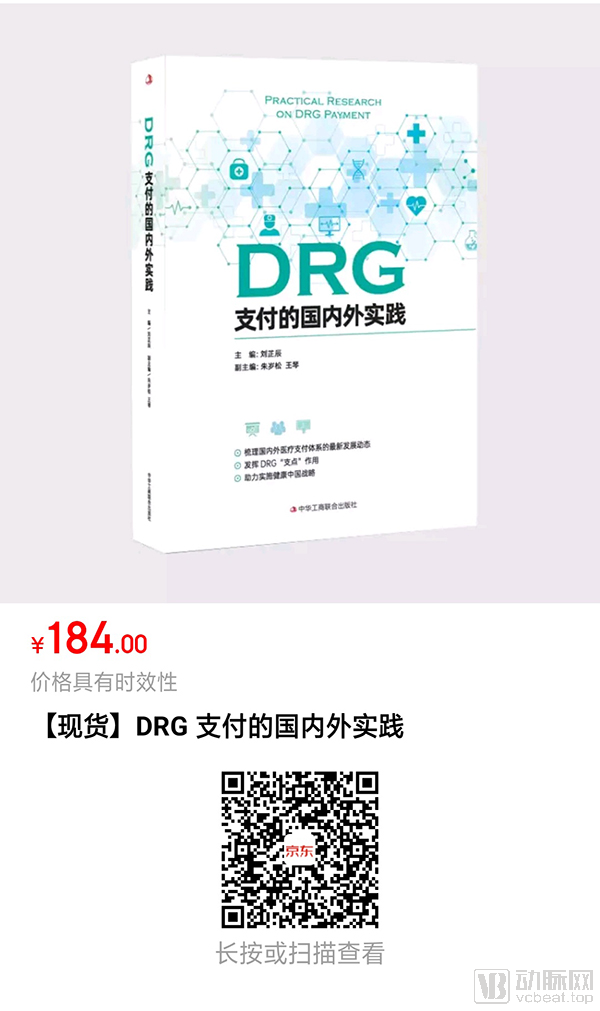
Editor’s Note: Portions of this article are excerpted from the co-authored book *Domestic and International Practices of DRG Payment*. The book is edited by Liu Zhichen, who serves as Chief Expert in the Healthcare Industry at China Unicom Group and a member of the Industrial Internet Expert Committee of China Unicom Group, and was jointly trained as a postdoctoral researcher by the Postdoctoral Mobile Station in Public Administration at Fudan University and the Postdoctoral Workstation of the Statistical Information Center of the National Health Commission. The associate editors are Zhu Suisong, Director of the Network Technology Department at Shenzhen Nanshan Hospital, Adjunct Professor at Shenzhen University, and Off-Campus Leader; and Wang Qin, Secretary-General of the Health Insurance Working Committee of the Chinese Society for Health Informatics and Medical Big Data, and Deputy Director of the Life Insurance Department of the Insurance Association of China.
No reproduction without permission. Legal liability will be pursued for violations.