

Baidu Health Builds an Open Ecosystem with Partners to Create a 'Hospital Without Walls'
The essence of the world is a Black Swan; the pandemic was merely a catalyst.
Amid the impact of the COVID-19 pandemic, the internet industry has accelerated its transformation and reshuffling, with the digital health sector entering a pivotal year of change as many companies embark on a fast track to growth.
Zhiyun Health, which has been deeply engaged in chronic disease management and smart healthcare, and Haici Technology, which focuses on internet hospital services, both entered a new stage of development in 2020 and became important partners in Baidu Health’s ecosystem layout. Over the past year, Baidu Health has integrated the entire value chain of internet healthcare, achieving a holistic upgrade from connecting “people with information” to “people with services,” thereby building an open, enabling ecosystem for its partners.

Image source: 123rf
Previously, the internet healthcare sector struggled to break through due to two main reasons: on one hand, there was no mature business model to fully attract medical resources; on the other hand, users lacked awareness of online health services, and platforms operated in silos, failing to provide one-stop health management services.
It can be said that the sudden outbreak of the pandemic provided Zhiyun Health with an opportunity for rapid development.
“Zhiyun Health is a digital chronic disease management company. We aim to manage users’ health records through comprehensive digital chronic disease management services, enabling patients to establish long-term relationships with their attending physicians, helping doctors monitor patients’ conditions online, and facilitating real-time interaction with patients,” said Zheng Zeyu, Deputy General Manager of New Media Incubation at Zhiyun Health. Currently, Zhiyun Health has established an integrated business ecosystem linking healthcare providers, patients, pharmacies, and insurance. It serves nearly 2,000 hospitals and over 110,000 pharmacies across China, reaching 500 million chronic disease patients nationwide.
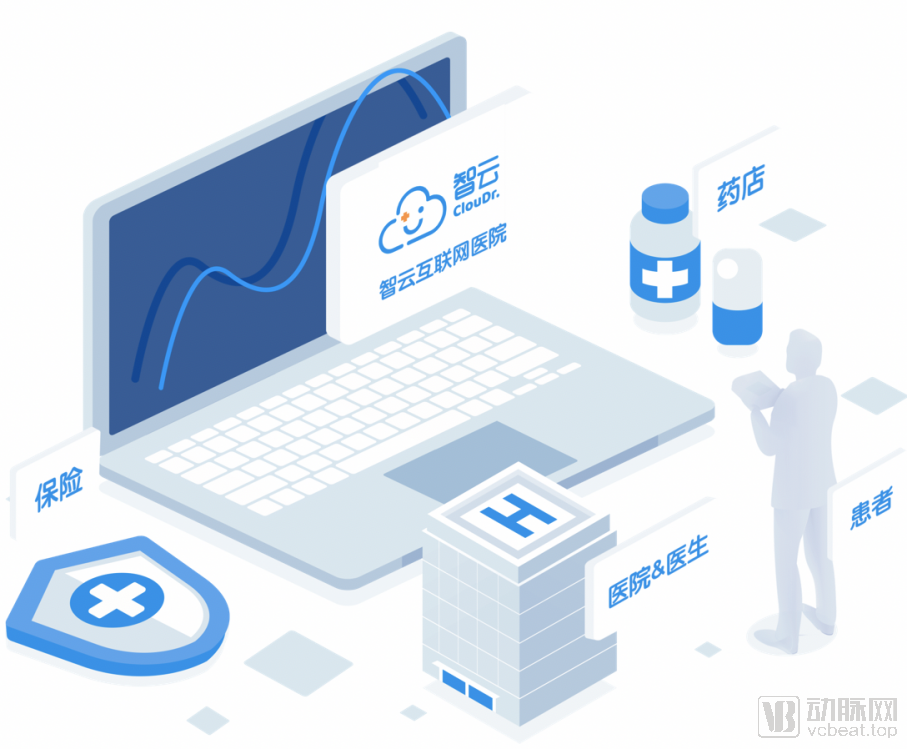
“Under the impact of the pandemic, some patients faced a dilemma when seeking medical care at hospitals. This was particularly true for patients with chronic diseases, who require continuous prescriptions without interruption but feared cross-infection by visiting hospitals. Through our collaboration with Baidu Health, we have resolved these challenges for patients,” said Zheng Zeyu.
The essence of internet healthcare lies in the restructuring of resources. “Among the high-quality medical resources connected by Baidu Health, partners can collaborate with enterprises across various niche sectors, amplifying their brand and service value through the multi-scenario application of health services,” said Zheng Zeyu. He noted that Baidu Health has mobilized resources across the internet healthcare industry in a comprehensive manner by building a content ecosystem and bringing together numerous partners, including healthcare service providers, hospitals, enterprises, and associations.
Nevertheless, Jia Yan, Vice President of Zhiyun Health, also expressed concerns, noting that China’s health industry is currently in a phase characterized by a diverse array of enterprise types, rapid growth, and strong capital interest, yet with uneven levels of quality. “While some companies genuinely contribute to industrial development, others are merely following trends to make quick profits. At this juncture, there is an even greater need for leading enterprises to assume the role of ecosystem builders, helping companies within the industry achieve common development through the aggregation of industry resources, and guiding the industry’s progress by promoting standardization.”
Baidu Health is playing precisely such a role. “On the one hand, Baidu Health has established a one-stop closed-loop health service system, meeting users’ increasingly diverse and rich internet-based health service needs; on the other hand, it connects the upstream and downstream segments of the broader healthcare industry, fostering a virtuous cycle within the health ecosystem,” Jia Yan continued.
By connecting industry partners and expert resources across the upstream, midstream, and downstream segments of the broader health sector, Baidu Health has accelerated industry integration and built a multi-dimensional, closed-loop ecosystem. This approach has generated synergistic effects by integrating previously fragmented health management and clinical care resources, providing partners with strategic leverage and focal points for business breakthroughs amid the surging pandemic.
Amid the pandemic, user-side demands are also driving the upgrade and iteration of the internet health industry.
Amid the surging opportunities in emerging industries, Haici Technology has ushered in a golden age for the development of the medical and health sector.
Since 2014, Haici Technology has been assisting public hospitals in process optimization and upgrading. Its business layout has expanded from the initial online migration of traditional offline services—such as appointment registration, payment, and inquiry—to innovative, end-to-end medical service offerings, including the construction and operation of internet hospitals and in-hospital AI intelligent computing applications. To date, Haici Technology has served over 800 public medical institutions across 26 provinces in China, supporting 60,000 healthcare professionals, accumulating more than 650 million patient interactions, and facilitating platform transaction volumes exceeding RMB 100 billion.
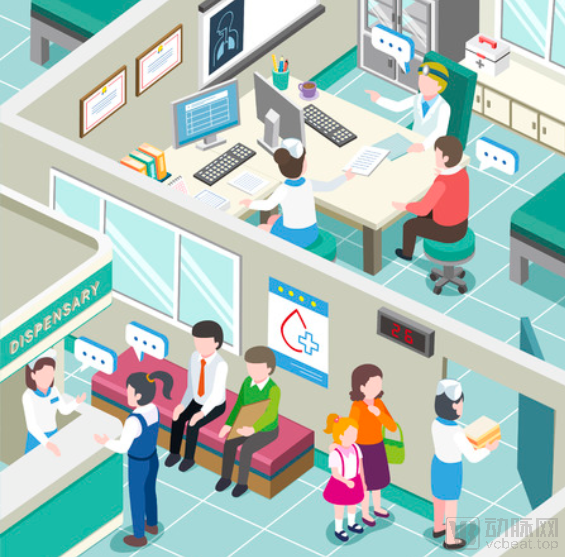
Image source: 123rf
In 2020, Haici Technology partnered with Baidu Health to provide hospitals with Baidu Smart Mini Program services, launching a comprehensive suite of internet healthcare solutions. Min Neng, founder of Haici Technology, stated that this online internet hospital service “breaks down” the “walls” surrounding traditional offline hospitals, effectively integrating online and offline operational workflows.
“Baidu Health sits at the starting point of users’ health needs, providing one-stop services such as online medical consultations, medication purchases, physical examinations, and vaccine appointments, based on authoritative health information and knowledge, thereby accelerating the digitization of healthcare services,” said Min Neng. He noted that initiatives such as the issuance of internet hospital licenses and reforms enabling online medical insurance payments are sending positive signals for industry development.
“Baidu Health has not only empowered its partners, but also accelerated the digital transformation of traditional hospitals and facilitated the rapid development of internet hospitals in China. From a strategic perspective, this represents a significant breakthrough.”
Due to the unique nature of the healthcare environment, offline hospitals will remain the primary setting for clinical diagnosis and treatment for a considerable period. Min Neng believes that “how effectively offline and online resources are integrated will largely determine the quality of future health services.”
Baidu Health fulfills 200 million health-related search queries daily, with users turning to Baidu as their primary gateway for information on disease prevention, treatment, wellness, and rehabilitation. This entrenched user behavior and strong brand association are difficult to surpass in the short term, establishing robust industry barriers for the internet hospital services jointly developed by both parties. Min Neng stated, “Within the open ecosystem built by Baidu Health, we will explore greater possibilities and innovations in the future.”
The “Healthy China” strategy explicitly states that by 2030, the total scale of the health service industry will reach RMB 16 trillion, indicating substantial room for growth from the current market size. On one hand, the development of the health industry requires enterprises or platforms to serve as bellwethers leading industry trends; on the other hand, the increasing specialization of social division of labor inevitably necessitates platforms to aggregate and integrate resources from various stakeholders.
Currently, the internet health sector is brimming with countless opportunities and challenges. Baidu Health is leveraging this zeitgeist to forge a tightly-knit “community of shared destiny” with its partners, thereby accelerating the rapid rise of China’s broader healthcare industry.