

TCL Medical's Yin Bing on Independent Imaging Centers and Their Role in Medical Consortium Development
In the private healthcare sector, “independent imaging centers” represent a particularly intriguing niche. As an imported model, it has been present in China for only six years, yet it already exhibits characteristics of a mature market, such as few new entrants and a pronounced concentration among leading players. After all, with established models from developed countries like the United States and Japan serving as references, coupled with the constraints of asset-heavy operations, very few entrepreneurs possess the capability to cross the entry barrier. Those who have entered this space are largely well-prepared.
However, to gain recognition, new entities must overcome numerous challenges. For independent imaging centers, clarifying their market positioning, establishing distinctive services, building patient acquisition channels, and recruiting effective medical talent are critical issues that every enterprise must address. In essence, independent imaging centers optimize resource allocation through innovative models, thereby revitalizing China’s diagnostic imaging market. Given the domestic shortage of medical and physician resources, trust is the key to making this pathway successful.
Trust here refers not only to the confidence of C-end users, but more importantly to the mutual recognition of imaging diagnoses among B-end physicians, as well as support from G-end government authorities for cloud-based imaging diagnosis across different institutions within medical consortia. Establishing such trust typically requires enterprises to possess extensive medical experience and the capacity to bear the costs of trial and error. Over the years, in the process of building trust, various companies have explored their own viable business models.
TCL Medical is a latecomer in this sector, but its decades of deep expertise in the healthcare industry have enabled it to rapidly ascend to the top tier. In mid-2019, the independent imaging center under construction by TCL Medical Imaging in Kunshan, Jiangsu Province, received preliminary approval and commenced construction in the same year. The first imaging outpatient clinic—the Jiaozuo Outpatient Clinic in Henan Province—began operations at the end of 2019. By mid-2020, the Luohu Imaging Outpatient Clinic and the Longhua Independent Imaging Center, both in Shenzhen, had successively become operational. TCL Medical’s imaging services strategy quickly gained momentum.
Recently, the TCL Medical Kunshan Ruiying Medical Imaging Center obtained its medical practice license, marking a significant addition to TCL Medical’s independent imaging network. Seizing this opportunity, VCBeat conducted an in-depth interview with Yin Bing, General Manager of the TCL Medical Kunshan Ruiying Medical Imaging Center, aiming to gain insights into the evolving landscape of independent imaging centers through the lens of TCL Medical’s imaging development. The following is a transcript of the interview.
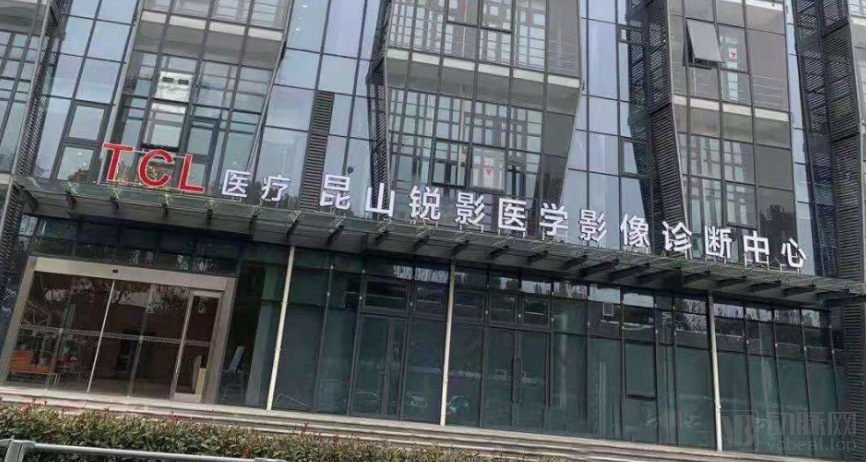
TCL Medical Kunshan Ruiying Medical Imaging Center
Q: Is the independent imaging center sector worth exploring in depth?
A: There are both similarities and differences in market selection between the healthcare and non-healthcare industries. The similarity lies in the need for both to take a long-term view and gain insight into market size. The difference is that the healthcare industry is highly policy-driven; only with policy support is there room for subsequent development.
Returning to the track of independent imaging centers. First, regarding policy: the National Health Commission’s 2015 “Guiding Opinions on Advancing the Construction of a Tiered Diagnosis and Treatment System,” the 2016 “Management Specifications for Medical Imaging Diagnostic Centers (Trial),” and the 2017 “Detailed Rules for the Implementation of the Regulations on the Administration of Medical Institutions” all demonstrate, through policy measures, the government’s determination to promote privately operated healthcare. It is this policy support that provides us with the motivation to sustain our operations.
Next is the market, which consists of two segments. The first is the rigid-demand market for hospital imaging. According to industry research reports, the total size of China’s imaging market was RMB 240–300 billion (based on 2016 data). Assuming a 5% penetration rate for third-party imaging centers, their addressable market size would amount to RMB 12–15 billion, with rapid annual growth. The second segment comprises health checkup services within the broader big-health sector. Although there are no precise figures to substantiate this, public awareness and emphasis on healthcare are steadily increasing. A set of market research data on health checkups published by Ali Health in 2019 indicated that the health checkup market grew steadily from 2016 to 2018, with a growth rate of 32% in 2018. Although health checkups represent only part of the functions offered by imaging centers, this glimpse suffices to demonstrate the continuously rising overall value of this market.
Q: After six years, have independent imaging centers entered the next stage of development?
A: It is difficult to define the development stage of independent imaging centers, as the industry is still in an exploratory phase. What is certain, however, is that the initial period of blind, land-grab-style expansion has gradually passed, and every participant is now acting with greater caution. While there has been significant accumulation of experience in site selection, service models, and operational methods, innovation continues.
In our view, the development trend of all independent imaging centers is inseparable from the concept of “precision medical services.” This entails developing specialized medical services tailored to specific customers in particular regions with distinct needs. For TCL Medical Imaging, our choice to establish operations in Kunshan was driven by the aim of addressing the imaging needs of Kunshan and its surrounding areas.
Q: Amid its development, what is the strategic core of TCL Medical Kunshan Ruiying Medical Imaging Center?
A: There are two main points. First, effectively accommodate and precisely align with healthcare demands by integrating into the construction of medical consortia established by the National Health Commission. By vertically integrating medical resources with medical imaging at the core, we aim to foster a development model characterized by resource sharing and collaborative division of labor.
Kunshan enjoys a unique locational advantage, situated between Suzhou and Shanghai, less than 100 kilometers from the latter. Despite its impressive per capita GDP of $230,000, Kunshan’s healthcare capabilities lag significantly behind those of Shanghai. As a result, patients from Kunshan frequently travel to top-tier hospitals in Shanghai for medical care, leading to substantial spillover demand for imaging services. Our primary objective is to effectively capture this overflow demand by delivering professional and precise imaging services.
On the other hand, our role is to serve as a complement to the public healthcare system. The Kunshan Municipal Health Commission’s active promotion of the Medical Consortium model is highly conducive to the development of independent imaging centers. This model establishes a medical consortium led by tertiary hospitals in the Kunshan area, in collaboration with secondary urban hospitals, imaging centers, rehabilitation hospitals, nursing homes, and community health service centers. It vertically integrates medical resources to form a management framework characterized by resource sharing and division of labor, wherein imaging centers play an indispensable role through their equipment, technology, and resources. One of the most urgent tasks is to facilitate the downward flow of high-quality medical resources, enhance the capacity of primary healthcare services, and empower grassroots medical institutions.
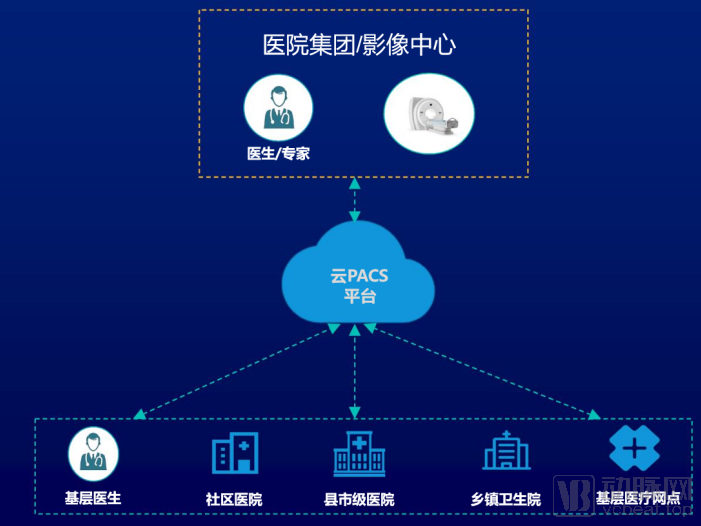
Specifically, TCL Medical Kunshan Ruiying Medical Imaging Center will integrate into the construction of medical consortiums, establishing connections with community hospitals, county- and city-level hospitals, township health centers, and primary healthcare facilities. For medical institutions lacking imaging equipment, patients can be referred to the imaging center for examinations. For those equipped with imaging devices, acquired images can be uploaded to the TCL Medical Imaging Cloud PACS for remote interpretation by TCL Medical’s own or partner radiologists. Patients requiring further mid-to-high-end imaging examinations and diagnostics will then be referred to the imaging center.
Q: How to establish a competitive advantage after the business model is established?
A: Building the competitiveness of private healthcare has always been a topic worthy of discussion. In general, establishing competitive advantage relies on cultivating the unique characteristics of imaging centers themselves; independent imaging centers must not simply become enlarged versions of hospital radiology departments. Only by pursuing specialization and precision, ensuring service quality, and creating distinct features can they secure a foothold in the market.
First, regarding equipment: at the end of last year, we signed a strategic cooperation agreement with Siemens Healthineers. The Kunshan Center’s major imaging modalities—including MR, CT, and PET/CT—are all equipped with Siemens’ top-tier hardware and advanced software solutions, establishing a differentiated configuration compared to local public hospitals. Second, in terms of talent: the Kunshan Center has recruited and plans to recruit a substantial number of senior professor-level physicians and technical specialists in the field of medical imaging, which will significantly enhance the center’s capabilities in specialized deep-dive diagnostics and services. Third, concerning services: we are currently striving to develop distinctive examination services in cardiology, neurology, orthopedics, and other specialties, gradually building our own unique healthcare advantages.
Q: Are there reasonable training models and promotion mechanisms to address the talent issues in independent imaging centers?
A: From the perspective of the current talent structure at the Kunshan Center, all three generations—senior, middle-aged, and young—include a certain number of full-time physicians and technicians. However, to meet diverse and multi-level demands, we have also recruited numerous radiologists from Shanghai’s Grade A tertiary hospitals, who provide services to patients through a model akin to multi-site practice.
Q: How to address the issue of mutual recognition of medical images?
A: The issue of mutual recognition of medical images is a widespread problem, existing not only between hospitals and imaging centers but also among hospitals. The best way to address this issue is to standardize image quality, which is precisely what we plan to do next.
To achieve this goal, we will, on the one hand, collaborate with various medical institutions to establish an offline cooperation mechanism whereby medical experts from Shanghai and Jiangsu are stationed at the Kunshan Center. We aim to create an expert platform akin to a “Medical Club,” designed to address core healthcare needs such as specialized medical consultations, two-way patient referrals, and green-channel services. This initiative seeks to compensate for the limited scope of the imaging center’s current offerings, reinforce the pivotal role of diagnostic imaging in healthcare delivery, and drive overall improvements in medical services. On the other hand, we will establish the Kunshan Medical Imaging Alliance, using Suzhou’s medical imaging quality control standards as the benchmark for construction and entry requirements, thereby elevating the level of medical imaging services in the Kunshan region.
Q: What are your thoughts on the future development of TCL Medical Kunshan Ruiying Medical Imaging Center?
A: As the General Manager of TCL Medical Kunshan Ruiying Medical Imaging Center, my primary task is naturally to rigorously uphold medical quality, establish a gold standard in the industry through quality excellence, and earn customer trust and peer respect by providing high-quality, high-standard imaging examination services.
Given the current situation, while there are third-party medical service models we can draw upon, it is more crucial to adapt to local conditions and advance through continuous exploration based on the specific realities of Kunshan. In the future, under the leadership of the Health Commission, we will remain committed to participating in the development of Medical Consortiums, striving to cover primary healthcare institutions as extensively as possible. We aim to address the challenges of image interpretation at the grassroots level and provide differentiated, value-added services to users with mid-to-high-end imaging needs. By delivering unique and in-depth value in medical imaging examination and diagnosis within the Medical Consortiums, we will step by step build our company’s distinctive business model and competitiveness. This mission is arduous and long-term, requiring us to work hand in hand with our partners to jointly contribute to the development of the healthcare industry.