

BoSi Medical Group: 'Expert Physicians + AI' Powering an Integrated Breast Cancer Screening Solution
Women’s health is vital to the well-being of every family and the overall health of the population. According to data from the World Health Organization, breast cancer surpassed lung cancer in 2020 to become the most commonly diagnosed cancer worldwide. In response to the threat of breast cancer, the globally recognized strategy is consistent, population-wide breast cancer screening. Over the past 50 years, developed countries have successfully increased the early detection rate of breast cancer to over 70% through effective nationwide screening programs, with cure rates for early-stage breast cancer exceeding 90%. In these countries, breast cancer is no longer considered a terminal illness.
Breast cancer has consistently ranked first in incidence among cancers affecting women in China. Since 2008, China has invested substantial human and material resources in promoting breast cancer screening. However, constrained by insufficient primary healthcare resources, although the early detection rate of breast cancer has improved to some extent, it has generally remained below 30%. This figure still lags significantly behind the 60–70% early detection rates observed in countries such as Japan and South Korea.
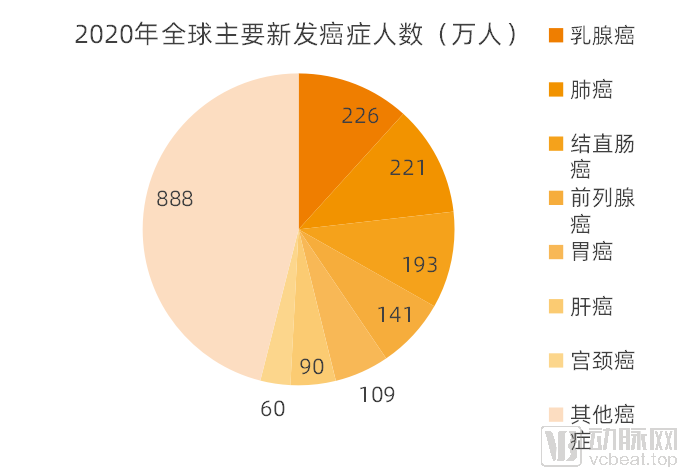
Data source: International Agency for Research on Cancer (IARC), World Health Organization
Combining AI to Solve the Challenge of Early Cancer Screening
Gu Xiang, CEO of Boshi Doctor, was a core member of the founding management team of HK Express Airways and brings extensive business experience. His decision to launch a venture in cancer screening is partly rooted in his early medical education at Fudan University’s Shanghai Medical College.
Currently, Dr. Bosi has established a core team comprising experts in clinical medicine, AI technology, and corporate operations management. Leveraging cancer screening as its entry point and fully utilizing AI technology, the company has developed a comprehensive solution for breast cancer screening.
It is understood that the core of this solution lies in the separation of scanning and diagnosis. Specifically, high-resolution, standardized 3D whole-breast ultrasound images are acquired using the Automated Breast Ultrasound (ABUS) system developed by GE Healthcare. Radiologists at remote diagnostic centers then leverage an AI-based breast cancer diagnostic system to perform high-quality, efficient, and precise interpretations of the 3D whole-breast ultrasound images transmitted from across China.
Under this protocol, primary screening facilities need only be equipped with Automated Breast Ultrasound (ABUS) devices. Ultrasound scans can be performed without requiring physicians specialized in breast cancer diagnosis. This approach not only preserves the advantages of conventional ultrasound—namely, being painless and radiation-free, which is particularly suitable for Asian women with dense breast tissue—but also eliminates the heavy reliance on the experience level of frontline clinicians. It truly enables women across China to access high-quality breast cancer screening comparable to that provided by tertiary hospitals, regardless of time or location.
Gu Xiang stated, “More than 50 countries worldwide have implemented nationwide breast cancer screening programs. The detection rates in Japan and South Korea exceed 3‰, whereas China has only conducted limited-scale screening, with a detection rate of less than 0.5‰. Our breast cancer screening solution does not consume local physician resources, can achieve detection rates comparable to those in Japan and South Korea, and can save substantial national medical insurance resources.”
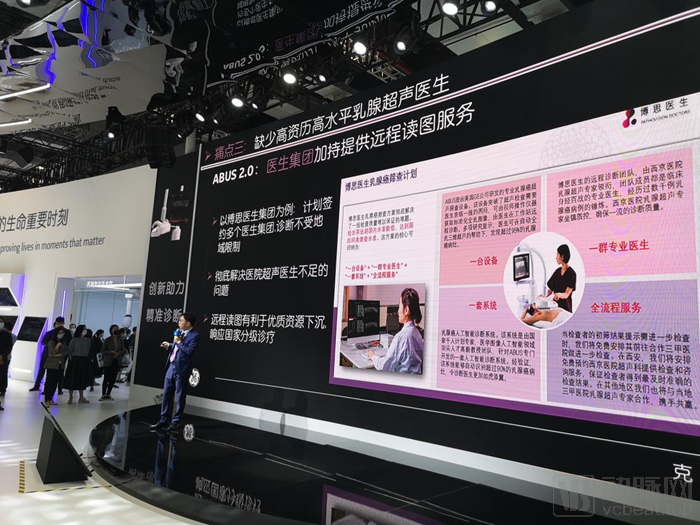
AI-Assisted Diagnostic System for Automatic Identification of Millimeter-Scale Early-Stage Breast Cancer Lesions
The accuracy of AI-assisted diagnosis largely depends on algorithm training. To achieve precise screening for breast cancer, Professor Gao Yi, Chief Scientist at Bosi Doctor, and his team have developed a system that can automatically flag suspicious lesions in medical images, leveraging tens of thousands of cases and an automated annotation program. This approach not only ensures screening quality but also significantly enhances physicians’ workflow efficiency, reducing diagnosis time by more than 50% and making it possible to popularize high-quality breast cancer screening across China.
During the system development process, Bosi Doctor established feedback channels between the technical team and the medical team. Through continuous collaboration and iteration, the final product form and its lesion annotation capabilities were refined to better align with the diagnostic and treatment requirements of clinicians. Meanwhile, leveraging the continuous accumulation of data from platform operations, Bosi Doctor’s AI-assisted diagnostic system undergoes ongoing model optimization and upgrades, thereby creating a closed loop of AI evolution.
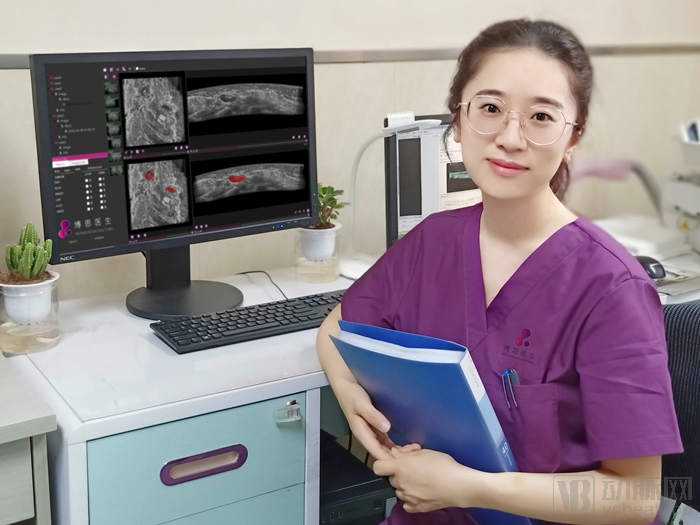
Since its official launch in 2020, the system has established formal partnerships with multiple medical institutions and has received positive market feedback.
Hardware Empowerment: Assisting in the Acquisition of High-Quality Images
2020 marked the 15th year of GE Healthcare’s Pink Ribbon Campaign. Since 2006, GE Healthcare has conducted the “Pink Ribbon Campaign” every October, a public welfare initiative dedicated to breast cancer screening, with the aim of raising societal awareness of breast health.
In the field of breast imaging and precision diagnosis and treatment, GE Healthcare has developed a series of innovative technological products that cover the entire disease lifecycle, including early detection, imaging diagnosis, biopsy and pathological examination, treatment efficacy assessment, and long-term follow-up. Among these, the Automated Breast Ultrasound Scanner (ABUS), which utilizes the new cSound holographic domain imaging platform, provides three-dimensional breast ultrasound images. Its unique coronal view offers more valuable information for the identification of breast cancer. Furthermore, the standardized images generated by ABUS create an ideal scenario for the application of artificial intelligence.
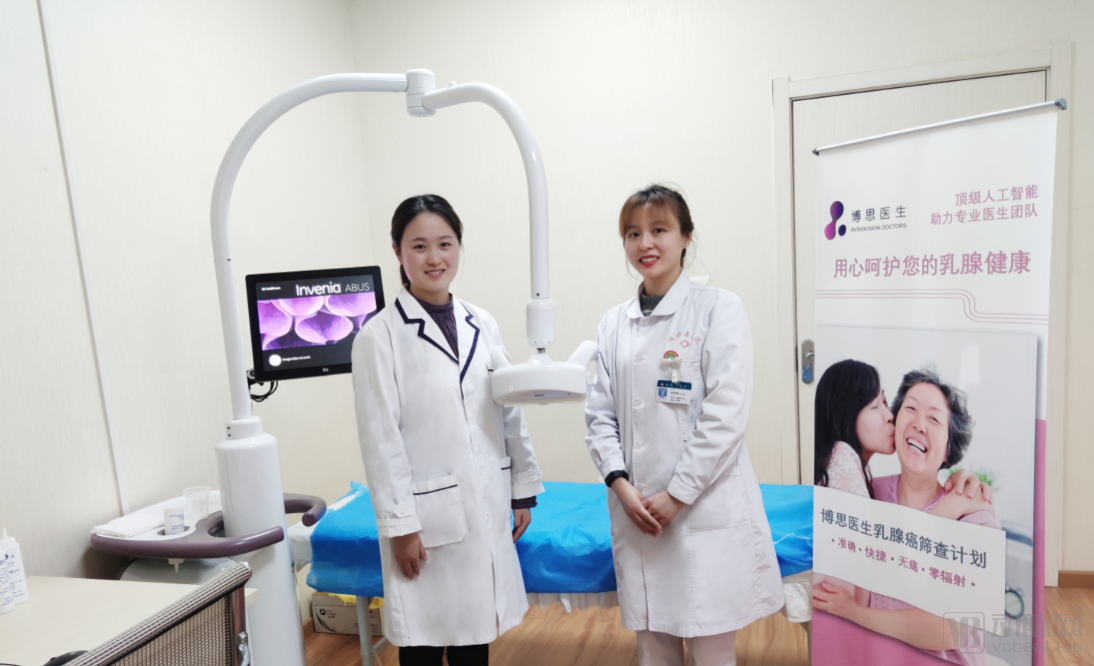
In 2020, Bosi Doctor partnered with GE Healthcare’s Pink Ribbon Initiative, integrating Automated Breast Ultrasound (ABUS), AI-assisted diagnosis, and remote diagnostic technologies to address the challenge of deploying high-quality medical expertise to frontline screening settings, thereby further enhancing early detection rates for breast cancer. Building on the favorable outcomes achieved through the combined use of ABUS devices and AI-assisted diagnostic systems, Bosi Doctor will maintain a long-term partnership with GE Healthcare and assume responsibility for GE Healthcare’s external equipment training programs.
Expert Physician Team, Ensuring Diagnostic Quality
Currently, all members of Dr. Bosi’s telemedicine team are professional physicians with extensive clinical experience. They receive training, guidance, and quality control oversight from breast ultrasound experts at Xijing Hospital, ensuring first-class diagnostic quality.
Leveraging the company’s standardized training services, Bosi Doctor can accelerate the professionalization of primary-care physicians and empower their disease screening capabilities with AI. The standardized training content provided by Bosi Doctor’s team of specialist physicians not only enables people in more regions to access high-quality cancer screening services but also injects fresh talent into Bosi Doctor’s growth.
Meanwhile, Dr. Bosi has established collaborative partnerships with numerous Grade A tertiary hospitals across China. When initial screening results indicate the need for further examination, Dr. Bosi will arrange free referrals to these affiliated Grade A tertiary hospitals, ensuring that patients receive timely and accurate diagnostic results.
In the future, Dr. Bosi will continue to leverage its AI-assisted diagnostic capabilities and promote its screening model that separates scanning from diagnosis, thereby establishing a nationwide breast cancer screening system covering a broader population. Building on its existing mature technologies, the company will expand its screening scope to include gastric cancer, colorectal cancer, and other conditions, aiming to achieve early screening, early diagnosis, and early treatment for major cancers. Furthermore, Dr. Bosi will intensify its efforts in promoting breast cancer screening, drive market education, and enhance public awareness of breast cancer screening.