

Yihe Pharma Files IPO Prospectus: Led by Canadian Royal Society/CAE院士, Pioneering Dry Powder Inhalation Therapies in China

Inhal Pharma
Dry Powder Inhalation Formulations, Inhalation Devices, and Related Equipment Developer
With the continuous advancement of medical technology, human life expectancy has increased, but population aging has also emerged as a significant challenge, becoming an impediment to economic development. Currently, China’s population aged 60 and above has exceeded 200 million, accounting for more than 18% of the total national population. In 2019, China recorded the fastest growth rate in population aging worldwide.
For every individual, the aging of the body signifies an increased likelihood of developing diseases. The very beginning of life—breathing—is also accompanied by the intrusion of pathogens, becoming an accomplice in strangling human life. Pulmonary diseases continue to occur at high rates due to intensified environmental pollution and unhealthy lifestyle habits.
Among the 380 million people with chronic obstructive pulmonary disease (COPD) worldwide, nearly 100 million are in China; among the approximately 360 million asthma patients globally, about 48 million are in China;This highlights the substantial proportion of the Chinese population affected by respiratory diseases. However, these data are based solely on individuals who have been tested for lung conditions and do not account for those in third- and fourth-tier cities and rural areas who remain untested.
According to the latest research findings:Among individuals aged 20 years and older in China, the total number of people with small airway dysfunction is approximately 426 million, accounting for 43.5% of the total population.This population faces a higher potential risk of asthma, chronic obstructive pulmonary disease (COPD), and other pulmonary diseases than the general population.
Leveraging this vast patient market as its entry point, Inhal Pharma focuses on the research, development, and manufacturing of dry powder inhalation formulations, inhalation devices, and related equipment, committed to driving innovation in China’s dry powder inhalation sector.
Inhaled formulations are primarily categorized into three types: nebulized inhalations, aerosols, and dry powder inhalers.
The advantages of nebulized inhalants lie in their convenient administration; however, their use is limited by location constraints and unstable dosing. Aerosols effectively address the poor portability and unstable dosing associated with nebulized inhalants, but they face challenges such as asynchronous inhalation and actuation, significant irritation, and low pulmonary deposition rates of the active pharmaceutical ingredient.
To address these limitations of medication delivery, dry powder inhalation formulations have emerged, becoming the mainstream direction in the global development of inhalation products.
“Unlike aerosols,Dry powder formulations utilize a matching dry powder inhaler to deliver ultrafine drug particles into the lungs via inhalation, offering excellent synchronization, non-irritating properties, and the portability advantages of aerosol inhalers.Furthermore, the active pharmaceutical ingredient (API) in dry powder inhalation formulations is stored in a dry state, thereby offering superior stability and safety compared to aerosols and nebulizer solutions.Dr. Kaiqi Shi, CEO & Co-founder of Inhal PharmaIntroduced the advantages of dry powder inhalation formulations to VCBeat.
As an emerging drug delivery method in recent years, dry powder inhalation formulations account for 45.7% of the global inhalation medication market and 24.7% of the inhalation medication market in China, demonstrating broad patient recognition and high acceptance of this formulation type. However, currently,Constrained by factors such as pricing and user training, the market share of dry powder inhalation formulations in China still has significant room for growth.
However, regrettably,Currently, the dry powder inhalation formulation market in China is essentially monopolized by foreign pharmaceutical companies:GSK, AstraZeneca, and Boehringer Ingelheim have essentially monopolized the major domestic market for inhalation preparations. There are few relevant generic products available in China, and not many pharmaceutical companies manufacture dry powder formulations, which has contributed to higher product prices to some extent. As current policies continue to be refined, innovative pharmaceutical companies capable of overcoming related technical barriers clearly hold a first-mover advantage in the market.
Inhal Pharma is composed ofProfessor Zhu Jingxu, Fellow of the Royal Society of Canada and the Canadian Academy of EngineeringCo-founded with Dr. Shi Kaiqi, the company is located at the New Materials International Innovation Center in Ningbo National High-Tech Zone, Zhejiang Province. Officially established in June 2020, it is a technology-driven enterprise specializing in the research and development of dry powder inhalation formulations, inhalation devices, and related equipment, as well as the provision of related technical services.
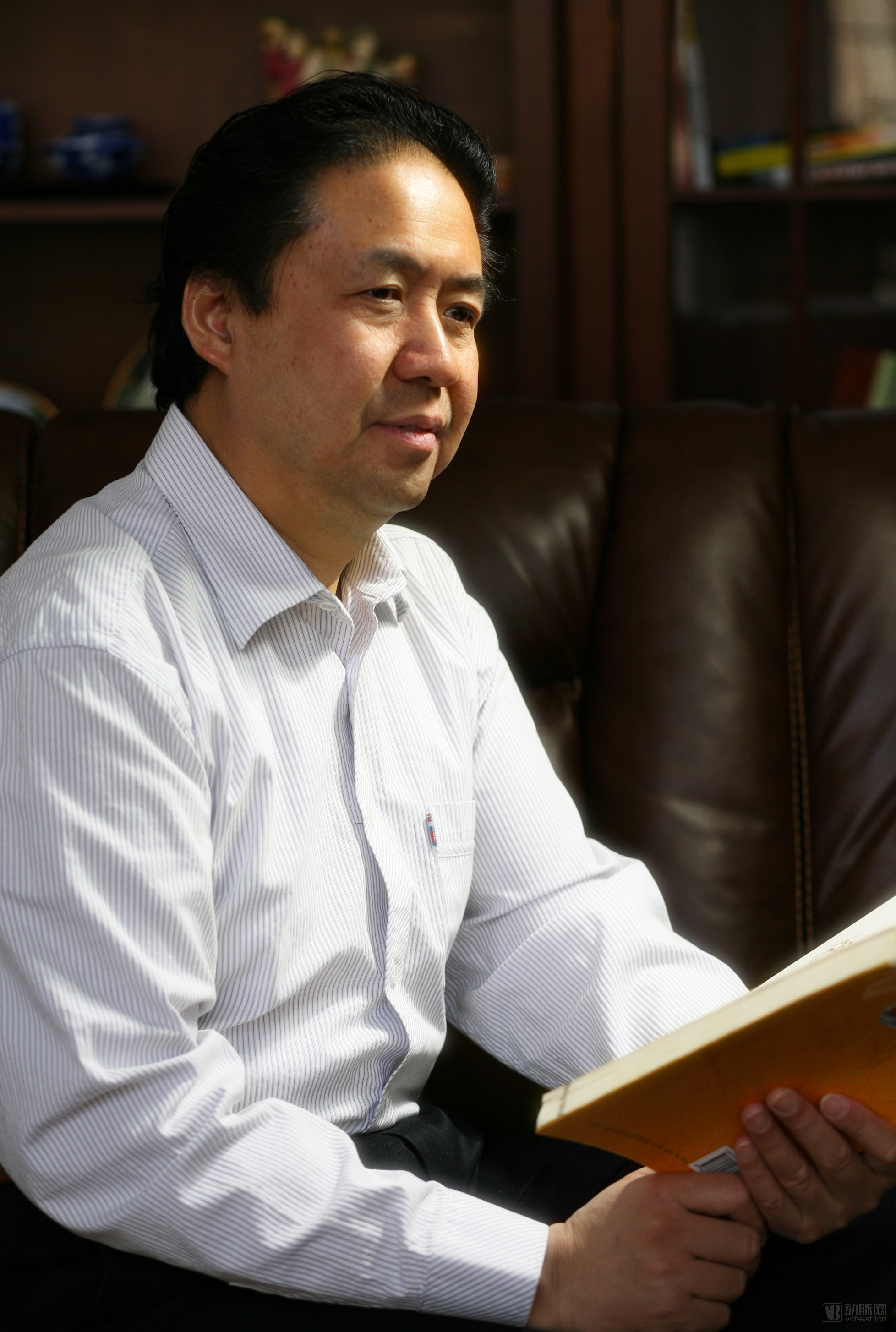
Academician Zhu Jingxu, Founder & Chief Scientist of Inhal Pharma
Since 1994, Academician Zhu’s team has been engaged in research on inhalation drug delivery, accumulating over two decades of R&D experience. The team has achieved significant advancements in drug screening and evaluation, formulation design and optimization for powder aerosols, development of dry powder inhaler devices, precise quantitative filling technologies and equipment for ultrafine powder drugs, and the construction of lung-targeted drug delivery systems, positioning itself at the forefront of the global dry powder inhalation field.
Currently, Inhal Pharma boasts 1,600 square meters of office and R&D space, equipped with a complete set of formulation development facilities and an experienced R&D team, over 60% of whom hold master’s or doctoral degrees. This infrastructure enables the company to meet requirements ranging from small-scale laboratory development to pilot-scale production.
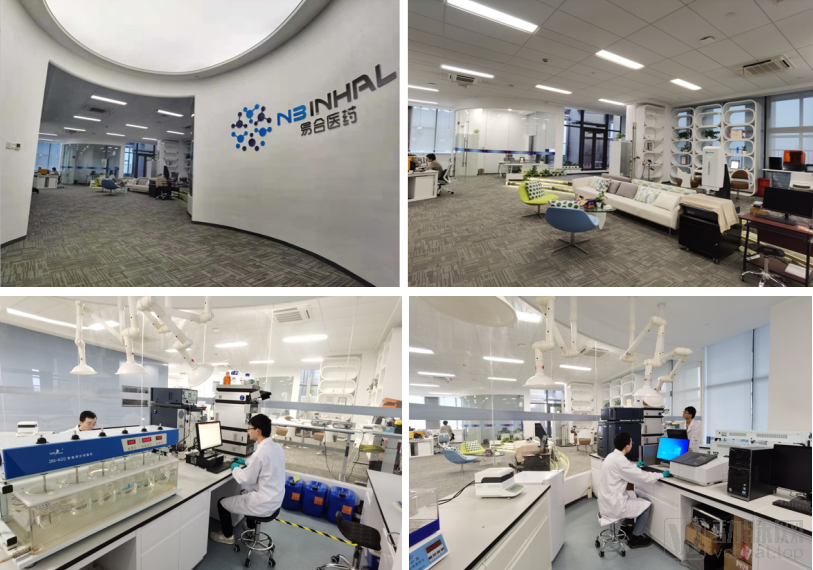
Inhal Pharma Office and R&D Facilities
Levosalbutamol Sulfate Powder for InhalationIt is a Class 2 new drug independently developed by Inhal Pharma, currently in the active pharmaceutical ingredient (API) development stage;Budesonide and Formoterol Fumarate Inhalation Powder (Symbicort Turbuhaler)It is a high-end, highly complex generic drug strategically positioned by Inhal Pharma, currently in the small-scale trial development phase. It is reported that Symbicort Turbuhaler was developed by AstraZeneca, and there are currently no generic drug applications filed for it in China. Inhal Pharma will use these two drugs as entry points to gradually advance innovation in China’s dry powder inhalation formulation sector.
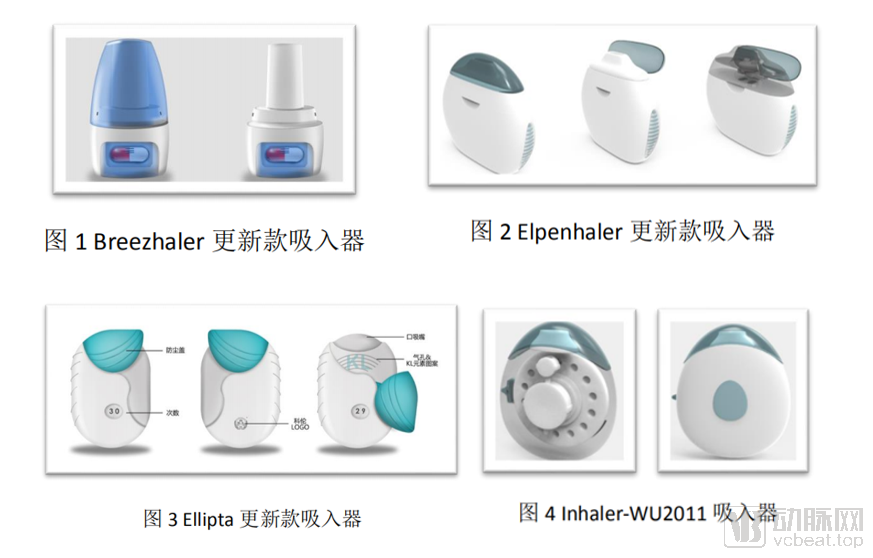
“Because the R&D cycle for inhalation devices is shorter than that for drugs, Inhal Pharma’s progress in this area will be relatively faster,” Shi Kaiqi told VCBeat.In terms of inhalation devices, Inhal Pharma already has several mature products:including Breezhaler, Elpenhaler, and Ellipta inhalers with updated designs (as shown in Figures 1–3); a generic Turbuhaler device; and the independently developed InhalerWU2011 disc-blister inhaler (as shown in Figure 4).
There are three key points in the development of dry powder inhalation formulations:Formulation, Inhalation Device, and Metered-Dose Filling.These three factors determine whether a dry powder inhalation product can achieve market success. Given the high technical barriers at each stage, there are stringent requirements for both talent and technical expertise within the R&D team.
“The challenge with the formulation lies in its stability, and it is essential to ensure high bioavailability for patients after inhalation,” Shi Kaiqi told VCBeat. Yingliang Ma, Formulation Director at Inhal Pharma, is a Senior Research Fellow at the Particle Technology Research Centre of Western University in Canada. With 27 years of experience in developing inhalation formulations, he has collaborated with domestic and international institutions such as GSK Canada, Shanghai Institute of Pharmaceutical Industry, and Shenyang Pharmaceutical University to jointly develop dry powder inhalation products.
Since the dosage of inhaled formulations for patients is at the microgram level, precise quantification presents significant technical challenges.Precise, quantitative loading of ultra-fine drug powders into devices is a bottleneck technology.Since 1994, the team at Inhal Pharma has collaborated with GSK Canada, engaging in the pretreatment of ultra-fine inhaled powder, as well as the development and scale-up of precision filling technologies and devices. With extensive experience, the team is capable of achieving precise microgram-level drug dispensing and holds multiple independent intellectual property rights.
The flow path of the inhalation device, the material of the flow path, as well as its antibacterial and moisture-proof properties, will all affect the final success rate of drug administration or bioavailability, thereby influencing the therapeutic efficacy of the formulation.Inhal Pharma is capable of independently completing the design, development, manufacturing, and validation of inhalation devices.Possesses substantial expertise and relevant patent protection in flow channel design and the diversification of drug delivery devices.
Particle technology serves as the link connecting formulation, quantitative filling, and inhalation devices, thereby integrating the three key elements of inhaled pharmaceuticals.Academician Zhu Jingxu, the company’s founder, is a world-renowned expert in particle science with over 30 years of experience in particle technology R&D and engineering, and he oversees rigorous quality control for this project.
Currently, there are few inhaled formulations being developed domestically in China, and the industry also faces a shortage of talent. Regarding its talent development strategy, Inhal Pharma plans to adopt a “two-pronged” approach: “On one hand, we will continue to recruit suitable talent from abroad; on the other hand, we will establish close collaborations with a number of renowned domestic and international universities specializing in pharmaceutical sciences, materials science, and mechanical engineering—such as China Pharmaceutical University, Shenyang Pharmaceutical University, the University of Nottingham (UK), and Western University (Canada)—to cultivate our own ‘reserve talent pool’ through joint projects and product development initiatives.”
“We will proceed in two steps,” said Shi Kaiqi. “The first step is to develop laboratory-scale devices such as capsule-filled, blister-packed, and reservoir-based systems; the second step is to scale up to mass production through organic growth or by identifying suitable partners.”
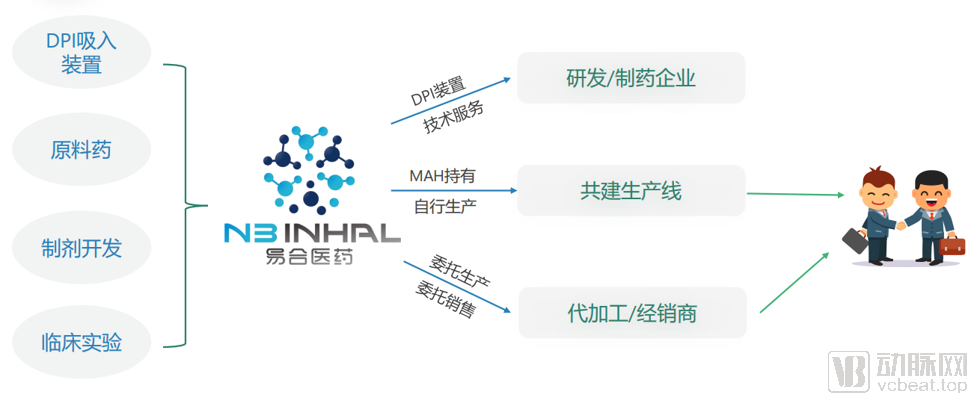
By adopting a differentiated R&D pipeline strategy, actively seeking external collaborations, continuously recruiting and cultivating front-end technical talent, and adhering to independent innovation, Inhal Pharma has established a business growth model tailored to its development within just six months of its founding. The company is striving to pioneer the domestic market for dry powder inhalation formulations, a segment that remains largely untapped in China.
According to Dr. Shi Kaiqi, the company completed its seed financing round led by Ruihe Capital at the end of 2020. The funds were allocated to accelerate R&D progress on established projects, recruit talent, and foster collaborations with pharmaceutical companies, thereby strengthening its in-house R&D capabilities. Li Yizhen, project leader at Ruihe Capital, also noted that although Inhal Pharma is a rising star among domestic dry powder inhalation (DPI) R&D enterprises, it has accumulated substantial expertise over time. Meanwhile, given the strong demand in the asthma and chronic obstructive pulmonary disease (COPD) fields, DPI formulations hold immense potential in areas such as amino acids, antibody and nanobody therapies, and small-molecule immunomodulators, necessitating enhanced collaboration with more enterprises.
This field, this land, still needs innovation—this is also the long-term development goal that Inhal Pharma will persist in.