

The Rapid Rise of Internet Hospitals: Impacts on Healthcare Providers, Patients, and Pharmaceutical Enterprises
With the further implementation of China’s tiered diagnosis and treatment system and the optimization of uneven distribution of medical resources, internet hospitals have experienced significant growth in recent years. Under the impact of the COVID-19 pandemic in 2020, internet hospitals have ushered in new opportunities and challenges.
This report, drawing on real-world case studies, analyzes the current development status and future trends of internet hospitals in China. It provides an in-depth examination of the construction achievements and operational models of internet hospitals under the current domestic healthcare environment and relevant policy guidance, as well as their impact on stakeholders such as hospitals/physicians, patients, and pharmaceutical companies.
I. Introduction to Internet Hospitals and Policy Review
II. Current Development Status in China
III. Future Trends and Impact Assessment
Keywords: Internet healthcare, online consultation, prescription circulation, patient flow, impact on pharmaceutical companies
By shifting offline resources to online platforms, internet hospitals can provide a variety of basic online diagnosis and treatment services while establishing collaborations with offline physical hospitals. For patients, internet hospitals meet the healthcare needs of those who find it inconvenient to visit physical hospitals due to constraints such as time and geography. For hospitals, they alleviate, to some extent, the patient intake pressure on large tertiary Grade A hospitals, while also facilitating remote consultations and the cross-regional mobilization and integration of high-quality physician resources.
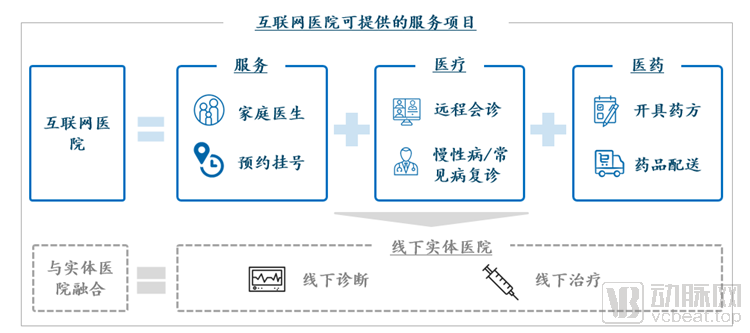
On the other hand, the development of internet hospitals has better implemented the tiered diagnosis and treatment policy, bringing tangible convenience to both hospitals and patients.
From the government’s perspective, internet hospitals can better implement tiered diagnosis and treatment, divert patient flow, and address challenges such as difficulty in accessing medical care. From physicians’ standpoint, internet hospitals enable optimal allocation of medical resources by facilitating cross-regional mobilization and integration of high-quality physician talent. From patients’ viewpoint, online healthcare offers more consultation options, allowing them to choose services tailored to their specific conditions.
Internet hospitals are primarily suitable for patients constrained by time and geography, such as children and the elderly who face difficulties with in-person consultations, young professionals with limited availability due to work commitments, and critically ill patients requiring remote multidisciplinary expert consultations. They are also appropriate for individuals with mild conditions who do not require prescription medications, as well as those who have already received an initial diagnosis and prescription from a physical hospital and only need follow-up consultations for medication renewal or simple medication purchases.
The establishment and operation of internet hospitals must comply with relevant regulations and be subject to effective oversight by local governments. Specific requirements include:
1. There are strict requirements for the naming of internet hospitals, such as “Name of the Institution + Partner Identification Name + Internet Hospital”;
2. Physicians must be qualified to conduct online consultations (their practice location must be at or registered with an internet hospital);
3. Medical personnel shall undergo electronic real-name authentication; internet-based diagnosis and treatment activities shall not be conducted for patients receiving their initial consultation, those with Class A infectious diseases, or those with critical or life-threatening conditions;
4. An electronic signature by a physician is required; after review by a pharmacist, the medication shall be delivered by a qualified third-party institution;
5. Implement an access control system, requiring approval and supervision from the local government to engage in internet-based diagnosis and treatment services;
6. Hospitals must strictly comply with relevant laws and regulations on information security and the confidentiality of medical data, and properly safeguard patient information.
In recent years, the central government has also issued a series of guiding opinions and relevant policies targeting the internet healthcare sector.
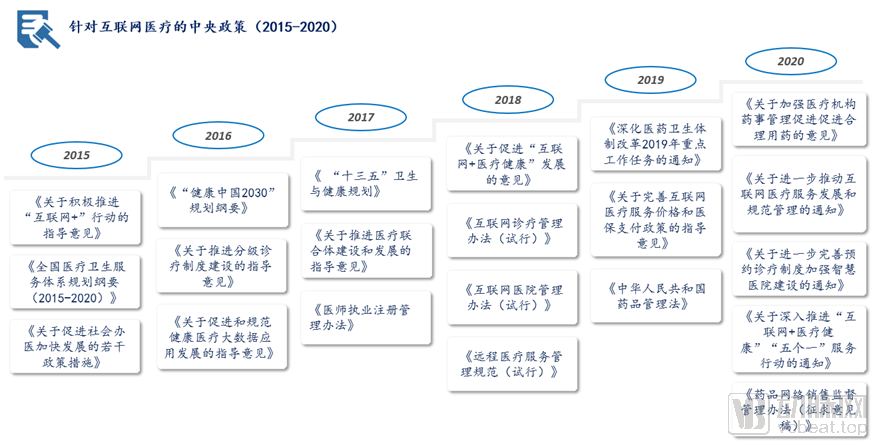
In 2019, the central government explicitly issued guiding policies on fee structures for internet healthcare services and pharmaceutical sales.
The "Key Tasks for Deepening the Reform of the Medical and Health Care System in 2019," issued on May 23, 2019, specified that the National Healthcare Security Administration should formulate policies on pricing and medical insurance coverage for internet-based diagnosis and treatment by September 2019. It also called for organizing the establishment of provincial-level demonstration zones for "Internet + Healthcare," guiding localities to develop "Internet + Healthcare" services in an orderly manner, and expediting the formation of standardized and comprehensive regulatory frameworks.
In May 2014, the former China Food and Drug Administration (CFDA) first proposed lifting the ban on online sales of prescription drugs. In the following years, significant controversies arose regarding the online sale of prescription drugs due to regulatory concerns. However, under the Drug Administration Law promulgated on August 26, 2019, prescription drugs were not included in the list of medications prohibited from being sold online, thereby once again permitting their online sale.
Subsequently, on August 30, 2019, the central government issued the “Guiding Opinions of the National Healthcare Security Administration on Improving Pricing and Medical Insurance Payment Policies for ‘Internet+’ Medical Services,” which clarified the five basic principles that must be met for the inclusion of “Internet+” medical service items in the pricing catalog. The document provided guidance on pricing for internet-based medical services and related medical insurance policies, while specifying that concrete prices, as well as the scope and reimbursement rates of medical insurance coverage, would be formulated separately by each province and municipality based on local conditions.
The “Negative List for Market Access (2019 Edition),” issued on November 22, 2019, stipulates that “drug manufacturers and distributors shall not, in violation of regulations, directly sell prescription drugs to the public via mail order, online transactions, or other means,” thereby imposing further restrictions on the online sale of prescription drugs.
On November 12, 2020, the National Medical Products Administration (NMPA) released the “Administrative Measures for the Supervision of Online Drug Sales (Draft for Comments)” to solicit public opinions. The document stated that, provided the authenticity and reliability of electronic prescriptions are ensured, the online sale of prescription drugs is permitted; meanwhile, drug retail enterprises meeting the conditions for online sales of prescription drugs are allowed to display prescription drug information to the public.
After several twists and turns, and partly influenced by the COVID-19 pandemic, online sales of prescription drugs have been permitted again. The current draft for public comment outlines various regulatory measures, including provisions that allow the sale of prescription drugs provided the authenticity and reliability of electronic prescriptions are ensured. It also specifies the parties responsible for compliance and the associated penalties. Although the actual effectiveness of implementation remains to be verified in the future, from a regulatory standpoint, this draft represents more comprehensive oversight compared to previous regulations.
As China’s first pilot province for “Internet + Healthcare,” Ningxia has formulated and implemented a series of local policies on internet hospitals. The policies successively promulgated in Ningxia from 2016 to 2019 are as follows:
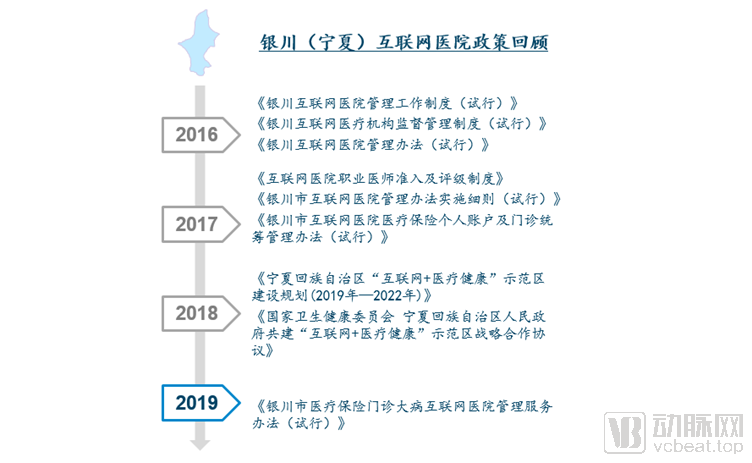
The primary reason for the development of internet hospitals in Ningxia (Yinchuan) is that Ningxia, located deep inland, has an underdeveloped healthcare system and a scarcity of high-quality medical resources. Meanwhile, the aging population has increased the demand for medical services, particularly in the area of chronic disease management, which is a key focus of internet-based healthcare. Telemedicine enables patients to access medical resources from first-tier cities, thereby saving significant labor and time costs.
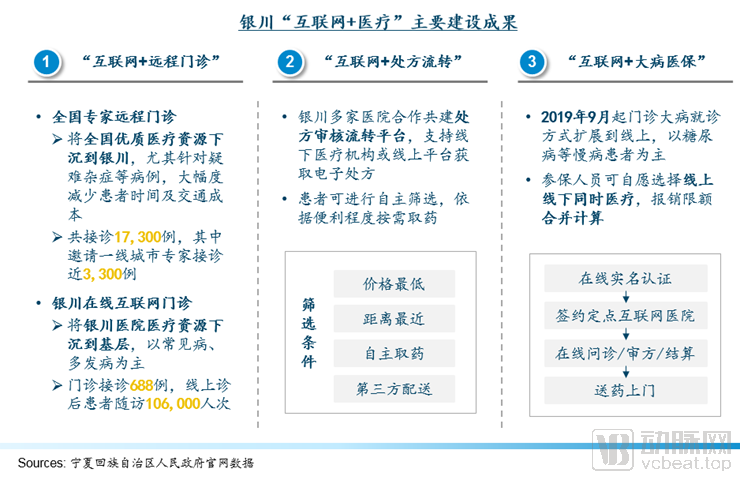
Taking Yinchuan City as an example, the implementation of the “Internet + Healthcare” policy has achieved relatively significant results.
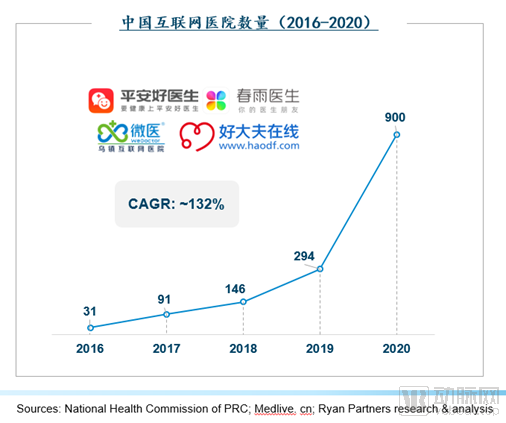
With the continuous strengthening and improvement of internet healthcare policies by both central and local governments, the number of internet hospitals in China has experienced rapid growth in recent years.
In recent years, government policies have encouraged the development of internet healthcare, facilitating better implementation of tiered diagnosis and treatment and rational allocation of medical resources to address current challenges such as difficulty in accessing medical care and long waiting times. With the continuous improvement of supportive and regulatory policies—covering areas such as pricing, health insurance coverage, and online pharmaceutical sales licensing—and given the proactive stance of both central and local governments toward the development of internet healthcare, the number of internet hospitals is expected to maintain a sustained upward trend in the coming years.
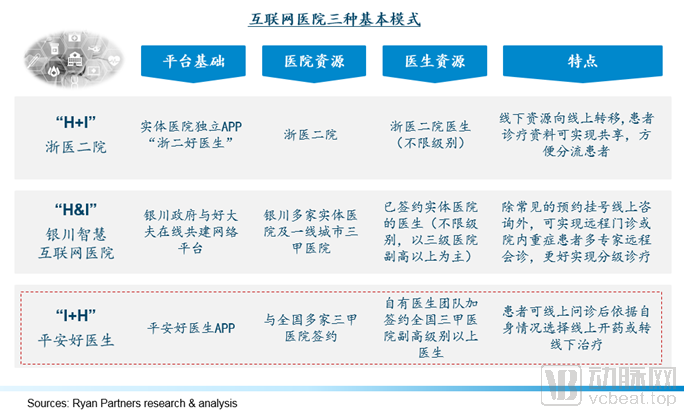
Based on the initiating entity and operational model, internet hospitals in China can currently be categorized into three basic models:
The first model of online medical service delivery by physical hospitals is primarily based on the physician resources of these institutions, establishing internet hospitals led by physical hospitals to facilitate the migration of high-quality offline resources to the online platform, as exemplified by the Second Affiliated Hospital of Zhejiang University School of Medicine.
The second model of integrated online services within medical consortiums involves partnerships between physical hospitals and third-party online platforms, such as Haodf Online, to aggregate physician resources from various regions and achieve cross-regional sharing of medical resources; the Yinchuan Smart Internet Hospital exemplifies this model.
The third platform service model for aggregating physician resources is led by internet companies, which integrate physicians from across China through online multi-site practice registration to provide services such as online consultations and e-prescriptions, as exemplified by Ping An Good Doctor. Each model can develop its own unique advantages and suitable application scenarios based on differences in the platform entity and resource sources.
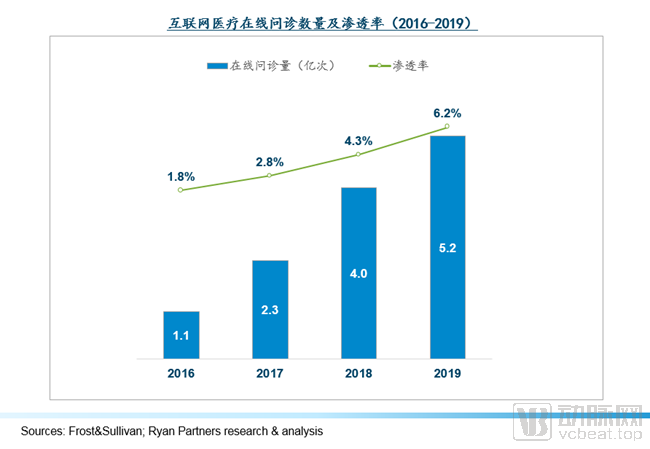
In recent years, the internet healthcare sector has developed rapidly, with a continuous increase in consultation volumes. Under the impact of the pandemic, it was projected to enter a phase of explosive growth in 2020. Taking Ping An Good Doctor’s data during the pandemic as an example, the platform recorded 1.11 billion visits in 2020, while new app registrations increased tenfold and the average daily consultation volume rose ninefold. In recent years, the Chinese government has continuously issued policy guidelines to promote the development of internet healthcare, aiming to facilitate the better implementation of tiered diagnosis and treatment. Affected by the COVID-19 outbreak in 2020, internet healthcare has garnered greater attention and adoption from broader population groups, leading to rapid improvements in various online medical services, particularly online consultations and medication purchases.
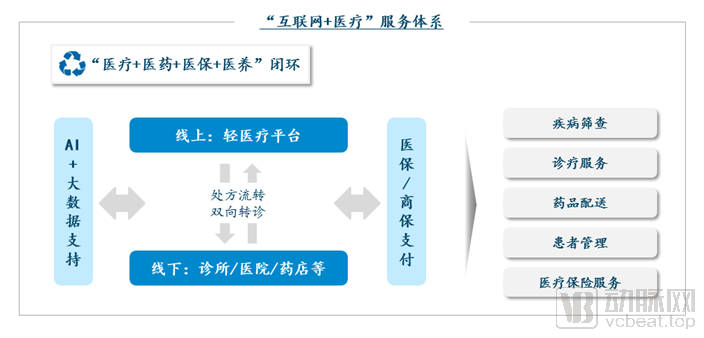
It is anticipated that the “Internet + Healthcare” model will increasingly establish a closed-loop integration of online and offline medical services, thereby enhancing the operational efficiency of the healthcare system.
Establish a closed-loop healthcare service model integrating online and offline channels. Internet hospitals and physical medical institutions should have increasingly clear business demarcations to avoid operational overlap, thereby maximizing medical efficiency and enhancing patient experience. Currently, internet healthcare primarily collaborates with public hospitals; in the future, it can expand its presence in the private healthcare sector by deepening cooperation with commercial insurance providers.
For hospitals, the development of internet hospitals has better facilitated the implementation of tiered diagnosis and treatment, benefiting the growth of both tertiary hospitals and primary care institutions.
Internet hospitals have better implemented tiered diagnosis and treatment, shouldering a significant portion of the healthcare demands from patients with chronic diseases and those requiring follow-up visits. This allows large tertiary hospitals to allocate resources more effectively to critically ill patients. During the pandemic, this model helped disperse patient flow and prevent cross-infection. For high-level hospitals, it has improved operational efficiency and alleviated the pressure on outpatient services. For complex and refractory cases that primary care institutions cannot handle, remote consultations and joint diagnoses with specialists from other hospitals can be conducted. This not only improves service quality but also enables primary care physicians to learn and enhance their skills through real-world cases. For private medical institutions, the queue-free and highly private nature of internet hospitals may pose a certain threat. However, private hospitals can also collaborate with internet hospitals by leveraging their own specialized disciplines for patient referral and management. Thus, challenges and opportunities coexist.
Private healthcare institutions can better attract patients and enhance their services by aligning with the characteristics of internet-based healthcare according to their own needs. For instance, they can sign agreements with online hospital platforms to become offline partner hospitals, focusing on referrals of commercial insurance patients who have a higher willingness to pay for high-quality medical services. Internet healthcare platforms, with their large user base and high volume of consultations, can provide a foundation for patient referrals, thereby addressing the issue of insufficient patient volumes in private hospitals.
General private hospitals often lack high-quality physician resources. However, physicians can register online for multi-site practice to work part-time. Private healthcare institutions can establish or co-develop internet hospitals, facilitating greater opportunities for key opinion leaders (KOLs) from public hospitals to practice part-time in the private sector. This approach not only expands their pool of high-quality physicians but also enables patient referrals by leveraging the patient bases of these KOLs in public hospitals. Additionally, the cost of post-discharge consultations for patients from other regions is typically high. Internet healthcare offers cost-effective online consultations while providing hospitals with a channel for patient follow-up management. Since most out-of-region patients treated by private healthcare facilities are those with critical or severe conditions, they often require subsequent consultations and follow-up care after discharge. Through internet healthcare platforms, patients can directly communicate with their attending physicians—who are most familiar with their conditions—for follow-up consultations, prescription adjustments, and other necessary care.
For patients, internet hospitals offer more diagnostic and treatment options, allowing them to make more suitable choices based on their individual circumstances.
It is difficult to secure appointments at large public tertiary hospitals, particularly for follow-up visits and prescription renewals. Patients can opt for online consultations via internet hospitals. Especially during the pandemic, this approach significantly reduces the risk of cross-infection associated with visiting physical hospitals for minor symptoms, thereby saving patients considerable time and travel costs. Whether through online consultations or in-person visits at physical hospitals, patients gain greater access to specialists at high-level medical institutions, leading to improved diagnostic accuracy and more effective treatment plans, thus ensuring higher-quality medical care. For certain conditions, such as those in gynecology and dermatology, online consultations effectively meet patients’ needs for privacy, safeguarding their confidentiality.
For pharmaceutical companies, especially those affected by the “4+7” policy, internet hospitals can serve as a crucial channel for future market expansion and information dissemination.
In recent years, under the guidance of national policies, the proliferation of online pharmaceutical sales terminals, particularly for prescription drugs, has created new opportunities for pharmaceutical companies. For originator drug manufacturers affected by the “4+7” volume-based procurement policy, setbacks in hospital channels can be offset by identifying new market opportunities in retail channels, thereby strengthening their retail footprint and developing targeted strategies and marketing initiatives for these channels. The information platforms provided by internet healthcare services also offer pharmaceutical companies more direct and precise patient education opportunities. By leveraging a closed-loop online business model, companies can enhance brand awareness while driving online consumer conversion. Pharmaceutical firms can collaborate with high-traffic internet hospital platforms to deliver targeted content, such as patient education materials. Furthermore, driven by the outflow of prescriptions from hospitals and the impact of policies like “4+7,” sales terminals for chronic disease medications are gradually shifting to out-of-hospital settings. To control costs and strategically position themselves in emerging channels, pharmaceutical companies can optimize and upgrade their sales team structures—for instance, by downsizing traditional channel sales teams while expanding teams dedicated to new retail channels.
The primary driver prompting pharmaceutical companies to place greater emphasis on investment and development in drug retail channels is the continuous expansion of the prescription outflow market in recent years.
In recent years, national policies such as Diagnosis-Related Groups (DRGs) have promoted the outflow of prescriptions from hospitals. Following a series of policy adjustments, in 2019, the government once again lifted restrictions on the online sale of prescription drugs, issued relevant guiding opinions, and incorporated internet healthcare services into the medical insurance coverage. The market potential for prescription outflow is substantial, ushering in growth in the new retail pharmaceutical sector. However, several challenges indicate that current drug retail channels fail to meet demand: there is an insufficient number of licensed pharmacists to support the expansion of retail pharmacies; interoperability between retail pharmacies and hospitals remains difficult, and prescription-sharing platforms still require development; retail pharmacies lack adequate hardware facilities; the initial investment required for Direct-to-Patient (DTP) pharmacies is excessively high; and the outflow of certain prescription drugs, such as injectables, remains challenging.
For pharmaceutical companies, it is advisable to strengthen strategic deployment in retail channels. This can be achieved by increasing investment in retail channels, supporting the training of licensed pharmacists and the development of prescription-sharing platforms, or assisting retail pharmacies in establishing Direct-to-Patient (DTP) pharmacies. In addition to chronic disease medications, other high-cost prescription drugs can also expand into retail channels.
Author: Rui An Management Consulting; published with authorization from VCBeat
Ryan Partners is composed of professionals dedicated to management consulting and research, specializing in vertical industries such as pharmaceuticals and healthcare, fast-moving consumer goods (FMCG), manufacturing, and digital new media. With specialized expertise and services, the firm aims to provide clients with comprehensive solutions, including global market research, market access strategies, and market potential assessments, among other business intelligence offerings. Ryan Partners helps clients address various challenges encountered at different stages of the business cycle, enabling them to evaluate and understand market environments and potential opportunities, thereby enhancing their competitiveness in the global marketplace.
Website: http://www.ryan-partners.com/
WeChat Official Account: ruianshangwu