

Henan's First TCM Internet Hospital: JD Health Partners with the First Affiliated Hospital of Henan University of Chinese Medicine to Innovate 'Smart TCM Healthcare' Model

JD Health
Internet Medical and Health Service Platform Provider
On January 28, the “JD Internet Hospital of the First Affiliated Hospital of Henan University of Chinese Medicine” was officially launched. As the first TCM internet hospital in Henan Province, the platform has established an online-offline integrated medical service model covering pre-diagnosis, during-diagnosis, and post-diagnosis stages. It provides users in Henan and across China with services including online follow-up consultations, medication delivery, health consultations, and follow-up management. In the context of normalized epidemic prevention and control, the platform more conveniently meets patients’ needs for medical consultations and medication purchases anytime and anywhere.
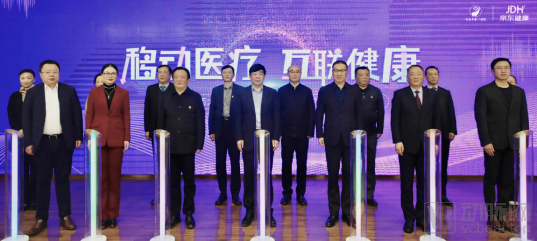
(Front row, from left: Zhou Jianguo, Chairman of Beijing Yikang Medical Technology Co., Ltd.; Wang Dongyuan, General Manager of Smart Healthcare at JD Health; Zhai Jianbo, Party Secretary of the First Affiliated Hospital of Henan University of Chinese Medicine; Liu Yanjun, Deputy Director of the Henan Provincial Health Commission; Li Jiansheng, Vice President of Henan University of Chinese Medicine; Zhu Mingjun, Deputy Party Secretary and President of the First Affiliated Hospital of Henan University of Chinese Medicine; Wang Yu, General Manager of the Product R&D Center at JD Health)
The First Affiliated Hospital of Henan University of Chinese Medicine (hereinafter referred to as “the First Affiliated Hospital of Henan TCM”) is a Grade 3A traditional Chinese medicine (TCM) hospital integrating medical care, teaching, scientific research, prevention, healthcare, and rehabilitation. Leveraging the enhanced efficiency brought by “Internet+” in the healthcare sector, the First Affiliated Hospital of Henan TCM has embarked on an internet-based transformation journey, partnering with JD Health to jointly establish a TCM Internet Hospital and innovatively explore the “Smart TCM Healthcare” model.
It is reported that since its trial operation began in June 2020, the internet hospital has cumulatively served patients across more than 20 provinces, autonomous regions, and municipalities directly under the Central Government in China, reaching even remote areas such as Xinjiang and Hainan, with a patient satisfaction rate of 95%. This initiative has not only significantly expanded the coverage of high-quality medical resources but also pioneered an efficient and viable model for the development of traditional Chinese medicine (TCM) internet hospitals.
To better align with the professional requirements of Traditional Chinese Medicine (TCM) diagnosis and treatment and enhance user experience, JD Health has leveraged the technological advantages of the JD ecosystem—including big data, artificial intelligence, and 5G—as well as its core capabilities in open supply chain and logistics. Furthermore, JD Health has established a more refined functional layout and interaction design for this internet hospital. For instance, to meet the “inspection” (Wang) requirements of TCM consultations, features such as patient video capture and tongue image upload have been implemented to help physicians collect more authentic and effective information. Based on the TCM “Ten Questions Song,” structured scale completion functions have been introduced to facilitate comprehensive assessment of patients’ baseline conditions. Additionally, prescription-writing functionalities have been tailored to closely match the workflow habits of TCM hospital physicians, thereby lowering the learning curve for the system and simplifying data entry processes.

(Mini-program page, with the consultation form featuring the “Ten Questions Song” on the far right)
In line with the distinctive features of Traditional Chinese Medicine (TCM), JD Health has developed customized prescription review rules for the “Eighteen Incompatibilities and Nineteen Antagonisms” to enhance medication safety. By leveraging technologies such as natural language processing, it has built a more scalable drug database and repository of classic TCM formulas, enabling physicians to retrieve them with a single click across different dosage forms. Furthermore, the establishment of various TCM-specific functional modules effectively reduces physicians’ workload and improves the operational efficiency of its internet hospital.
This internet hospital fully leverages information technologies such as artificial intelligence (AI). During the consultation phase, it provides intelligent triage and patient routing by analyzing patients’ chief complaints. Facial recognition is employed to verify patient identities, thereby ensuring medical safety. The hospital has also integrated classical and empirically validated Traditional Chinese Medicine (TCM) formulas from texts such as Formulas of Traditional Chinese Medicine and Treatise on Cold Damage and Miscellaneous Diseases into its online consultation app. Compatibility contraindications are embedded within the prescription rules, utilizing AI technology to help physicians minimize medication risks to the greatest extent. Furthermore, by leveraging big data and AI, the platform precisely matches patients’ reported symptoms with physicians’ areas of expertise, thereby enhancing the efficiency and precision of high-quality medical resource utilization.
Guided by a user-centric philosophy, JD Health and the First Affiliated Hospital of Henan University of Chinese Medicine are committed to building an integrated online-offline healthcare service model that spans the pre-consultation, consultation, and post-consultation phases. Currently, they offer comprehensive end-to-end services, including online profile creation, appointment scheduling, registration, consultations, follow-up visits, e-prescriptions, medication delivery, home-based rehabilitation guidance, post-consultation follow-ups, and patient evaluations.
According to the introduction, when patients consult on this internet hospital platform, they can choose the mode of consultation service according to their needs, such as text-and-image, telephone, or video consultations. Based on the patient’s condition and needs, doctors may provide a certain number of free online follow-up consultations or conduct telephone follow-ups directly with the patient.
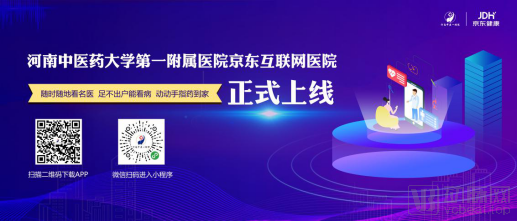
("Yuzhong No. 1" Internet Hospital features two access points: a standalone app and a WeChat mini program)
Upon completion of the consultation, patients can pay for their medications online, and the hospital will deliver the medications to their homes free of charge via JD Express, thereby providing users with a convenient, fast, safe, and efficient end-to-end service for follow-up visits and medication purchases.
Currently, the “First Affiliated Hospital of Henan University of Chinese Medicine JD Internet Hospital” has launched 36 online clinical departments, with a physician participation rate exceeding 80%.
Driven by both policy and demand, the establishment of internet hospitals by medical institutions has become a trend. Currently, there are three primary models: hospitals independently applying for an internet hospital as a secondary name; collaborating with third-party organizations to apply for an internet hospital as a secondary name; and establishing independently operated internet hospitals. The construction model adopted by the First Affiliated Hospital’s internet hospital falls into the second category. This model better integrates the hospital’s expert resources with the technological and operational capabilities of third-party platforms, thereby accelerating the upgrade of internet-based medical services within healthcare institutions.
Currently, the daily operations of the Internet Hospital at the First Affiliated Hospital of Henan University of Chinese Medicine are managed by just two full-time staff members and four to five part-time personnel, resulting in significantly improved efficiency in triage, order dispatching, and prescription review. As planned, building on existing collaborations, the hospital will next work with JD Health to establish an internet-based smart pharmacy and expert cloud consultation rooms, promote the application of intelligent wearable devices, and strengthen cooperation in the pharmaceutical supply chain. These initiatives aim to achieve interconnectivity with offline physical hospitals and telemedicine centers, thereby comprehensively enhancing the service capabilities of the hospital’s Internet Hospital.
“JD Internet Hospital of the First Affiliated Hospital of Henan University of Chinese Medicine” is the first license awarded to an internet hospital project co-established by JD Health and its partner hospital. Both parties have fully leveraged the internet hospital platform to expand their service reach, optimize the allocation of in-hospital resources, and facilitate comprehensive connectivity among hospitals, physicians, and patients, thereby providing more convenient and efficient traditional Chinese medicine (TCM) healthcare services. Meanwhile, this initiative has also paved an innovative path for the development of internet hospitals in China, particularly those specializing in TCM.
Wang Dongyuan, General Manager of Smart Healthcare at JD Health, stated that in the future, JD Health will continue to integrate its platform resources and technical service capabilities. In collaboration with numerous partners, including the First Affiliated Hospital of Henan University of Chinese Medicine, it will jointly deepen the exploration of innovative applications of high-quality offline medical resources in online healthcare scenarios, thereby enhancing user service experience as well as hospital operational efficiency and overall medical and management standards.